You want an outdoor sink to rinse soil, tools, and muddy shoes, but the area around it keeps getting slimy and slippery. In Malaysia, water plus humidity makes algae show up fast on tiles and concrete.
Frequent rinsing, splashback, and slow drying in shaded corners around terrace homes and condo patios create a perfect slick film. If the sink is placed wrong or drains poorly, the floor becomes a safety hazard and starts to smell.
In this guide, you’ll learn how to place an outdoor sink so you can rinse soil without slime and how to keep the area drying faster in wet months. You will also learn quick checks for drainage, surface grip, and simple habits that reduce algae.

Hi, I’m Ken. I write practical home guides for Malaysia—no fluff, just what works.
I hold a formal building design qualification and have spent about 20 years on job sites across hundreds of projects. My goal is simple: help you avoid costly mistakes with clear, safe steps—a quick way to decide what to do next.
1. Garden outdoor sinks placed smart: 5 checks
A sink zone is a wet-work station so it needs drainage and grip first.
In Malaysia, an outdoor sink is used often, and “a little splash” becomes a daily moisture load—design matters. Sink zone. Start by checking where water lands, where it flows, and where it sits after use. If the area dries quickly, it stays cleaner and safer with less scrubbing.
- Check floor slope direction with a small water pour
- Look for puddles that remain after 10 minutes
- Inspect nearby walls for splash stains and algae lines
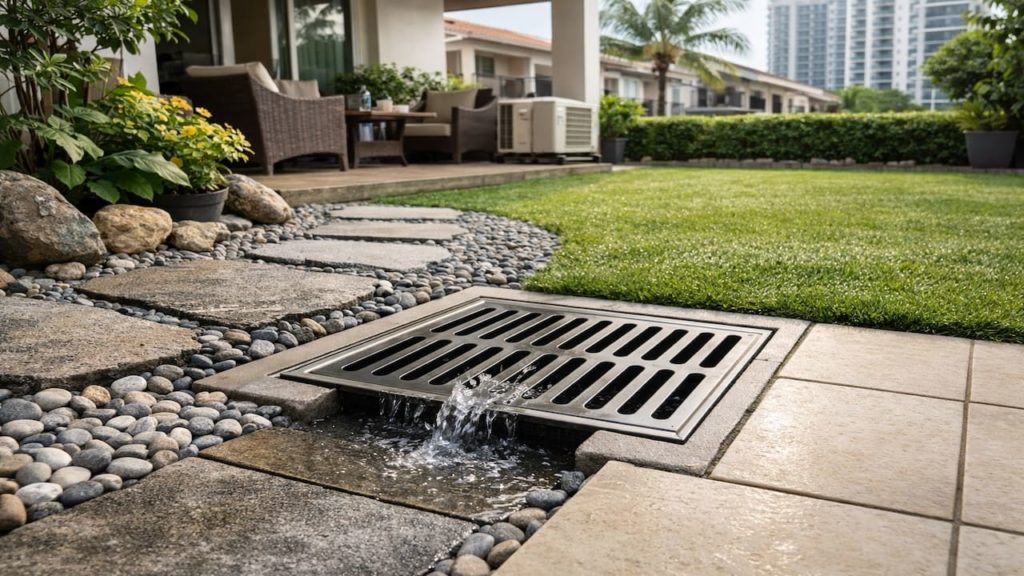
- Confirm drain outlet is reachable and not clogged
- Test foot grip when wet on the current surface
Some people put sinks in tight corners for convenience, but corners often trap damp air and grow slime faster. Reality. Choose airflow and drainage, then add convenience.
2. Rinse soil without making the floor slimy
Control splash and keep water moving so biofilm cannot build.
Soil rinsing adds fine particles that feed algae and bacteria, and Malaysia humidity helps them form a slick film quickly. Slime control. The key is preventing standing water and preventing dirty splash from spreading. A small change like a splash guard or a better rinse pattern can stop the “always slippery” feeling.
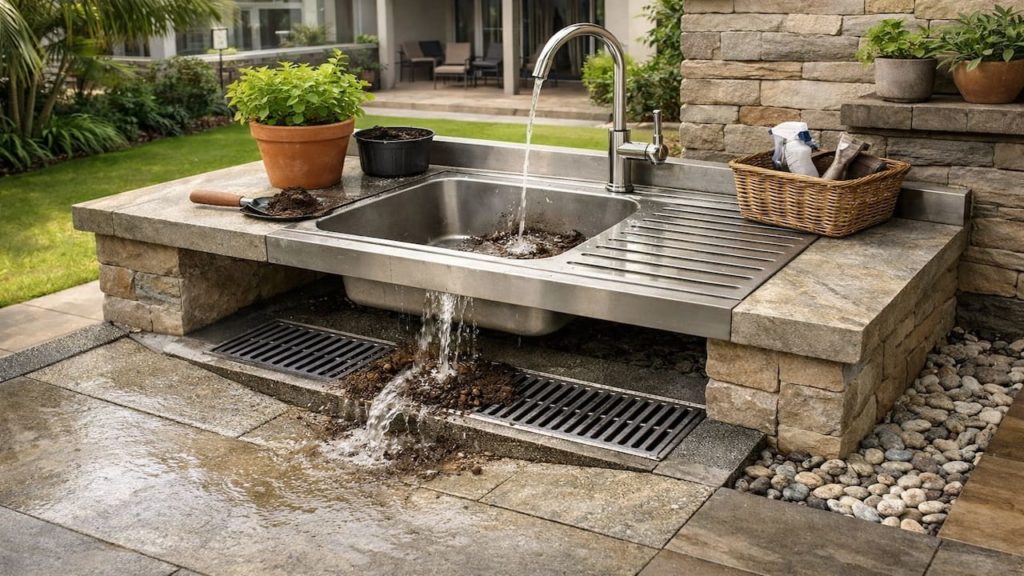
- Add a splash guard behind sink to protect walls
- Use a drain strainer to catch soil and roots
- Rinse into a bucket first to reduce floor runoff
- Squeegee water toward drain after each heavy rinse
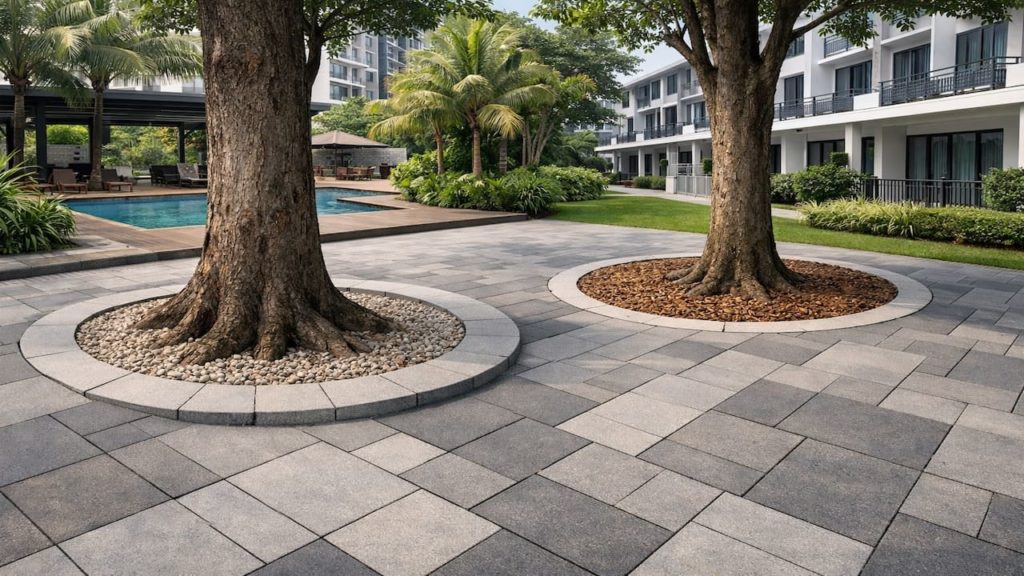
- Keep a gravel strip where muddy water splashes most
You might think stronger chemicals fix slime, but chemicals without flow control just reset the problem for a week. Truth. Move water away fast and slime stops returning.
3. Why sink areas turn slimy fast in Malaysia homes
Standing water plus fine soil creates biofilm that feels greasy.
When water pools, fine soil settles and becomes food for algae, then humidity keeps it moist so the film grows. Shaded sink corners on patios and balconies dry slowly, so the slick layer gets a daily refresh. Poor drain design also causes backflow or slow drainage, making the floor wet even when you are not using the sink. This is why the area feels “always slippery.”
- Spot green or dark film forming near drain edges
- Notice the slipperiest zone is always the same spot
- Check for slow drain and gurgling after rinsing
- Find grout lines trapping soil and forming slick patches
- See puddles under hose taps and pipe joints
It is easy to blame “dirty gardening,” but the real cause is moisture staying plus dirt staying. Mechanism. Remove either one and the slime cycle breaks.
4. How to set up a safer outdoor sink area
Create a washable footprint with good slope and easy cleanup tools.
Start by ensuring the floor drains to an outlet and that the outlet stays clear, because a wet base invites algae and slip risk. Then choose surfaces or mats that add grip and do not trap grime, and keep tools like a brush and squeegee nearby. For basic supplies like a strainer, anti-slip mat, splash guard, and cleaning brush, RM10–180 is common depending on what you already have. Keep it simple and repeatable daily.
- Install anti-slip mat that drains and dries fast
- Seal grout lines to reduce soil and algae hold
- Flush the drain weekly to remove trapped sludge
- Keep a stiff brush for quick scrub after muddy days
- Place sink where breeze helps drying after use
Some people want to move the sink later, but most slime problems drop quickly when slope, straining, and drying habits improve. Practical. Fix the flow first, then decide if relocation is needed.
5. FAQs
Q1. What is the best place to put an outdoor sink?
Place it where water can drain to an outlet and where airflow helps drying, not in the tightest damp corner. Avoid spots under constant drip lines or near backflow drains.
Q2. Do I need a floor drain near the sink?
A nearby drain helps a lot because it reduces standing water after rinsing. If no drain exists, use buckets and squeegee water to an outlet path consistently.
Q3. How do I stop algae from growing on tiles?
Reduce standing water and remove soil residue, then clean lightly but regularly before film thickens. Improving airflow and sunlight exposure also helps surfaces dry faster.
Q4. What cleaning habit makes the biggest difference?
Squeegee water toward the drain after heavy rinsing and empty the strainer so soil does not sit. A 30-second habit saves hours of scrubbing later.
Q5. Should I use textured tiles for the sink area?
Yes, texture can improve grip, but it must still be cleanable. Avoid very deep texture that traps mud, and combine it with good drainage so water does not pool.
Pro’s Tough Talk

Alright, I’ve been on site 20+ years, done hundreds of jobs, and outdoor sink slime is always the same pattern. Malaysia humidity plus dirty rinse water makes a slick film faster than you can say “careful.”
Three causes. One, no slope and no exit, so water pools like a tiny pond. Two, soil particles sit there and feed biofilm, then the floor feels greasy. Three, people keep the sink in a dead-air corner, so nothing dries and algae treats it like home.
Do this in 3 steps. First, pour water and watch the flow, then fix the outlet and remove puddle spots. Second, add a strainer and rinse into a bucket when it is muddy, so soil does not spread. Third, squeegee dry and brush the film before it thickens.
Don’t blame yourself, and don’t blame every contractor either, but the structure is cold. People install a sink and forget the floor and drain, because the sink looks nice in photos. Flow path decides slipperiness and that is the real truth.
Aruaru: you rinse pots once and the next day the floor feels like soap. Aruararu: you almost slip while carrying a plant, then you do the penguin walk. Oi, want a sink or a slip trap? Fix the flow, or keep practicing balance drills.
Summary
Outdoor sinks stay safer when placed where water can drain, airflow dries the area, and soil is strained before it spreads. In Malaysia humidity, standing water plus fine dirt creates slime fast.
If your floor is already slick, fix slope and outlet flow first, then add a strainer, anti-slip mat, and a squeegee habit. Only relocate the sink if you truly cannot create a drain path.
Do one water-flow test today and clear one drain then move to a slippery tile guide or a drainage-around-the-house guide to keep the whole wet-work area cleaner. Small routines beat constant scrubbing.