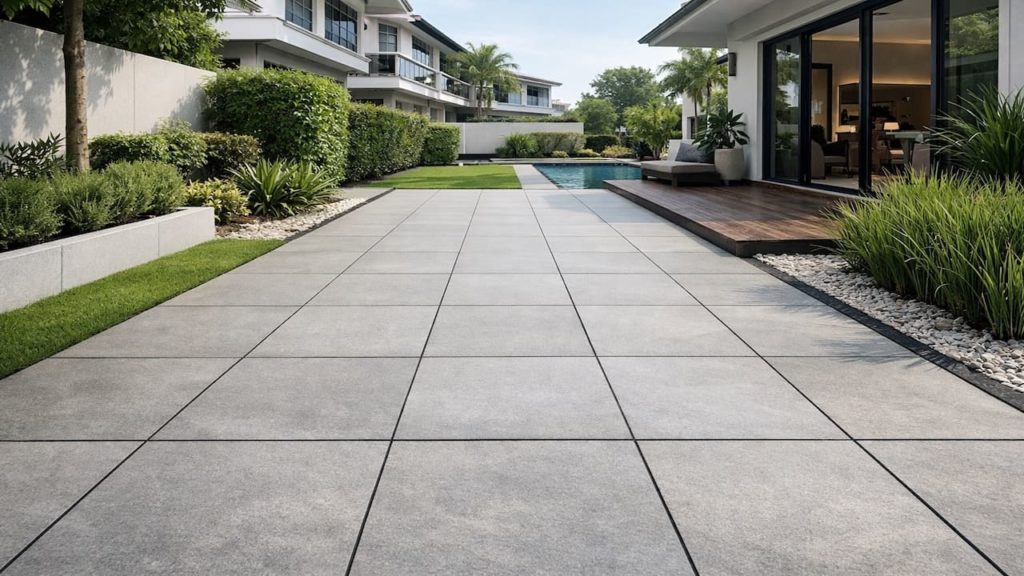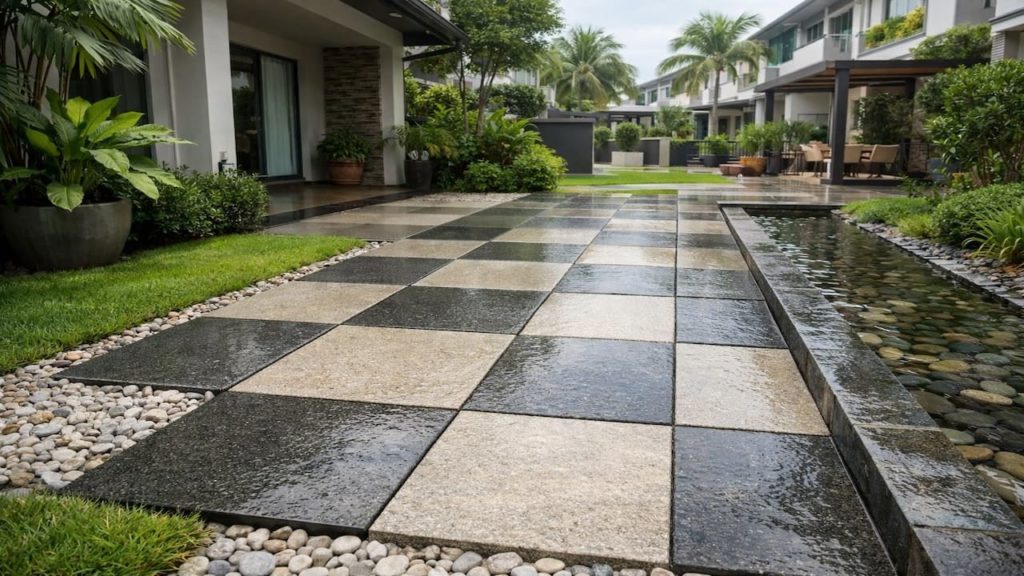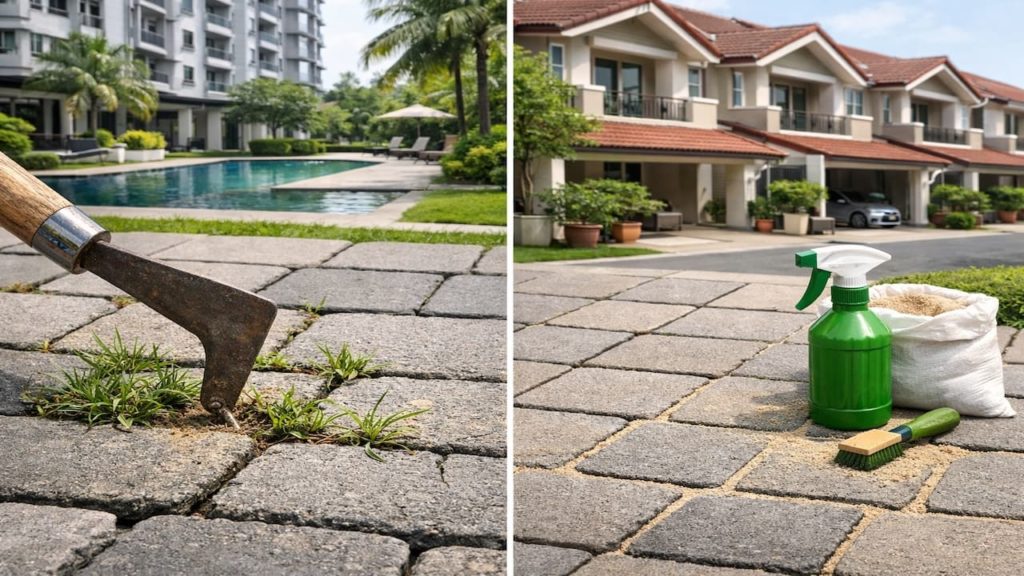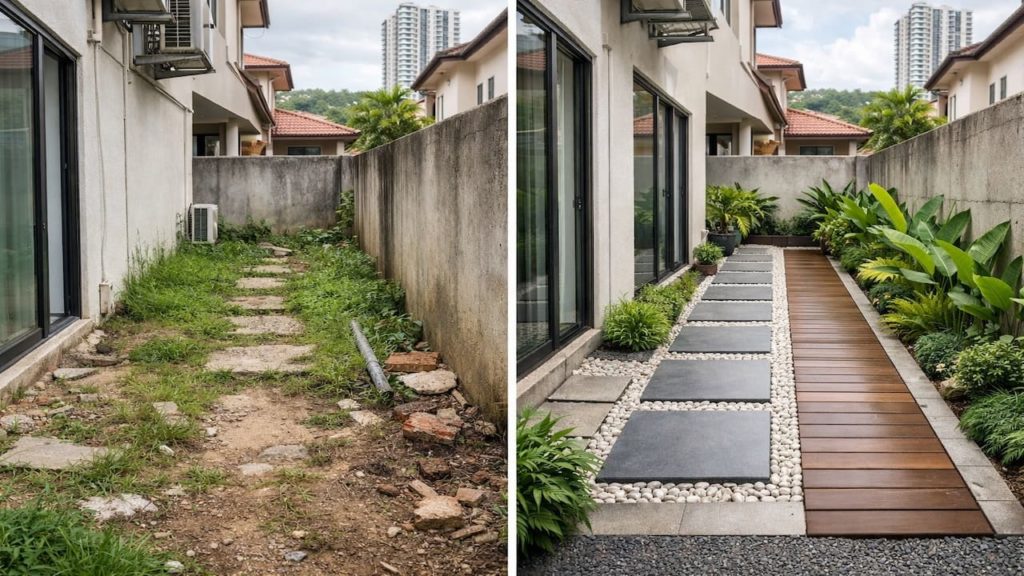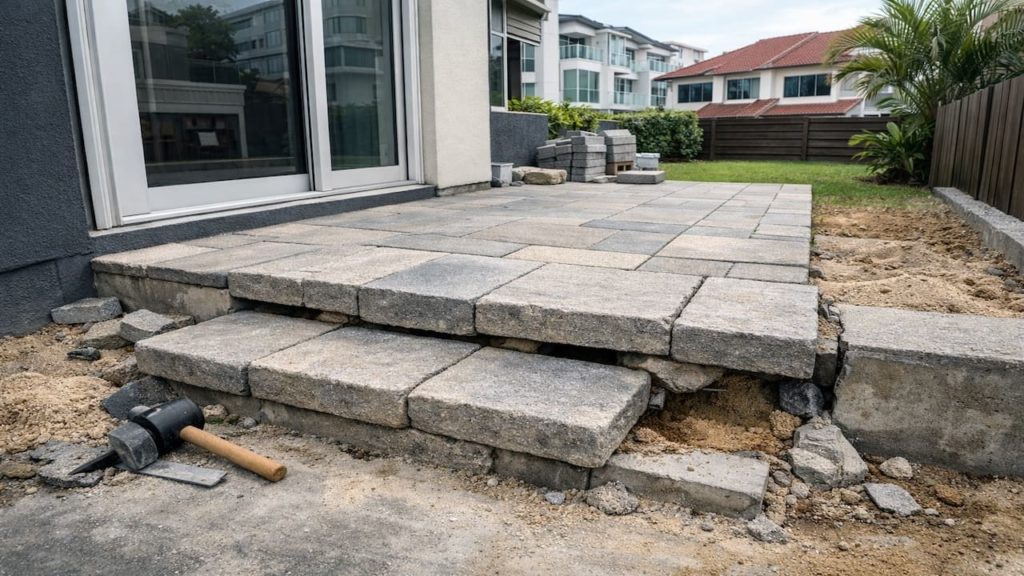
You hired a contractor, the pattern looks nice, and you want to pay and move on. Then you hear one loose “clack” underfoot and you wonder what you are really paying for.
In Malaysia, heavy rain, humid shade, and fast ground softening can punish weak base work, especially near gates, walls, and narrow terrace-house side strips. The top can look perfect while the base is already failing.
In this guide, you’ll learn how to check contractor paving work before final payment so you catch base shortcuts early and keep the project tidy and safe. You will also know what proof to ask for without starting a fight.

Hi, I’m Ken. I write practical home guides for Malaysia—no fluff, just what works.
I hold a formal building design qualification and have spent about 20 years on job sites across hundreds of projects. My goal is simple: help you avoid costly mistakes with clear, safe steps—a quick way to decide what to do next.
1. Garden paving contractor checks: 5 steps
Inspect the base work before the final payment so you keep control and avoid paying for hidden weakness.
Contractors can finish the surface fast, but the base is slow work and it is where corners get cut—especially when rain delays the schedule. cost is mostly time/effort. Malaysia ground stays damp longer, so compaction and drainage details matter more than “it looks level today.” Proof beats promises.
- Request photos of base before sand bedding
- Check edge restraints are installed and anchored
- Ask for compaction method and layer thickness
- Pour water and watch runoff direction
- Walk slowly and listen for hollow clicks
They may say the surface is finished so it must be fine, but finished is not the same as stable. If they cannot show base photos or explain layer order, that is a signal, not a personality issue. You can still be fair and firm while protecting your money. Control now saves repairs later.
2. Catch base shortcuts before you pay fully
Hold payment until you see base evidence because once you pay, your leverage disappears fast.
Payment timing is a tool, not a threat, and good contractors already expect it. cost is mostly time/effort. In Malaysia wet months, problems show up after the first storms, so you need proof today, not excuses later. Receipts and photos are your safety net—simple and calm.
- Split payments by base stage and surface stage
- Ask for delivery slips of base materials
- Confirm sub base is not mixed with soil
- Check bedding layer is thin and even
- Verify joints are filled and edges locked
Some homeowners feel awkward asking, but this is normal project hygiene, not disrespect. Do not accuse, just ask for evidence and walk the site together. If the contractor is solid, they will explain with confidence. If they dodge, you learned something valuable.
3. Why base shortcuts cause repeat rocking and stains
Base shortcuts fail because water keeps moving below and it slowly turns a flat surface into a wobbly one.
When layers are thin, unseparated, or un-compacted, rain pushes fine soil upward and washes bedding away over time. cost is mostly time/effort. Malaysia humidity slows drying, so soft spots stay soft and algae film grows where puddles linger. The surface is a mirror of the base. Structure logic.
- Loose sub base settles under repeated footsteps
- Poor slope keeps puddles feeding algae film
- Missing edge restraint lets pavers drift outward
- Thick bedding sand creates uneven compression zones
- Soil contamination pumps mud into joint gaps
People blame the pavers, but the same pavers can last years on a good base. If one corner rocks today, that movement spreads, and the tidy grid becomes a messy patchwork. Fixing early is cheaper than chasing new spots each rainy month. Base first always.
4. How to check the base like a non expert
Use a simple on site checklist and photos so you can challenge vague answers with clear facts.
You do not need special tools to spot most shortcuts if you know what to look for and when to look. cost is mostly time/effort. Ask to see work before the final sand or mortar cover goes down, because that is your one clean window. Take photos from the same angle. Evidence.
- Ask to see layers before the surface goes
- Measure depth at edges with a simple ruler
- Check compaction by foot and sound response
- Confirm drain path with a poured water test
- Photograph corners and edges before joint filling
A contractor might say “trust me,” but trust is stronger when it is documented. You can be polite in tone while being strict on process, because process protects both sides. If anything feels rushed, pause payment, not respect. Good work survives scrutiny.
5. FAQs
Q1. When is the best time to inspect the base?
Inspect right after compaction and before the bedding layer is fully covered by pavers. If the surface is already installed, ask to open one small edge section for proof.
Q2. What is the clearest sign of a bad base after installation?
Repeat rocking in the same spot after rain is the big one. Hollow tapping sounds and joint sand washing out in one area also point to base movement.
Q3. How do I ask for proof without sounding hostile?
Use neutral language and focus on process, not blame. Request photos and layer details as standard practice and say you want both sides protected if issues appear later.
Q4. Should I accept “we will fix it later” promises?
Accept only if the fix plan is specific and written, with a clear time window and payment holdback. Verbal promises fade fast once the job is paid.
Q5. What if the contractor refuses to show the base work?
That refusal is information you should act on. Pause the final payment and request a joint site walk, because hidden work with no proof is a risk.
Pro’s Tough Talk

Listen, I’ve been on site for 20+ years and done hundreds of different jobs, and the sweetest lie is “the top looks nice.” Nice is easy, base is hard.
Cause is 3 things. They skip real compaction because it is slow. They keep layers too thin because it is cheaper. They ignore water exit because it is invisible today.
Do 3 steps now. Ask for base photos before cover, check edges and corners, then pour water and follow the flow with your eyes. No flow, no deal.
I don’t blame you for trusting a contractor and I won’t say every contractor is bad, but the structure is cold, like makeup on a cracked wall, like tiles set on wet cake Base proof before full payment. That rule saves friendships and money.
The moment you carry groceries in both arms and the paver clicks, and the moment kids run barefoot and a corner shifts, you will feel it, so here is the tsukkomi: seriously. Pay first and learn later if you enjoy buying the same job twice.
Summary
Contractor checks work best when you focus on base evidence, edge restraint, and water exit, because Malaysia wet months punish hidden shortcuts first. Process matters.
If anything is unclear, pause the final payment and request a walk-through with photos and simple measurements. If multiple spots feel soft, rebuild the failing zone before sealing or decorating.
Document the base and hold payment until it is proven then move to the next guide on drainage checks or algae slick prevention for safer paving.