Puddles near doors and walls feel small, until Malaysia’s wet months turn them into slippery steps, damp marks, and algae that keeps coming back.
Drainage problems are usually layout, slope, and runoff focus points, not just “too much rain” or one bad paving choice.
In this guide, you’ll learn how to plan paving drainage correctly for Malaysia terrace homes and condo gardens, so water moves away from doors and walls instead of sitting there.

Hi, I’m Ken. I write practical home guides for Malaysia—no fluff, just what works.
I hold a formal building design qualification and have spent about 20 years on job sites across hundreds of projects. My goal is simple: help you avoid costly mistakes with clear, safe steps—a quick way to decide what to do next.
1. Plan garden paving drainage: 5 checks
Start by mapping water movement because drainage is a route problem.
Malaysia downpours dump water fast, then humidity slows drying, so any low spot becomes a daily wet patch. Most puddles form where roof runoff, downpipes, or aircond drips concentrate, and the paving has no clear exit path. If you find the route, the fix becomes simple and cheaper than repeated repairs. Water map.
- Watch runoff during a real heavy downpour
- Mark puddle outlines with chalk after rain
- Trace downpipe discharge onto paving zones
- Locate aircond drips hitting the ground daily
- Confirm where water should safely exit the site
You might think a drain grate alone solves it. If the paving still slopes toward the door, water will keep trying to go there first. Plan the route, then add drains only where needed. Clear order.
2. Keep puddles away from doors and walls
Slope away from thresholds so water leaves before it can soak and stain.
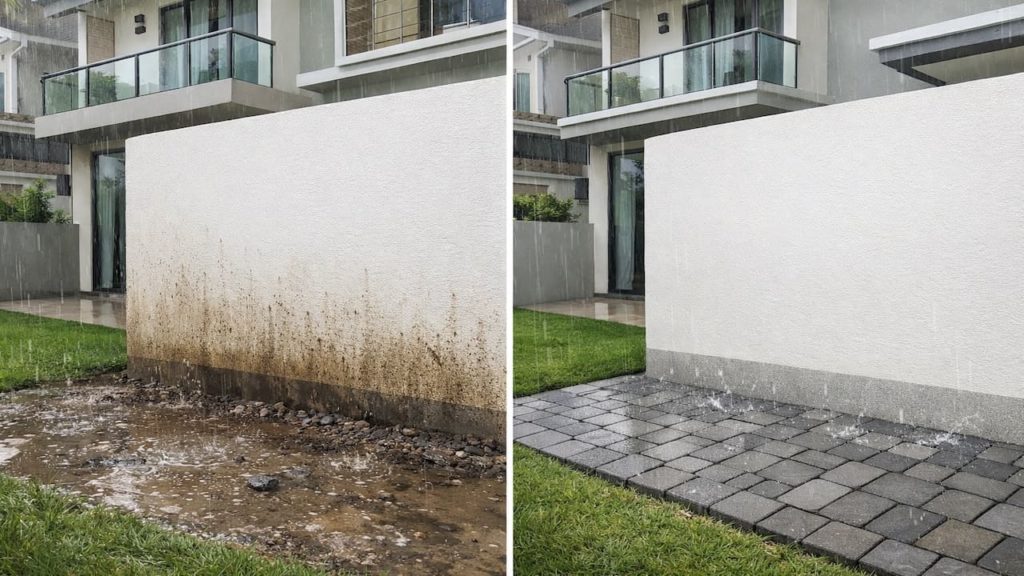
Doors and walls are vulnerable because splash marks and damp lines show up fast in Malaysia’s humid climate. Even a small fall away from the building reduces puddles, reduces algae film, and keeps paint and skirting cleaner. The goal is not “perfectly flat,” it is “drains reliably,” especially in wet season. Building protection.
- Create fall away from door landings and steps
- Avoid flat spots at wall edges and corners
- Keep paving level changes smooth for safe walking
- Use edging to stop soil washing onto paving
- Plan a dry landing zone for daily entry use
Some people worry a slope looks wrong. In reality, a tiny fall is invisible but your feet feel the safety, and your walls stay cleaner. In Malaysia, flat paving that ponds is the real eyesore later. Drain first.
3. Why puddles form near doors and walls in Malaysia homes
Low spots plus repeated runoff create stubborn puddles that never fully dry.
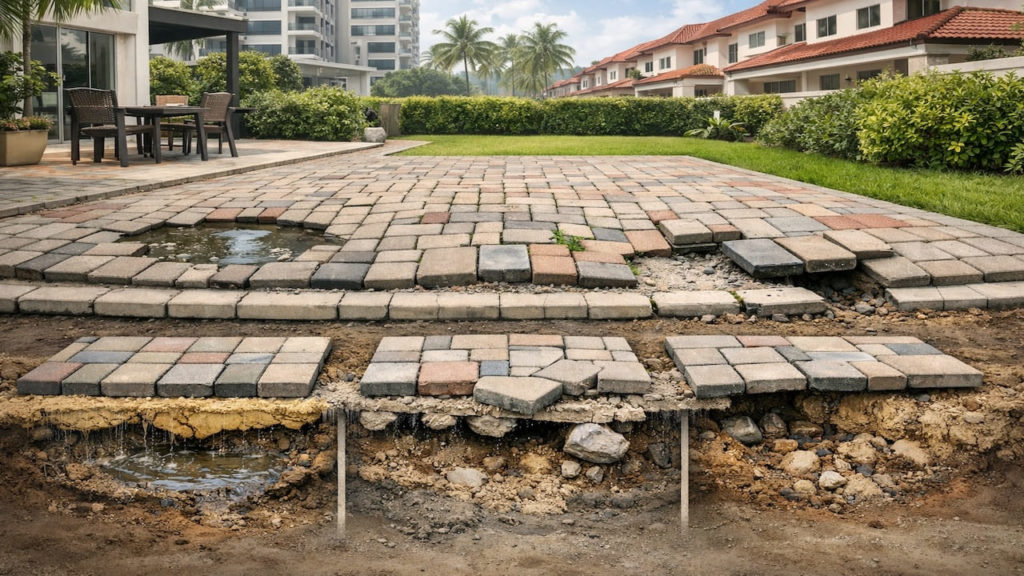
Terrace homes often have narrow side yards where walls shade the paving, so evaporation is slow. Downpipes, roof edges, and outdoor taps can dump water onto one patch daily, washing fine sand away and creating a shallow basin. Once a basin forms, it collects more water and dirt, then algae grows and the area becomes slippery. Repeat cycle.
- Check if downpipes discharge onto flat paving
- Check for settled or sunken pavers near edges
- Check for blocked drains with leaf debris
- Check joints for washout creating low channels
- Check wall shade that keeps corners damp longer
You may blame “bad workmanship,” but sometimes the design never gave water a place to go. Even good installers cannot fight a layout that traps water at the door. Fix the route and the symptoms disappear. Simple truth.
4. How to design drainage for long-term dry paving
Combine slope with a clear outlet so water exits fast during heavy storms.
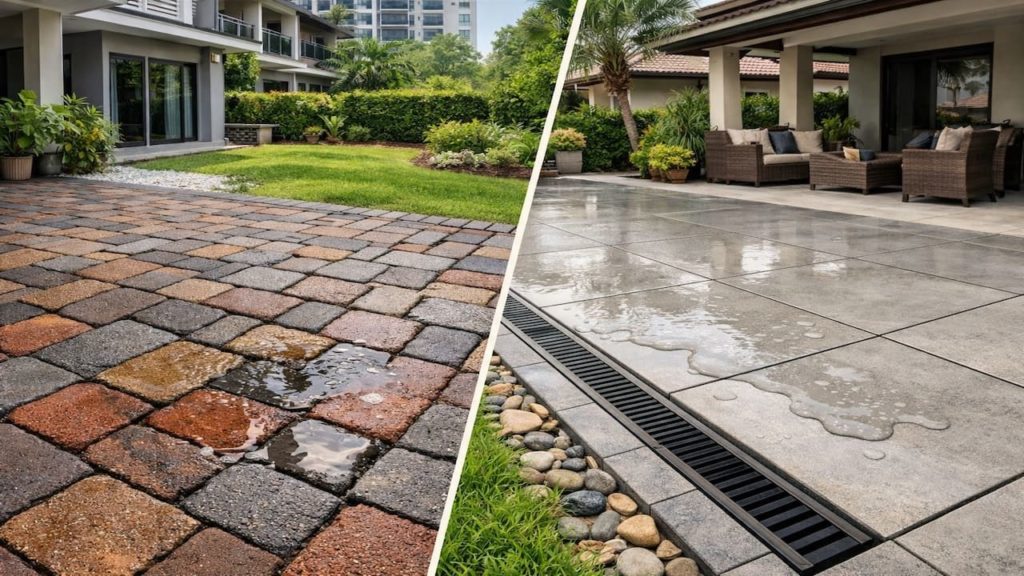
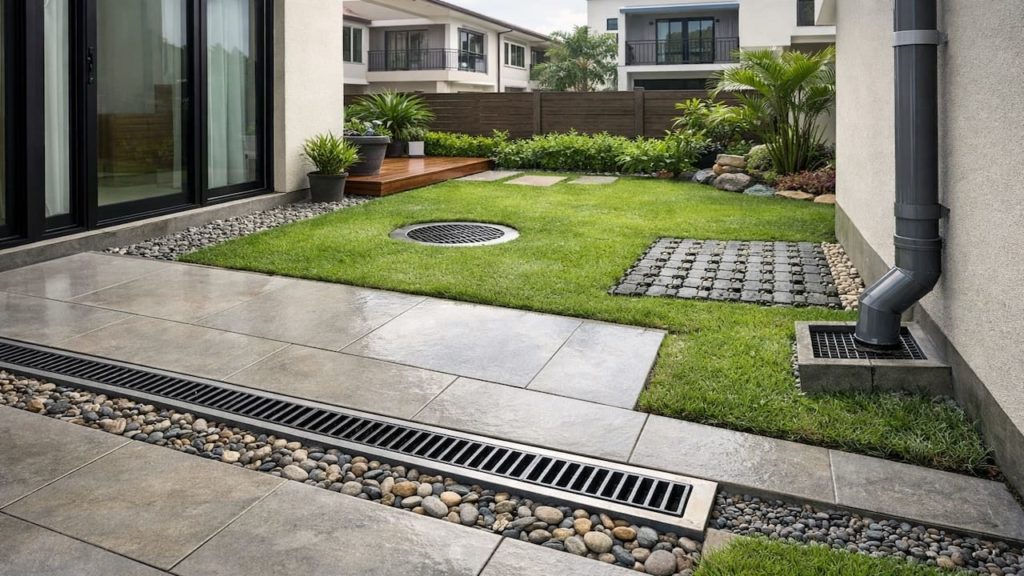
Good drainage is usually a gentle fall to a garden strip, drain channel, or safe outlet, plus control of concentrated runoff sources. In Malaysia, adding a small channel drain at a threshold can be smart if roof runoff is unavoidable. If you need a channel grate, extra bedding, or joint materials, plan RM50–300 depending on length and access. Storm ready.
- Set a consistent fall toward a planned outlet
- Install channel drains at concentrated flow points
- Redirect downpipes away from door approach zones
- Compact base layers to prevent future sinking
- Keep joints filled to stop water pumping sand out
You might think more drains is always better. Too many drains can clog in Malaysia leaf litter and become maintenance headaches. One good route with one reliable outlet beats a drain maze. Keep it simple.
5. FAQs
Q1. How much slope should paving have near a door?
A small fall is usually enough, as long as water clearly moves away from the threshold. The right number depends on length and surface, but “no ponding” is the test.
Q2. Do I need a channel drain at every door?
Not always. If slope can carry water away safely, you may not need one. Use a channel drain when runoff concentrates at the entry and cannot be redirected.
Q3. Can I fix puddles without redoing the whole patio?
Fix the low spot and outlet by lifting and re-leveling the problem area. If the base is soft everywhere, a wider rebuild may be needed.
Q4. Why do puddles keep returning after I sweep sand into joints?
Because the base or slope is still wrong, so water keeps pumping material out. Joint sand is support, but it cannot replace a stable base and proper fall.
Q5. What causes damp marks on walls near paving?
Splashback from puddles and runoff hitting the wall line. Drain water away and keep a dry strip near walls to reduce staining in humid months.
Pro’s Tough Talk

Listen. I’ve got 20+ years on site and I’ve handled hundreds of jobs, and puddles at the door are not “normal in rainy season.”
The causes are three. No fall, so water sits. Runoff concentrates, so the same spot gets hammered daily. Base softens, so the low spot grows. Malaysia humidity keeps it wet like a sponge.
Do these 3 moves now. First, watch a real downpour and mark the pooling edge. Second, lift and re-level that zone to create a clear fall away from the wall. Third, give water one clean exit, not five random drains. You know the step that goes splash into your house. You know the slimy corner that ruins flip-flops. Seriously, why are you inviting water inside?
I’m not blaming you, and I’m not saying every contractor is careless, but the structure is cold: route, fall, and outlet decide everything. Water needs an exit so design the path and the puddles stop.
Ignore it and enjoy mopping your “outdoor” rainwater like it is your second job.
Summary
Plan drainage by mapping water routes, sloping away from doors and walls, and stopping concentrated runoff from hitting one spot daily.
If puddles keep returning, re-level the low zone and confirm there is a clear outlet. Add a channel drain only where concentration is unavoidable.
Route first then fall and Malaysia downpours stop creating puddles at your door. Next, read a downpipe splash control guide or a wet-season algae prevention guide.