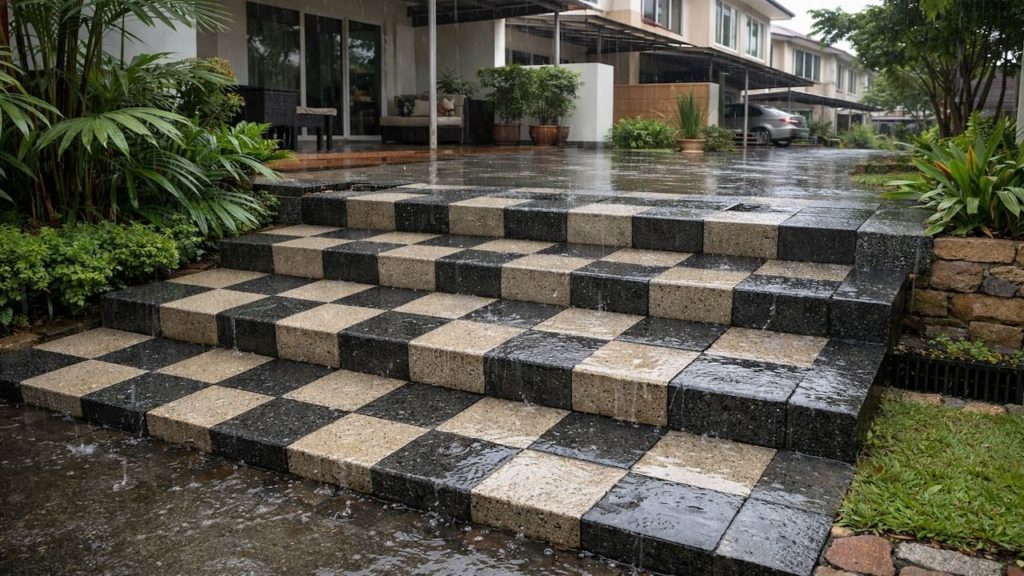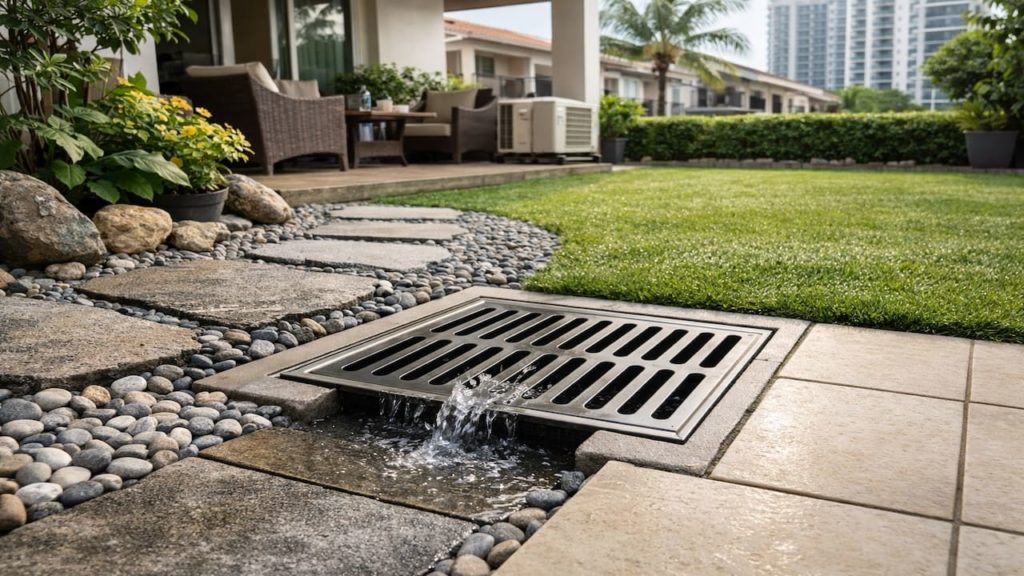
After rain, the drain area is where paving looks worst: puddles stay, grit gathers, and the air can turn sour near the gate.
In Malaysia, sudden storms, warm humidity, and shaded terrace-house side yards make drains work overtime, so small paving mistakes become overflow and odor fast. Wet season reality.
In this guide, you’ll learn how to keep garden drains working clean by checking grate height, slope, joints, and cleaning access. You will stop smells and backflow before they spread.

Hi, I’m Ken. I write practical home guides for Malaysia—no fluff, just what works.
I hold a formal building design qualification and have spent about 20 years on job sites across hundreds of projects. My goal is simple: help you avoid costly mistakes with clear, safe steps—a quick way to decide what to do next.
1. Paving near garden drains: 5 checks
Build the drain area as a water exit not as a decoration you hope will cope.
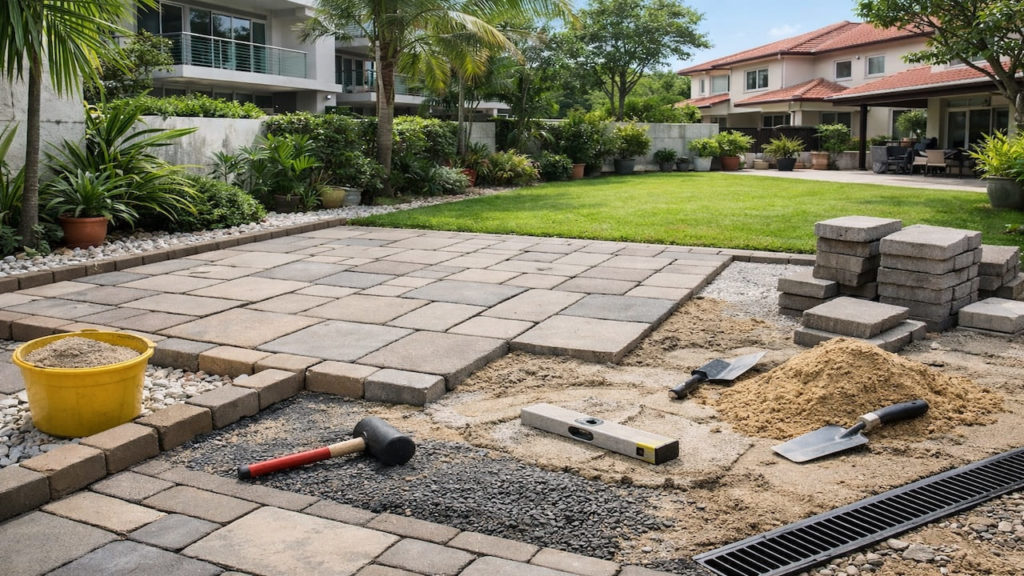
Paving near a grate must guide water cleanly into the opening—Malaysia rain comes hard, so the last 1 m around the drain matters most. If the grate sits proud, water skims past; if it sits low, silt settles and stinks. Clear exit. Less algae. Grit rides the flow.
- Check grate sits level with finished paving
- Confirm slope funnels water into the grate
- Inspect joint gaps around grate for washout
- Remove leaf mats blocking the grate slots
- Test overflow route away from doors and walls
Some people focus on tile style and ignore the drain zone. In Malaysia humidity, that corner becomes the first place that turns green and smelly. Fix the exit, then everything else dries faster. Drain area discipline.
2. Keep grates clear and stop overflow smells
Keep the grate clear every week so water does not sit and rot in the same spot.
Overflow smell often starts when fine silt and leaf bits make a wet blanket over the grate—Malaysia storms deliver debris. Humidity then keeps it fermenting. One quick lift and rinse beats masking odor with perfume cleaners. No stink. No slime. Always.
- Lift the grate and rinse trapped sludge
- Brush slot edges to remove sticky biofilm
- Clear surrounding joints where storm grit collects
- Flush water and watch for slow swallowing
- Keep a small screen basket for leaf catch
You might think the smell comes from “the drain pipe far below,” but the top layer is usually the problem. When the grate face stays clear, air moves and water drains quickly. If it still smells, then you check the trap and the line next. Step by step.
3. Why drains overflow and smell near garden paving
Overflow happens when water meets a clogged choke point right where your paving is flattest.
Most drains fail at the surface: high grate, wrong slope, or a dirty joint ring. Malaysia rain pushes silt into that ring—every storm. Then water pools, algae blooms, and odor rises when the sun hits. Predictable cycle. Not bad luck.
- High grate edges divert runoff away from opening
- Low grate bowls collect silt and leaf paste
- Flat paving leaves water sitting after storms
- Loose joints feed dirt into the drain edge
- Shaded corners keep trapped water from drying
People blame the drain design or the tile brand, but the system is usually install plus maintenance. Contractors do not see your daily hose use and storm flow, so the last details get rushed. Fixing height and slope is boring, but it stops the repeat mess. That is the lever.
4. How to pave around drains for cleaner flow
Create a clean bowl to the grate with stable edges that do not crumble in rain.
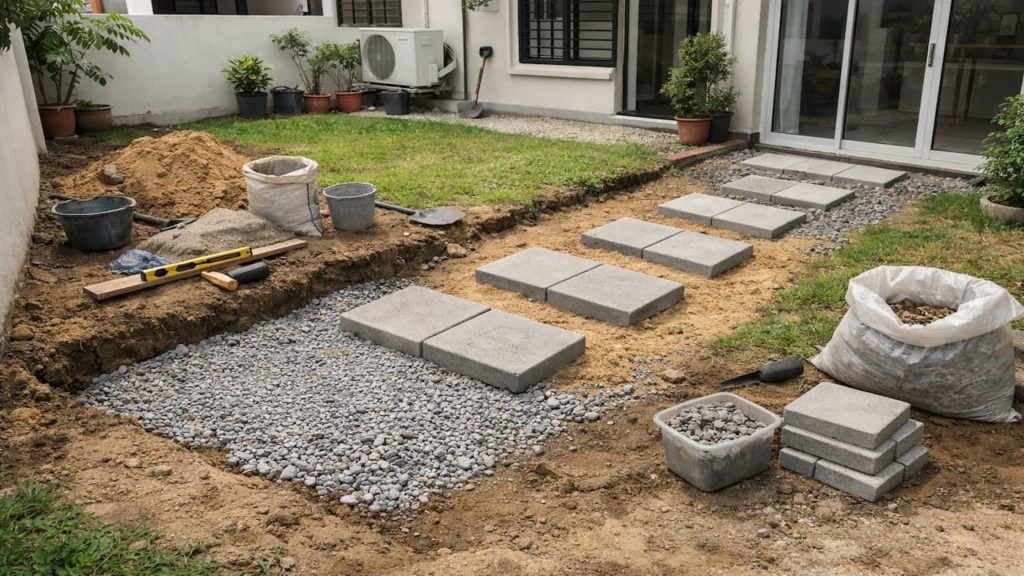
Start by fixing the last meter: set the grate frame, compact the base, and grade the paving—Malaysia wet months demand a clear path. Budget RM80–300 for a grate frame reset, joint materials, and basic tools for a focused repair. Small spend. Big relief. Less mosquito risk.
- Reset grate frame to match paving height
- Compact base firmly to stop future settling
- Grade paving so water runs into grate
- Refill joints around grate with stable filler
- Add a small leaf catcher for storm days
It is tempting to raise the paving with extra mortar and call it done. If the base is still soft, everything shifts and the gap ring returns. Make the base and edges strong first, then your weekly cleaning becomes easy. Clean flow is calm.
5. FAQs
Q1. How do I know if my grate height is wrong?
Pour a bucket of water upslope and watch the path it takes. If water skirts around the grate or pools beside it, the height or slope needs adjustment.
Q2. Why does it smell worse after rain stops?
After rain, warm air and humidity in Malaysia speed up decay of trapped leaf paste and silt. When the sun hits, the odor rises from that wet film near the grate.
Q3. Should I seal paving near drains to stop stains?
Seal only after drainage works well, because sealing over pooling can lock in grime and darken patches. Fix slope and cleaning access first, then test a small area.
Q4. What if water drains but the smell stays?
Check the trap and flush the line, because odor can come from stagnant water below the grate. Still, always clean the grate face first since that is the fastest win.
Q5. How often should I clean the drain area?
In storm months, do a quick check weekly and after big downpours. A 2 minute lift and rinse prevents the sludge layer from building up and smelling.
Pro’s Tough Talk

Listen, I have been on site for over 20 years and I have done hundreds of jobs. The smelly overflow corner is never a surprise.
It breaks into 3 causes: the grate is set wrong, the paving is flat, and the top layer turns into leaf paste. In Malaysia humidity, that paste ferments like a kitchen strainer stuffed with soggy rice.
Do 3 steps now: lift the grate and scrape the sludge, then pour a bucket to see where water really goes. Next, fix the joint ring so dirt cannot keep feeding the choke point. That moment when you hose the patio and the water crawls back to your feet, classic.
Do not blame yourself and do not scream at every contractor, but accept the structure: water will punish weak details. And seriously, who thought covering a drain with a pot was smart.
If you ignore it, you will keep smelling that swampy puff every time you open the gate after a storm. Either fix the exit or enjoy your garden longkang perfume.
Summary
Near drains, paving must guide water into the grate with the right height, slope, and tight joints, or Malaysia storms will create pooling and odor.
If overflow and smell repeat, start at the surface zone. Check the trap and line only after the grate face stays clean and clear.
Lift the grate and bucket test today then continue to the guides on paving joints and fast drying walkways for a cleaner wet season routine.