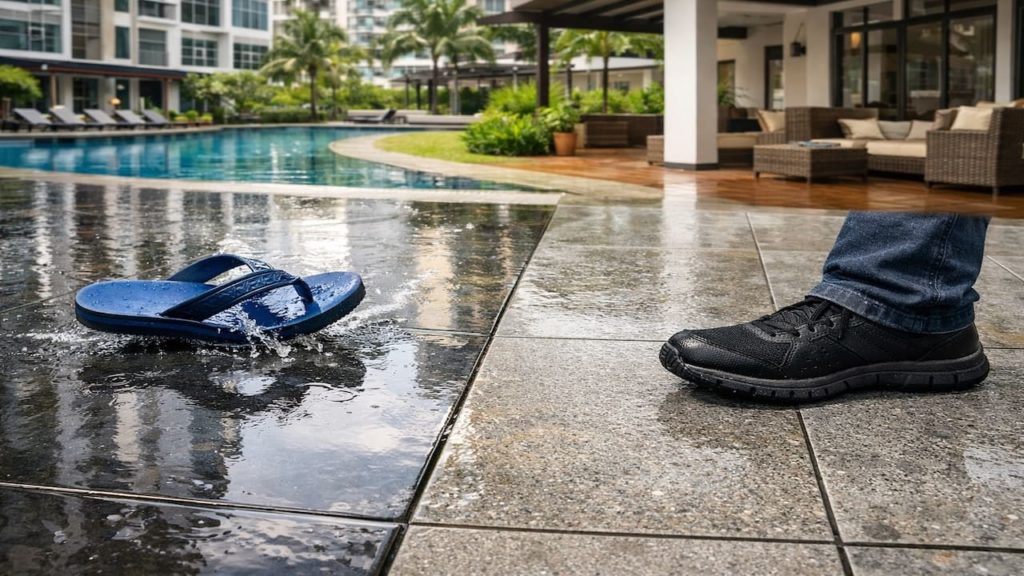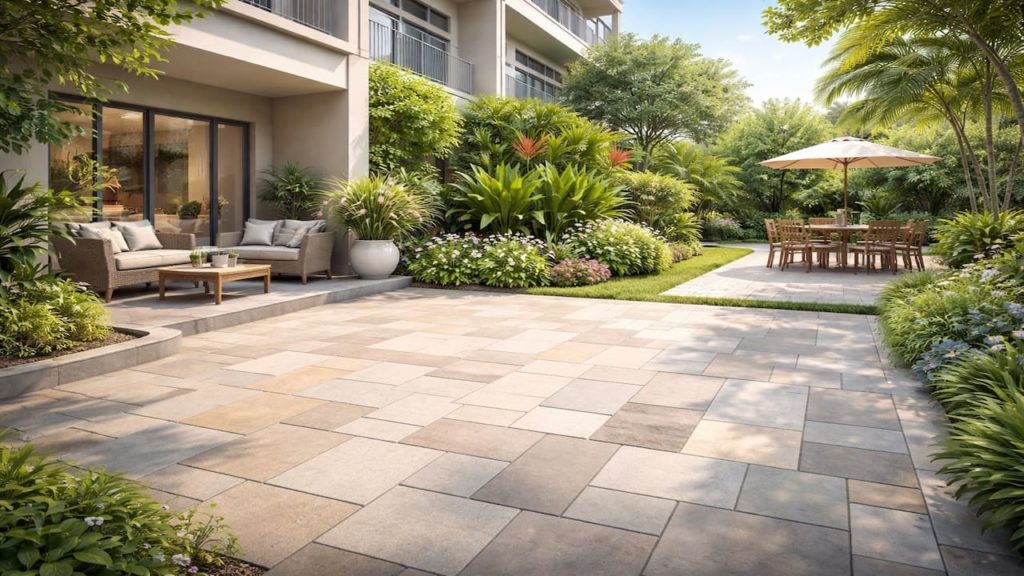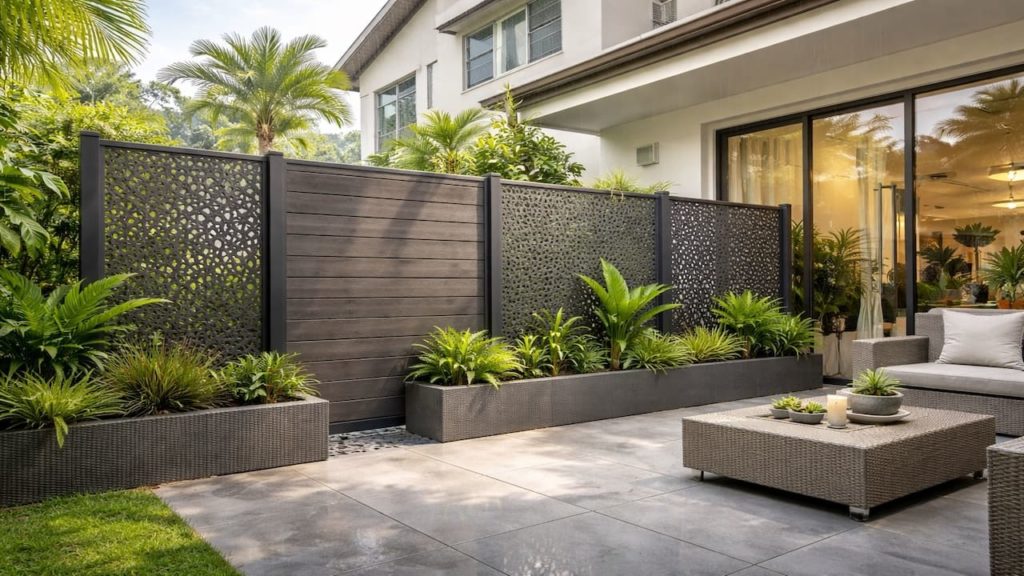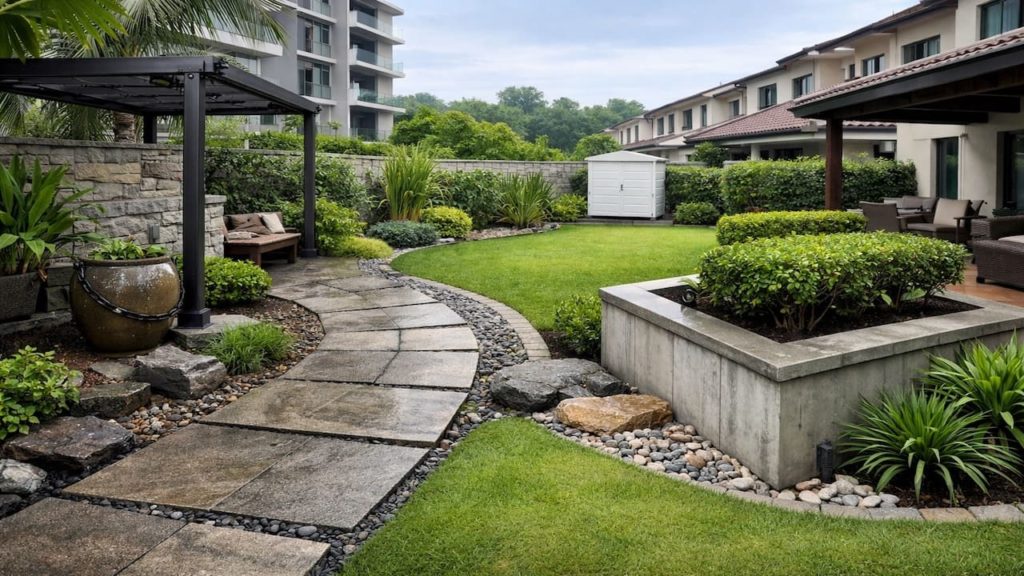
Garden paving height looks like a small detail, until Malaysia rain sends runoff toward your door and splash marks climb the wall base.
Most threshold problems come from finished height, slope, and where water exits, not from the paving material itself.
In this guide, you’ll learn how to set paving height safely so door thresholds stay protected from runoff and splash in Malaysia terrace homes and condo gardens.

Hi, I’m Ken. I write practical home guides for Malaysia—no fluff, just what works.
I hold a formal building design qualification and have spent about 20 years on job sites across hundreds of projects. My goal is simple: help you avoid costly mistakes with clear, safe steps—a quick way to decide what to do next.
1. Paving height in a garden: 5 checks
Finished height controls water behavior more than most people realize.
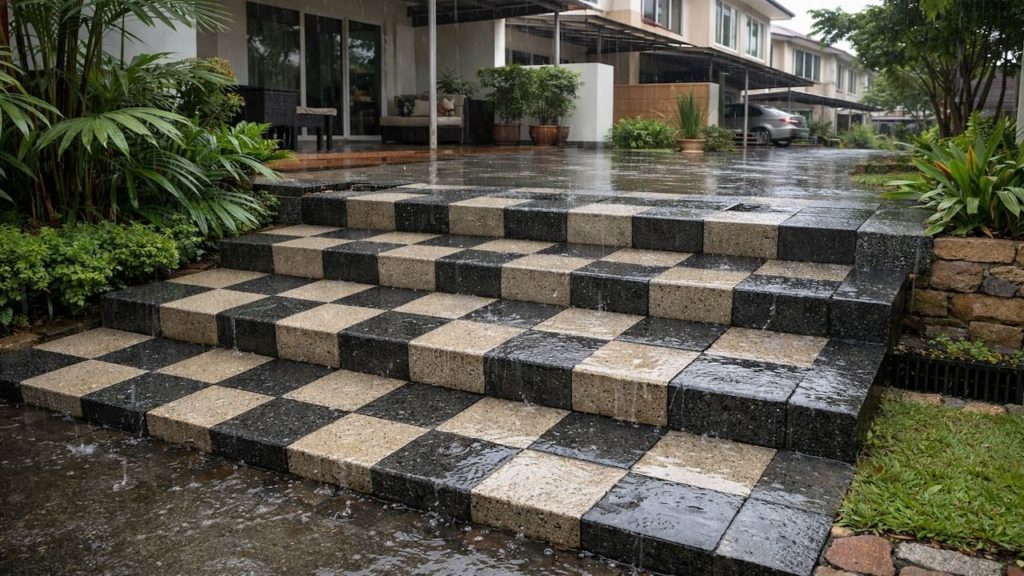
If paving is too high, rainwater can run straight toward the door and leave damp lines on the wall. If it is too low, water can pond near the building and keep the area wet, feeding algae and stains in Malaysia humidity. The right height works with slope and drainage so water leaves fast without splashing back. Height matters.
- Check current threshold height above outdoor ground level
- Check where water flows during heavy downpours
- Check if splash marks already show on wall base
- Check for ponding near the door after rain
- Check where the nearest safe outlet point is
You might think “level with the door looks neat.” In Malaysia wet months, neat is dry and safe, not perfectly flush. Plan for water first, then looks follow. Simple.
2. Protect door thresholds from runoff and splash
Keep a clear drop and fall so water never wants to enter the doorway zone.
The door area should act like a protected landing, not a runoff target. A small height difference plus slope away from the threshold reduces pooling and reduces splashback that stains paint and skirting. In Malaysia humidity, keeping the landing dry also reduces slippery film at the entry. Dry landing.
- Maintain a clear step down below the threshold line
- Slope paving away from the door toward an outlet
- Avoid flat strips right at the door edge
- Use a drain channel when runoff concentrates there
- Keep soil and mulch away from the entry edge
Some people try to solve splash by adding more sealant at the wall. That treats symptoms while runoff still targets the doorway. Fix height and fall first, and the wall stays cleaner with less effort. Better order.
3. Why threshold runoff gets worse in Malaysia homes
Downpours expose tiny errors because water volume is high and drying is slow.
Terrace homes often have narrow side yards where walls funnel water toward doors. Downpipes, outdoor taps, and aircond drains can dump water close to the entry, creating a constant wet zone. When paving height is wrong, the water has no reason to leave, so you get puddles, algae, and damp marks. Wet-season pressure.
- Trace downpipe discharge toward the doorway path
- Check if aircond drip lands near the entry area
- Check wall funnel effect in narrow terrace strips
- Check joints darkening that shows constant wetness
- Check tile rocking that indicates base washout nearby
You may blame “heavy rain,” but water always follows the easiest route. If the easiest route is toward your door, it will take it every time in Malaysia storms. Change the route and the problem fades. Cold truth.
4. How to set paving height and slope correctly
Plan finished levels from the door outward so every layer supports the final fall.
Start with threshold height, then set the finished paving level below it, then build the base layers to match a consistent slope to an outlet. If you need to adjust levels with extra base material, bedding sand, or a small channel drain, plan RM50–400 depending on area size and what needs changing. Level planning.
- Measure threshold and set target finished paving level
- Mark slope line with string to the outlet point
- Build base layers to support that final height
- Keep bedding thin and even for stable pavers
- Test with water pour before final joint filling
You might want to “just add one more layer” to raise the paving. Raising without a drainage plan can push water into the door zone and increase splash. Always plan height with slope and outlet together. One system.
5. FAQs
Q1. How do I know if my paving is too high near a door?
If water runs toward the threshold or splash marks keep appearing on the wall base, height and fall are likely wrong. Also watch for wet joints that never fully dry.
Q2. Is a channel drain always needed at doors?
Not always. If the paving slopes away and water has a safe outlet, a drain may be unnecessary. Use a drain when runoff concentrates and cannot be redirected.
Q3. Can I fix threshold runoff without redoing the whole patio?
Fix the landing zone first by re-leveling the strip near the door and improving slope. If the whole area is flat, a wider adjustment may be needed.
Q4. Why do splash marks keep coming back after cleaning?
Because runoff still hits the same wall line and bounces dirt upward. Reduce puddling and redirect flow to stop splash, not just the stains.
Q5. What should I avoid when setting paving height?
Avoid flat strips at the door, and avoid raising paving to near-threshold levels without drainage. Also avoid trapping soil right next to the entry edge.
Pro’s Tough Talk

Listen. I’ve got 20+ years on site and I’ve handled hundreds of jobs, and door thresholds are where bad paving levels show their teeth.
The causes are three. Paving is set too high, slope points the wrong way, and runoff sources dump water near the entry. Malaysia downpours make that mistake loud.
Do these 3 moves now. First, measure the threshold and stop guessing. Second, set the finished paving lower and slope it away to one clear outlet. Third, redirect downpipes and drips so the door is not the target. You know that wet strip that never dries at the entry. You know the wall base stain that returns like a bad joke. Seriously, why are you building a water slide into your house?
I’m not blaming you, and I’m not saying every contractor is useless, but the structure is cold: level, fall, and outlet decide where water goes. Door areas must stay dry so plan height like your flooring depends on it.
Ignore it and keep mopping rainwater indoors like that is your rainy-season tradition.
Summary
Protect door thresholds by checking finished paving height, creating slope away from the entry, and ensuring water has a clear outlet point.
If splash and runoff keep returning, re-level the landing strip near the door and control concentrated runoff sources like downpipes and drips.
Set height then slope and Malaysia rain stops attacking your doorway. Next, read a drainage planning guide or a slip-safe entry paving guide.