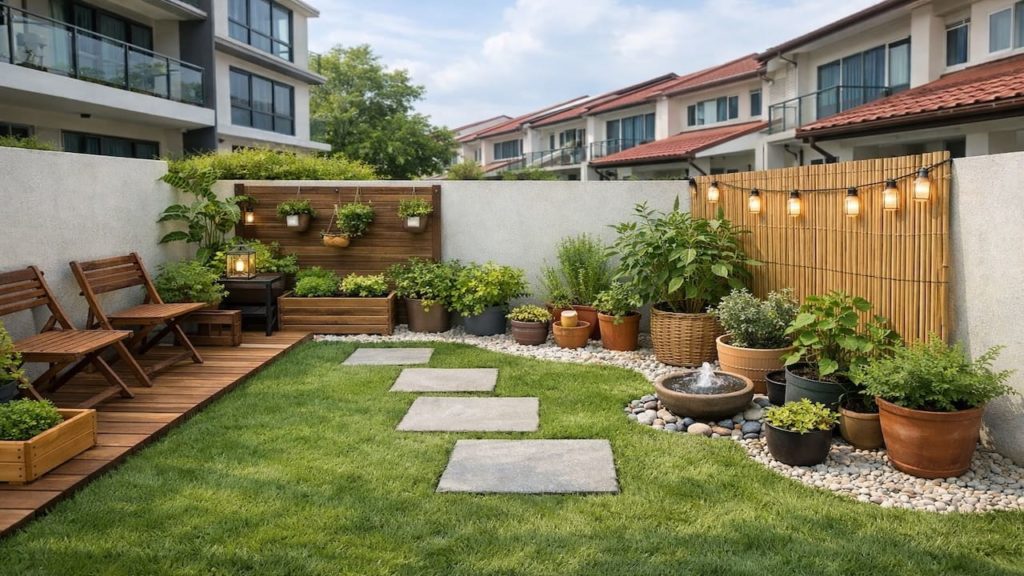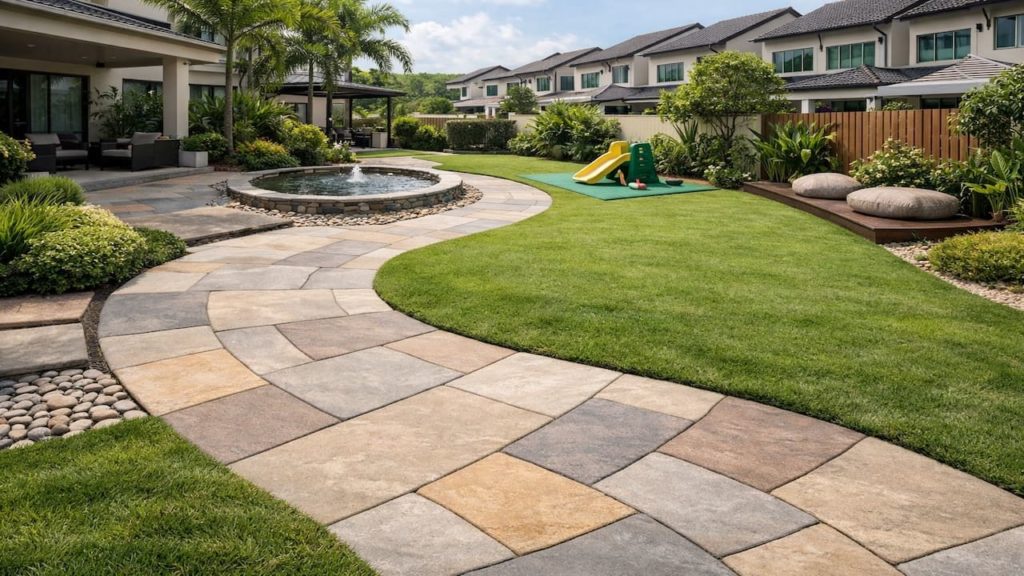
If kids run through the garden and you notice sudden slips or tiny stumbles, the paving is often the hidden cause. Small falls add up.
In Malaysia, storms arrive fast, humidity keeps surfaces damp, and terrace-house side yards stay shaded, so surprise slick spots and trip lips appear quickly.
In this guide, you’ll learn how to check paving for kid safety by spotting trip points, wet season slip traps, and simple fixes that protect daily play routes.

Hi, I’m Ken. I write practical home guides for Malaysia—no fluff, just what works.
I hold a formal building design qualification and have spent about 20 years on job sites across hundreds of projects. My goal is simple: help you avoid costly mistakes with clear, safe steps—a quick way to decide what to do next.
1. Kid-safe garden paving: 5 checks
Kid safe paving starts with predictable footing across the routes children actually use.
Kids change direction fast, so tiny lips and slick patches become real hazards—Malaysia rain makes those hazards show up more often. cost is mostly time/effort for these checks, using a bucket, a brush, and your eyes. Focus on gates, steps, and corners. Peace of mind.
- Walk route after rain and note puddles
- Check paver edges for lifted corners and gaps
- Feel for slick film in shaded gate areas
- Inspect joint fill for missing sand or cracks
- Test drain flow with a bucket pour
Some owners assume kids will learn to be careful, but kids will always sprint and slide into turns. Malaysia wet months do not negotiate with that energy. Reduce surprises first, then polish the look later. A safer route.
2. Reduce trip points and slippery surprise spots
Remove small level changes before they become falls and the whole garden feels calmer for kids.
The biggest dangers are sharp edges, uneven transitions, and glossy wet film—those create sudden slips during rainy months. Budget RM30–180 for joint top ups, anti slip strips, and simple edging changes if you need quick improvements. Keep the play path simple and consistent. Fewer surprises.
- Round off sharp edges near play routes
- Keep level changes under one finger height
- Add textured strips at steps and corners
- Set a gravel buffer strip beside painted walls
- Move hoses and toys away from wet zones
You might think a deep clean solves slippery spots, but film returns fast in Malaysia humidity, especially in shaded terrace corridors. Fix the surface behavior, not just the appearance. If a corner always feels slick, treat it like a design flaw. No drama.
3. Why kid-safe paving becomes risky in wet months
Wet season risk grows when dirt stays damp and the surface never fully dries between storms.
Malaysia rain carries fine silt that packs into joints, then humidity keeps everything soft, so edges shift and algae takes hold—this is the chain. Budget RM20–120 for basic joint materials and cleaning tools if you catch it early. Small maintenance beats big repair. Wet season reality.
- Storm silt fills joints and traps moisture
- Hot sun then rain causes tiny surface films
- Shade keeps algae alive on smooth finishes
- Loose edging lets pavers drift and create lips
- Downpipes splash grit onto walls and paving
People blame the paver brand, but the system is usually water flow plus joint health plus edge restraint. Contractors are not always wrong, they often build to a standard that is not tuned for your specific wet corner. Fix the cause chain and the risk drops. Consistency.
4. How to make garden paving safer for kids
Fix trip lips and slick film with targeted repairs so kids can play without surprise slip zones.
Start with the worst 2 or 3 spots, because Malaysia gardens often have one shaded corner that stays wet and one edge row that drifts—those are your priority. Budget RM80–350 for leveling, edge restraint, and a small anti slip treatment if needed. Test changes in one patch first. Stable footing.
- Mark trip points with chalk and measure height
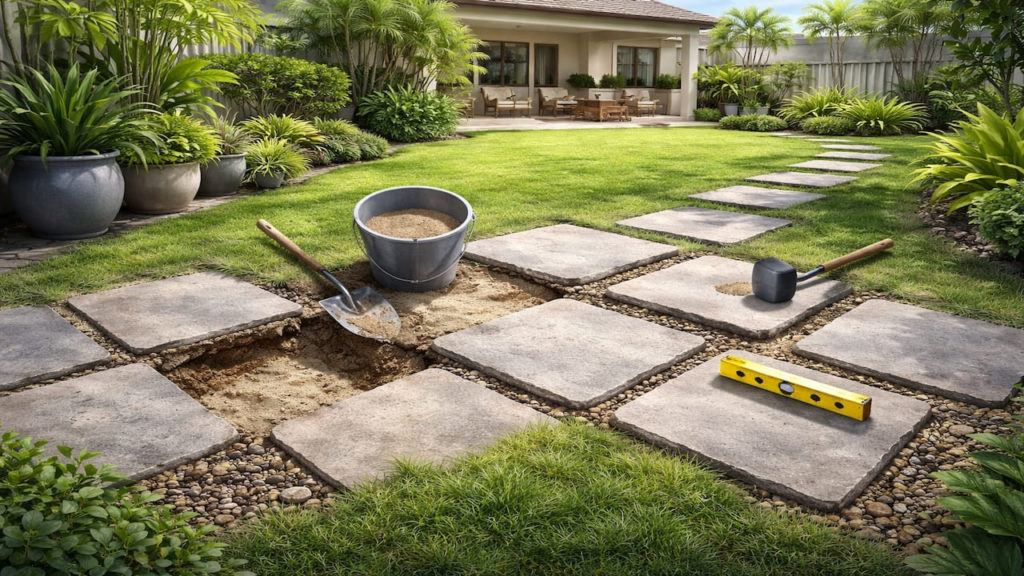
- Lift and reset loose pavers on firm base
- Top up joints and compact until stable
- Add anti slip coating only on test patch
- Rinse silt after storms before it bonds
You may think you need to rebuild the whole patio, but most kid safety gains come from edge rows, corners, and steps. Once those zones feel stable, you can decide whether aesthetics upgrades are worth it. Keep it practical. Better play flow.
5. FAQs
Q1. What is the most common trip point in garden paving?
Lifted paver corners and tiny lips at borders are the most common, especially after storms loosen the base. In Malaysia, silt and repeated wet drying cycles make drift happen faster.
Q2. What surface is safest for kids during rainy months?
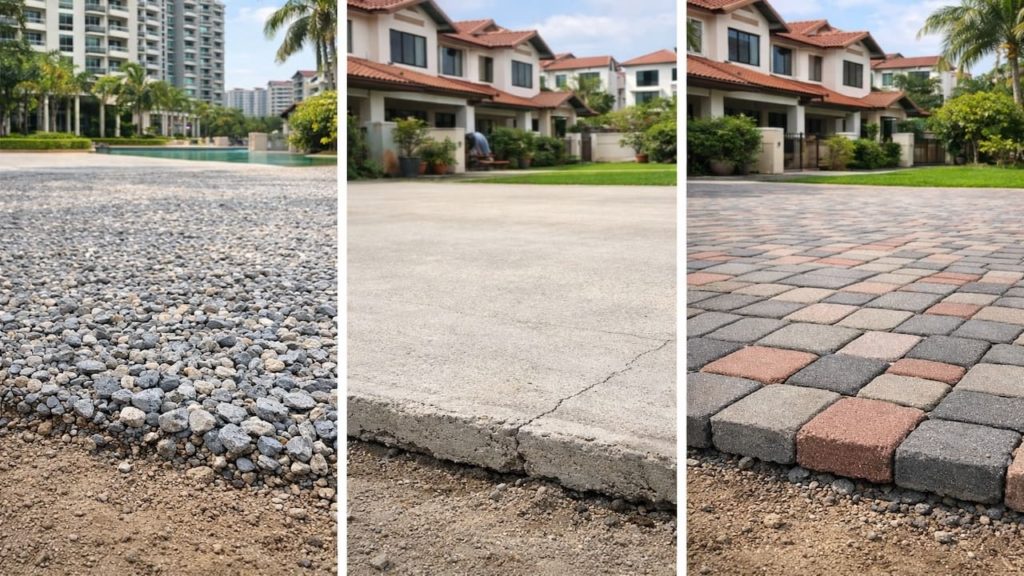
Textured paving with good drainage is usually safest because it breaks the wet film and keeps footing predictable. Smooth glossy finishes can hide slick patches in shaded areas.
Q3. Should I use anti slip coatings on outdoor paving?
Use coatings only after cleaning and drying, then test one small patch first. Some coatings can look patchy if moisture is trapped in humid weather.
Q4. How can I reduce slippery algae without harsh chemicals?
Improve drying by fixing pooling and rinsing silt early, then brush the surface before algae bonds. In Malaysia humidity, prevention works better than occasional heavy cleaning.
Q5. When should I call a contractor for safety fixes?
Call when pavers rock, edges keep lifting, or steps have unstable transitions, because those are structural issues. Quick leveling and edge restraint often solve it without full replacement.
Pro’s Tough Talk

Listen, I have been on site for over 20 years and I have done hundreds of jobs, and kid slips on garden paving are not bad luck.
It breaks into 3 causes: a tiny lip that catches toes, a slick film that shows up after rain, and a base that moves because water has nowhere to go.
Do 3 steps now: walk the route right after a storm, mark every wobble and slick patch, then tighten joints and reset the worst pavers first. That barefoot dash outside when the doorbell rings, and that kid sprinting to the gate, both happen.
Do not blame the kid and do not blame every contractor, but accept the structure: unsafe paving is built into the details. Seriously, if it feels like marbles under your feet, why are you waiting.
Ignore it and you will keep doing the same panic grab when a child slips, like trying to stop a rolling cart with one finger, so fix it before the next storm teaches you.
Summary
Kid safe garden paving comes from stable levels, tight joints, and drainage that prevents slick film and surprise puddles in Malaysia rainy months.
If trips and slips repeat, treat it as a system issue and fix the worst corner first, then the edge row, then the step approach.
Do a post storm walk check today and continue to the guides on paving joints and outdoor tile grip tests to keep play routes safer and easier to clean.