If your garden paving feels fine in daylight but sketchy at night, lighting is usually the missing piece, not the paving itself.
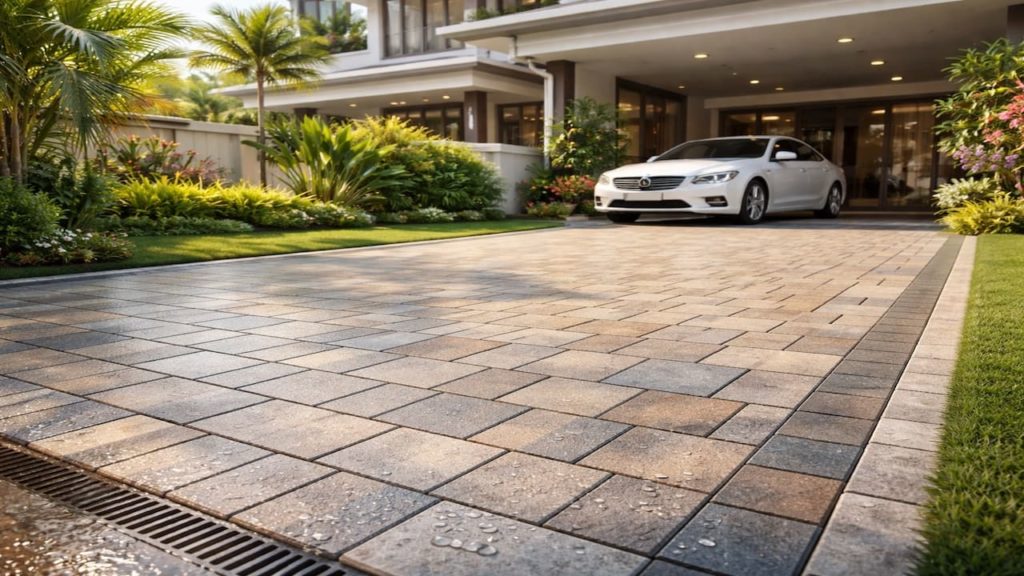
In Malaysia, sudden storms, high humidity, and shaded terrace-house corridors keep surfaces damp, so glare and slippery film show up when you least expect it.
In this guide, you’ll learn how to light paving without glare so you can see texture, avoid trip points, and keep paths comfortable during rainy months.

Hi, I’m Ken. I write practical home guides for Malaysia—no fluff, just what works.
I hold a formal building design qualification and have spent about 20 years on job sites across hundreds of projects. My goal is simple: help you avoid costly mistakes with clear, safe steps—a quick way to decide what to do next.
1. Lighting with garden paving: 5 tips
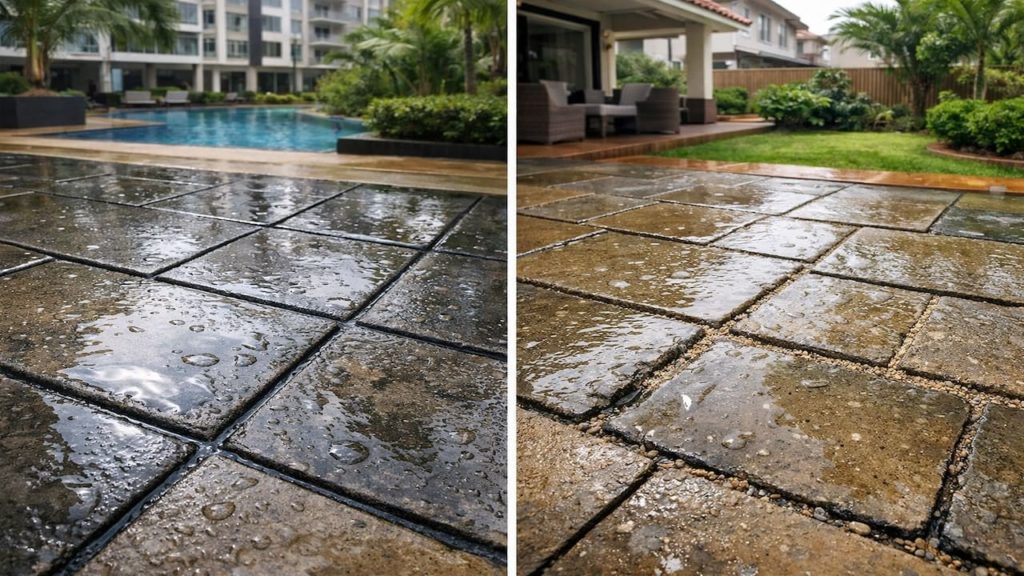
Good lighting makes paving texture readable so wet shine does not trick your feet.
Malaysia rain creates a glossy film that can hide joint lines and small lips, so you want light that skims across the surface—never straight into your eyes. Budget RM80–350 for basic path lights, mounts, and simple wiring for a small route. Footing clarity. Aim for even, low level light that shows texture.
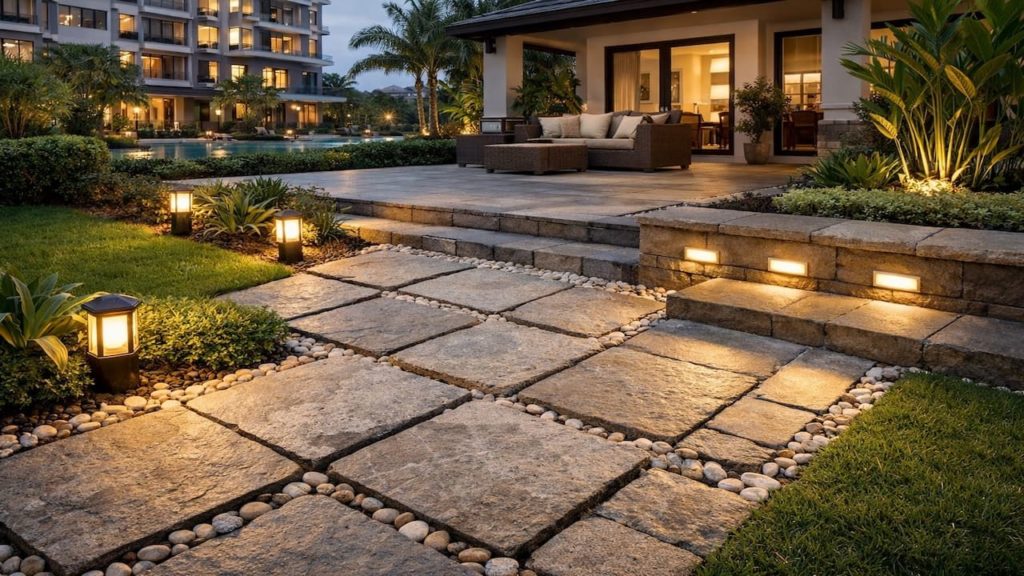
- Aim lights along joints to reveal texture
- Keep fixtures low to reduce glare lines
- Light turning points and steps before long runs
- Use warm beams to soften wet surface shine
- Leave dark gaps for plants to stay calm
Some people think brighter always means safer, then they add harsh lights that bounce off wet tiles and blind you. In Malaysia humidity, that glare returns after every storm. Use controlled light and clear routes instead. Safer feels calmer.
2. Show texture clearly without harsh glare
Control glare first then the paving looks premium and walking feels steady in rain.
Glare comes from hot spots and steep angles, and wet paving turns those hot spots into mirrors—especially near gates and narrow side yards. Budget RM60–250 for diffusers, shields, or swapping to softer lenses and lower output fixtures. Softer light. You want gentle spread, not a spotlight fight.
- Choose diffused lenses to avoid hot spot glare
- Angle beams across pavers not straight down
- Place lights behind shrubs for softer bounce
- Use two low lights instead of one bright
- Test at night after rain to see shine
You might worry diffused light will look weak, but it actually makes surfaces easier to read because the shadows stay honest. Harsh glare hides edges and makes puddles look like flat ground. Keep it soft and consistent. Premium is quiet.
3. Why glare hides trip points on wet paving
Glare hides small level changes because your eyes chase brightness instead of surface detail.
In Malaysia, damp film reflects bulbs and washes out contrast, so joints and lips disappear at the exact moment you need them visible—right after rain. Budget RM20–120 for simple glare shields, lens swaps, or repositioning brackets if the setup is wrong. Night safety. The problem is not darkness, it is wrong contrast.
- Wet film reflects bulbs and hides uneven edges
- Smooth tiles amplify glare when surfaces stay damp
- Shaded corridors grow algae and reduce traction
- Tall fixtures cast sharp shadows that fool depth
- Dirty joints create dark lines that look like gaps
Some owners blame the paving brand, but the lighting angle is what turns minor texture into invisible danger. Contractors are not always careless, they often install lights where wiring is easiest. Fix contrast and direction, and the same paving feels safer. Cause and effect.
4. How to place lights along paving for safe routes
Light the route not the garden so every step has predictable information.
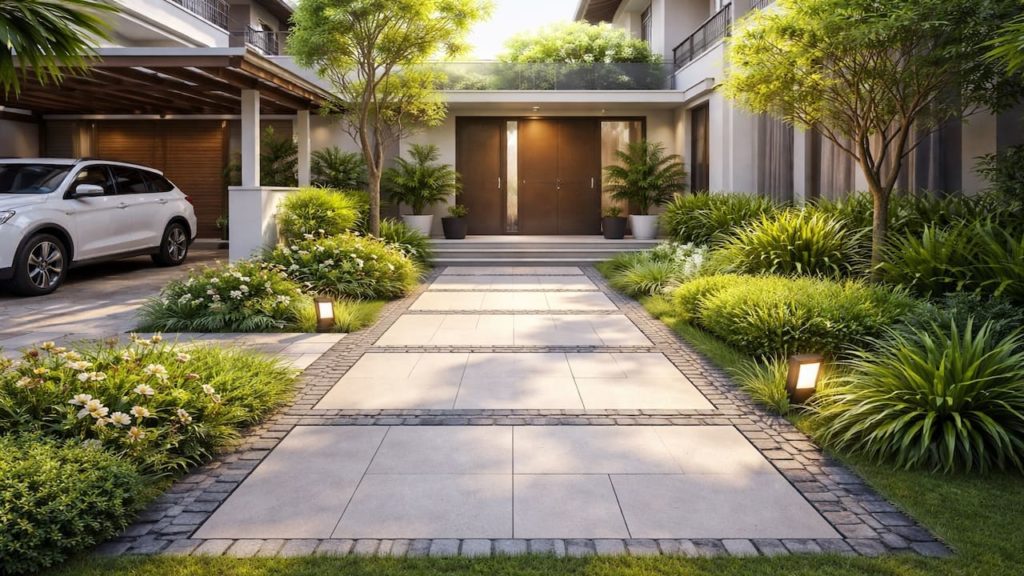
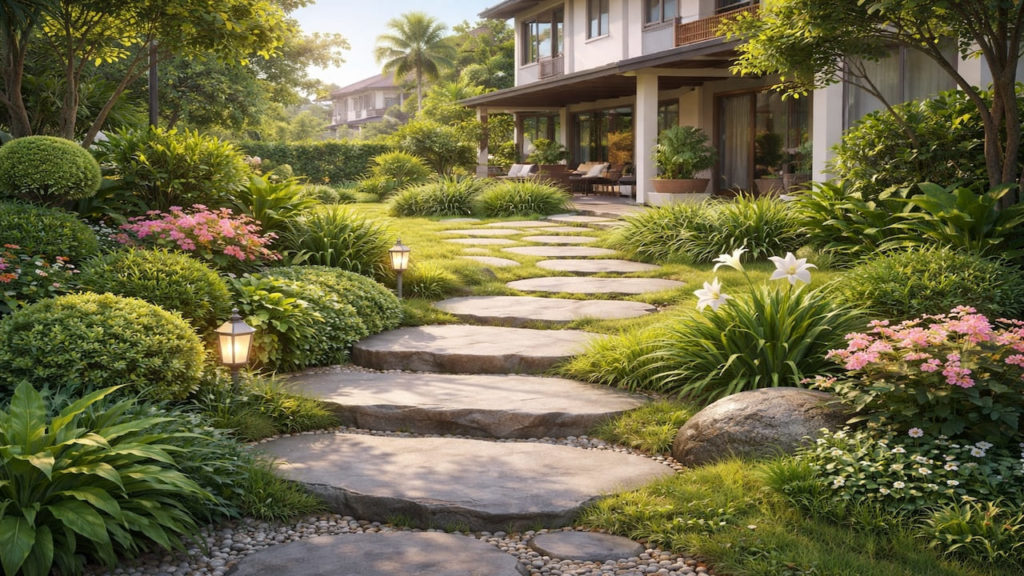
Start with a simple plan from door to gate to bin corner, because Malaysia storms force quick night walks and you need reliable footing in wet months—no guessing. Budget RM120–500 for low path lights, step markers, and basic cable protection on a typical small run. Route first. Then add mood lighting only after the path works.
- Map routes from door to bin corner
- Add step lights at changes in level
- Hide cables in conduits to prevent chew risk
- Keep fixtures away from sprinklers and splashback
- Clean lenses monthly to maintain even light
You may think solar lights are enough everywhere, but weak output creates patchy dark zones and makes wet shine feel random. Use fewer lights with better placement and stable mounting. If the route reads clearly, slips drop fast. Practical improvement.
5. FAQs
Q1. Should lights be installed on the wall or on the ground?
Ground level lights show texture better, while wall lights can create glare on wet paving. In Malaysia rainy months, low lights with shielding usually read safer.
Q2. What color temperature works best for wet paving?
Warm soft light shows texture better because it reduces harsh reflections on damp surfaces. Cool white can look bright but often increases mirror like glare after storms.
Q3. Are solar lights reliable during rainy season?
Solar can be fine for accents, but long cloudy weeks reduce charge and create uneven brightness. Use solar for secondary zones, not for the main walking route.
Q4. How do I avoid attracting too many insects?
Keep lights lower and avoid overly bright fixtures near doors, because insects gather around strong sources. Clean lenses and reduce glare so you can use less output.
Q5. When should I upgrade instead of adjusting placement?
If fixtures create hot spots and harsh shadows even after repositioning, upgrade to diffused optics and better shielding. A safer route needs even coverage, not intense beams.
Pro’s Tough Talk

Listen. I have been on site for over 20 years and done hundreds of jobs, and night slips happen when people light the garden like a showroom instead of a walkway.
It breaks into 3 causes: glare that blinds, wet film that reflects, and uneven paving details that hide in bad contrast. Malaysia humidity makes the surface stay shiny longer.
Do 3 steps now: walk the route after rain, lower the lights and aim them across the surface, then remove hot spots with diffusers. That moment when you carry laundry outside at night, and that moment when you rush the bin in drizzle, both are real.
Do not blame yourself and do not blame every contractor, but accept the structure: glare turns safe paving into a trap. Wet tiles become an ice rink, and your eyeballs do not need a phone torch in the face.
Seriously, who decided a bright naked spotlight at ankle height was smart. Fix the aim and the spread, or keep doing the midnight slip dance like it is your new hobby.
Summary
Lighting for paving should reveal texture and edges, especially in Malaysia wet months when surfaces stay damp and reflections hide trip points.
If the route feels risky, fix glare and placement first—then add decorative lighting only after the walking line reads clearly from door to gate.
Walk the route after rain tonight and continue to the guides on outdoor tile grip tests and kid safe paving checks for safer daily steps.