Your garden path should feel obvious, but in Malaysia it can turn into a wet, messy zigzag after one storm.
If the route feels awkward, it is usually a mix of layout, width, slope, shade, and the paver surface, not one “bad product” issue.
In this guide, you’ll learn how to plan a path people actually use in terrace homes and condo gardens. You keep walks clean and steady through Malaysia’s humid months.

Hi, I’m Ken. I write practical home guides for Malaysia—no fluff, just what works.
I hold a formal building design qualification and have spent about 20 years on job sites across hundreds of projects. My goal is simple: help you avoid costly mistakes with clear, safe steps—a quick way to decide what to do next.
1. Paving ideas for a garden path: 5 steps
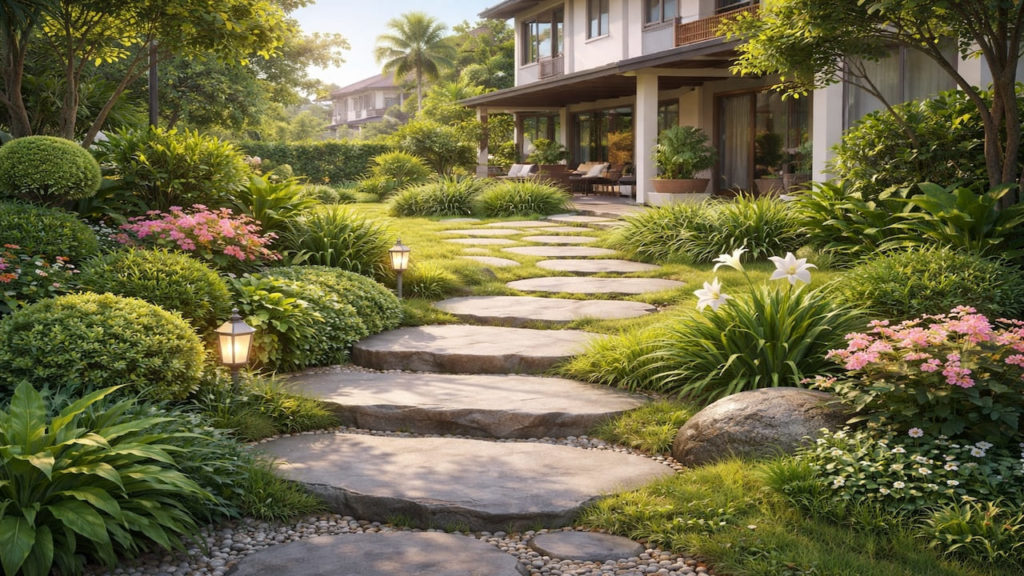
Trace the real walking line before you buy anything—flow comes from habits, not drawings.
In Malaysia, sudden rain and damp shade punish paths that fight the way you move between gate, door, bin, and laundry area. When the line matches your daily steps, fewer corners get churned into mud, and the paving stays sharper. Small planning saves money because redoing a wrong line costs more than measuring once. Foot traffic.
- Mark your usual route with tape and stakes
- Set path width for two bags of groceries
- Add a pause spot near the door landing
- Keep bends gentle to avoid awkward toe turns
- Align edges with walls gates and planting lines
You might think any straight strip works, especially in a narrow terrace yard. But if you always cut across grass, the strip becomes decoration, and wet soil will win fast. Talk to a contractor if you want, yet your daily route is the real spec in Malaysia humidity. No guesswork.
2. Make flow feel natural and easy to follow
Use repeating modules and clear edges—your eyes follow patterns, so your feet follow too.
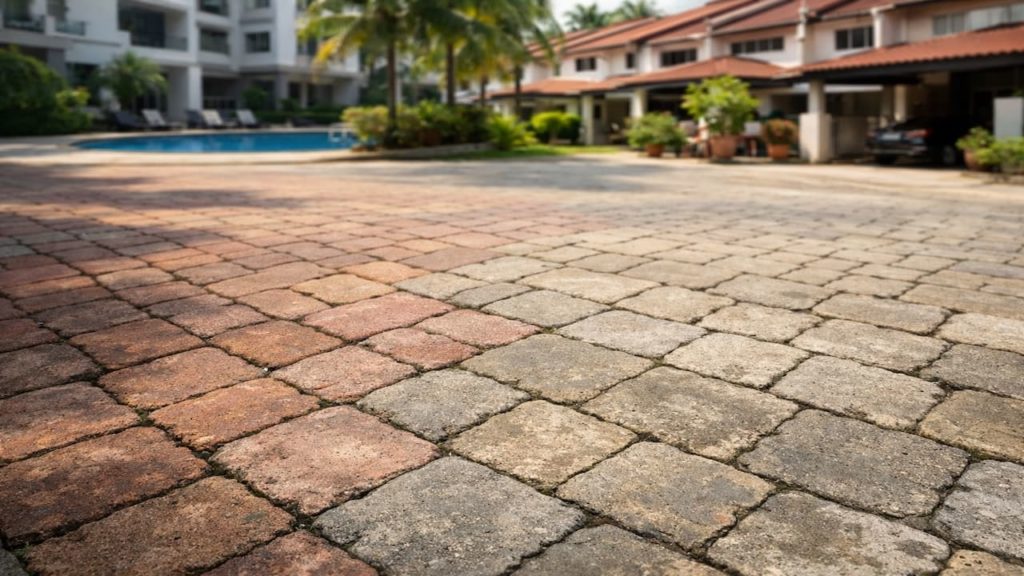
When pavers change size every meter, the path feels jittery and people drift onto soil without noticing. In Malaysia homes, close walls and short setbacks mean messy splash marks show up quickly, so crisp edging matters. Keeping one module also makes ordering simpler and reduces waste, which is kinder to your budget. Visual rhythm.
- Pick one paver size and stick to it
- Set a straight reference line from main door
- Use contrasting edging to frame the walking strip
- Repeat joint spacing so gaps look intentional
- Match path width to gate and entry opening
Some people fear repetition looks boring. In practice, planting, light, and rain-stained texture provide enough variation in Malaysia, while the pattern keeps the route readable. If you crave flair, do it at the landing, not mid-walk. Calm order.
3. Why garden paths feel awkward after rain in Malaysia homes
Water decides the walking line—puddles push people to the edges and break the flow.
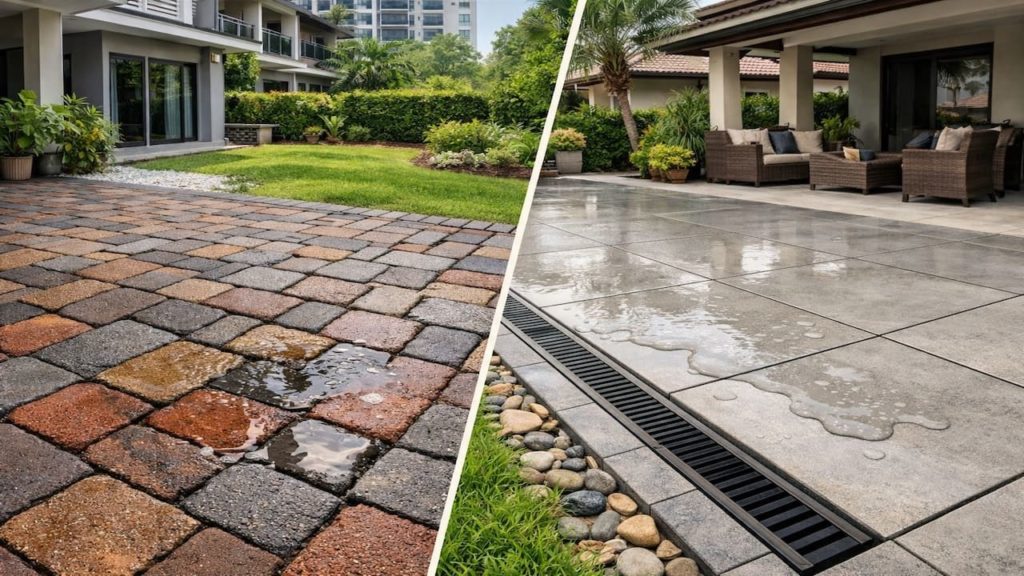
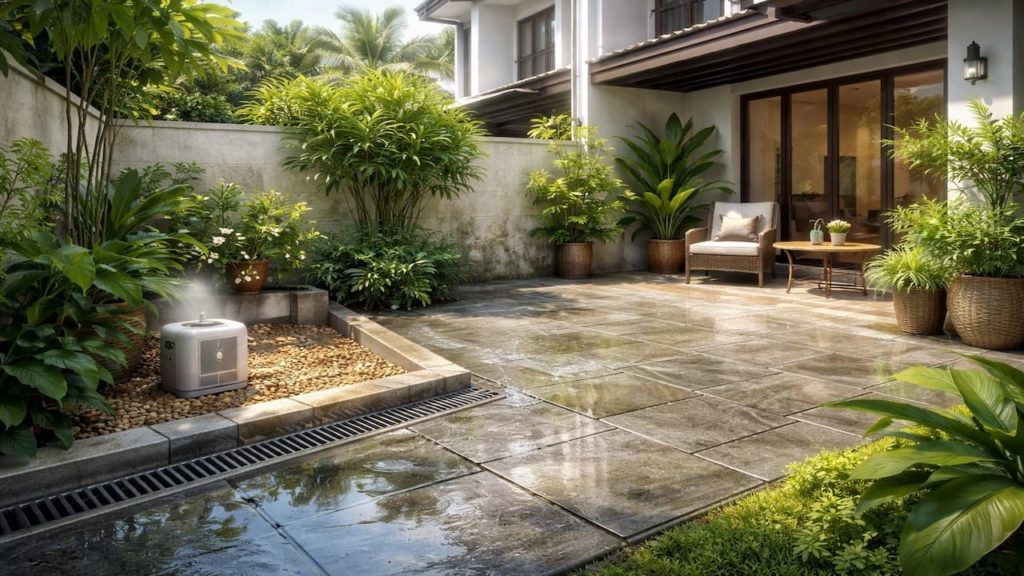
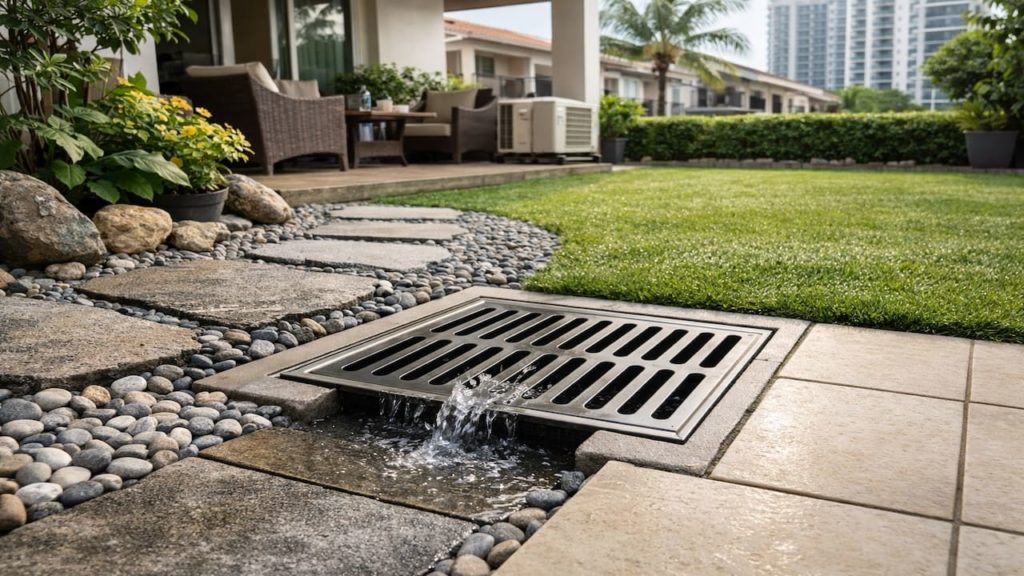
Malaysia’s short, heavy storms dump water faster than many path bases can drain, especially in shaded side yards. In terrace homes, downpipes and aircond drips often land near walls, feeding algae on joints and leaving slick edges. Fixing drainage early saves money because you avoid re-lifting pavers and scrubbing stains every weekend. Wet season reality.
- Watch where water pools after a heavy shower
- Locate aircond drips and downpipe splash zones
- Check shade hours that keep pavers damp
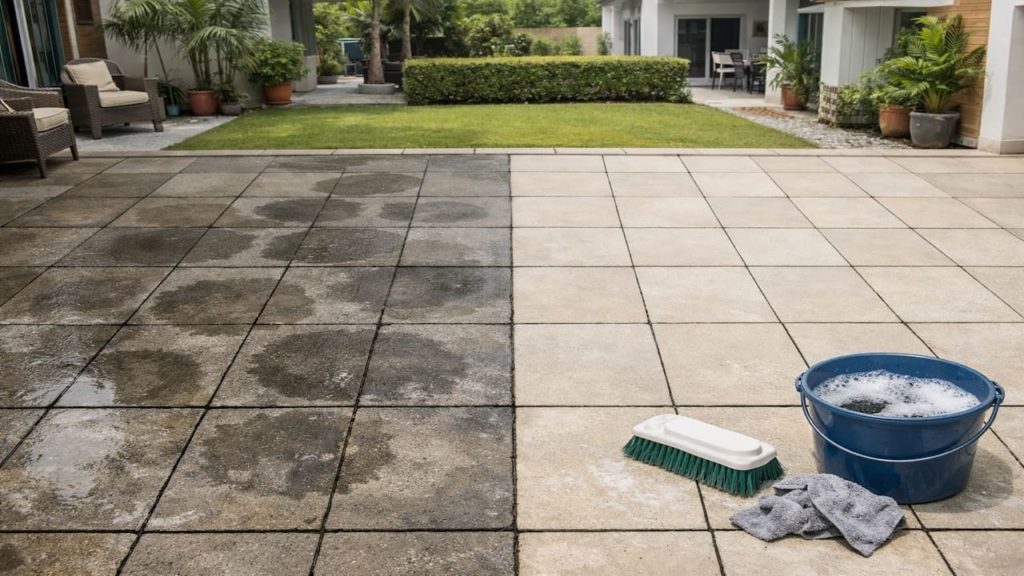
- Feel for slimy film on joints and edges
- Note muddy cut corners near gates and bins
You may blame the paver brand, but most problems come from slope, runoff, and dirt feeding algae. Contractors can miss it when they rush, yet the structure is simple: water plus shade plus dirt equals slip. Break one part and the path behaves. Simple physics.
4. How to lay pavers so the path guides feet
Build a gentle slope and tight joints—that keeps the surface dry enough to stay safe.
In Malaysia, aim for a small fall away from walls so rain does not splash damp onto paint and skirting. Use a compacted base and edge restraint to stop shifting, and budget RM300–1,500 for basic materials on a small terrace path. Spending a bit upfront beats paying for cleaning, stains, and rework later. Long-term value.
- Excavate path bed and compact the base layer
- Add bedding sand and screed to level
- Set pavers in pattern and tap flush
- Install edge restraints to lock the line
- Sweep joint sand then rinse lightly once
If you are renting or hate digging, you can still improve flow with a short paved strip at pinch points. But if the ground stays soft in Malaysia humidity, a full base matters, otherwise pavers rock and gaps widen. Hire help for the heavy work, then you control the layout details. Solid footing.
5. FAQs
Q1. How wide should a garden path be for daily use?
For most Malaysia terrace homes, a clear walking width around 80–100 cm feels easy with groceries or a laundry basket. Go wider at turns or landings so feet do not clip edging.
Q2. Do I need drainage under a paved garden path?
Yes, because humidity and daily rain mean the base stays wet if water cannot move out. A slight slope plus a compacted base is usually the cheapest way to keep it stable.
Q3. What surface stays less slippery in wet months?
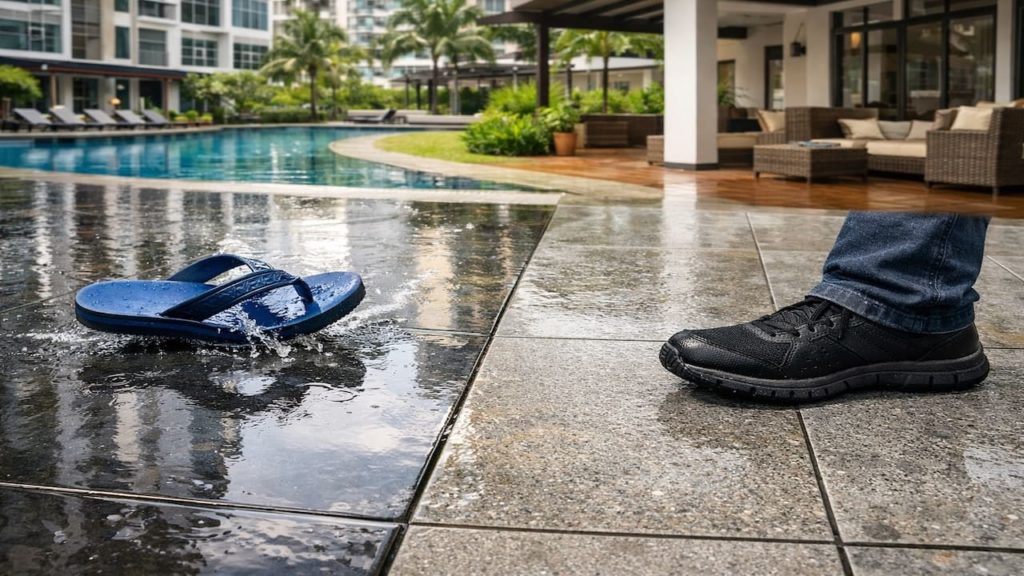
Choose Texture beats shine—a lightly rough finish grips better when rain leaves a thin film. Also keep joints tight so algae has fewer places to root.
Q4. Can I pave over existing concrete or tiles?
You can, but only if the slab already drains away from walls and does not pond. If water sits, you will trap grime and end up with a path that feels worse than before.
Q5. How do I keep joints cleaner with fewer weeds and ants?
Use proper joint sand, rinse lightly, then sweep again after it settles. Keep nearby soil contained with edging so the joints do not become a buffet for seeds.
Pro’s Tough Talk

Listen. I’ve got 20+ years on site and I’ve handled hundreds of jobs. That “cute path” is never cute when someone slips.
The causes are boring but brutal. Water sits, shade keeps it wet, and dirt feeds the green film, like a fish tank without a filter. Loose edges make it worse, like missing teeth in a smile.
Do this in 3 moves. First, fix the fall so water runs off. Second, lock the edges so the line stays straight. Third, scrub and reset joints before algae owns them. You know that moment when you step out in socks to grab delivery, then regret life choices? Same trap. And the other one: hauling a laundry basket while the floor feels like soap. Seriously, are you building a skating rink?
Don’t blame yourself, and don’t scream at the contractor either, but don’t ignore the structure: base, slope, and joints decide everything. Flow is built not wished so pick one fix today and do it before the next wet week.
Or keep “decorating” the mud line and call it a design feature, champ.
Summary
Start by tracing your real walking line, then keep the pattern simple and the edges clear so the route reads instantly.
If rain keeps pushing you off the path, treat it as a drainage and base problem. Decide whether a small repair or a full rebuild makes sense.
Fix the line fix the base and your path will feel calmer in Malaysia’s wet months. Then jump to a drainage guide or moss cleanup guide to keep it that way.