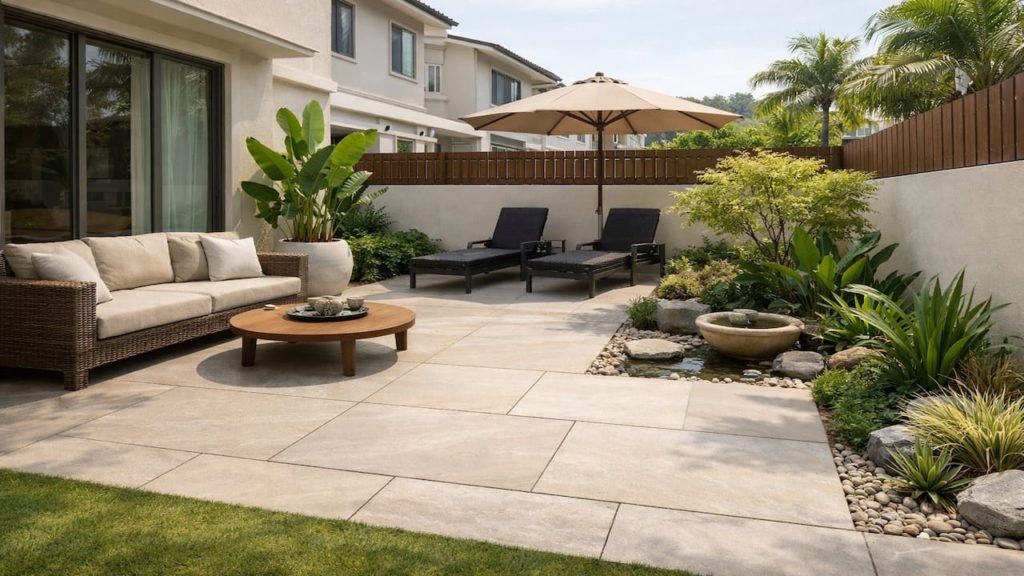
A small patio can look great on day 1, then feel busy once Malaysia’s wet months track dirt into every line.
If it looks chopped, it is usually layout, module size, and water behavior, not “bad taste” or one bad product.
In this guide, you’ll learn how to reduce cut lines for a calmer patio in Malaysia terrace homes and condo gardens, so it feels easier to use and easier to rinse.

Hi, I’m Ken. I write practical home guides for Malaysia—no fluff, just what works.
I hold a formal building design qualification and have spent about 20 years on job sites across hundreds of projects. My goal is simple: help you avoid costly mistakes with clear, safe steps—a quick way to decide what to do next.
1. Patio paving for a small garden: 5 tips
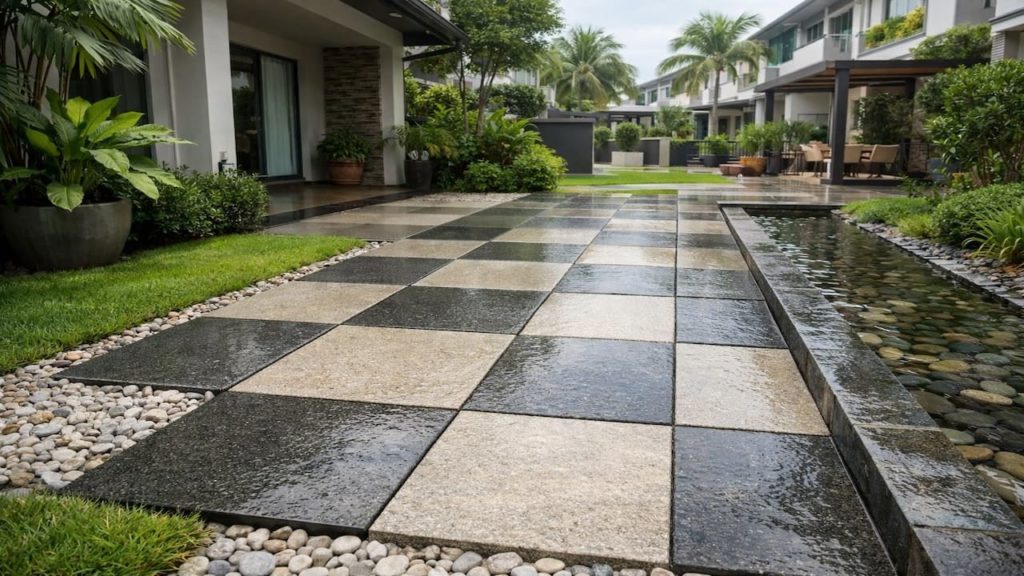
Start with a simple grid so the patio reads like one calm plane.
In a small patio, every seam reads louder—especially after rain darkens joints in Malaysia humidity. A clean grid makes the space feel bigger because your eye stops counting. It also reduces waste and rework, which is a quiet money saver. Calm field.
- Mark a centerline from door to seating
- Use one paver size for main field
- Set joints consistent across the whole patio
- Add a border course to absorb odd cuts
- Hide small trims under planters or benches
You might think mixing sizes looks “designer” in a tiny space. In practice, it often looks like leftovers once wet season stains the joints. Keep the field simple, then add personality with pots, plants, and lighting. Less noise.
2. Reduce cut lines so the space feels calmer
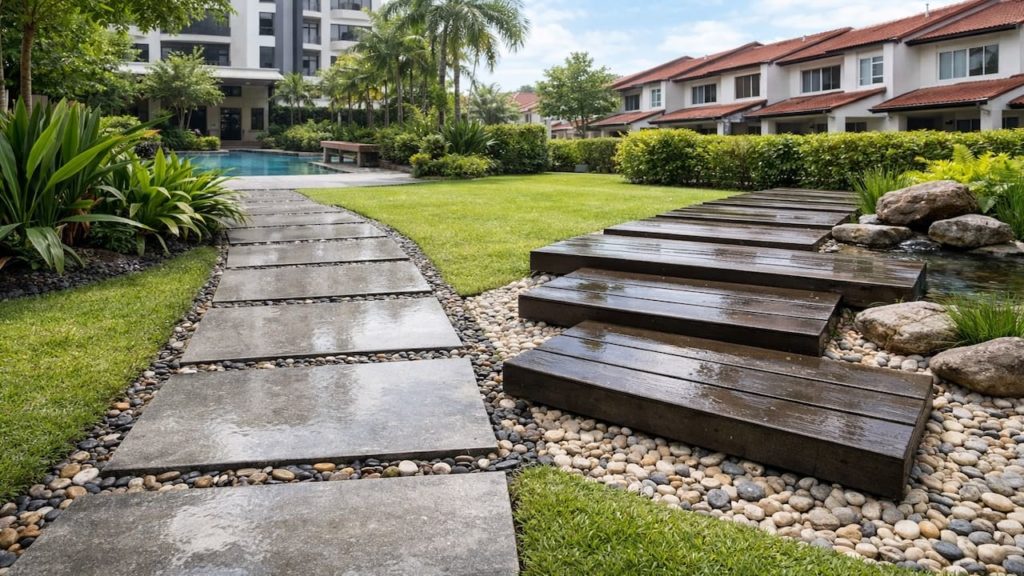
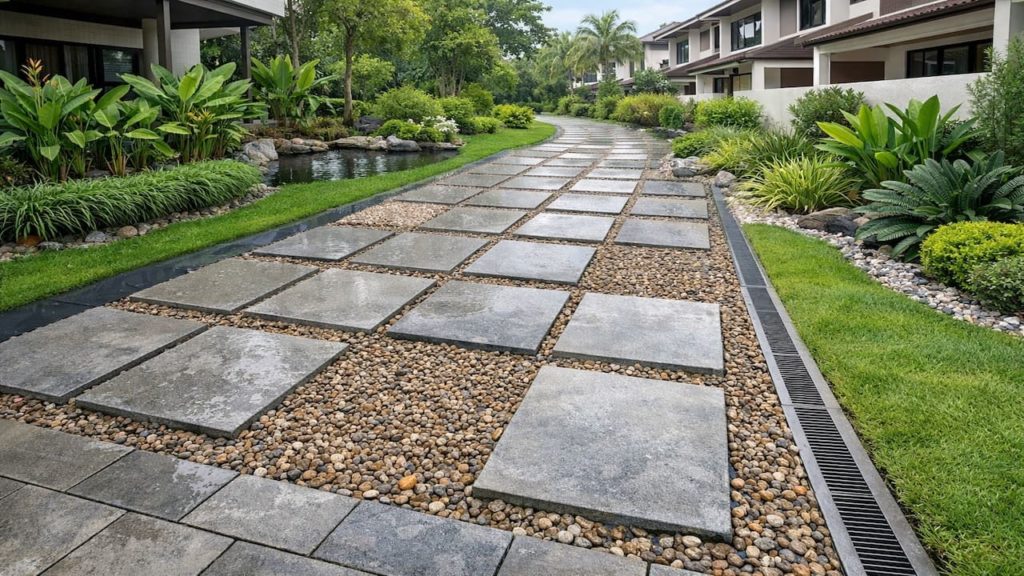
Use larger modules in the main field to reduce seam count at a glance.
Each extra cut becomes a little visual stop—so a small terrace patio feels chopped fast. Malaysia rain makes cut edges look darker because moisture lingers there. Fewer seams also means fewer grime traps, so weekly rinsing feels lighter. Quiet surface.
- Choose larger modules to reduce total seams
- Align pattern with walls and main sightline
- Shift start point to avoid thin slivers
- Keep cuts at edges not under seating
- Repeat one joint width for easier cleaning
You may worry large pavers look heavy or “too modern.” In small patios, they usually look cleaner because the surface reads as one piece. If you want contrast, do it at the border, not across the center. Keep it calm.
3. Why small patios look busy in Malaysia wet months
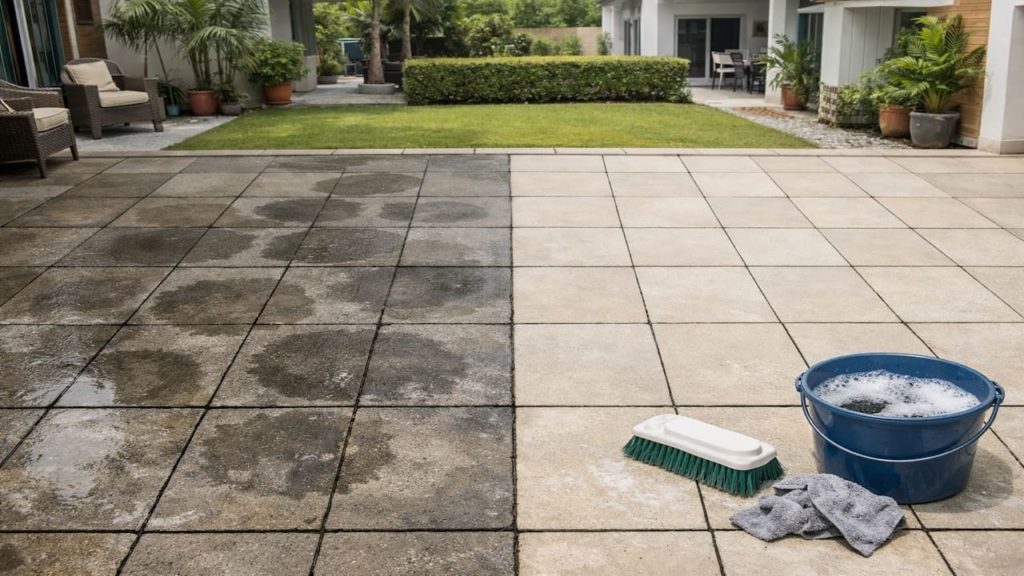
Wet-season grime highlights every joint so a cut-heavy layout looks louder.
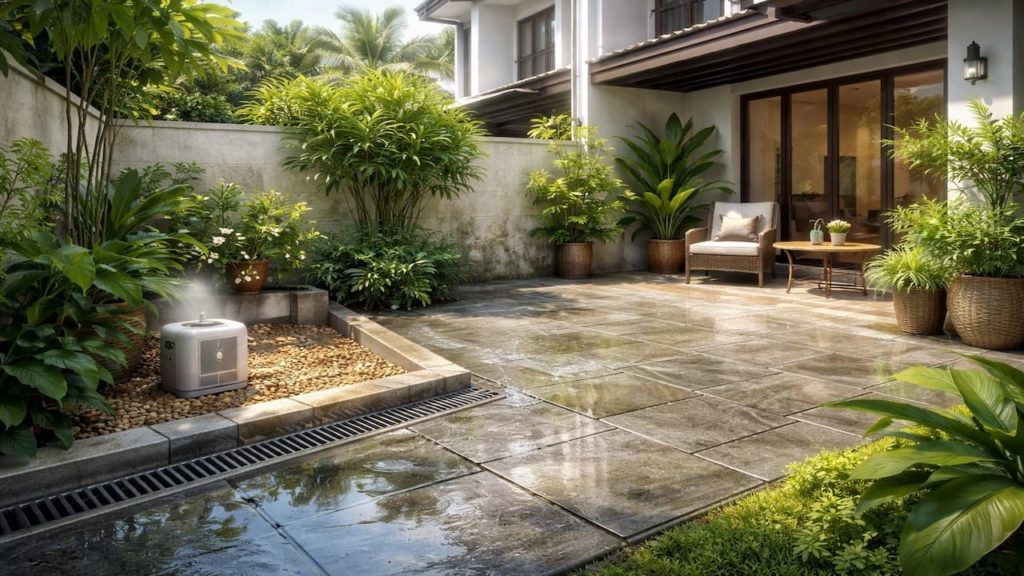
Humidity keeps shaded corners damp, so joints hold dirt like a sponge and lines stay dark. Runoff from downpipes, taps, and aircond drips hits edges and seams first—then the whole surface looks busier than it is. This is why “fine” layouts suddenly feel messy after repeated rain. Pattern stress.
- Count shade hours where paving stays damp
- Track downpipe water hitting edges and joints
- Check soil splash marks along lower walls
- Look for green film starting at cut edges
- Test slipperiness with wet sandals at night
You might blame the paver brand, but the structure is simple. Water sits, dirt feeds film, and shade keeps it alive. Reduce seams and control runoff, and the patio looks calmer with less effort. No mystery.
4. How to lay out paving with fewer cuts
Design the border to hide cuts and protect the center field from visual clutter.
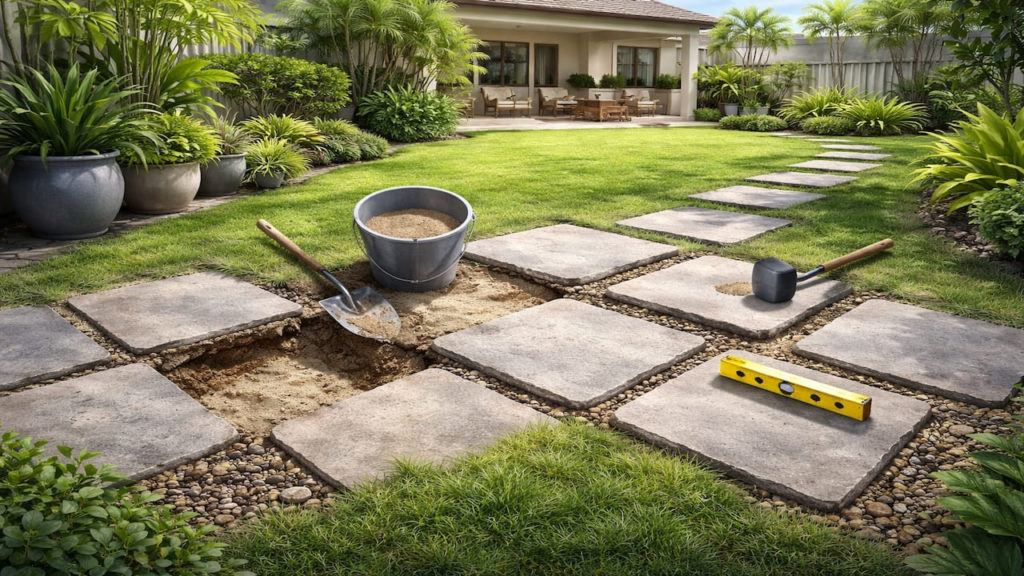
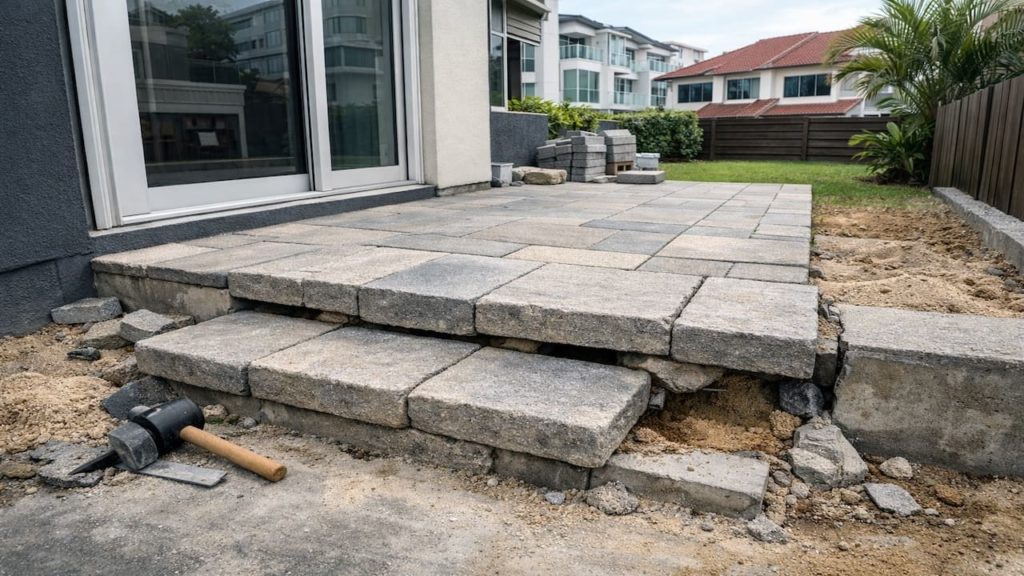
Plan drainage before you lock the pattern—otherwise you cut around fixes later. A border course lets you absorb odd dimensions so the main field stays clean. Budget RM400–2,000 for basic materials and prep on a small patio, depending on base work and access. Control first.
- Set fall away from walls and door landings
- Compact base layers until they feel rigid
- Install edge restraints to lock the perimeter
- Dry lay first row to confirm full pieces
- Sweep joint sand then top up after rinse
You may think eyeballing is faster in a small garden. One early mistake multiplies into many cuts, then you pay in waste and ugly seams. If you hire help, watch the set-out and base, because that decides the final calm. Build it right.
5. FAQs
Q1. What paver size works best for a small patio?
Larger modules usually look calmer because you see fewer joints. Just make sure the base drains well so edges do not stay damp in Malaysia humidity.
Q2. Should I add a border course around the patio?
Yes, a border hides cuts and makes the center look clean. It also protects edges where runoff and soil splash hit hardest in wet months.
Q3. How do I avoid thin sliver cuts?
Shift the grid before you start so both sides land on fuller pieces. Dry-lay a row first, then adjust your starting line before any cutting.
Q4. Will fewer joints make the patio less slippery?
It helps because there are fewer grime traps, but texture and drainage still matter. Choose a matte finish and keep water moving away from walls.
Q5. Can I calm a busy patio without redoing everything?
Sometimes you can add a wider border or hide cuts under fixed planters. If the base holds water, though, the calm look will not last long.
Pro’s Tough Talk

Listen. I’ve got 20+ years on site and I’ve handled hundreds of jobs. A wet-season patio in Malaysia can bite hard.
The causes are only three. Water has no exit, sun never hits, and dirt builds up. That makes a thin film, like soap on a plate.
Do these 3 moves now. First, give water a clear exit route. Second, lock the border so nothing wobbles. Third, reset the joints once so algae has no buffet. You know the flip-flop trash run at night when your foot slides. You know the chair leg wobble that makes your coffee jump. What is this, a jigsaw puzzle?
I’m not blaming you, and I’m not saying every contractor is trash. But the structure is cold: base, slope, and joints decide the outcome. Base slope joints decide everything so fix one weak link today and stop the repeat mess.
Ignore it and call it “character” if you want, but don’t act surprised when the wet season claps back.
Summary
Keep the center field simple, push cuts to the edges, and use a border to hide what you cannot avoid.
If joints keep going dark in wet months, treat it as runoff, shade, and base drainage first. Then your layout stays calm longer.
Protect the center field and the whole patio feels bigger and easier to live with. Next, read a wet-season paving cleaning guide or a runoff control guide.