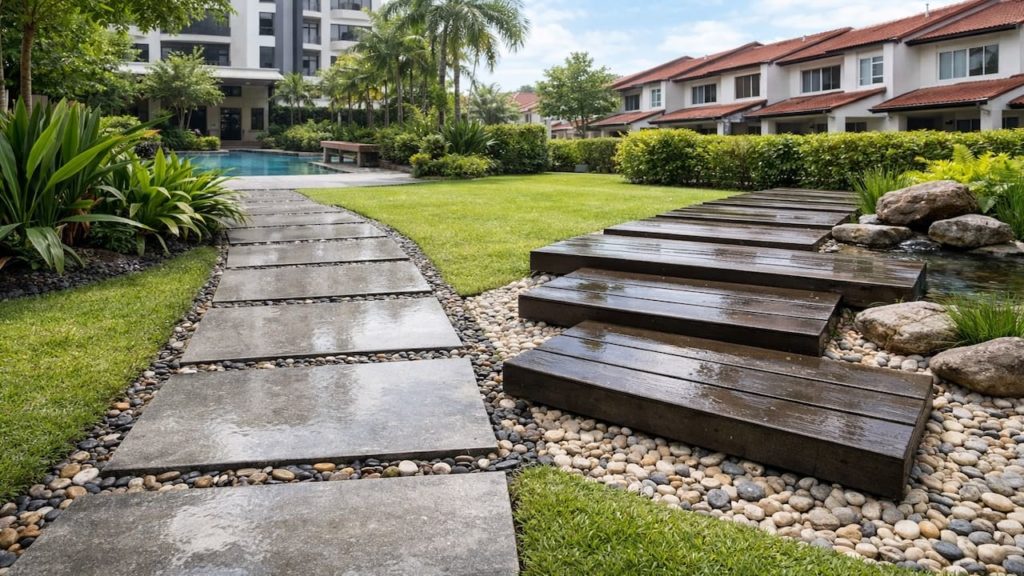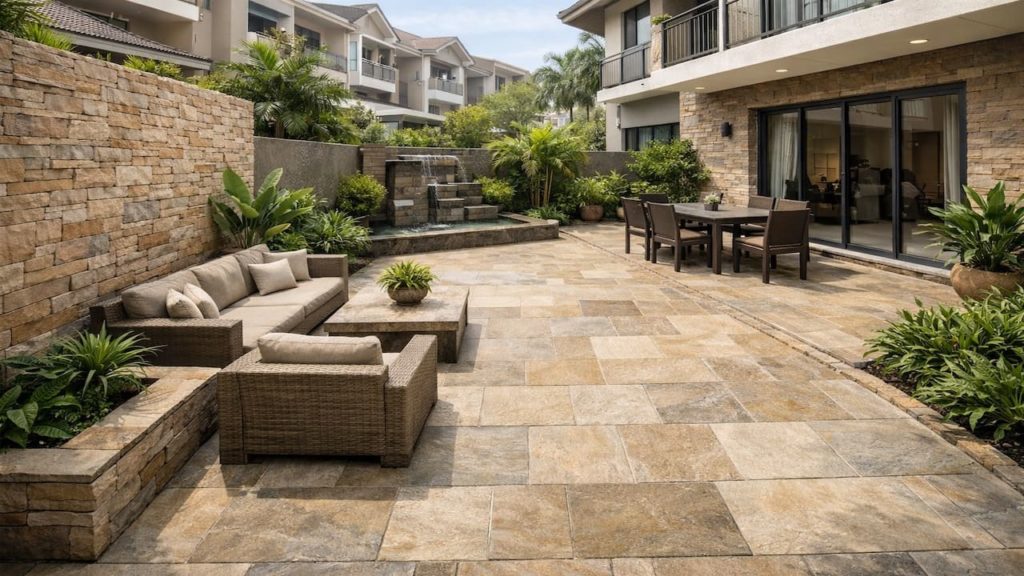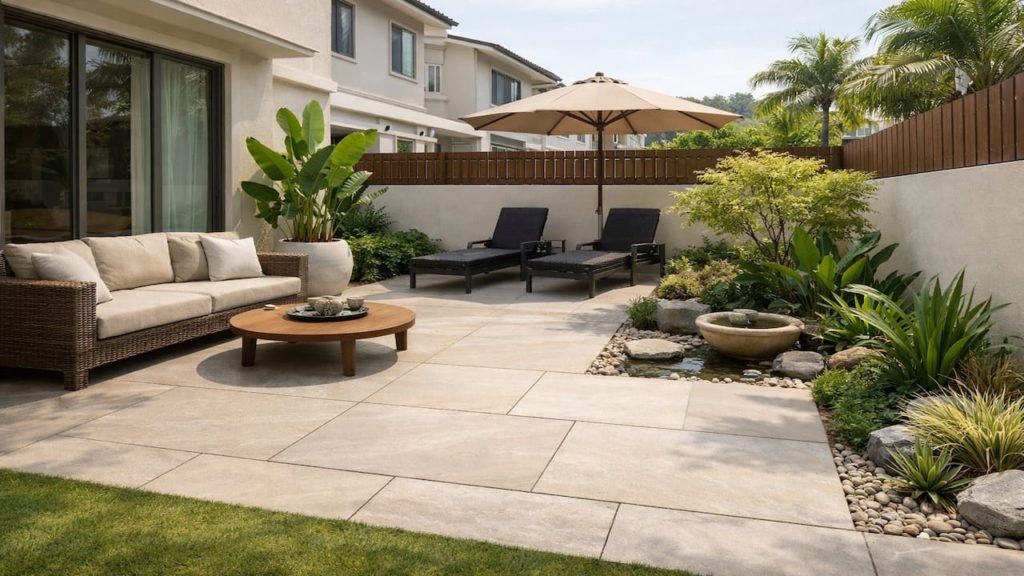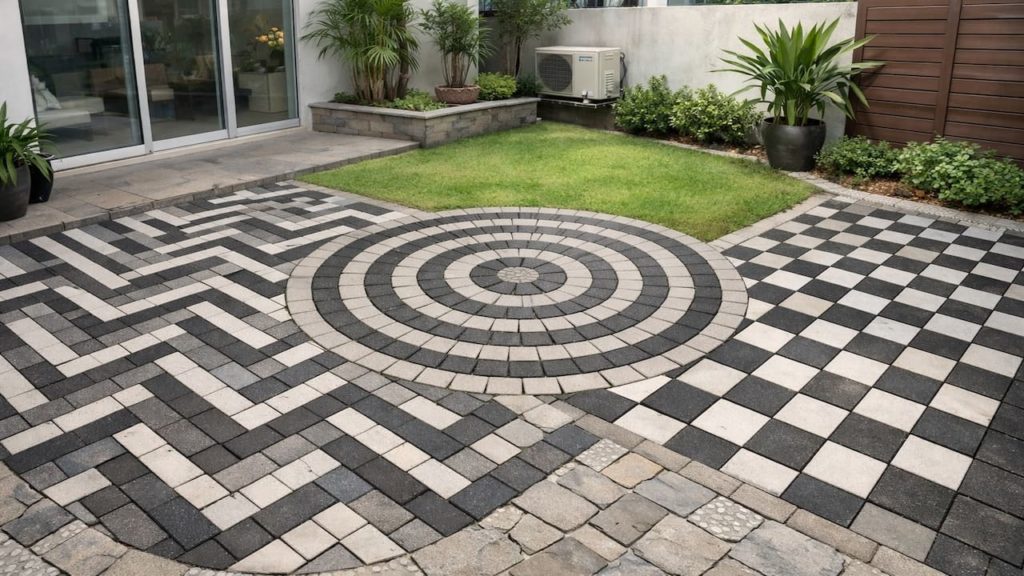
A paving pattern can make a small yard feel calm and open, or make it feel chopped into tiny pieces that look messy after rain.
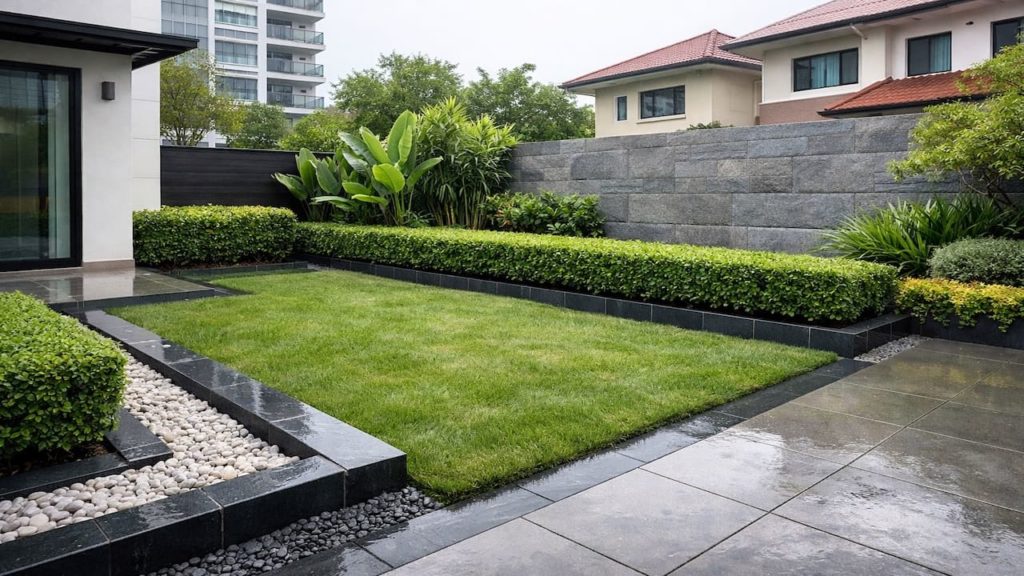
In Malaysia, wet months darken joints and highlight seams, so “busy lines” become even louder, especially in shaded terrace side yards.
In this guide, you’ll learn which paving patterns make small yards feel tighter and how to avoid them, so your patio and paths stay bright, simple, and easy to live with.

Hi, I’m Ken. I write practical home guides for Malaysia—no fluff, just what works.
I hold a formal building design qualification and have spent about 20 years on job sites across hundreds of projects. My goal is simple: help you avoid costly mistakes with clear, safe steps—a quick way to decide what to do next.
1. Garden paving patterns to avoid: 5 mistakes
Too many lines shrink the space because your eye reads seams as boundaries.
Small yards have fewer long sightlines, so every joint and cut becomes a visual stop. In Malaysia humidity, joints stay darker for longer, making the pattern look even busier after rain. Avoiding the wrong pattern saves money because busy layouts usually create more cutting, more waste, and more cleaning effort. Visual clutter.
- Count how many seams cross your main view
- Check where shade keeps joints permanently darker
- Note areas needing many tiny cut pieces
- Check if pattern fights the natural walking line
- Check if furniture legs land on many seams
You might think “detail” equals premium. In a small Malaysia yard, too much detail becomes noise, and wet-season stains underline every line. Keep the pattern simple and let plants add interest instead. Better balance.
2. Busy lines make small yards feel tighter
Patterns should support flow not create a grid of interruptions underfoot.
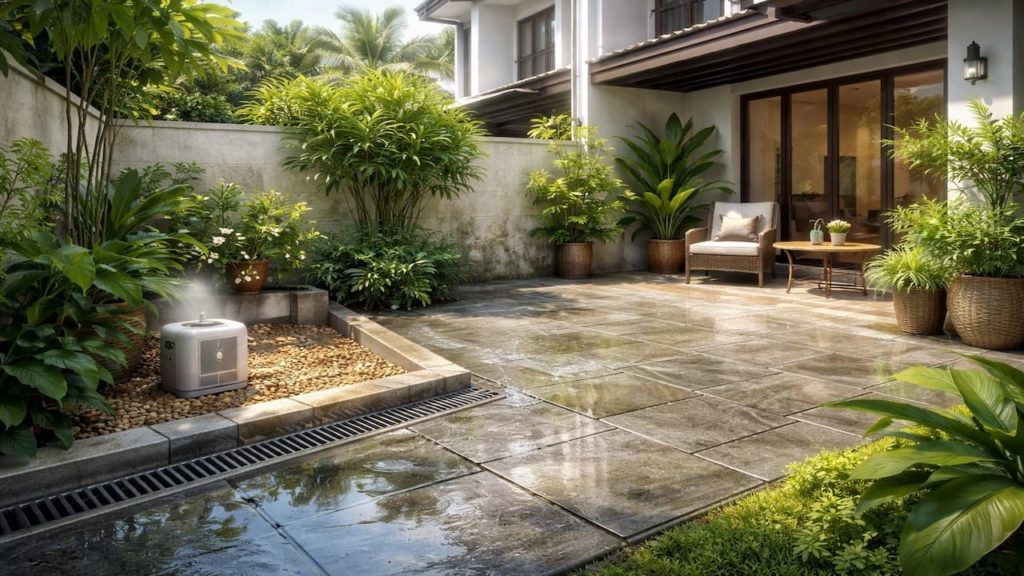
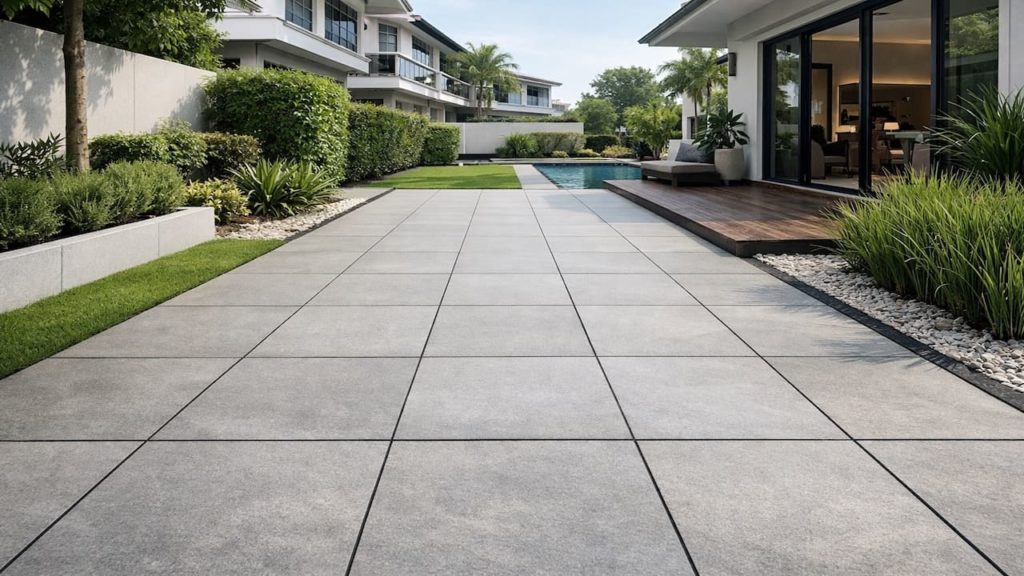
Busy lines pull attention to the floor, making walls feel closer and corners feel tighter. When rain leaves a thin film, the contrast between pavers and joints increases, so your eye notices the pattern more than the space. A calmer pattern also cleans faster because there are fewer edges to trap grime in Malaysia humidity. Calm floor.
- Use larger modules to reduce joint count
- Align pattern with the longest sightline
- Keep border simple and not overly segmented
- Match joint color close to paver tone
- Use one main pattern for the whole area
Some people worry a simple pattern looks boring. In practice, outdoor light, shadows, and planting already create variation, especially in Malaysia. Simple floors make everything else look more intentional. Quiet wins.
3. Why certain patterns look worse in Malaysia wet months
Wet joints exaggerate contrast and make complex layouts look dirty faster.
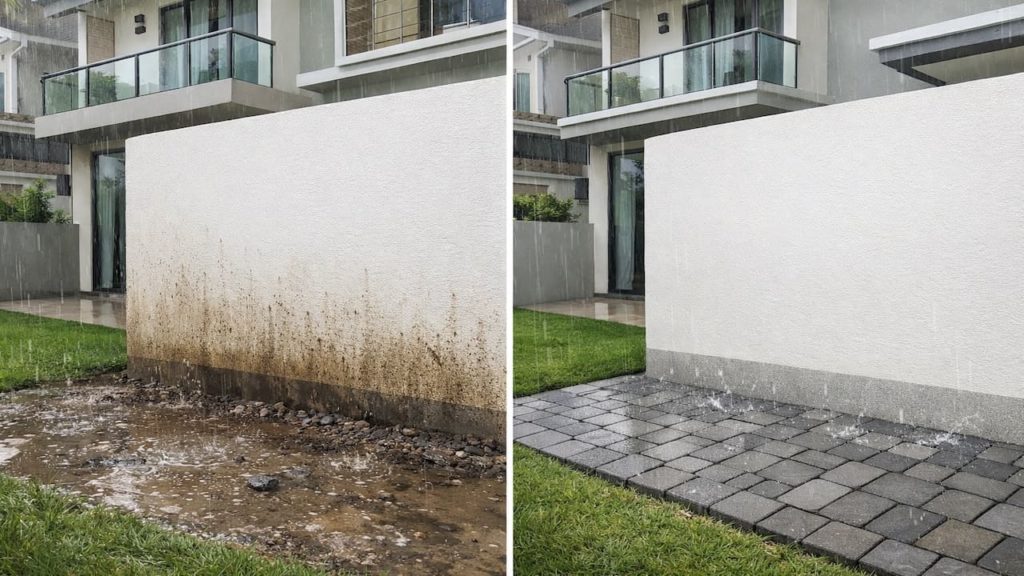
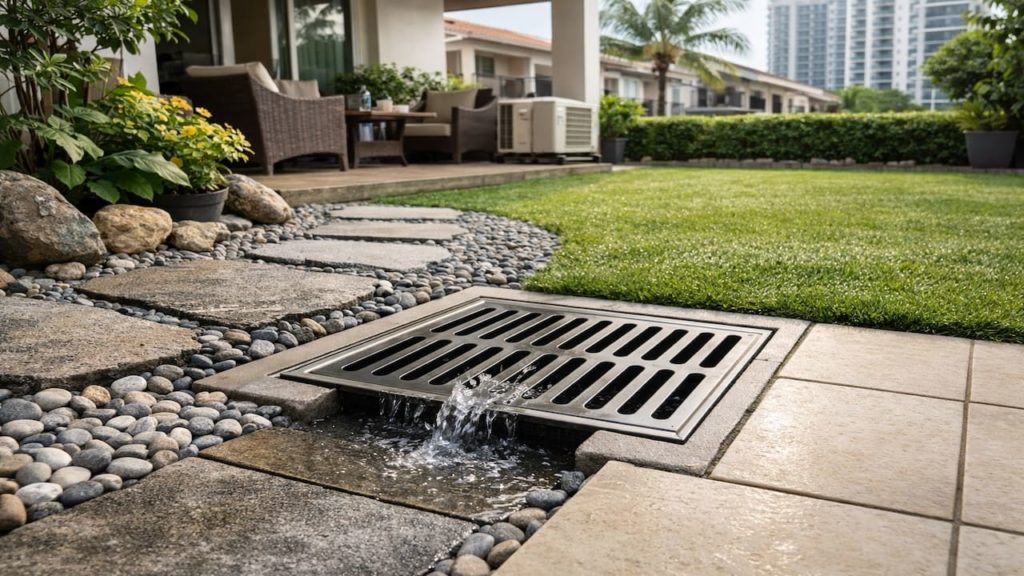
In shaded areas, joints dry slowly and trap fine dirt, so they stay darker than the paver face. Complex patterns multiply joint length, meaning more places for algae film to start. Downpipe splash and soil wash from beds also hit seams first, making the “lines” stand out and the yard feel smaller. Wet-season amplifier.
- Check joint length per square meter of paving
- Check for algae starting along intricate seam networks
- Track runoff that concentrates on patterned borders
- Check soil splash marks feeding seams near walls
- Check low spots where patterned cuts hold water
You may blame the material, but the pattern can create the maintenance burden by multiplying seams. Fewer seams means fewer dark lines, and the yard looks cleaner with less effort. Structure matters.
4. How to choose a calmer pattern that works long term
Choose one simple layout and use borders only to solve edges and dimensions.
The best small-yard patterns reduce cuts and keep the main field consistent. In Malaysia, a straight lay or simple running bond often feels cleaner than high-contrast mosaics because the joints read as soft texture, not stripes. If you need layout tools, string lines, or extra edge pieces, plan RM20–150 depending on what you already have. Calm design.
- Use running bond to hide minor size variations
- Use straight lay for a clean modern look
- Keep borders wide enough to absorb odd cuts
- Center the field on the main view axis
- Avoid thin slivers by shifting the start line
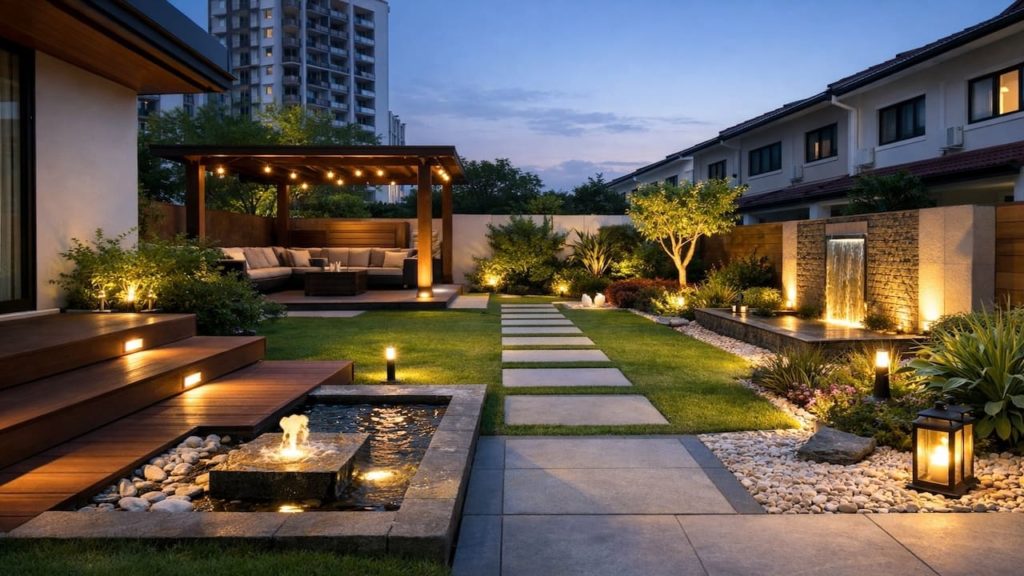
You might think adding a feature pattern will “upgrade” the yard. In small spaces, a feature often becomes the whole story and makes clutter feel worse. Upgrade with lighting, seating, and plants, and keep the floor quiet. Better value.
5. FAQs
Q1. Which paving patterns usually make small yards feel smaller?
Busy mosaics, high-contrast checkerboards, and patterns with lots of tiny cuts often shrink the space visually. They also highlight dark joints in Malaysia wet months.
Q2. Is herringbone a bad choice for small patios?
It can look great, but it increases seam direction changes and can feel busy in tight yards. If you use it, keep colors calm and borders simple.
Q3. What is the simplest pattern that still looks premium?
Running bond looks clean while hiding small alignment issues. It also reduces the “grid” feeling compared with strict straight lines.
Q4. How do I reduce the look of joint lines?
Choose larger modules, keep joints tight, and match joint color close to the paver tone. Control runoff so joints do not stay dark and damp.
Q5. Can a border make the patio look bigger?
Yes, if it frames the space with one clean line and does not add extra segmentation. Too many border breaks make the yard feel tighter.
Pro’s Tough Talk

Listen. I’ve got 20+ years on site and I’ve handled hundreds of jobs, and small-yard paving fails first in the eyes, not in the concrete.
The causes are three. People choose patterns with too many seams, they use high-contrast colors that turn into stripes, and they ignore how Malaysia rain makes joints go dark.
Do these 3 moves now. First, stand at the door and count how many seam lines cross your main view. Second, choose one quiet pattern and stick to it across the whole area. Third, push all cuts to the edges and keep borders simple. You know that “looks messy even after cleaning” feeling. You know that “why does my yard feel smaller than it is” frustration. Seriously, are you paving a crossword puzzle?
I’m not blaming you, and I’m not saying every contractor is clueless, but the structure is cold: more seams equals more dirt lines and more visual noise. Fewer seams looks bigger so stop decorating the floor with extra lines.
Ignore it and enjoy staring at your own paving like it is a complicated math problem.
Summary
Avoid patterns that multiply seams, force tiny cuts, or create strong contrast lines, because they make small yards feel tighter.
If your paving already feels busy, simplify with consistent modules, calm colors, and borders that hide cuts instead of adding detail.
Keep the floor quiet and the whole Malaysia yard feels larger and easier to keep clean. Next, read a paving color guide or a wet-season joint care guide.