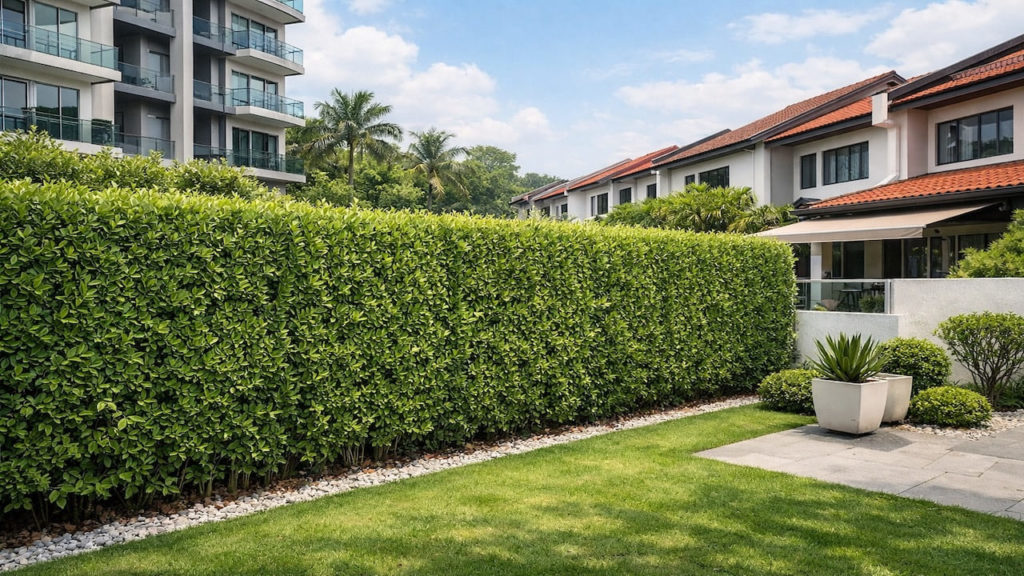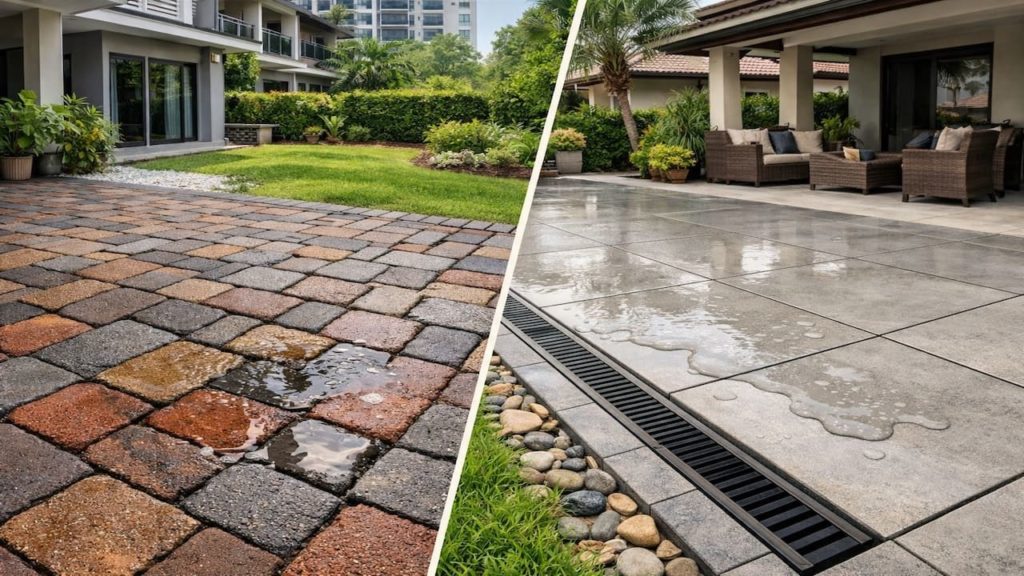
Choosing between pavers and tiles sounds simple, until Malaysia’s wet months expose slippery spots, dark joints, and puddles that never fully dry.
Most “regret” comes from grip, joint behavior, and drainage details, not the label of paver or tile on the receipt.
In this guide, you’ll learn how to choose the safer long-term surface for Malaysia terrace homes and condo gardens, using 5 checks that match real rain, humidity, and daily use.

Hi, I’m Ken. I write practical home guides for Malaysia—no fluff, just what works.
I hold a formal building design qualification and have spent about 20 years on job sites across hundreds of projects. My goal is simple: help you avoid costly mistakes with clear, safe steps—a quick way to decide what to do next.
1. Pavers vs tiles for garden paving: 5 checks
Decide by performance not appearance because wet season will test every shortcut.
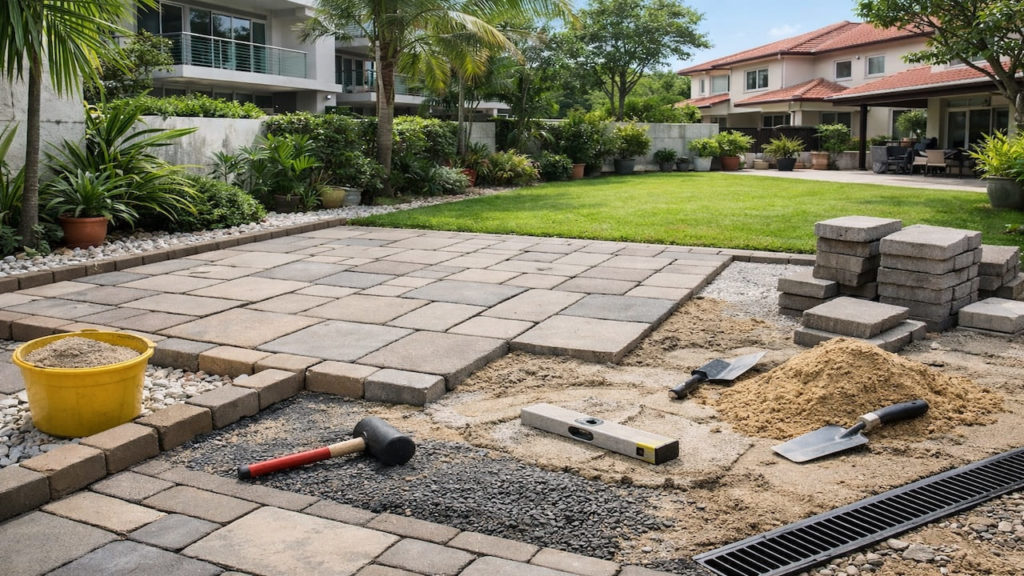
Outdoor “garden paving” is really a system: surface, joints, base, and edge restraint. In Malaysia, heavy rain and constant humidity make poor drainage show fast, and joints become dirt traps if they are not designed to drain and stay tight. A clean decision saves money because replacing a failed surface is harder than choosing right once. Long-term choice.
- Check grip when wet using your shoe sole
- Check joint width and how it collects dirt
- Check base drainage path after heavy rain
- Check edge restraint and movement over time
- Check cleaning effort in shaded damp corners
You might think “tiles look premium so they must be better.” In Malaysia gardens, premium is what stays safe and clean after a storm, not what looks shiny in a showroom. Choose the system that suits your site conditions. Reality first.
2. Grip, joints, & drainage decide long term
Grip and drainage matter more than material because water film is the real enemy.
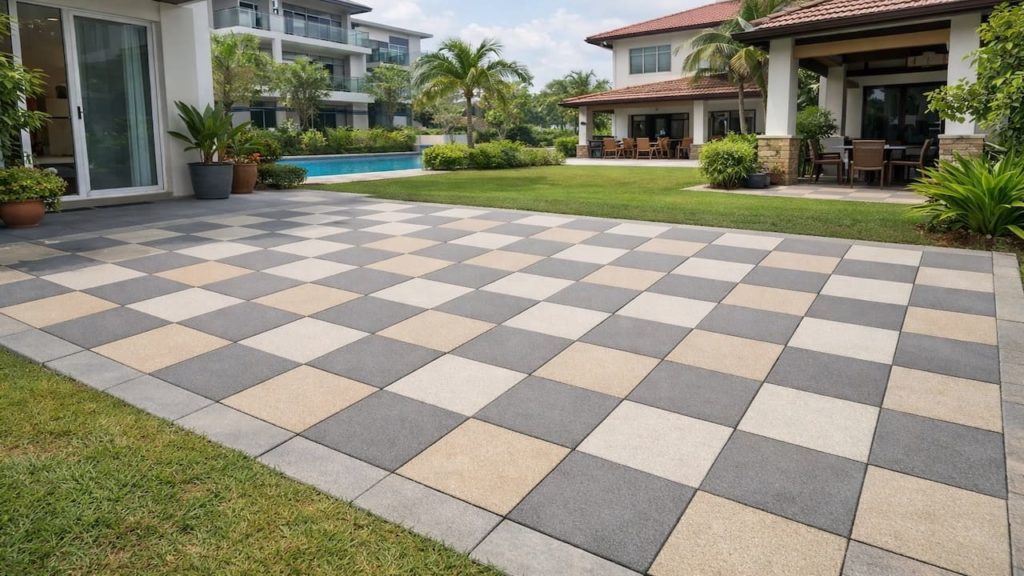
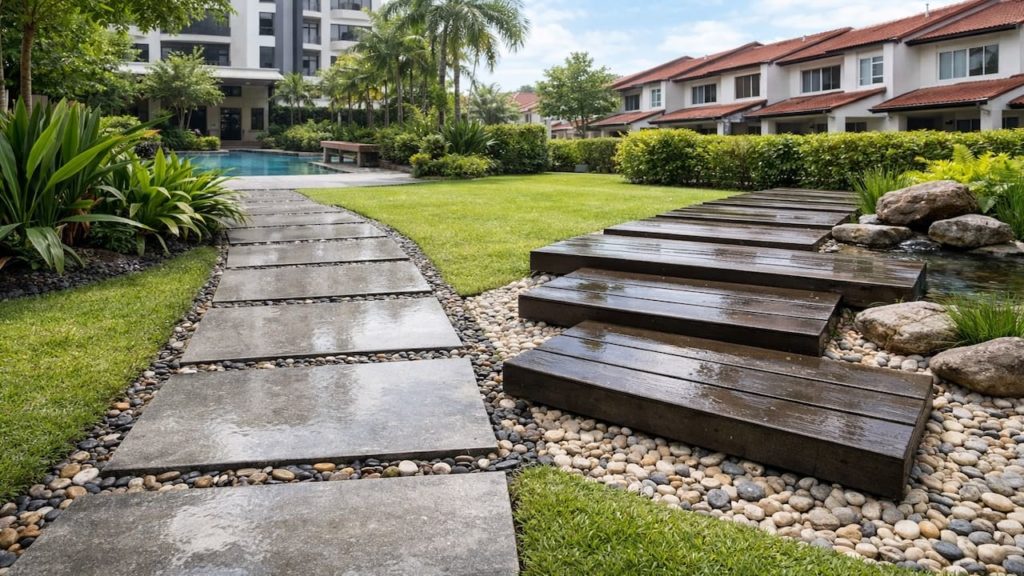
Tiles can work if they are outdoor-rated, textured, and laid with proper fall, but glossy or smooth faces turn risky when wet. Pavers often have better texture and tolerate small movement, but wide joints can darken and trap grime in humidity. In Malaysia, the smartest pick is the one you can rinse fast without slippery surprises. Practical safety.
- Choose matte texture over glossy smooth faces
- Prefer tight joints that resist washout
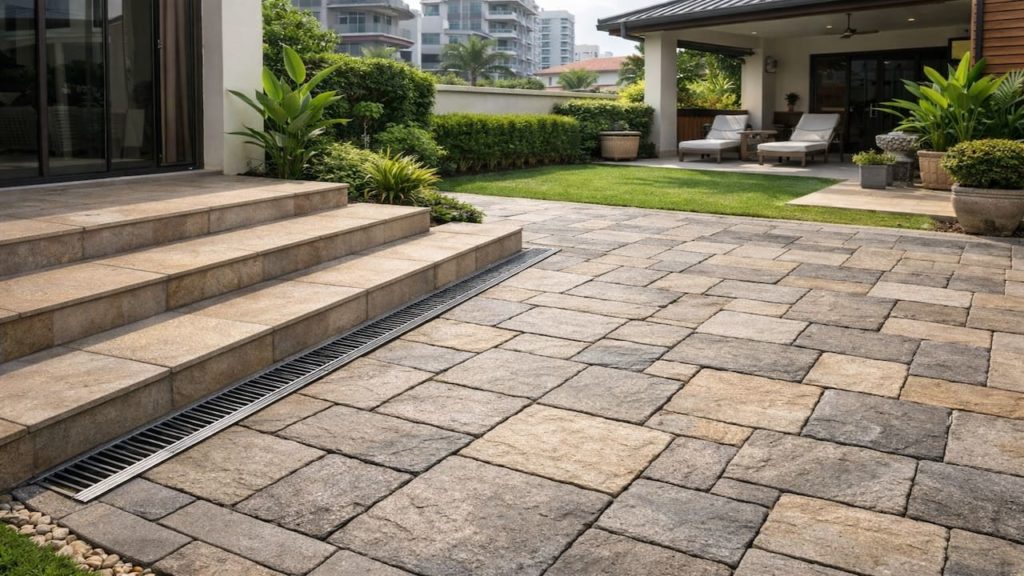
- Ensure slope moves water away from walls
- Place drains before locking the pattern layout
- Match surface to barefoot and sandal comfort
Some people chase “zero joints” to look modern. That can backfire if water cannot escape, because puddles and algae appear anyway. A few well-designed joints beat a slick slab that never dries. Smart compromise.
3. Why garden paving fails faster in Malaysia homes
Moisture plus shade keeps surfaces dirty and small defects grow into long-term headaches.
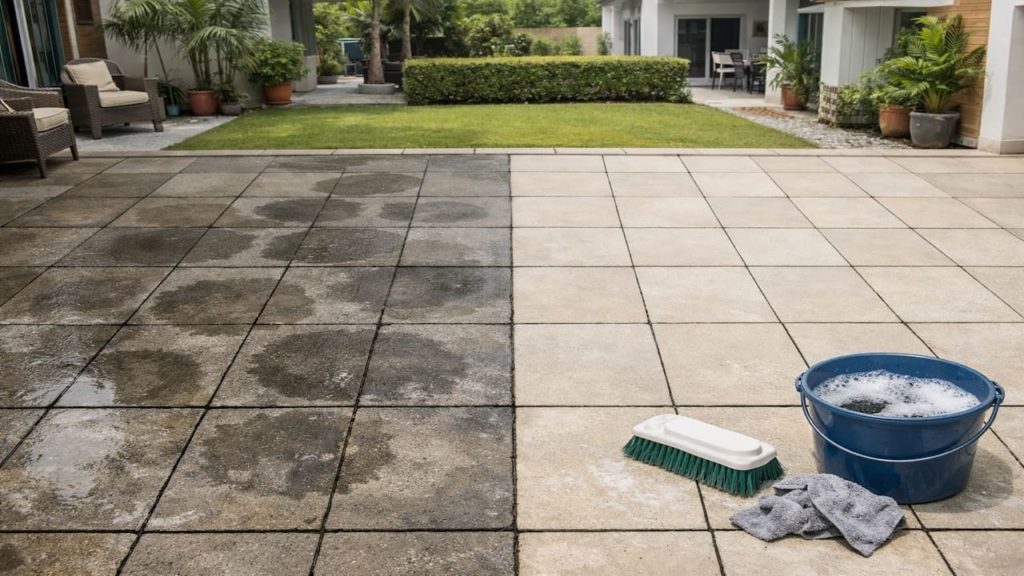
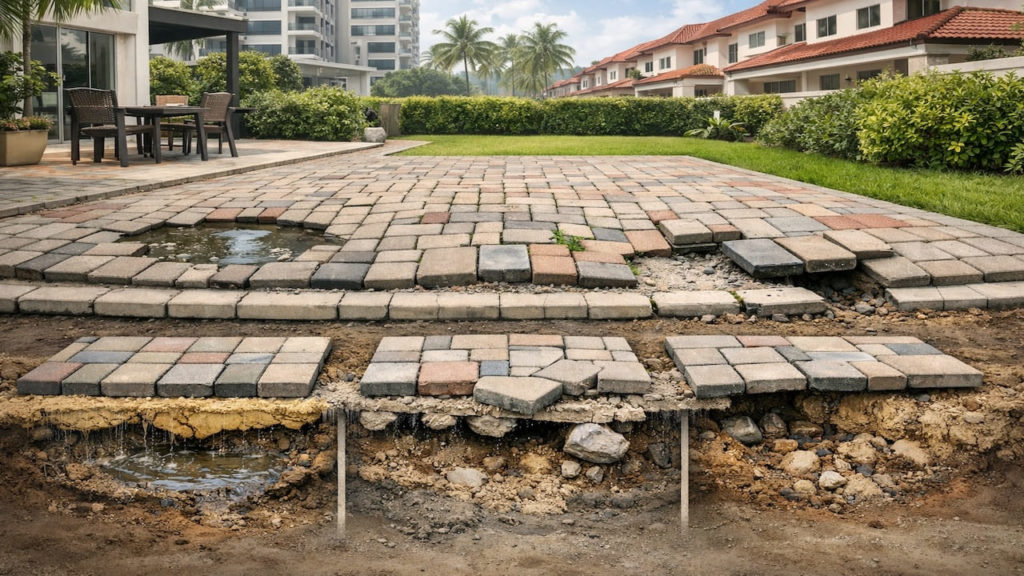
Terrace side yards and condo ground floors often stay shaded, so algae and dark film build up on joints and edges. Downpipe splash, outdoor taps, and aircond drips add repeated wetting in one zone, washing bedding sand out under pavers or leaving stained grout on tiles. When the base is soft or flat, water ponds and everything gets worse. Wet-season pressure.
- Identify daily shade hours across the paved area
- Track downpipe and tap runoff onto the surface
- Check for ponding near walls and door landings
- Inspect joint darkening and green film at edges
- Test movement by stepping on corners and seams
You may blame the product quality, but structure wins. If water stays, dirt sticks, and the surface becomes slippery, regardless of paver or tile. Fix runoff and base first, then pick the finish that fits. Cold truth.
4. How to choose between pavers and tiles for your site
Match the surface to your drainage reality so you do not pay twice in wet season.
If your area is slightly uneven or likely to move, pavers can be easier to repair because you can lift and reset sections. If you have a solid slab with correct fall and you want a cleaner look, outdoor textured tiles can work, but grout and edges must be planned for wet months. Budget RM800–3,000 for a small patio area depending on base condition, surface choice, and labor access. Decision map.
- Choose pavers for repairable modular outdoor areas
- Choose tiles for stable slab with proper slope
- Use edge restraint to stop paver spread
- Use outdoor grout and seal edges properly
- Plan cleaning access for shaded damp strips
You might think you can “tile over anything.” If the base drains poorly, tiles will still pond and become slick, and cracked grout becomes a stain magnet in Malaysia humidity. If you go pavers without a good base, rocking and sinking will appear. Either way, base and drainage come first. No shortcuts.
5. FAQs
Q1. Are pavers less slippery than tiles in wet months?
Often yes because many pavers have built-in texture, but it depends on the specific finish. A textured outdoor tile can be safe too if water drains and film does not build up.
Q2. Which option is easier to repair later?
Pavers are usually easier because you can lift and reset a small section. Tiles often require breaking and retiling, and color matching can be harder over time.
Q3. What matters more, joints or surface type?
Joints and drainage matter most because they control water exit and dirt buildup. The best surface still fails if water ponds and grime feeds algae.
Q4. Can I use indoor tiles outside in a small garden?
No, many indoor tiles become dangerously slick when wet and may crack with weather exposure. Use outdoor-rated tiles with a suitable texture and proper installation.
Q5. How do I reduce joint darkening in humidity?
Keep joints tight, prevent soil splash, and rinse regularly in shaded zones. Also control runoff so one spot is not soaked every day by downpipes or drips.
Pro’s Tough Talk

Listen. I’ve got 20+ years on site and I’ve handled hundreds of jobs, and I’ve seen both pavers and tiles fail the same way in Malaysia wet season.
The causes are three. No slope, so water sits. Bad joints, so dirt feeds film. Weak base, so movement starts and cracks spread. That is the whole story.
Do these 3 moves now. First, check grip with wet sandals and do not lie to yourself. Second, watch where water pools after a real storm, not a gentle hose. Third, plan your joints and edges so they stay tight and drain. You know that “one corner always slimy” spot. You know the chair leg wobble that makes your drink jump. What is this, a slip test lab?
I’m not blaming you, and I’m not saying every contractor is careless, but the structure is cold: drainage, joints, and base decide the outcome. Grip joints drainage decide long term so pick the system you can maintain in real humidity.
Choose by looks only and you will be scrubbing your “premium” floor like it is your new weekend hobby.
Summary
Use the 5 checks to judge grip, joint behavior, drainage, and repairability, because wet season performance matters more than the material label.
If your site moves or drains poorly, fix the base and water exit first, then choose the surface that matches your reality and maintenance tolerance.
Choose the system not the product and your Malaysia garden paving stays safer and cleaner for years. Next, read a runoff control guide or a joint cleaning guide for wet months.