If your pet brings mud indoors after every walk, the issue is often the garden paving, not your cleaning routine.
In Malaysia, sudden rain, humid air, and shaded terrace-house corridors keep paws wet, so mud and smell stick longer than you expect.
In this guide, you’ll learn how to make paving pet friendly. You will reduce tracking, speed up rinsing, and keep surfaces safer in wet months.

Hi, I’m Ken. I write practical home guides for Malaysia—no fluff, just what works.
I hold a formal building design qualification and have spent about 20 years on job sites across hundreds of projects. My goal is simple: help you avoid costly mistakes with clear, safe steps—a quick way to decide what to do next.
1. Pet-friendly garden paving: 5 tips
Pet friendly paving dries fast and rinses clean.
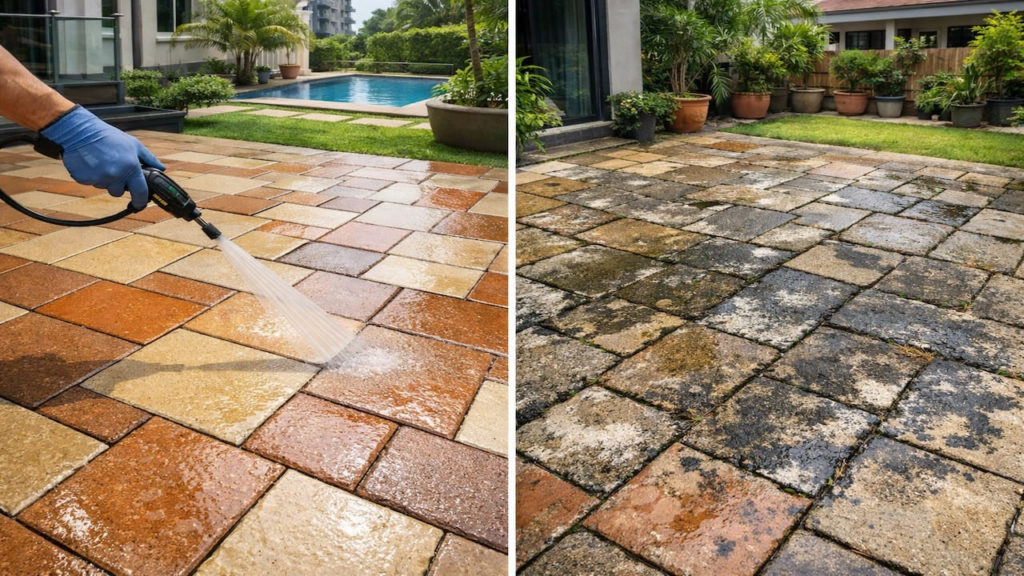
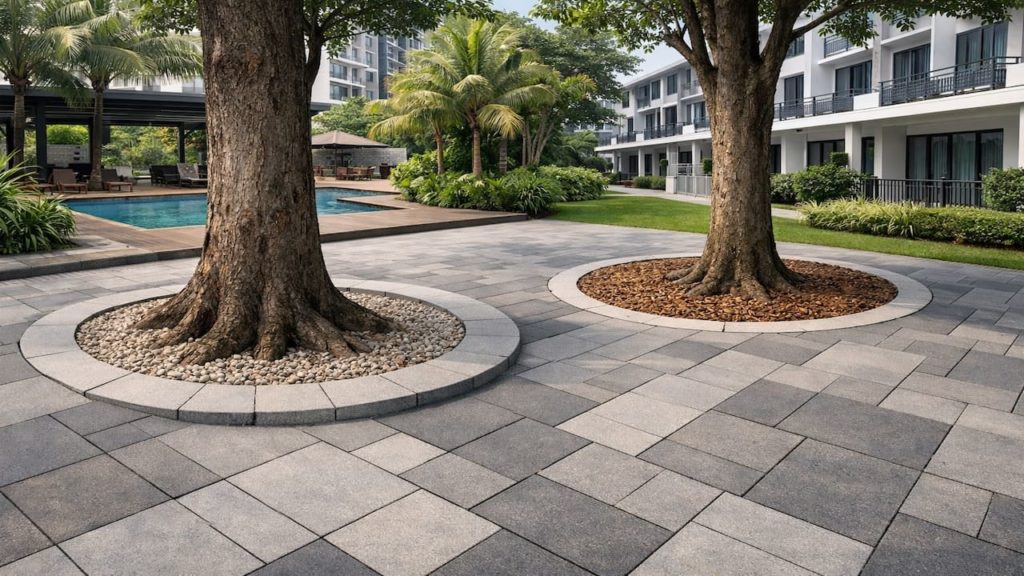
When paws stay wet, everything gets messy—mud turns into a film that spreads to doors, tiles, and rugs. In Malaysia gardens, plan RM120–500 for small upgrades like better joints, edging, and a rinse corner. Choose texture that breaks water, then add a clear runoff path. Even a simple gravel buffer can cut the mess.
- Choose textured pavers that keep grip wet
- Keep slope sending water away from doors
- Use tight joints to block mud lodging
- Add a rinse spot near the garden tap
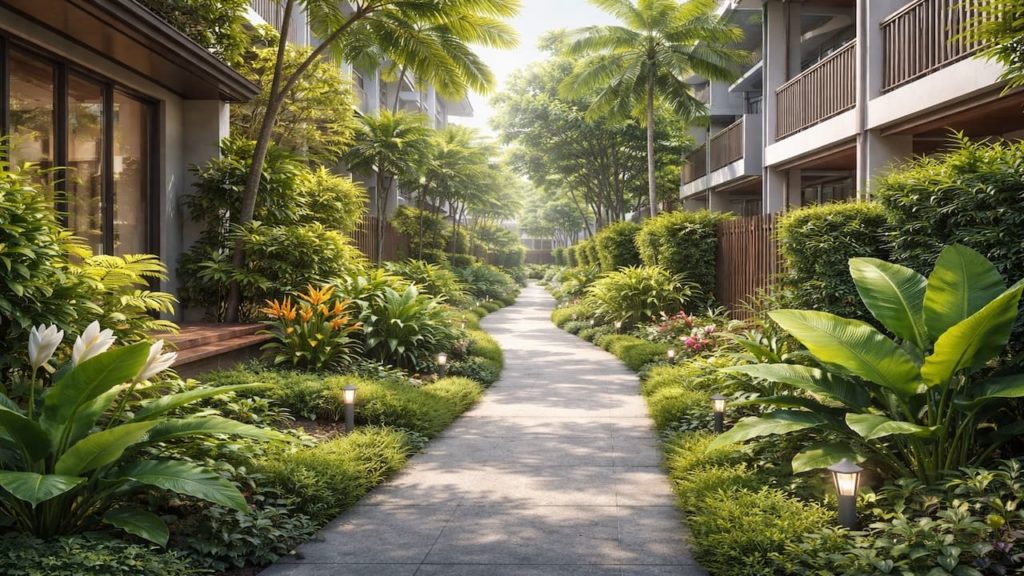
- Border planting to stop soil washing onto paving
Some owners think any hard surface solves mud, then they get slippery slime after storms. A pet route needs predictable footing and fast drying. No surprises. If the surface feels slick to you, it is worse for paws.
2. Less mud tracking and faster rinse cleanup
Contain the mess in one washable zone.
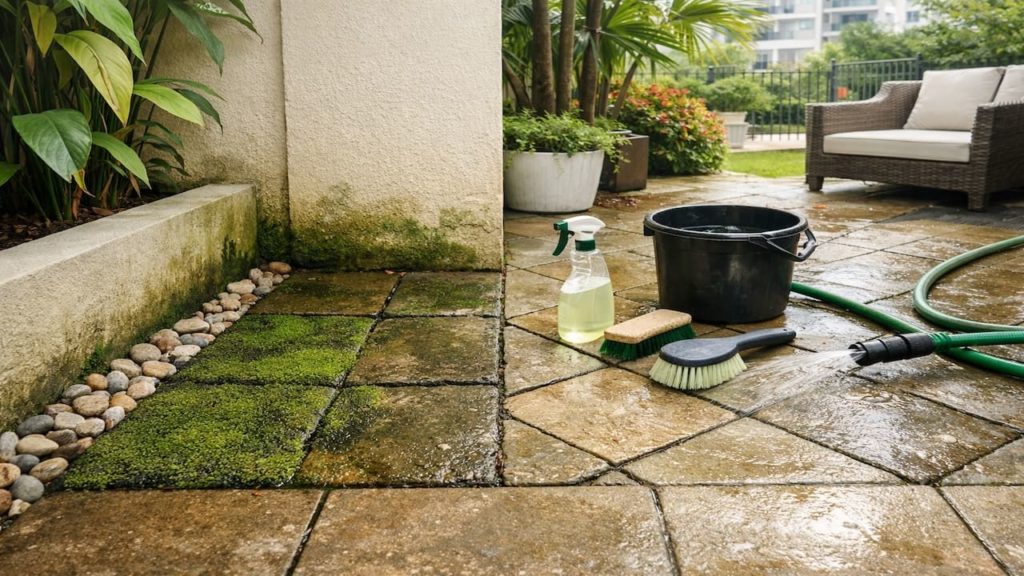
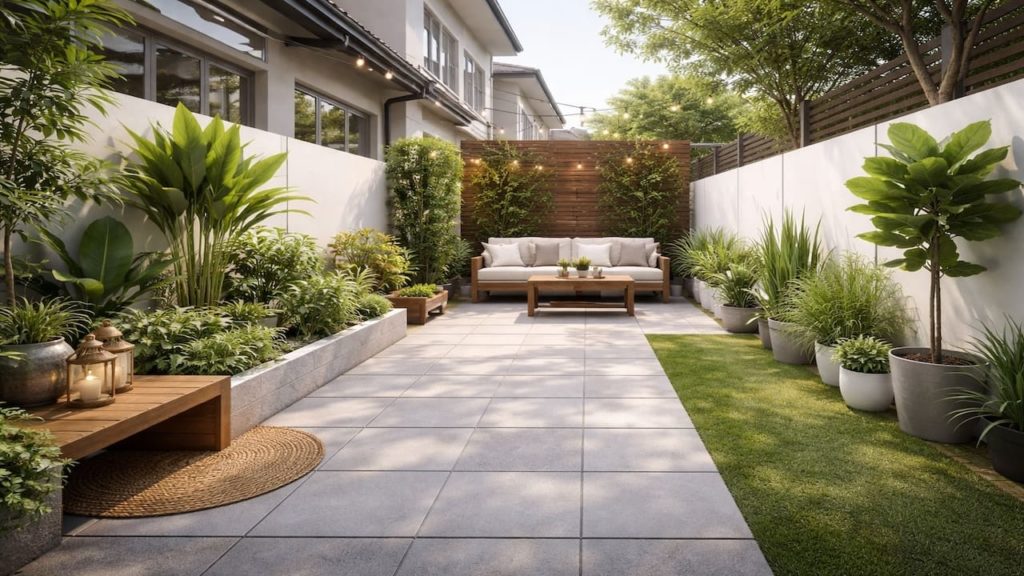
A defined rinse zone stops paw prints from spreading across the whole yard—especially in Malaysia where rain hits during daily routines. Budget RM80–350 for a small mat, a gravel strip, and joint refresh near the tap. Put towels, leash, and brush within reach so you actually use it. Make the path to the door simple and short.
- Place rinse zone between gate and door
- Use mid tone paving to hide splash marks
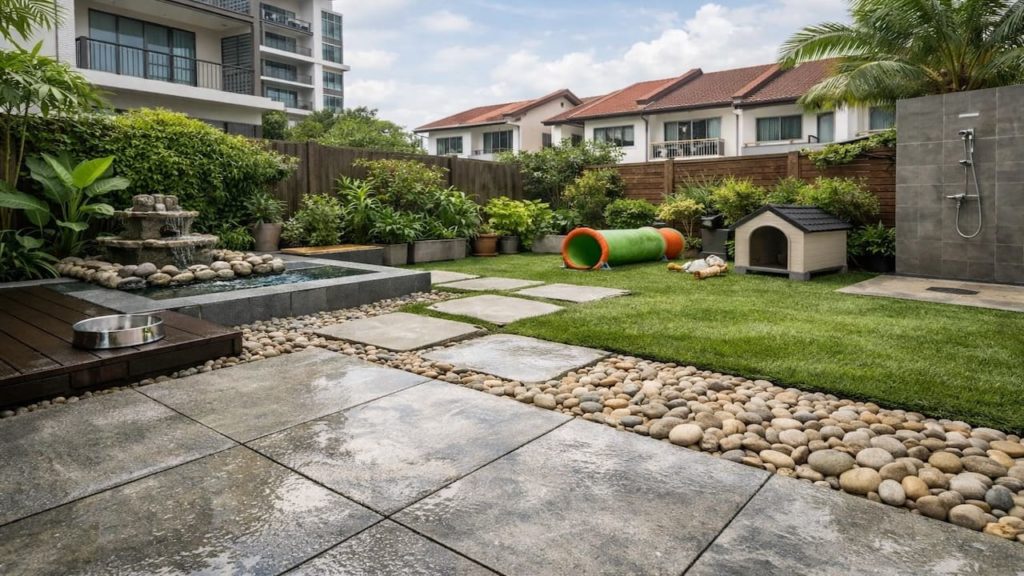
- Add gravel strip to catch muddy runoff
- Install hooks for leash and towel storage
- Keep edges smooth to protect paws and pads
You might worry a rinse zone looks ugly, but neat borders make it feel intentional. The real eyesore is constant brown streaks and wet smell. Clean zones look premium. Your indoor floors stay calmer.
3. Why pet paws stay muddy on garden paving
Mud sticks when water and silt get trapped.
In Malaysia humidity, damp joints and low spots hold grit, and paws pick it up again even after the rain stops—then the cycle repeats. Expect RM30–150 for joint sand, a stiff brush, and simple edging to block soil wash. Shade slows drying and feeds green film. Wet corners.
- Flat paving keeps puddles after heavy storms
- Wide joints collect silt and hold moisture
- Loose borders let soil spill onto walk routes
- Shaded corridors grow algae and slick film
- Downpipe splash spreads dirty water onto paving
People blame the pet, but the surface is feeding the loop. Contractors are not always careless, they just build to a standard base. If your site drains poorly, that standard struggles. Start with the route you use most, and the improvement feels immediate.
4. How to set up a pet rinse path that stays clean
Create a fast drain route for rinse water.
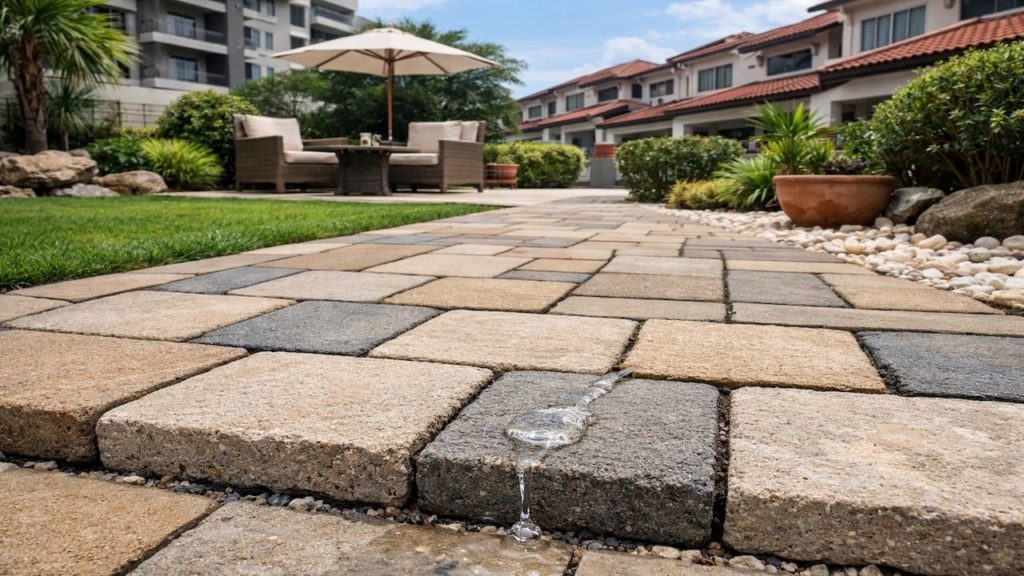
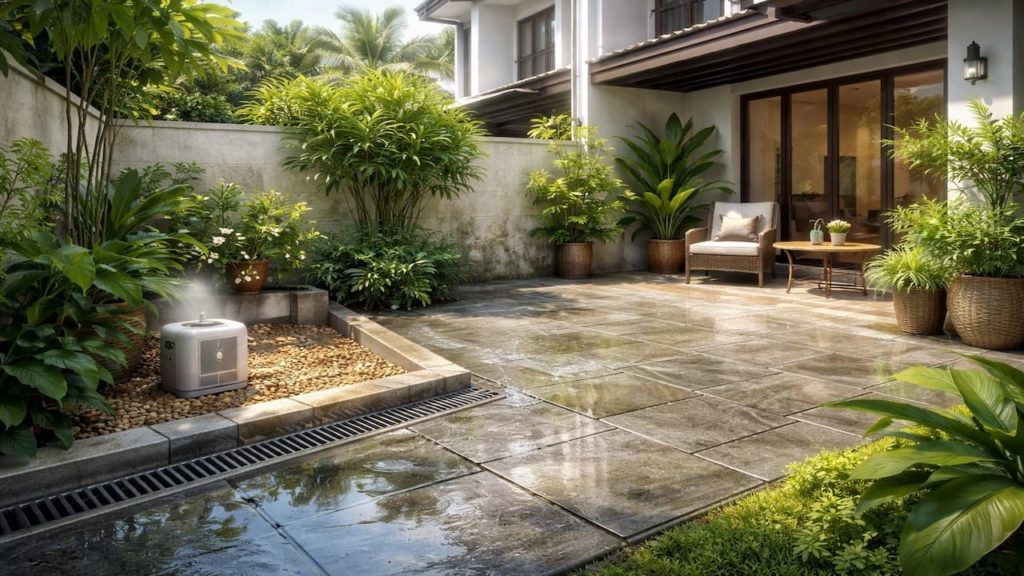
Start by mapping where rinse water should go, because Malaysia terrace yards often push water back toward walls—then mud stains the same strip again. Plan RM150–600 if you add a small grate, reset one paver row, or build a gravel edge strip. Keep joints tight so dirty water cannot sit and ferment. Add a splash buffer near painted walls.
- Pour a bucket and mark the pooling spot
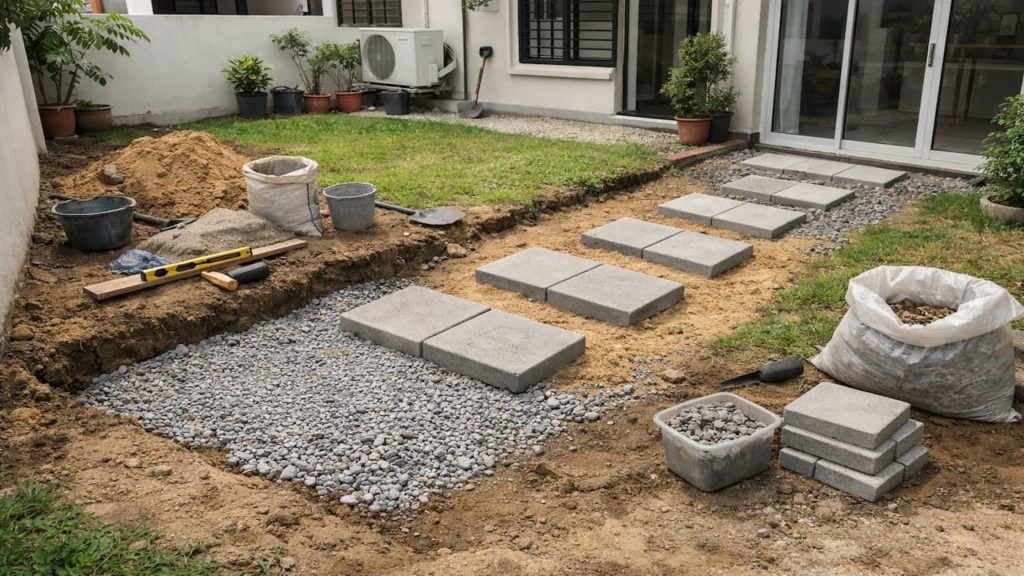
- Reset pavers to form gentle slope to drain
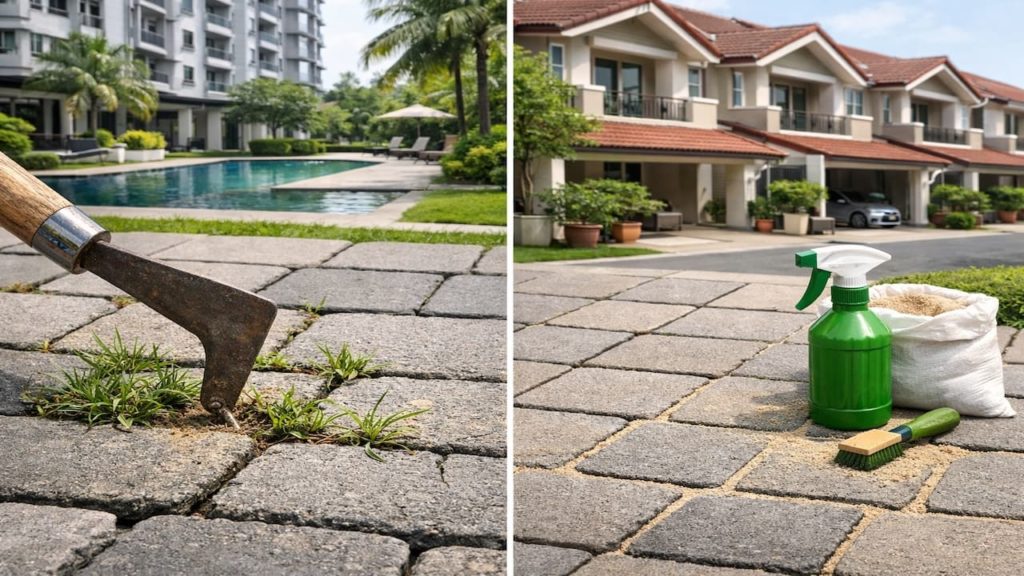
- Brush joints clean and top up compacted sand
- Add anti slip strip at tight turning corners
- Rinse silt after storms before it bonds
It feels tempting to just hose harder, but that spreads dirty film without an exit. Build the rinse path like a mini wet area with one direction. Controlled flow. Keep soap runoff away from planting beds so soil stays stable.
5. FAQs
Q1. What paving finish is safest for pets in rain?
Choose light texture that grips when wet and does not feel sharp under paws. In Malaysia wet months, avoid smooth glossy surfaces that hide slippery film. Test grip with wet feet before you commit.
Q2. Do gravel areas help reduce mud tracking?
Yes, a contained gravel strip can knock mud off paws before the door. Keep it edged so stones do not scatter into walkways. Rinse the gravel when it turns into silt.
Q3. How do I stop slippery green film without harsh chemicals?
Improve drying and rinse early—algae loves damp shade in Malaysia. Fix pooling first, then brush the surface before the film bonds again.
Q4. Where should I place a rinse zone for best results?
Put it on the route from gate to door so you use it every time. Keep it near a tap and a drain exit so rinsing stays quick. Storage nearby makes it stick.
Q5. Should I seal paving to block pet odors and stains?
Sealers can help on porous pavers, but only after deep cleaning and full drying. If water still pools, sealing can trap grime and make stains look patchier. Use a small test patch first.
Pro’s Tough Talk

Listen, I have been on site for over 20 years. I have done hundreds of jobs, and the “mud everywhere” problem is never about the dog’s attitude.
It breaks into 3 causes: the paving holds water, the joints hold silt, and the edges let soil spill back onto the route. Malaysia humidity keeps it damp like a wet towel stuffed in a backpack.
Do 3 steps now: bucket test the route, scrape joint sludge out, then build a small rinse zone. That moment when you juggle keys and the leash at the gate, and the pet bolts inside leaving paw stamps, classic.
Do not blame yourself and do not blame every contractor, but accept the structure: mud wins when it can stay wet. Seriously, who designed a pet route with a puddle right at the door.
Ignore this and you will keep mopping like trying to dry a swimming pool with tissues. You will keep smelling that damp corner after rain. Fix the exit route, or enjoy the daily mud parade.
Summary
Pet friendly paving means fast drying, tight joints, and a rinse zone that contains mess during Malaysia rainy months. Predictable footing. Less stress. Quick wins.
If tracking keeps happening, fix the worst pooling spot first—then block soil wash and refresh joints so paws pick up less grit. If you rent, focus on reversible edge strips and joint top ups.
Build one rinse path today and continue to the guides on paving joints and fast drying walkways for cleaner routines all year.