You rinse the paving, it looks fine for an hour, then the same puddle returns and the area smells a bit stale. That repeat puddle is not “bad luck.” It is a signal.
In Malaysia, sudden rain, high humidity, and shaded terrace-house side strips make water linger longer than you expect. Condo patios also trap damp air, so slow drying turns small puddles into slippery film.
In this guide, you’ll learn how to remove puddles by fixing slope and drainage so the surface dries faster and stays safer without endless scrubbing. You will also learn quick checks to catch base problems early.

Hi, I’m Ken. I write practical home guides for Malaysia—no fluff, just what works.
I hold a formal building design qualification and have spent about 20 years on job sites across hundreds of projects. My goal is simple: help you avoid costly mistakes with clear, safe steps—a quick way to decide what to do next.
1. Stop puddles on outdoor paving: 5 steps
Stop puddles by changing the water path instead of fighting the same spot every week.
Most puddles repeat because the slope is flat, the base is soft, or runoff has no exit. In Malaysia, downpours arrive fast—so even a small low point becomes a standing pool that feeds algae and stains. Small effort now prevents bigger patch repairs later. Dry feet.
- Mark puddle edges with chalk after rainfall
- Check slope using a marble or phone level
- Clean drain grates and remove leaf sludge
- Add joint sand and compact around low spots
- Install edge restraint to stop base spreading
Some people think sealing will solve it, but sealer cannot fix a low point and can trap moisture under dirt. If water cannot leave, the surface will always look tired after rain, no matter how often you rinse. Fix the route first, then cleaning becomes easy. One fix beats ten washes.
2. Slope and drainage fix the root problem
Slope creates drying speed and that is what keeps paving looking clean in wet months.
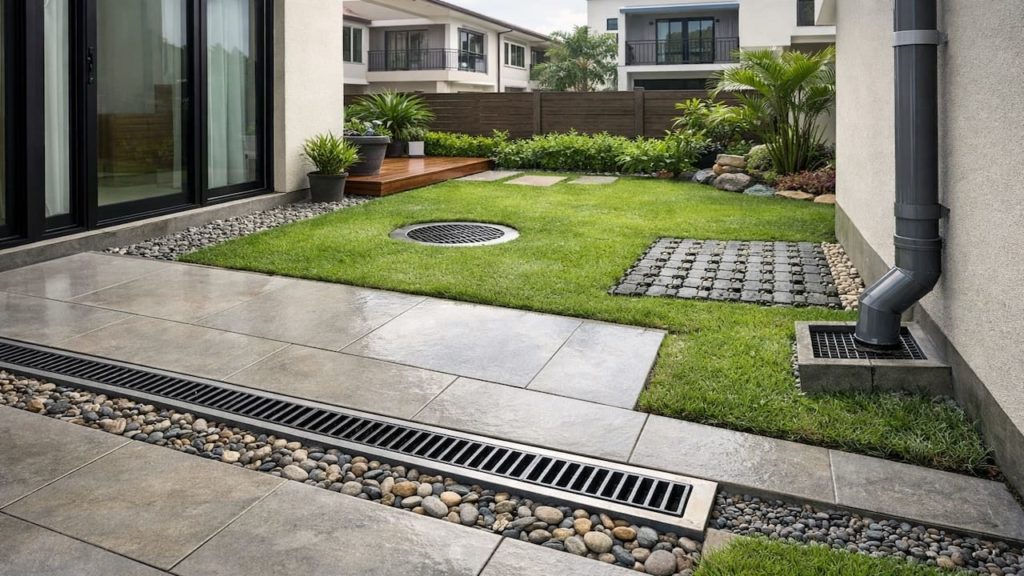
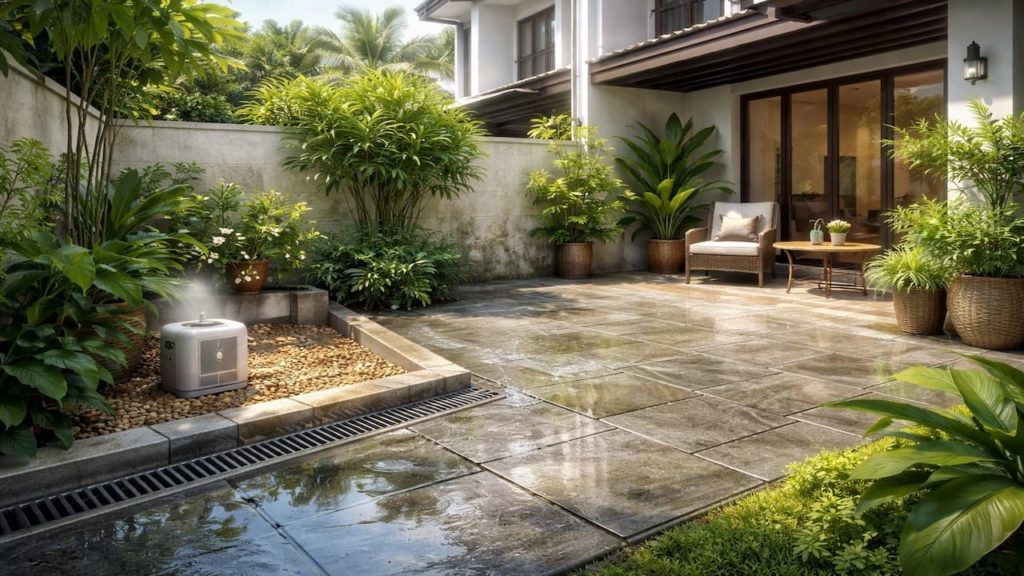
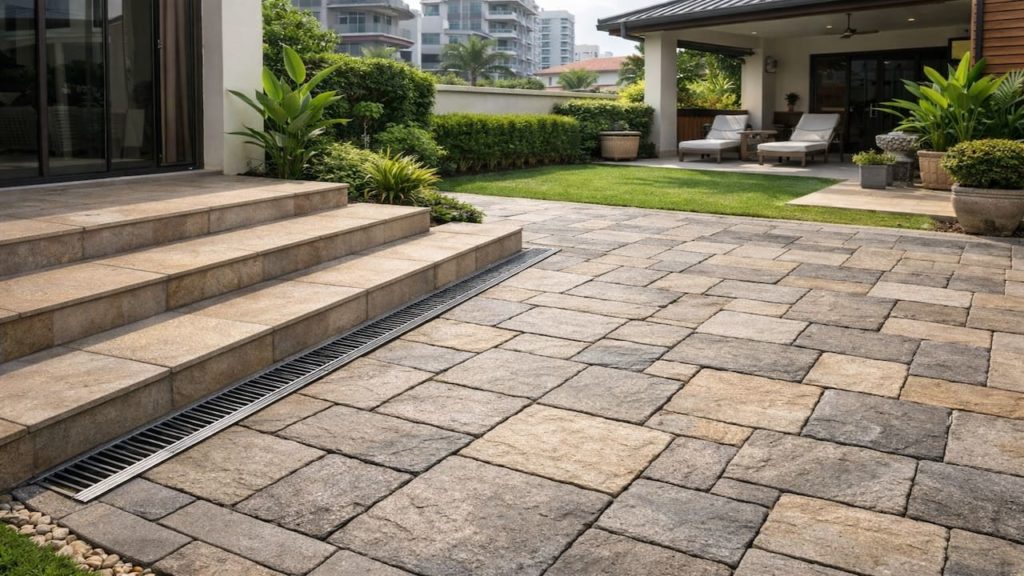
Drainage is not only for floods, it is for daily appearance and safety. On Malaysian homes, water often comes from roof edges, planters, and washdown habits, then it stalls at the lowest line. A small drain path plus correct slope keeps joints drier and slows black lines. Clear flow.
- Set slope away from doors about 1 percent
- Place a narrow gravel trench along lowest line
- Direct downpipe water into drain or soakaway
- Keep planter runoff off the entry and walkway
- Test flow with a bucket and time drain
Some contractors say the surface is “level” so it is done, but level is not the goal outside. A perfect tile finish means nothing—flow decides the look, and flow decides slip risk. Ask where the water goes, then confirm with a simple pour test. If it exits fast, you win.
3. Why puddles keep coming back on the same spot
Puddles return when the base compresses and the surface slowly sinks into a low bowl.
Under the paving, thin bedding and un-compacted layers settle after repeated wet cycles. In humid Malaysia, the ground stays damp longer, so soft soil pumps upward and joint sand washes out faster. That movement makes the lowest point lower every storm. Base truth.
- Hear hollow taps that signal hidden voids
- Feel rocking corners after each heavy rain
- See joint sand vanish at the same edge
- Find algae growth where drying stays slow
- Notice stains forming along one repeated puddle
People blame the paver quality, but good pavers still fail when the base stays wet and loose. The base holds water—then the surface lies to you until it suddenly rocks. Fix the layers and edge restraint, and the puddle pattern usually disappears. Structure first, always.
4. How to fix puddles without redoing the whole area
Fix puddles by lifting only the low zone and rebuilding the layers so the slope reconnects cleanly.
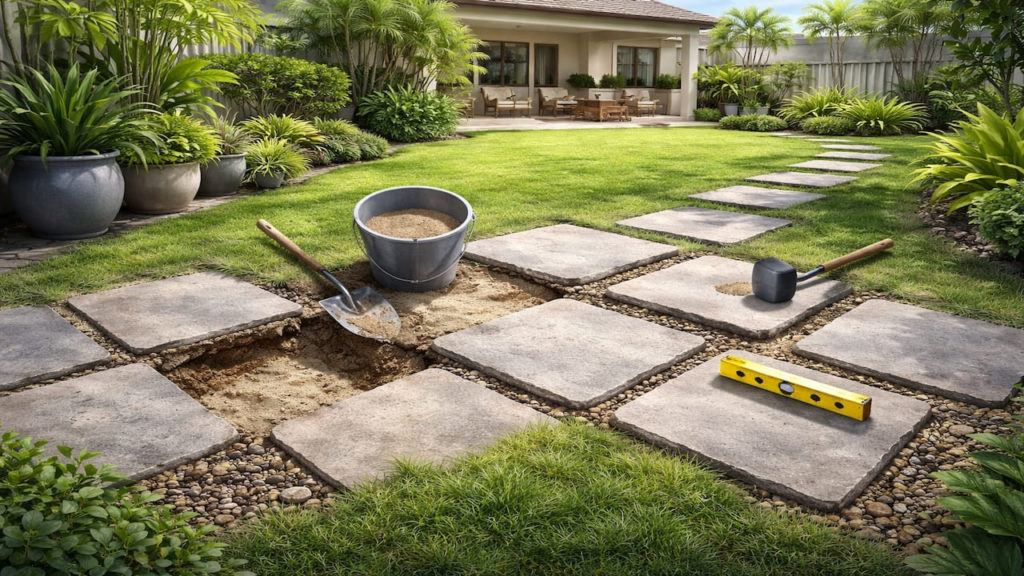
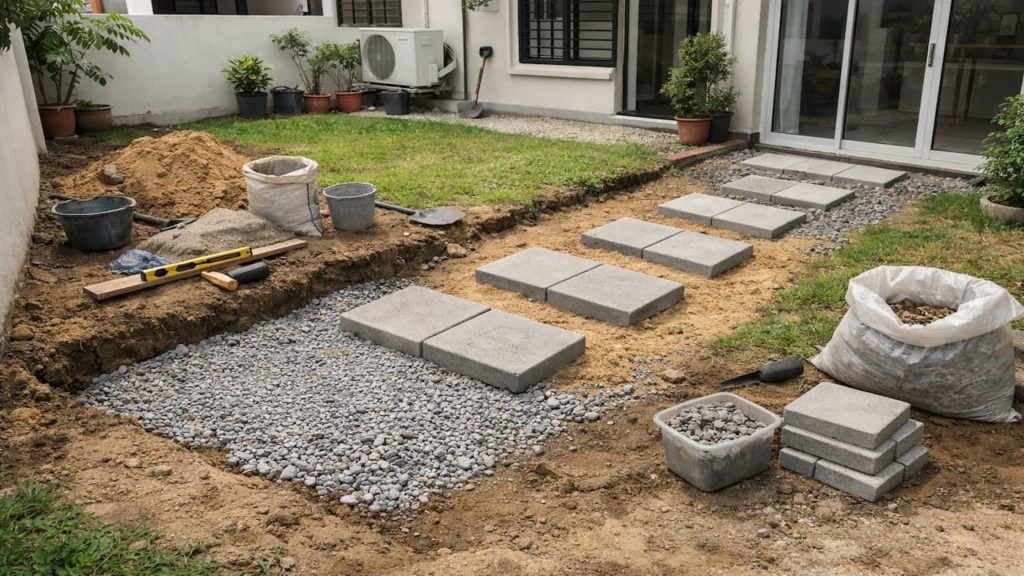
Cut a neat patch boundary along joint lines, lift pavers in order, and rebuild from sub-base to bedding to joints, then re-seat and lock edges. RM60-250 for basic sand, gravel, and small drain parts is common for a small patch, depending on your setup. Do it during a drier window, because Malaysia humidity punishes rushed wet layers. Small patch.
- Cut a patch boundary along existing joint lines
- Lift pavers and stack them in order
- Remove wet fines and scrape to firm layer
- Compact base and screed bedding to slope
- Repack joints and lock edges against washout
Some people try to add sand on top, but it washes out and makes the surface uneven again. Small slope fixes work—if you rebuild the base and protect the exit path so water cannot undercut. Test with poured water before you finish jointing. If it runs cleanly, you are done.
5. FAQs
Q1. How much slope do I need to stop puddles?
A gentle slope is usually enough if it points to a real exit line. Start small and confirm with a water pour test, because surface texture also affects drying speed.
Q2. Can sealing stop puddles on outdoor paving?
Sealing can reduce staining, but it does not remove standing water. If a low point exists, puddles will still form and can become slick in Malaysia humidity.
Q3. What is the fastest way to find the true low spot?
Pour water and watch where it stops instead of guessing by eye. Do it after rain too, because wet sheen reveals bowls that look flat when dry.
Q4. Why do puddles form near walls and doors?
Thresholds are often built slightly higher, so water collects just outside if slope is wrong. Splash and roof runoff also concentrate there, especially on terrace-house entries.
Q5. When should I call a contractor instead of DIY?
If the puddle zone keeps spreading or multiple areas rock after rain, the base system may be wrong overall. A contractor can rebuild layers and drainage lines faster if access is tight.
Pro’s Tough Talk

Listen, I’ve been on site for 20+ years and done hundreds of jobs, and puddles are not “normal outdoors.” They are your base telling you it is losing, and every rinse just proves the point.
There are 3 causes. The slope is too flat so water has nowhere to go. The base is soft so the low spot keeps sinking. And the exit is blocked by dirt, leaves, or lazy drainage planning during Malaysia wet months.
Do 3 steps now. Pour water and follow it like a detective. Mark the true low spot and lift until you reach firm support. Rebuild the layers and lock the edge so the bowl cannot come back.
This is like spraying perfume on a wet towel and calling it clean, like setting tiles on pudding and hoping they behave Give water an exit. Do that and the whole area stops feeling cursed.
The “hands full of laundry” dash and the “dragging bins to the gate” shuffle are when you slip, so here’s the tsukkomi: seriously, you want that drama. Keep the puddle if you enjoy free stress as a hobby.
Summary
Puddles stop when you control slope, provide a clear exit, and keep the base firm through Malaysia rain cycles. Water behavior is the real diagnosis.
If puddles repeat, treat it as a low spot and base issue, not a cleaning issue, and verify with pour tests after rain. Patch small zones early before the problem spreads.
Fix the slope and protect the drainage path then continue with related guides on base checks and slip prevention for wet months.