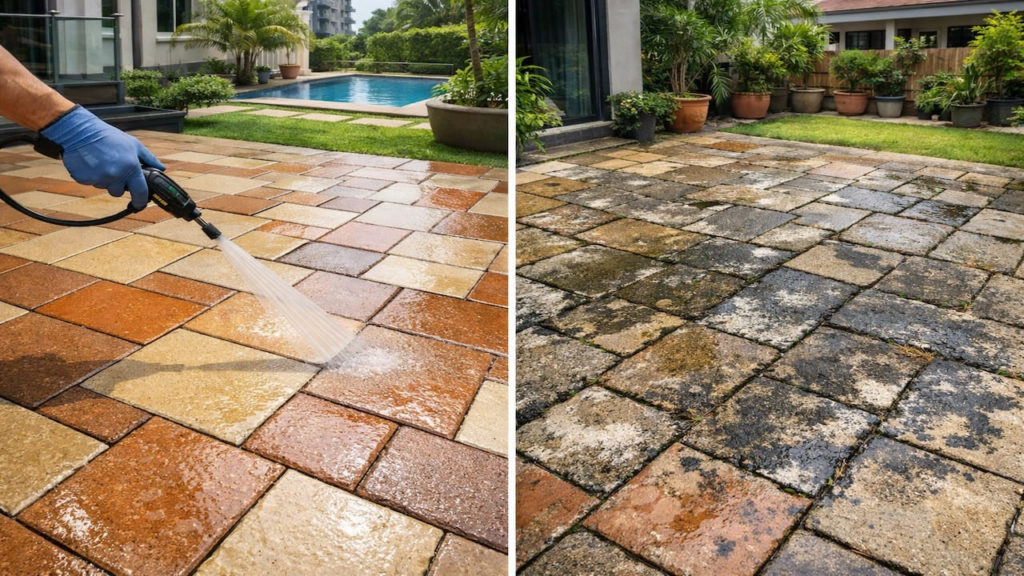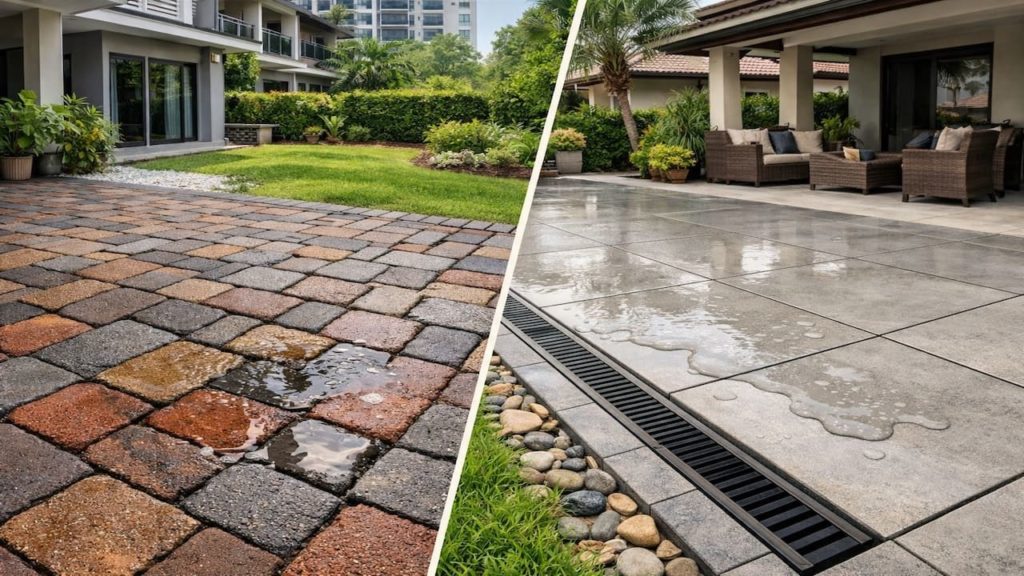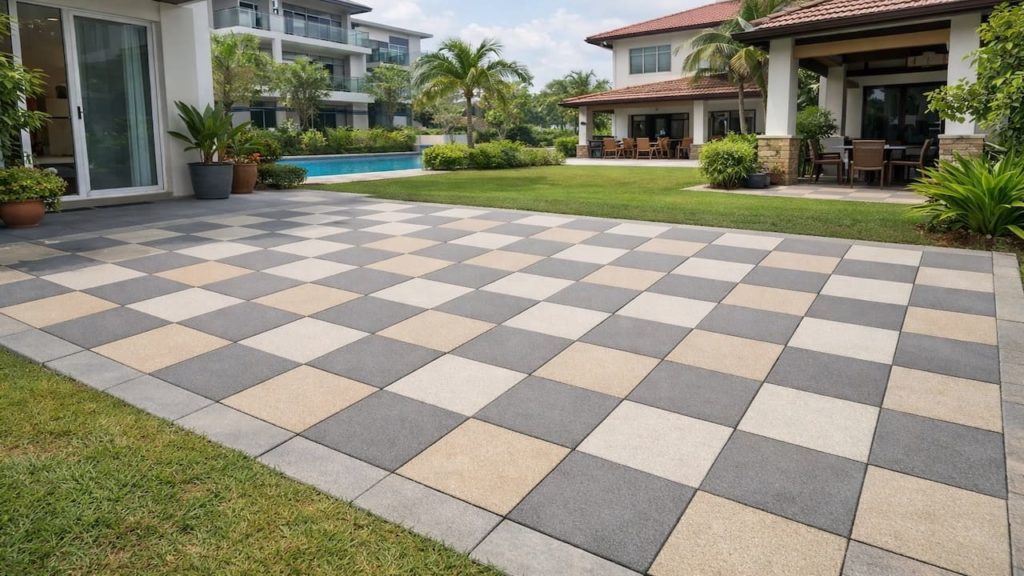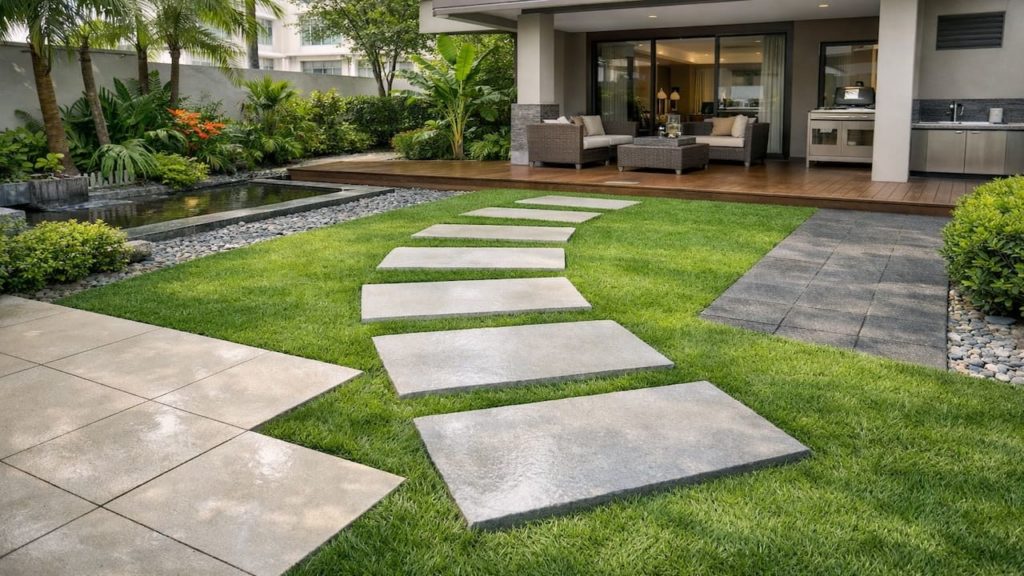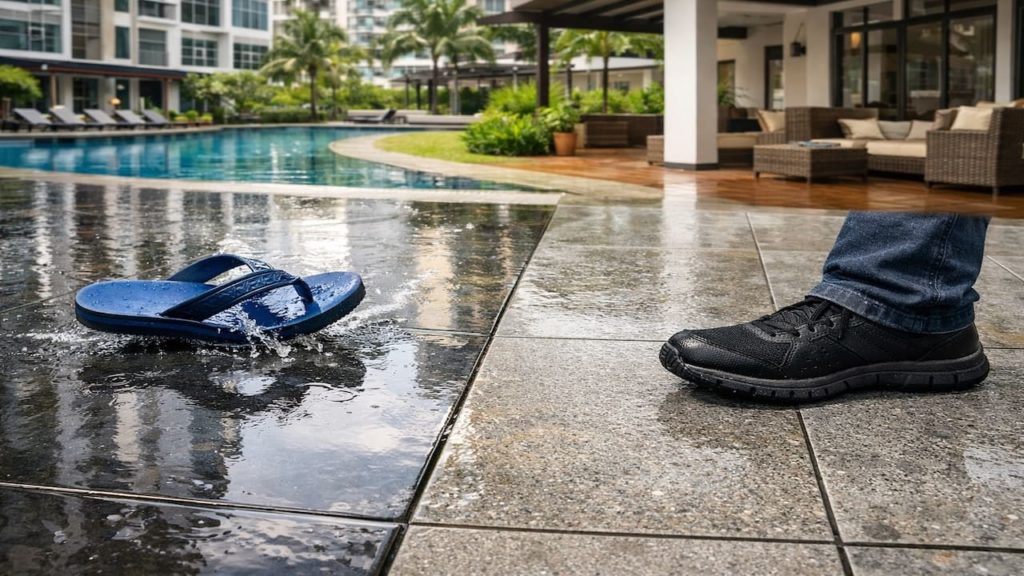
Loose garden tiles feel minor at first, then one corner starts rocking, water sneaks under, and cracks spread after Malaysia’s heavy rain weeks.
Most loose-tile problems are support and drainage problems, not “bad tiles,” especially in humid gardens where joints stay damp and sand washes out.
In this guide, you’ll learn how to repair loose garden tiles safely and stop the same spot failing again in Malaysia terrace homes and condo gardens.

Hi, I’m Ken. I write practical home guides for Malaysia—no fluff, just what works.
I hold a formal building design qualification and have spent about 20 years on job sites across hundreds of projects. My goal is simple: help you avoid costly mistakes with clear, safe steps—a quick way to decide what to do next.
1. Repair loose garden tiles: 5 steps
Remove and rebuild the support because a loose tile almost always has a void underneath.
In Malaysia, repeated wetting and drying pumps fine material out from joints, and the bedding under one tile can hollow out. If you only press the tile down, it will rock again and the edges will chip. A proper fix is small but needs careful steps to avoid sharp breaks and finger injuries. Safe repair.
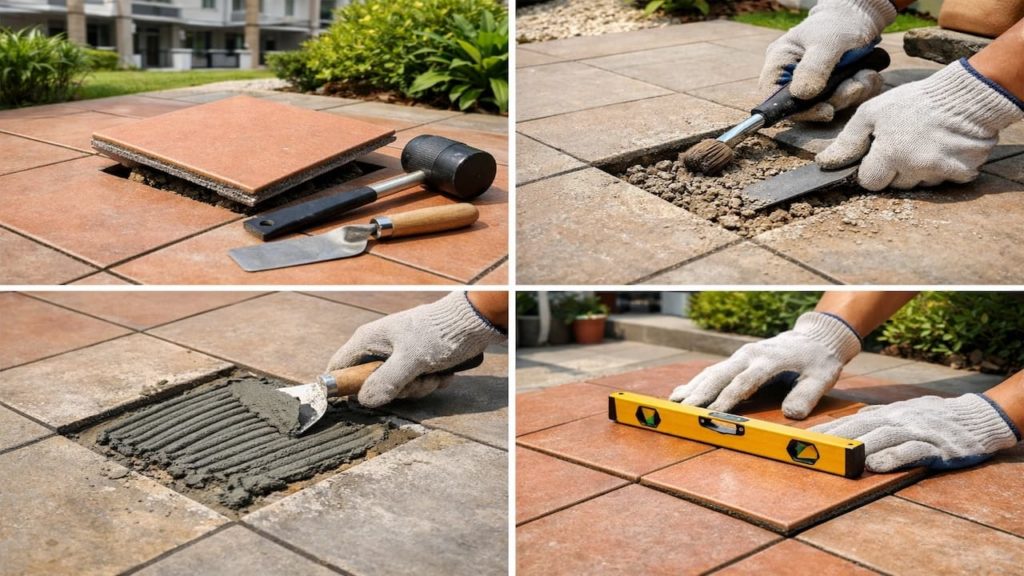
- Mark the loose tile and clear the area
- Lift tile gently using a flat pry tool
- Scrape out damp sand and loose muddy fines
- Rebuild bedding and set tile back flat
- Refill joints and confirm no rocking remains
You might want to “glue it” in place for speed. In outdoor Malaysia conditions, trapped water and movement often break rigid fixes, then the same spot fails again. Support first, then joints. Correct order.
2. Fix safely and prevent the same spot failing
Check water entry and edge movement so the void does not return.
The same spot fails when runoff keeps hitting it, or the edge is free to creep, opening the joint and letting water pump sand out. Malaysia downpours make this happen faster, especially near doors, downpipes, outdoor taps, and shaded corners. This repair is mostly labor, and cost is mostly time/effort if you already have simple tools. Repeat prevention.
- Redirect downpipe or drip lines away from the tile
- Ensure slope carries water away from walls
- Lock the perimeter with edge restraint if needed
- Use joint sand that resists washout in rain
- Top up joints after the first heavy storm week
Some people think one loose tile means the whole patio is failing. Often it is a local washout zone you can fix in one session, as long as you remove the cause. Fix the water route and the movement, and it holds. Simple.
3. Why outdoor tiles loosen in Malaysia gardens
Water pumps the bedding out when joints open and the base stays damp.
When water enters through joints, it carries fine sand away, leaving a pocket under the tile. Shaded areas dry slowly in Malaysia humidity, so the base stays soft and movement repeats. Ant activity can also remove joint sand, and small base gaps grow into rocking corners. Wet-month mechanics.
- Check joint gaps around the loose tile edges
- Check for ponding water after heavy rain
- Check shade hours that keep the area damp
- Check ants carrying sand from the joints
- Check nearby soil splash feeding joint dirt
You may blame the tile adhesive or the installer, but outside, water behavior is the boss. If water keeps entering and the base stays soft, any tile will loosen. Control water, then rebuild support. Cold truth.
4. How to reset tiles so they stay tight
Use a thin, even bedding layer and keep joints full so the tile stays supported.
Outdoor tiles need full contact under the entire piece, not just corners, or they flex and loosen. After resetting, pack joints so water cannot easily pump material out again. If you need bedding sand, joint sand, or a basic pry tool, plan RM20–150 depending on what you already have. Stable finish.
- Level the bedding carefully and remove high spots
- Set tile and tap until it sits fully supported
- Confirm slope so water does not sit on the tile
- Sweep joint sand in and compact it gently
- Rinse lightly then refill joints after drying
You might think thicker sand makes leveling easier. Thick bedding shifts, holds water, and settles unevenly in Malaysia humidity, which brings the wobble back. Keep bedding thin and even. Professional habit.
5. FAQs
Q1. Is it safe to walk on loose garden tiles?
It can be risky because the tile can tip and cause a slip, especially when wet. Fix it quickly and block the area if kids or elderly family use the path.
Q2. Can I just add sand to the joints without lifting the tile?
Sometimes it helps briefly, but it rarely fills the void evenly. Lifting the tile and rebuilding the bedding is more reliable.
Q3. Should I use cement or grout under outdoor tiles?
Avoid trapping water under tiles unless the system is designed for it on a proper slab. In garden paving, a drained base with correct bedding usually performs better in wet months.
Q4. Why does the same tile keep loosening?
Because water keeps entering at that spot, or the edge is drifting and opening the joint. Fix the water route and lock the perimeter so the joint stays tight.
Q5. How do I reduce future loosening in rainy season?
Maintain joint fill, control runoff from downpipes and taps, and ensure the paving drains away from walls. Small checks after storms prevent repeat voids.
Pro’s Tough Talk

Listen. I’ve got 20+ years on site and I’ve handled hundreds of jobs, and a loose tile is not “small,” it is the start of a crack and slip chain.
The causes are three. Water gets in, sand gets pumped out, and the tile loses full support. Malaysia humidity keeps the base soft, so the wobble repeats like a bad habit.
Do these 3 moves now. First, lift the tile safely and clear out every bit of mush. Second, rebuild the bedding thin and even so the tile sits fully supported. Third, stop water from attacking the same spot by fixing slope and refilling joints. You know the late-night step where the tile shifts and your stomach drops. You know the “why is it always this one corner” frustration. Seriously, is your patio playing whack-a-mole?
I’m not blaming you, and I’m not saying every contractor is careless, but the structure is cold: support, drainage, and tight joints decide whether it stays put. Full support stops loosening so fix the void, not your patience.
Ignore it and keep stepping on a moving tile like you are testing a trapdoor.
Summary
Repair loose garden tiles by lifting the tile, rebuilding the bedding for full support, and refilling joints so water cannot keep washing material out.
If the same spot keeps failing, fix drainage and edge movement first. Redirect runoff and lock edges so joints stay tight in Malaysia wet months.
Fix the void then block water and the repair will last. Next, read a drainage planning guide or an uneven paving fix guide.