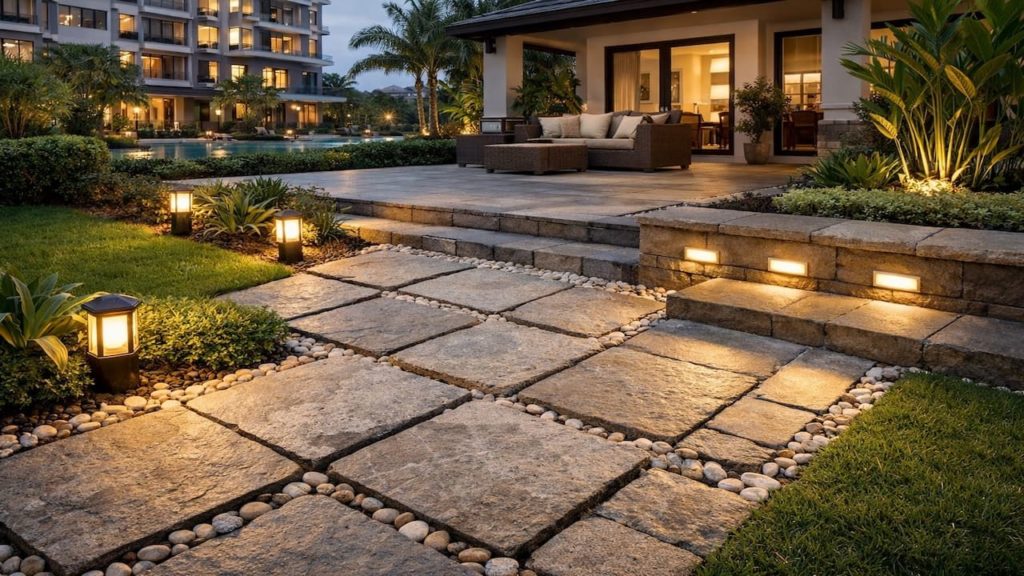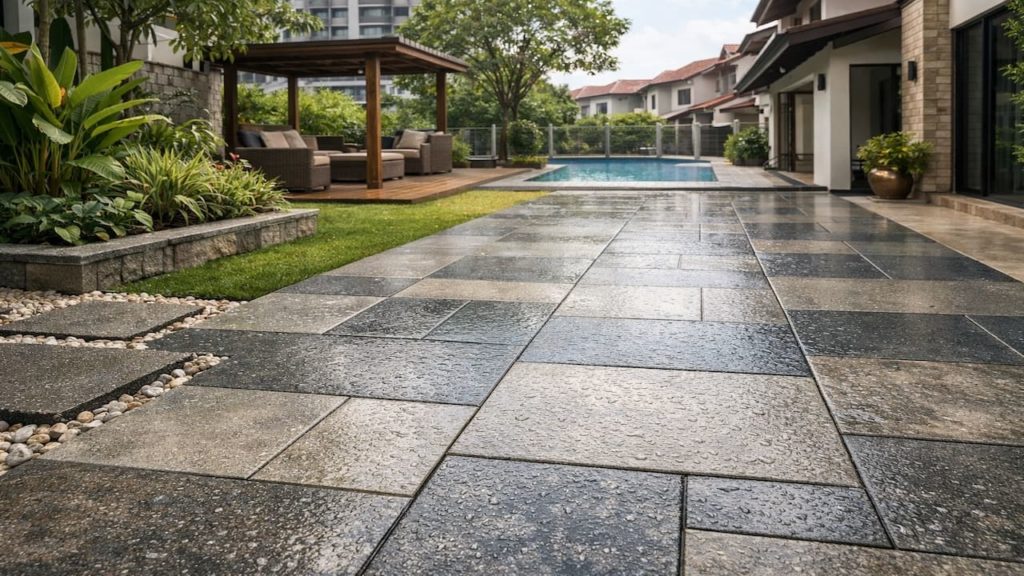
If you searched “garden paving that feels safer” you probably had a near-slip moment, or you’re tired of walking carefully every time it rains.
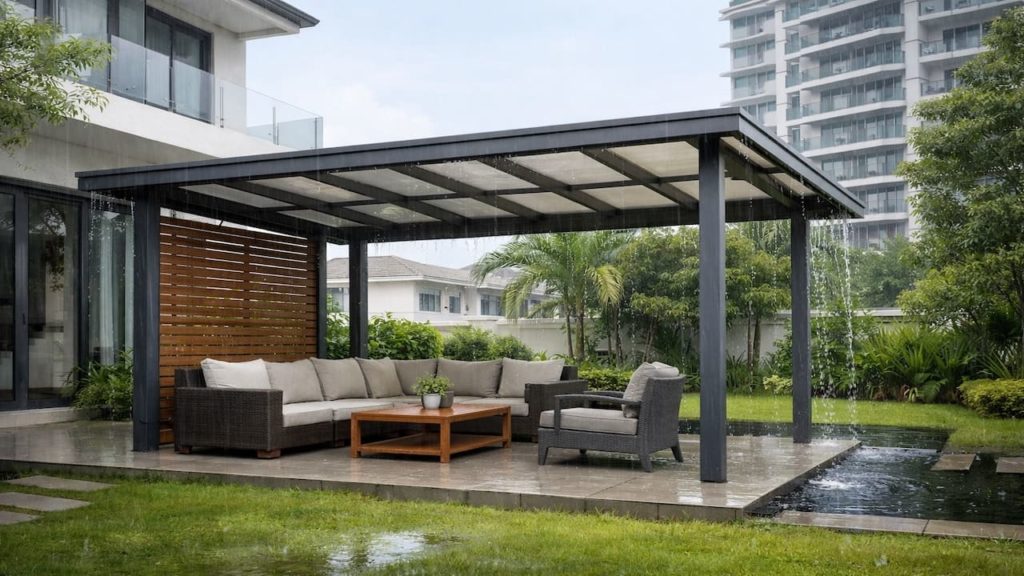
In Malaysia, wet months bring sudden downpours, algae grows fast in shade, and humid air keeps tiles damp longer. Slippery paving can come from the wrong texture, poor drainage, or soap and oil residue near outdoor taps.
In this guide, you’ll learn how to pick smart texture and simple habits for less slip so your paving feels safer, dries quicker, and stays easier to maintain through wet season.

Hi, I’m Ken. I write practical home guides for Malaysia—no fluff, just what works.
I hold a formal building design qualification and have spent about 20 years on job sites across hundreds of projects. My goal is simple: help you avoid costly mistakes with clear, safe steps—a quick way to decide what to do next.
1. Garden paving that feels safer: 5 tips
Safer paving comes from texture plus water control working together — not just “rougher is better.”
Malaysia rain turns smooth surfaces into skating rinks, but overly rough surfaces trap dirt and algae and can still get slick. You want grip and cleanability. Balance. Safety.
- Choose textured finish that still rinses clean
- Match texture level to traffic and barefoot use
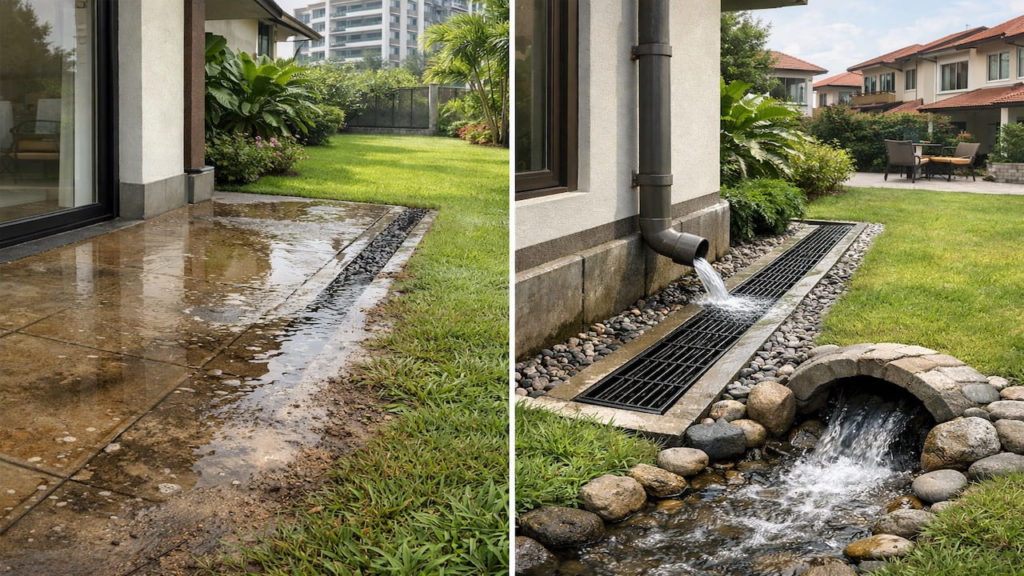
- Direct runoff so water never sits on paving
- Reduce shade damp zones by trimming plants back
- Clean algae early before it bonds to surface
You might think a quick anti-slip spray fixes everything. It can help, but if water pools and algae feeds, the slip returns, so start with texture and drainage first.
2. Less slip in wet months with smart texture
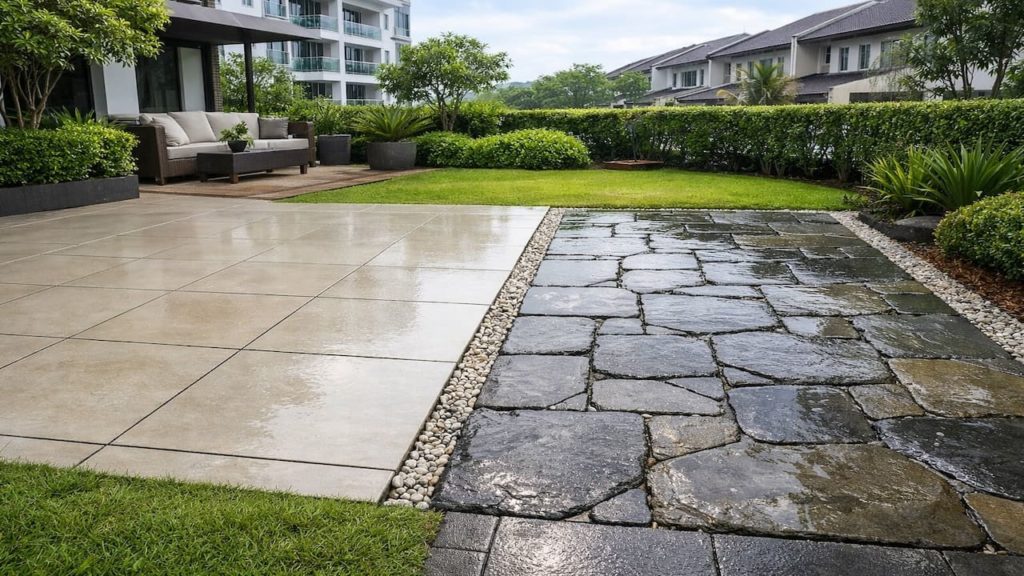
Smart texture means micro-grip that works even with thin water film.
In Malaysia wet months, the danger is the invisible film, not just puddles. A good texture breaks the film and gives your shoe or bare foot something to bite. Quiet confidence. Less fear.
- Pick matte textured tiles over glossy polished ones
- Use brushed concrete or exposed aggregate for grip
- Add ribbed strips along the main walking line
- Avoid tiny grooves that trap algae and mud
- Test sample tiles wet before buying in bulk
Some people think “deep grooves are safest.” Deep grooves often trap grime, then turn slimy, so choose texture that grips but still washes out fast after storms.
3. Why paving gets slippery in Malaysia rain
Slippery paving is usually a mix of water film and biofilm — algae is the real villain.
Humidity keeps the surface damp, shade slows drying, and dirt plus soap residue feeds growth. Once biofilm forms, even rough surfaces can slide. Wet season logic. Simple biology.
- Shaded edges stay damp and grow algae faster
- Pooled water leaves film that reduces traction
- Soap and oil near taps create slick residue
- Soil splash brings nutrients for green buildup
- Blocked drains cause backflow and constant wetness
You might blame the tile quality or say “it’s normal in Malaysia.” It’s common, but not unavoidable, so control drying and clean early and the surface stays safer.
4. How to make existing paving safer without replacing it
Improve grip by cleaning film and adding targeted traction zones.
You can often improve safety with small upgrades; RM30–200 for anti-slip strips, a stiff brush, and mild outdoor cleaner usually goes far in a small Malaysia porch. The cost is mostly time/effort if you already have tools. Start with the main path first. Small steps. Big safety.
- Scrub algae with stiff brush and rinse well
- Apply anti slip strips on main stepping route
- Redirect drip lines to stop constant wet patches
- Fill low dips that hold puddles after storms
- Open airflow by clearing clutter and trimming plants
You may think replacement is the only answer. Often, once biofilm is removed and wet spots are fixed, the same paving becomes much safer, and you avoid major spending.
5. FAQs
Q1. What paving finish is usually safest for wet months?
Matte textured finishes are usually safest. They break the water film better than glossy tiles and stay more predictable under sudden rain.
Q2. Can rough tiles still get slippery in Malaysia?
Yes, because algae and soap film can coat any surface. Regular cleaning and drainage control are still needed to keep grip consistent.
Q3. How do I test if a tile is slippery before installation?
Wet it and step carefully with the shoes you actually wear. If it feels slick when new and clean, it will be worse after algae grows.
Q4. Are anti-slip coatings worth it?
They can help, especially on existing glossy tiles. But if water pools or drains are clogged, coatings wear faster and slip risk returns.
Q5. How often should I clean algae during rainy months?
Weekly quick checks work well in Malaysia because growth is fast. Cleaning early takes minutes, while waiting makes it a hard scrub job.
Pro’s Tough Talk

Ok, straight talk. I’ve been on site for 20+ years, done hundreds of jobs, and slippery paving is not “just rain.” It’s a safety issue. Malaysia wet months turn small mistakes into a real fall risk. No joke.
Three causes. First, people choose glossy tiles because they look premium, then they become an ice rink the moment they’re wet. Second, they ignore drainage, so water sits and feeds slime. Third, they don’t clean early, and algae builds a film like invisible soap.
Do this now. Step 1: scrub off the biofilm and rinse hard. Step 2: fix the wet spots by clearing drains and filling dips. Step 3: add traction where feet land most, then keep airflow open so it dries faster.
This is the rule kill the film and stop the puddle. Aruaru #1: you slip once, then you start doing the penguin walk every rainy day. Aruaru #2: you buy a fancy mat, then it gets soaked and stinks. What is this, a porch or a skating lesson?
I’m not blaming you and I’m not saying every contractor is useless, but the structure is cold: if you pick shiny surfaces and ignore drainage, wet season will humble you. Fix it before someone kisses the floor, boss.
Summary
Safer garden paving in wet months comes from smart texture that breaks water film, plus drainage and cleaning that prevent algae buildup.
If slipping still happens, focus next on removing biofilm and fixing constant-wet zones, because Malaysia humidity keeps danger alive when surfaces never dry.
Start with the main walking line today and add grip where feet land while fixing the wet spots then move to a drainage or outdoor cleaning guide for wet season safety.