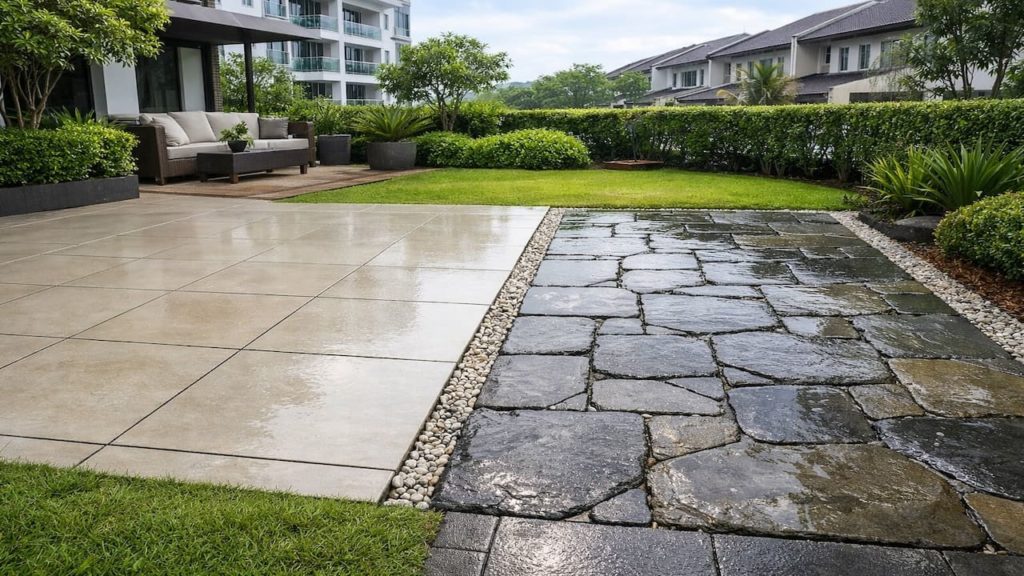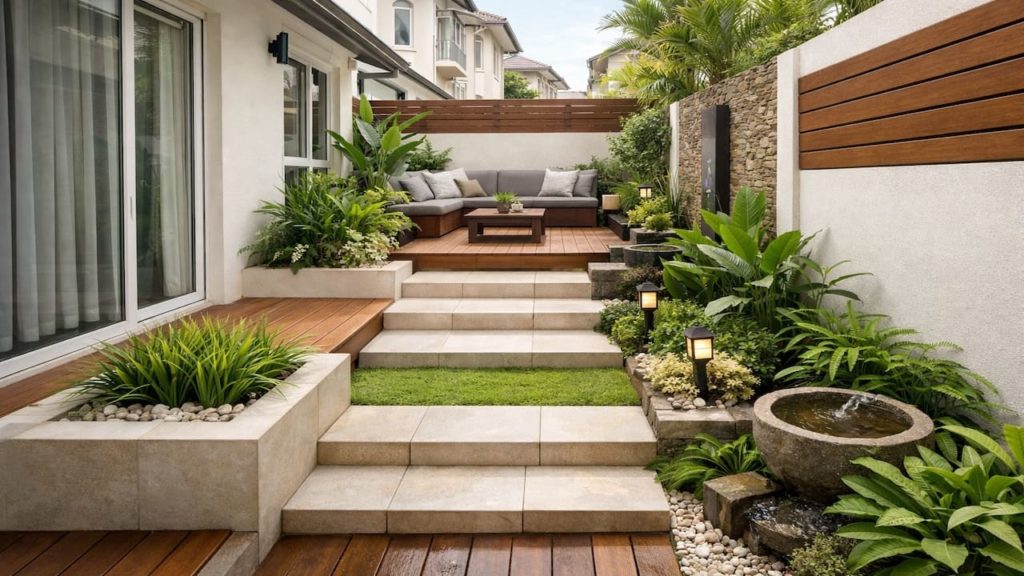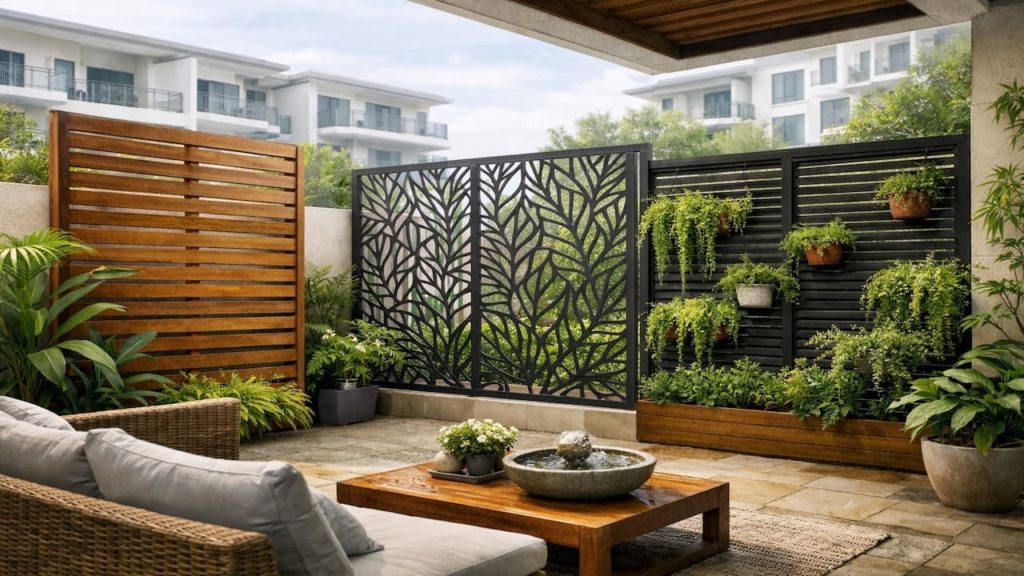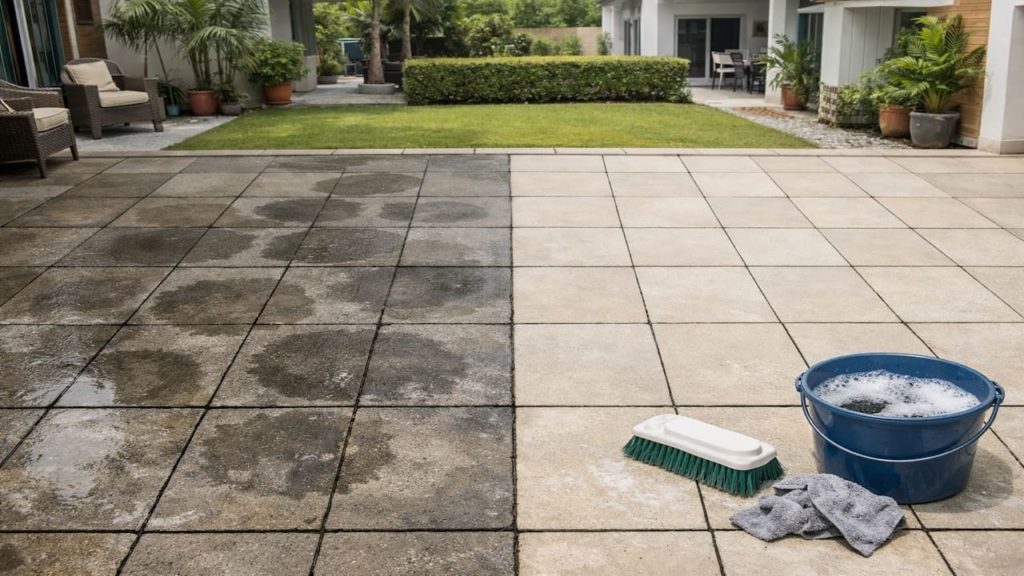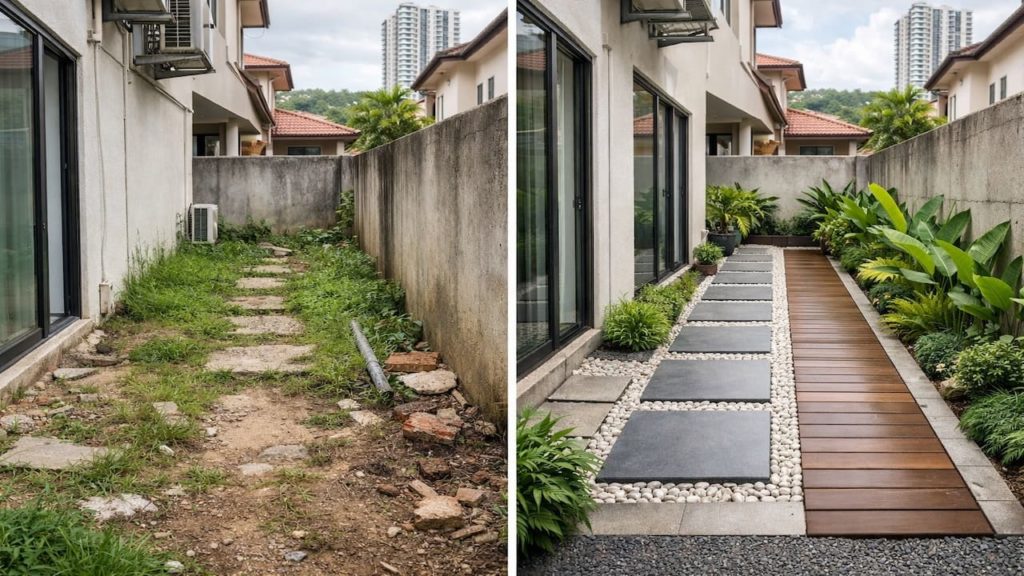
If your side yard feels like a narrow wet corridor, it is easy to stop using it, then clutter builds and the whole route becomes a problem zone.
In Malaysia, storms dump water fast, humidity slows drying, and terrace-house side passages stay shaded, so puddles, algae, and wall marks appear quickly.
In this guide, you’ll learn how to pave a side yard route so it stays clean, drains well, and feels usable even during Malaysia rainy months.

Hi, I’m Ken. I write practical home guides for Malaysia—no fluff, just what works.
I hold a formal building design qualification and have spent about 20 years on job sites across hundreds of projects. My goal is simple: help you avoid costly mistakes with clear, safe steps—a quick way to decide what to do next.
1. Paving a side-yard garden: 5 steps
Build the side yard as a daily route not as leftover space you hope stays fine.
Narrow strips magnify every mistake: a small lip becomes a trip point, and a tiny flat spot becomes a long wet line in Malaysia humidity. Budget RM200–800 for base materials, edging, and drainage tweaks for a typical side yard length, depending on access and soil condition. Route first. Then finish details. Clean corridor.
- Measure width and mark a straight walking line
- Set slope away from walls toward drain exits
- Compact a strong base before any pavers
- Use tight joints to block silt and weeds
- Finish edges with restraints to stop drift
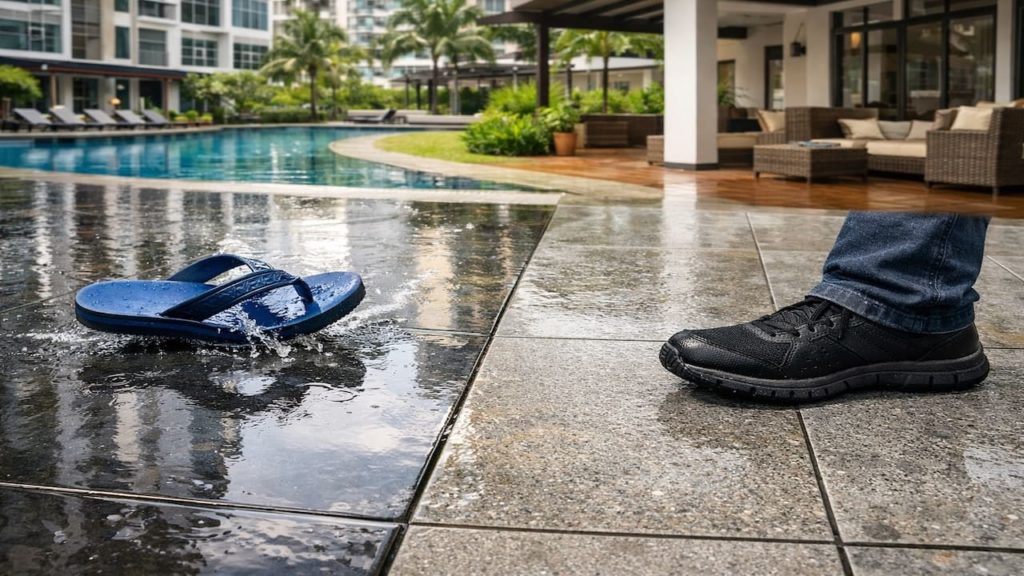
Some people pave wall to wall with smooth tiles, then get a slick tunnel that stays damp for days. In Malaysia wet months, that becomes a slip and algae factory. Make drainage and grip the priority. Your future cleaning time depends on it.
2. Turn narrow strips into useful clean routes
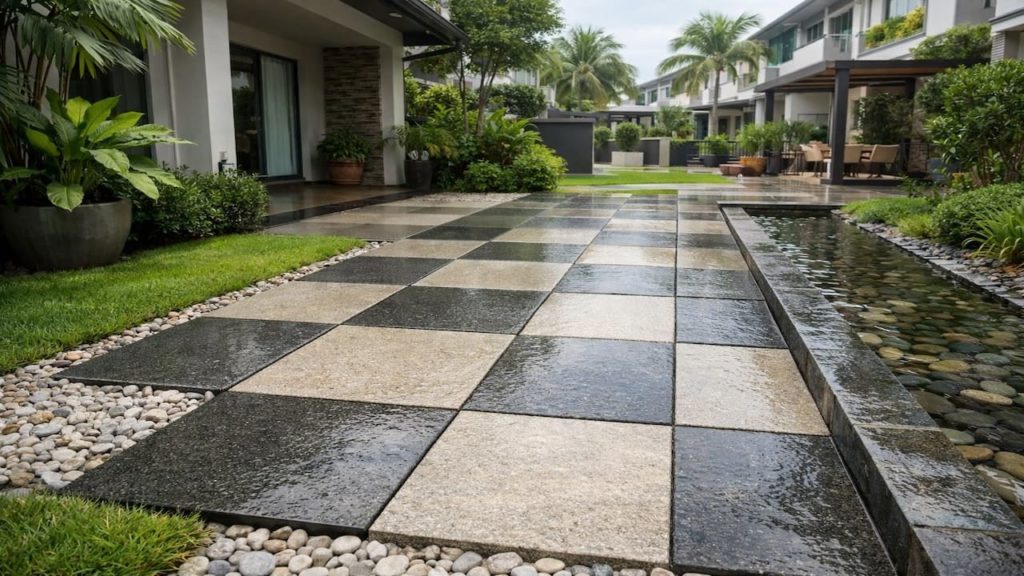
Keep the layout simple and straight so the side yard looks longer and stays easier to wash.
In a tight corridor, busy patterns and many cuts create more joints to trap silt, and Malaysia rain will pack those joints with dirt quickly. If you are not buying new materials and you are only adjusting cleaning and flow, cost is mostly time/effort. The premium look in narrow strips comes from calm lines and consistent joints. Quiet design.
- Choose one paver direction and stick to it
- Use fewer cuts by sizing pavers to width
- Leave a gravel buffer strip beside walls
- Place drains where rinse water naturally gathers
- Keep the route clear of pots and hoses
You might think adding more pattern makes it interesting, but in narrow strips it reads as clutter and becomes harder to clean. Straight lines also help you spot low spots early. Keep it disciplined. Clean routes feel bigger.
3. Why side yards stay wet and dirty in Malaysia
Side yards stay wet because they rarely get sun and water has fewer escape routes.
Walls block wind and light, and Malaysia humidity keeps dampness lingering even after rain stops, so algae and stains build faster. Downpipes often dump water into the corridor, and flat paving turns that into a long puddle. Budget RM50–300 for small fixes like downpipe redirection, joint refresh, and a gravel band, depending on what you already have. Early signal. Repeat wet lines.
- Shade reduces drying and keeps algae active
- Downpipes concentrate water into one impact spot
- Flat paving creates long puddle lines after storms
- Dirty joints trap silt and turn into sludge
- Wall splashback stains paint and darkens edges
People blame “Malaysia weather” and give up, but the corridor can work if water exits and the surface grips. Contractors are not always wrong, they often follow standard flat pads. The standard is not tuned for your shaded strip. Improve the water route and the whole corridor changes.
4. How to pave a side yard that drains and rinses easily
Create one clear runoff direction so you can hose the corridor and finish in minutes.
Start by planning the lowest line, then build the base and set the slope so runoff leaves the corridor—Malaysia storms will test it immediately. Budget RM250–1,200 if you need base rebuild, drain channel work, or edge restraints for a long side yard, depending on length and access. Keep joints tight and edges strong so the route stays stable. Functional first.
- Mark low line using string and a level
- Install a simple drain channel if pooling repeats
- Lay compacted gravel base to stop settling
- Set textured pavers for wet season grip
- Brush joint sand in and compact firmly
You might think you need expensive materials to make it feel premium. You do not. A straight, dry, easy to rinse corridor feels premium because it behaves well every day. If the corridor dries faster, algae drops and smell drops too. That is the real upgrade.
5. FAQs
Q1. How wide should a side yard walkway be?
Wider is easier, but even a narrow strip can work if the route is clear and stable. In Malaysia terrace homes, focus on a straight line you can rinse and walk comfortably.
Q2. Should I leave a gap between paving and the wall?
Yes a drainable buffer helps because it reduces splashback marks and gives water an escape route. A gravel strip also keeps dirt from washing into joints.
Q3. What paving finish works best in shaded corridors?
Use light texture for grip and choose tones that hide wet marks and algae edges. Smooth glossy surfaces look clean but can stay slippery after storms.
Q4. Do I need a drain channel in the side yard?
Not always, but if water pools in the same line after rain, a simple channel can be the clean fix. Start with slope and downpipe control, then add a channel if needed.
Q5. How do I keep the side yard from smelling musty?
Improve drying by clearing debris, fixing pooling, and keeping joints clean. In Malaysia humidity, airflow matters, so avoid blocking the corridor with pots and storage.
Pro’s Tough Talk

Listen. I have been on site for over 20 years and I have done hundreds of jobs, and side yard corridors are where sloppy paving gets exposed first.
It breaks into 3 causes: no slope, dirt packed joints, and water dumped from downpipes. Malaysia humidity keeps it damp like a wet umbrella left in a car boot.
Do 3 steps now: bucket test the corridor to find the low line, clear the grate and joints, then set one runoff direction away from walls. That moment when you squeeze past the bins and your foot lands on a slimy patch, and that moment when the wall edge looks permanently dark, both are signals.
Do not blame yourself and do not blame every contractor, but accept the structure: narrow strips need stricter drainage. Seriously, if water has nowhere to go, it will stay right where you walk.
Ignore it and you will keep doing the same hose rinse that turns into a muddy lake again, like trying to dry a corridor with a spoon. Fix the water exit, or enjoy your personal slip tunnel.
Summary
A good side yard paving route is straight, textured, and built with one clear runoff direction so Malaysia storms do not turn it into a wet slimy corridor.
If the corridor stays dirty, fix the lowest line first, then control downpipes, then tighten joints and add a drainable wall buffer for easier rinsing.
Do one bucket test today and continue to the guides on paving near drains and paving joints for gardens to keep narrow routes cleaner and safer.