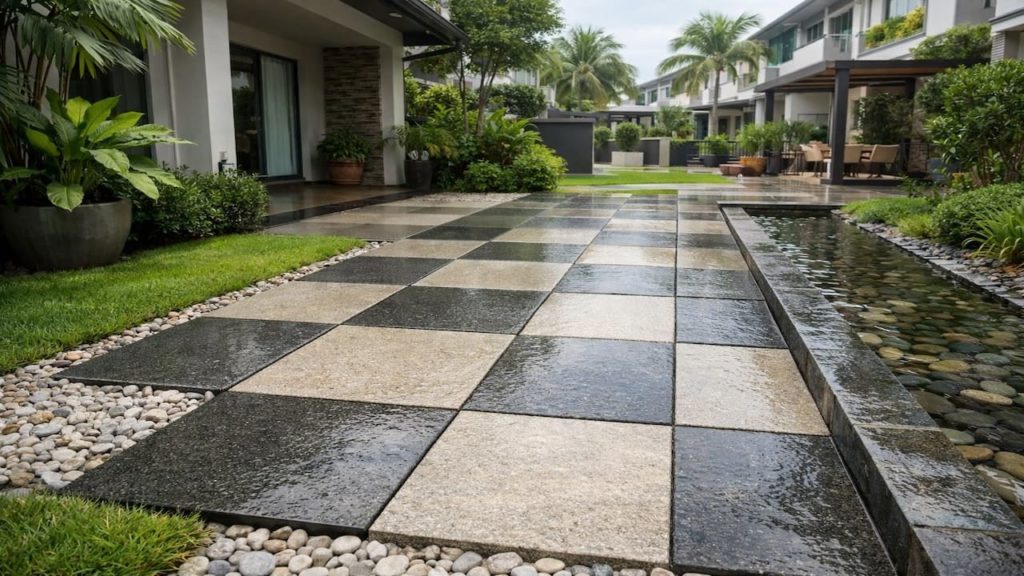
Garden entry paving feels “fine” until a heavy Malaysia downpour turns the first few steps into a slippery surprise.
Most scary slips happen at the entry because water rushes in, shade keeps it damp, and smooth surfaces hold a thin film that looks harmless.
In this guide, you’ll learn how to make entry paving slip safer in Malaysia terrace homes and condo gardens, using 5 checks that prevent scary steps after heavy rain.

Hi, I’m Ken. I write practical home guides for Malaysia—no fluff, just what works.
I hold a formal building design qualification and have spent about 20 years on job sites across hundreds of projects. My goal is simple: help you avoid costly mistakes with clear, safe steps—a quick way to decide what to do next.
1. Slip-safe paving for garden entries: 5 checks
Treat the entry as a wet zone because it gets more water than you think.
Entries receive runoff from roofs, walls, and gutters, plus splash from cars, hoses, and plant watering. In Malaysia humidity, the surface stays damp longer, so film builds up quietly. If you plan it like a dry patio, you end up with a high-risk strip right where people move fast. First impression.
- Watch entry water flow during real downpours
- Check puddles near door threshold and steps
- Check shade hours that slow drying at entry
- Check algae film starting along joint lines
- Check splash marks on walls and skirting
You might think a quick mop or rinse is enough. In Malaysia wet months, water returns daily, and the entry needs design that drains and grips, not constant emergency cleaning. Make it safer by structure. No stress.
2. Avoid scary steps after heavy downpours
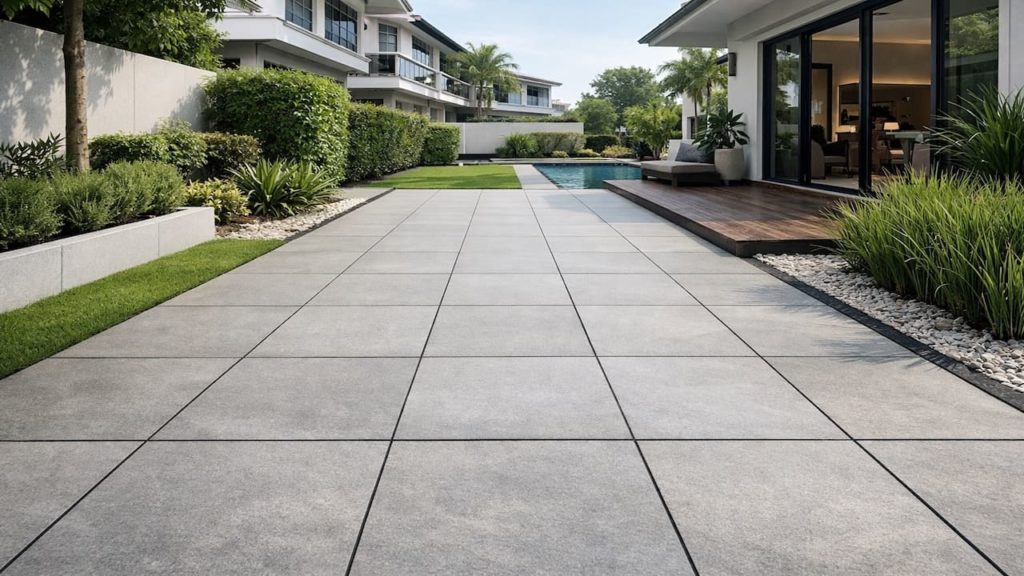
Choose texture that grips when wet so your foot does not slide on a water film.
Shiny finishes look bright, but they can turn into a skating feel when rain leaves a thin layer. Textured surfaces break the film and give your sole a bite. In Malaysia, the right texture also hides small dirt marks so you are not scrubbing daily just to keep it safe. Grip matters.
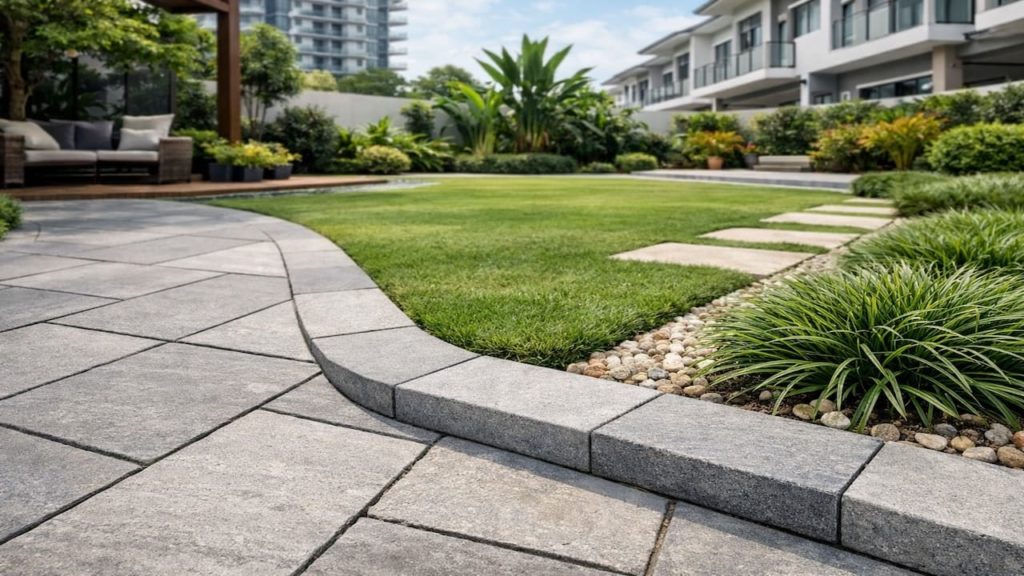
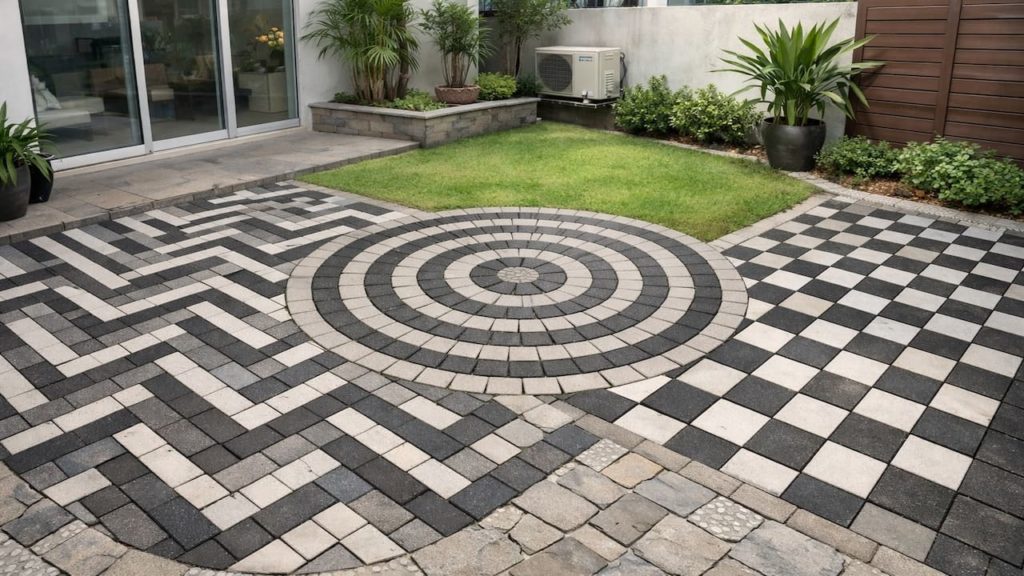
- Choose matte textured finishes over glossy faces
- Test grip with wet sandals and bare foot
- Avoid micro grooves that trap grime and algae
- Prefer chamfered edges that shed thin water
- Keep joint color close to paver tone
Some people worry textured paving looks rough or cheap. In real rain, it looks smart because it stays usable. If you want “premium,” use lighting and planting, not a slippery surface. Priorities.
3. Why garden entries get slippery in Malaysia homes
Film builds faster at entries because water and dirt meet there every day.
Entries collect fine dust from the street, soil from pots, and leaf bits from plants, then rain turns it into a thin paste. Shade from walls and gates slows drying, so algae starts at edges and joints. In terrace homes, downpipes and aircond drains often dump near the entrance zone, making the same area wet again and again. Repeat wetting.
- Track downpipe discharge near entry paving
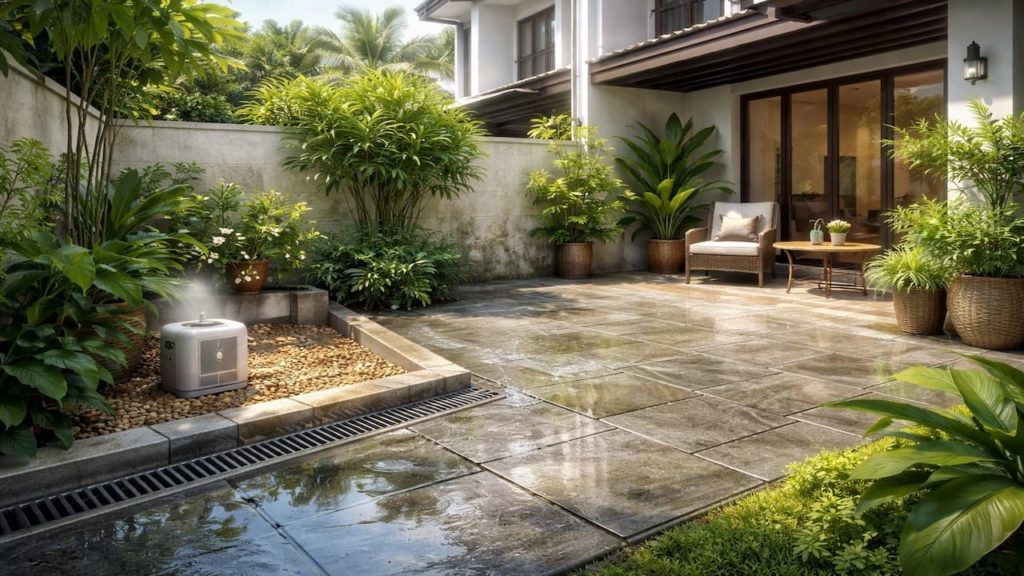
- Check aircond drip points hitting entry corners
- Look for soil splash from nearby beds
- Inspect edges where water sits after storms
- Test slope using a bottle and water pour
You may blame “rainy season,” but the real cause is water staying too long. If you shorten drying time and reduce dirt input, slip risk drops a lot. Fix the pattern, not the weather. Clear win.
4. How to make entry paving safer and drier
Drain away from the threshold and lock the edges so surfaces stay stable underfoot.
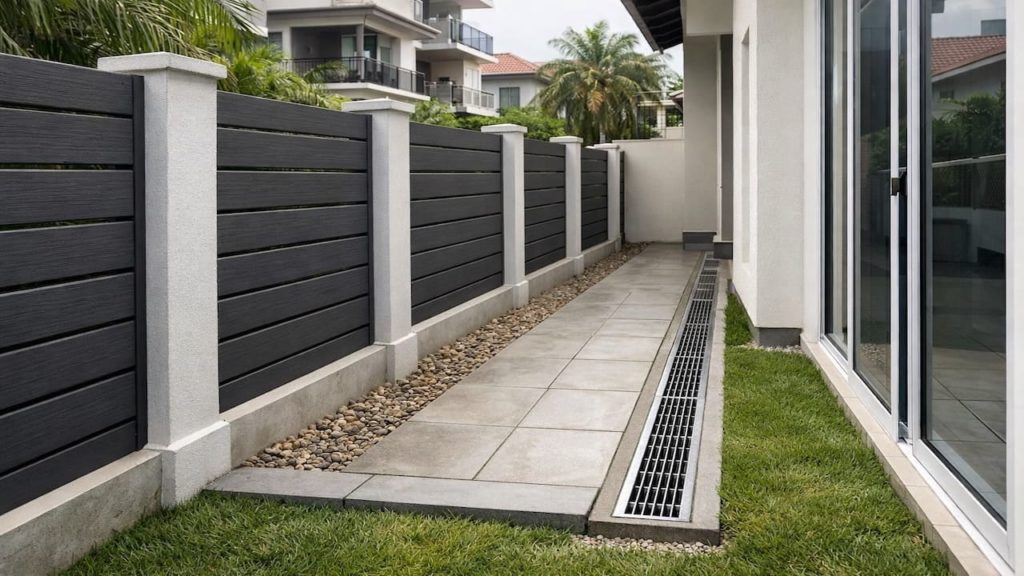
Give water a route away from doors and steps, then remove traps where film forms. In Malaysia, even a small fall and a simple drain channel can reduce slickness and wall splash stains. If you need to add anti-slip strips, a drain grate, or joint materials, plan RM30–250 depending on the fix. Safer entry.
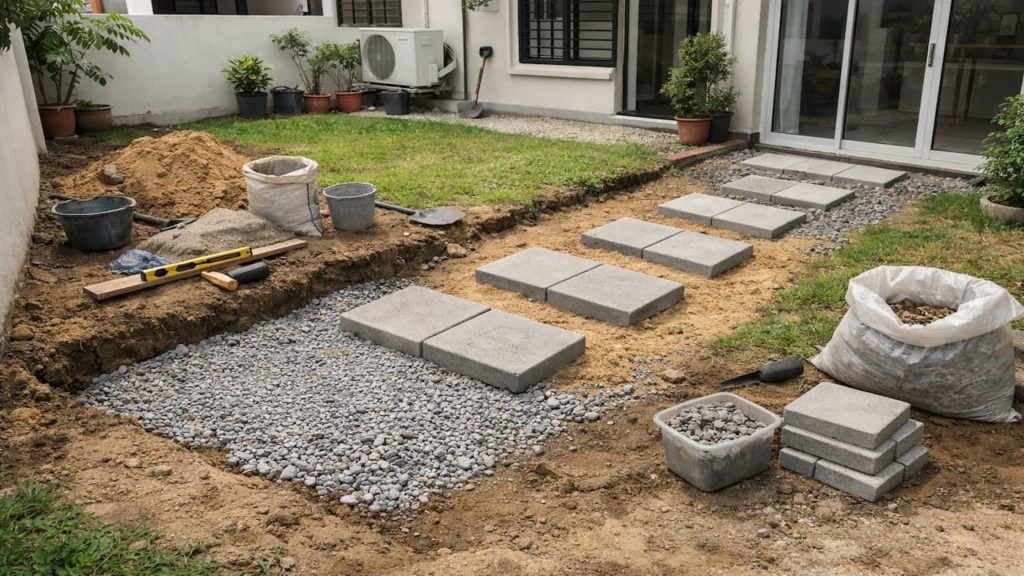
- Create a gentle fall away from door threshold
- Add a drain channel where runoff concentrates
- Redirect downpipes away from walking zone
- Reset loose pavers so nothing rocks or lifts
- Clean joints then refill to stop algae growth
You might think adding a mat solves it. Mats help, but they also trap moisture and dirt underneath in Malaysia humidity, then the surface stays slimy. Use mats as backup, not as your main safety plan. Build the fix.
5. FAQs
Q1. What is the safest finish for entry paving in wet months?
Matte, textured finishes are usually safer than glossy ones. Always test with wet sandals because grip varies by product and wear.
Q2. Are anti-slip coatings worth it for an entry?
They can help, but only after drainage and cleaning are addressed. Coatings on a dirty, wet surface fail fast and can look patchy.
Q3. How do I reduce algae on entry paving?
Reduce shade wetness and dirt by improving drainage and keeping joints tight. Rinse and brush lightly on a schedule during wet season.
Q4. Why is the first step near the door the worst?
It often gets the most runoff and the least sun, so water sits there. That creates a thin film that feels slippery even when it looks clean.
Q5. Can I fix slip risk without replacing the whole surface?
Often yes by improving slope, adding a drain, redirecting downpipes, and choosing better joint fill. If the surface is polished and dangerous, replacement may be smarter.
Pro’s Tough Talk

Listen. I’ve got 20+ years on site and I’ve handled hundreds of jobs, and the entry is where people slip because they relax for one second.
The causes are three. Water has no exit, the surface has no bite, and dirt feeds the slimy film. Malaysia humidity keeps that film alive like it is paying rent.
Do these 3 moves now. First, watch the water during a real downpour and mark where it pools. Second, fix the fall or add a drain so water leaves fast. Third, choose texture and reset joints so your feet actually grip. You know the late-night flip-flop step where you almost split. You know the rush-out-to-grab-delivery step in wet socks. Seriously, why are you testing physics?
I’m not blaming you, and I’m not saying every contractor is careless, but the structure is cold: drainage, texture, and cleanliness decide safety. Drain fast grip wet and the scary steps stop.
Ignore it and keep doing the “ice skating entry” routine if you want, but don’t call it bad luck.
Summary
Make the entry a wet-zone by design: check runoff, reduce puddles, and choose texture that grips when wet.
If scary slips keep happening, fix slope and drainage first, then address joints and dirt sources that feed algae film.
Fix drainage then choose texture and your Malaysia garden entry stays safer after heavy downpours. Next, read a runoff control guide or a wet-season cleaning guide.