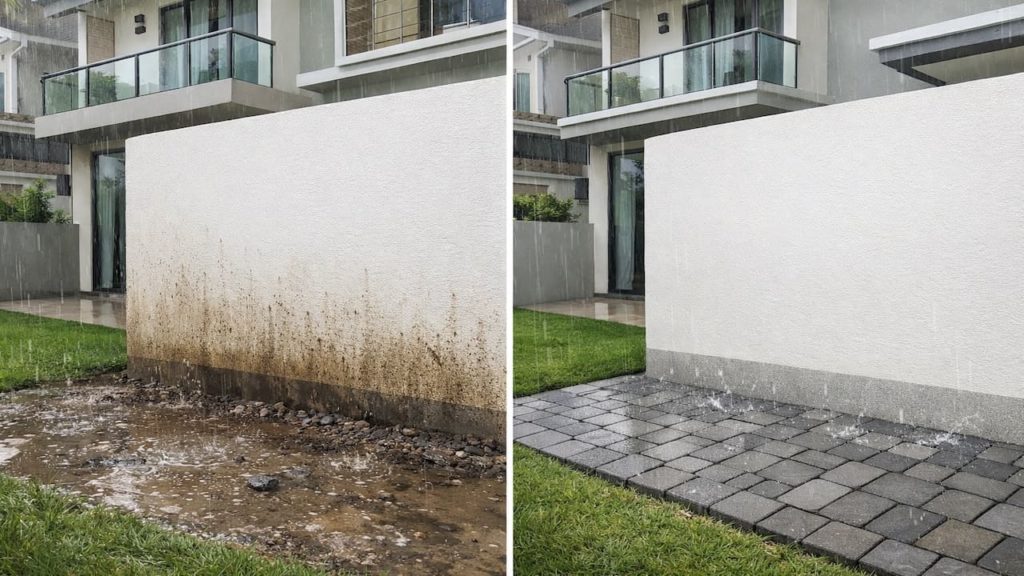
If your garden wall keeps getting dark splash marks after rain, it can make the whole home look older, even when the paving is new.
In Malaysia, heavy downpours, constant humidity, and terrace-house side yards that stay shaded cause water to bounce and carry silt onto walls again and again.
In this guide, you’ll learn how to reduce splashback fast by checking paving height, slope, surface texture, and edge details that suit Malaysia rainy months.

Hi, I’m Ken. I write practical home guides for Malaysia—no fluff, just what works.
I hold a formal building design qualification and have spent about 20 years on job sites across hundreds of projects. My goal is simple: help you avoid costly mistakes with clear, safe steps—a quick way to decide what to do next.
1. Stop splashback with paving: 5 checks
Splashback drops when water hits a surface that drains instead of bouncing against the wall.
Splash marks come from two things: water impact and dirty runoff, and Malaysia storms deliver both in seconds. If you are only adjusting layout and cleaning habits, cost is mostly time/effort. The biggest win is creating a dry buffer beside walls. Less bounce. Less staining. Cleaner lines.
- Check slope sends water away from walls
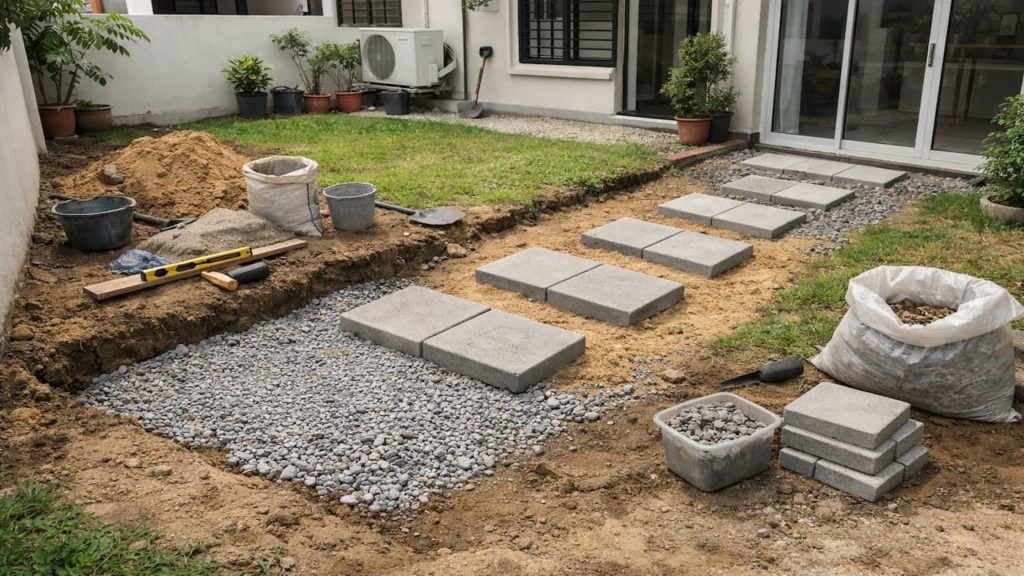
- Leave a gravel strip beside the wall edge
- Choose texture that breaks water impact force
- Lower paving height below wall base line
- Inspect edge joints where silt collects fastest
Some people think wall marks are just “rain season normal” and accept repainting. In Malaysia humidity, stains set in and algae follows, so the marks get harder to remove each month. Fix the splash pattern and the wall stays cleaner. It is a system, not luck.
2. Save walls from marks during rainy months
Protect walls by adding a buffer zone where water can drop and drain.
A narrow drainable band beside the wall reduces the rebound that throws dirty droplets upward—this matters most in terrace side yards where walls sit close to the paving. Budget RM60–250 if you add gravel, edging, or a simple drainable strip along a short run. Small change. Big visual payoff. Less cleaning.
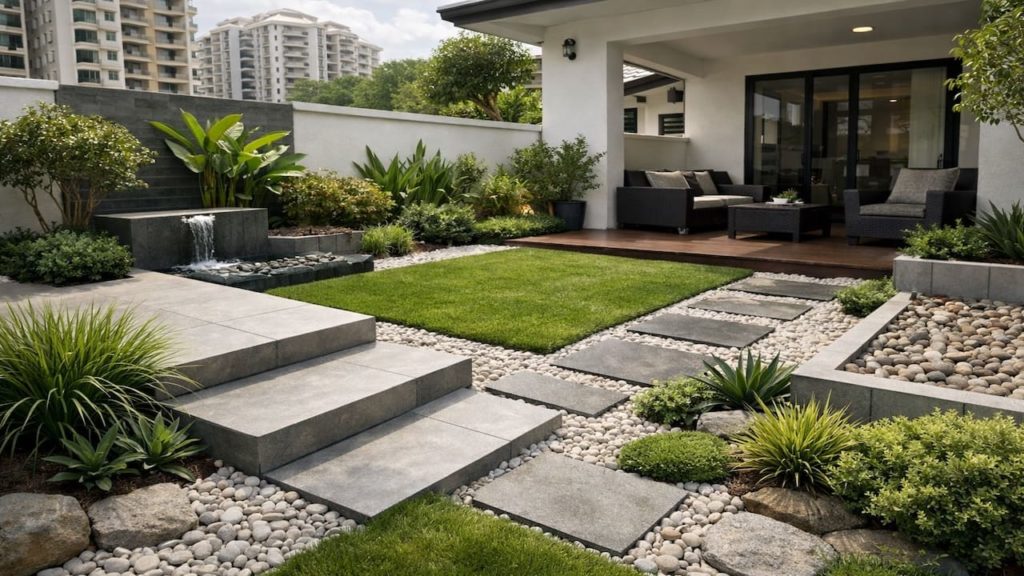
- Add 100 to 200 mm gravel band beside wall
- Use edging to stop soil washing onto paving
- Keep downpipe outlets aimed into drainable zones
- Avoid smooth tiles right beside painted walls
- Clean silt after storms before it stains
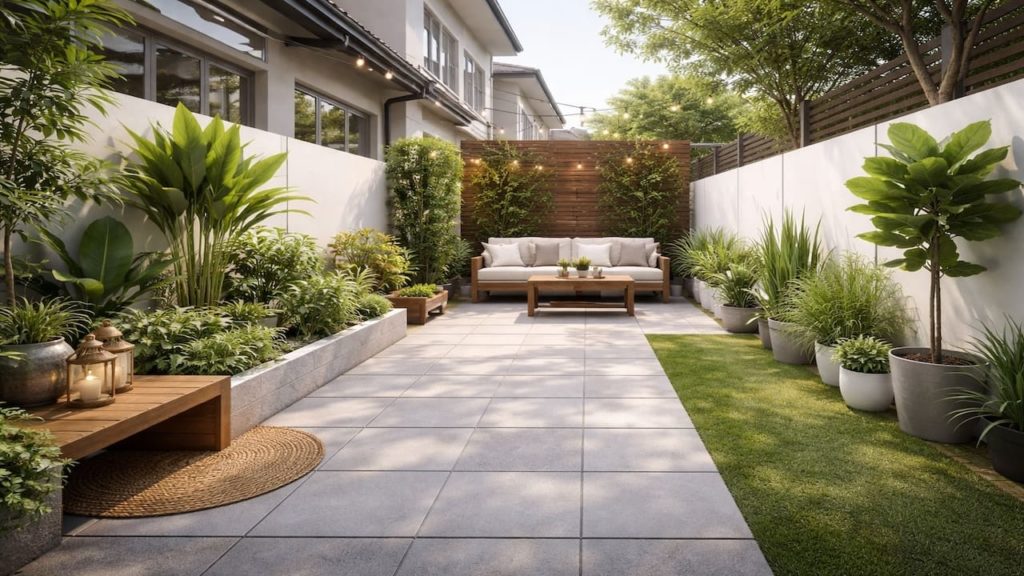
You might worry a gravel band looks unfinished. Done neatly with clean edging, it reads intentional and modern, and it helps drainage in Malaysia wet months. It also makes wall repainting last longer. A calm edge beats a dirty wall.
3. Why splashback marks happen on garden walls
Marks happen when dirty water rebounds upward and the wall stays damp long enough for stains to bond.
Malaysia storms push roof runoff, ground runoff, and fine silt together, and the first impact zone is often right at the wall line. If the paving is too high or flat, water sits and keeps splashing with every drip and step. cost is mostly time/effort to diagnose and adjust, but ignoring it makes repainting and repairs more likely. Wall stains are a signal.
- High paving sends runoff straight into wall base
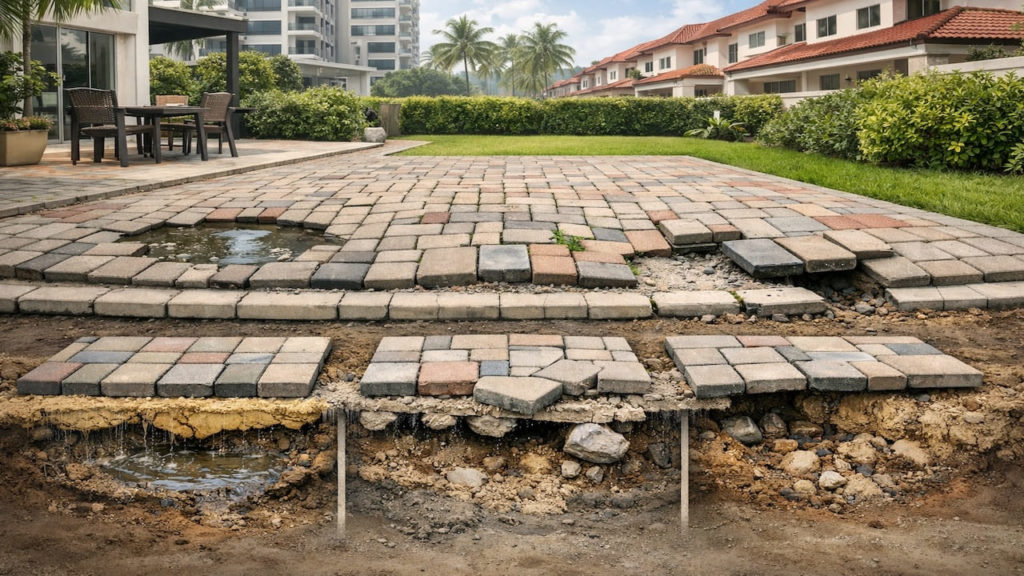
- Flat areas pool and create repeated splash cycles
- Smooth surfaces bounce droplets higher and farther
- Soil wash carries brown silt onto wall paint
- Humidity keeps walls damp so stains lock in
People blame the paint quality, but the real cause is water behavior at ground level. Contractors may install paving tight to the wall because it is simple and tidy on day one. In Malaysia wet months, that tidy line becomes a stain factory. Change the edge conditions and the wall improves.
4. How to reduce splashback without rebuilding everything
Redirect water and soften the impact zone so droplets stop jumping onto the wall.
Start with the wall edge: add a drainable strip, adjust the slope, and break the water film with texture—Malaysia rain will test it immediately. Budget RM80–350 for edging, gravel, joint refresh, and small slope corrections for a typical terrace side run. Focus on the first 200 mm beside the wall. That zone decides the marks.
- Cut a narrow channel and fill with clean gravel
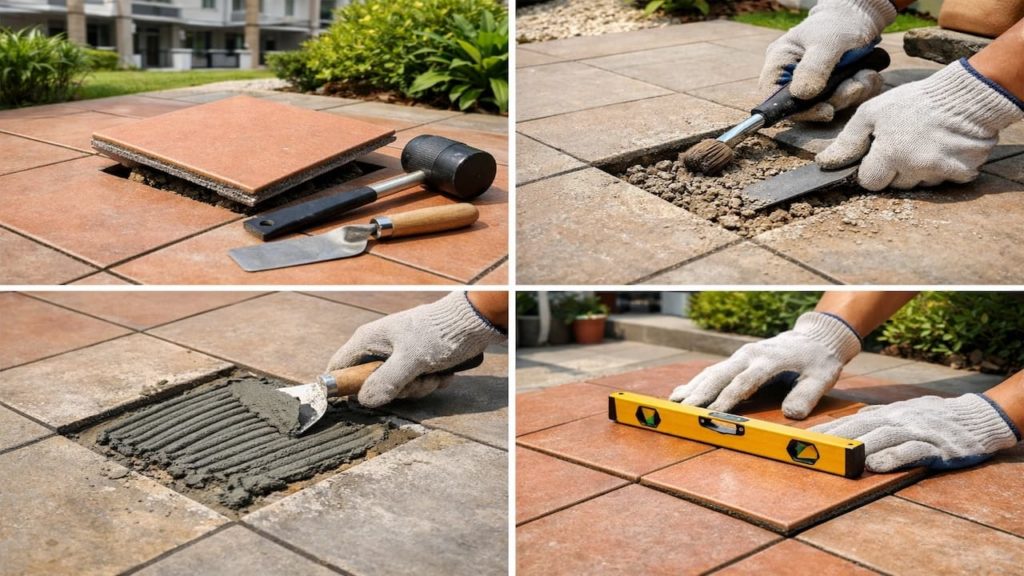
- Reset the first paver row slightly lower
- Change surface finish near wall to textured
- Add downpipe splash blocks to reduce impact
- Top up joints to stop silt pumping upward
You might think splashback needs a full redesign. Often it does not, if you treat the wall edge as a drainage detail, not just a border. When water exits cleanly, walls dry faster and stay lighter. Then cleaning becomes occasional, not constant.
5. FAQs
Q1. How wide should a gravel strip be to stop splashback?
A narrow strip often helps, and wider strips reduce splash more. In Malaysia terrace yards, even a small drainable band beside the wall can make a visible difference.
Q2. Can I stop splashback by sealing the paving?
Sealing does not stop splashback because bounce comes from impact and slope. Fix drainage and add a buffer zone first, then consider sealing only for stain resistance.
Q3. Why are the marks worse near downpipes?
Downpipes concentrate water into one impact spot, so droplets rebound with more force. Add a splash block or direct the outlet into a drainable area so water loses energy.
Q4. Does textured paving reduce wall staining?
Yes, texture breaks the water film and reduces rebound height. It also helps grip during Malaysia rainy months, which is useful near gates and doors.
Q5. How do I clean splash marks without damaging paint?
Start gentle and rinse well, because harsh cleaners can dull paint and leave residue. Preventing repeat splashback is the real solution so cleaning stays light.
Pro’s Tough Talk

Listen, I have been on site for over 20 years and I have done hundreds of jobs, and wall splash marks are never “mystery stains.”
It breaks into 3 causes: paving too high at the wall, water pooling with no exit, and smooth surfaces that bounce dirty droplets. Malaysia rain and humidity just keep replaying the same scene.
Do 3 steps now: pour a bucket and watch the wall line, add a gravel buffer strip, then fix the slope so runoff leaves the wall zone. That moment when you hose the floor and the wall gets sprayed brown, yes, that.
Do not blame yourself and do not blame every contractor, but accept the structure: walls stain when water rebounds at the base. Seriously, if your paving kisses the wall like it is glued, what did you expect.
Ignore it and you will keep scrubbing like a hamster on a wheel every rainy month. Fix the edge and let the wall breathe, or enjoy your new “two tone” paint job.
Summary
Stop splashback by managing the wall edge: slope away, lower paving at the base, and add a drainable buffer so Malaysia storms do not throw silt onto paint.
If marks keep returning, treat it as water behavior, not paint quality. Fix pooling and downpipe impact zones before you repaint again.
Add one buffer strip today and continue to the guides on paving near drains and joint maintenance for cleaner wet season results.