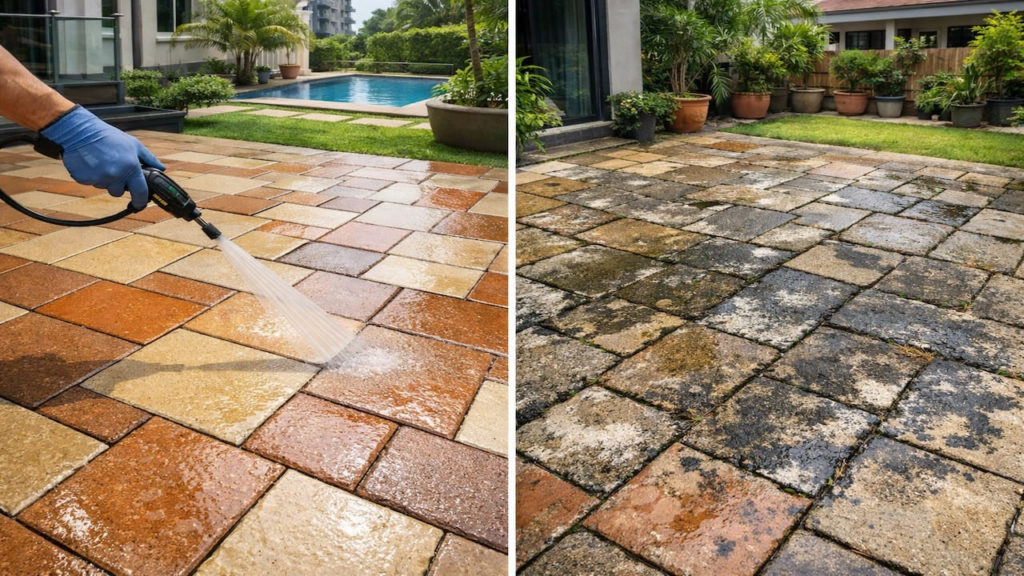
If your garden paving looks clean right after scrubbing, then the stains return a few days later, you are not imagining it.
In Malaysia, storms bring fine silt, humidity keeps surfaces damp, and shaded terrace-house corridors dry slowly, so marks reappear fast and look stubborn.
In this guide, you’ll learn why stains keep coming back and how to spot the real cause so your next cleaning actually lasts through rainy months.

Hi, I’m Ken. I write practical home guides for Malaysia—no fluff, just what works.
I hold a formal building design qualification and have spent about 20 years on job sites across hundreds of projects. My goal is simple: help you avoid costly mistakes with clear, safe steps—a quick way to decide what to do next.
1. Fix stained garden paving: 5 signs
Recurring stains mean the cause is still active.
Most paving stains are not “one time dirt,” they are a repeat cycle of water plus silt plus film, and Malaysia humidity keeps that cycle running. cost is mostly time/effort if you focus on diagnosis, better rinsing, and small behavior changes. If you stop the cause, the stain stops returning. Simple chain.
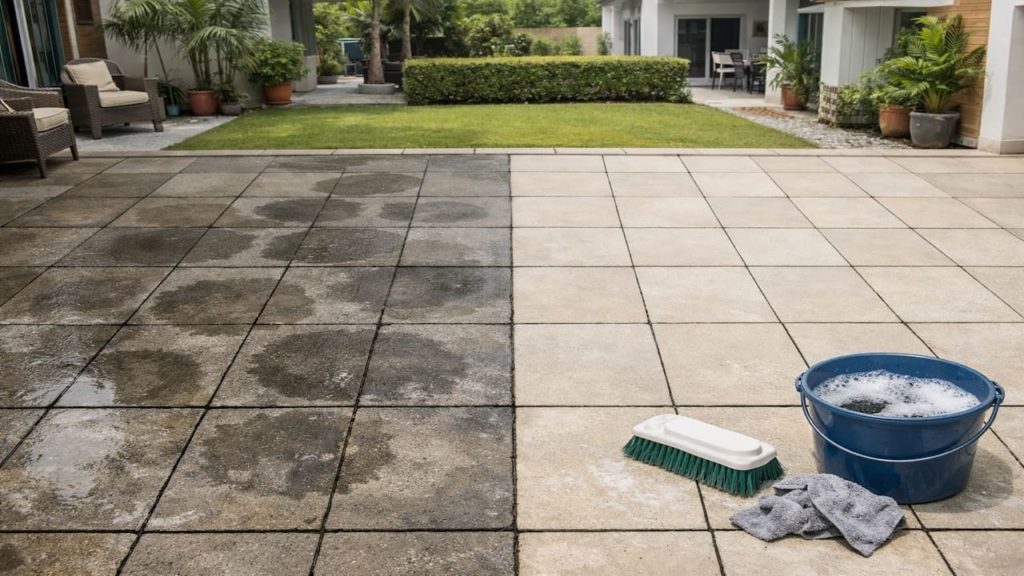
- Stains reappear first in the same damp corner
- Dark lines form along joints and borders again
- Surface feels slick even after deep scrubbing
- Water beads in patches and soaks in elsewhere
- Marks get worse right after rain or hosing
Some people assume they did not scrub hard enough. In Malaysia wet months, you can scrub daily and still lose if water pools and dirt keeps feeding the surface. Cleaning is not the only lever. Fix water flow and film buildup, then cleaning becomes easy again.
2. Why marks return even after you scrub hard
Marks return when stains are fed from below or nearby.
If silt keeps washing onto the paving, or algae keeps growing in damp shade, your surface gets “repainted” by the environment after every storm—Malaysia makes this happen fast. cost is mostly time/effort to change runoff routes and stop dirt sources. A hard scrub that leaves residue can also make stains come back darker. The goal is removal and prevention.
- Soil wash from beds keeps feeding brown stains
- Dirty joints pump sludge up after each rain
- Downpipes splash grit and create repeated marks
- Soap film traps dirt and makes patchy sheen
- Pooling zones stay wet and regrow algae fast
You may feel like the paving is “cheap,” but even premium surfaces look bad when the system feeds stains. Contractors are not always wrong, they often leave a flat spot because it looks neat at handover. The wet season reveals the truth. Stop the feed lines, then stains lose power.
3. Why stained paving is common in Malaysia gardens
Humidity slows drying so dirt bonds harder.
When surfaces do not dry, biofilm builds, and fine dirt sticks like glue, especially in shaded side yards and near walls—Malaysia climate is perfect for that. cost is mostly time/effort if you improve drying and rinse timing, but small fixes can also help if stains are severe. Think of stains as a moisture story, not just a dirt story. Damp film is the enemy.
- Shaded corridors stay damp and grow biofilm
- Storm silt settles into texture and joint lines
- Hard water deposits leave pale rings and patches
- Leaf tannins stain porous pavers during rain
- Wall splashback spreads dirty droplets onto surfaces
People blame one event, like a single storm or one spill, but the repeat pattern matters more. If the same patch always stains, that patch is telling you where water sits or where dirt enters. Fixing that spot changes the whole look. Pattern is information.
4. How to stop stains returning after cleaning
Clean, then change the conditions that recreate stains.
Start with a rinse plan: remove loose grit first, scrub with a residue free cleaner, then flush water toward an exit—Malaysia rain will undo shallow cleaning in days. Budget RM50–250 if you add edging, gravel buffer strips, or joint refresh to stop silt feeding. Small structural tweaks make cleaning last. This is the real trick.
- Rinse loose grit before you scrub any surface
- Use neutral cleaner and rinse until water clears
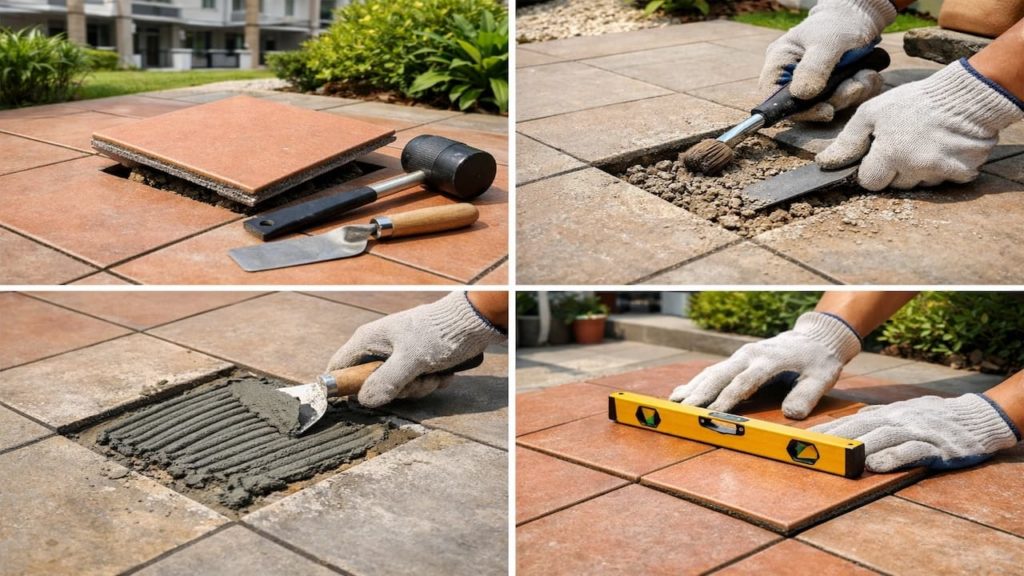
- Brush joints clean and top up missing fill
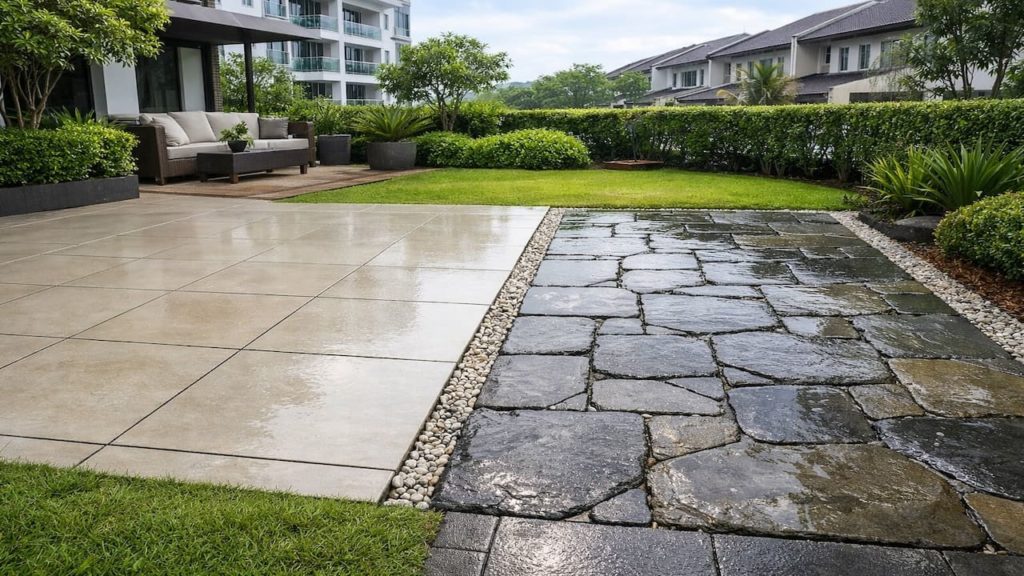
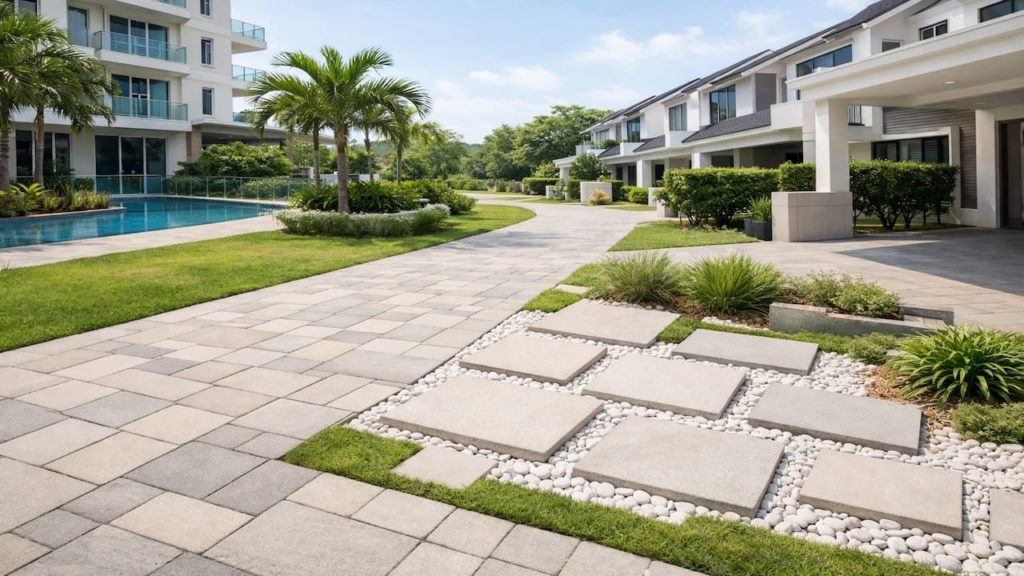
- Add gravel strip to block soil wash inward
- Fix the pooling spot with slope or drain
You might want to jump straight to strong chemicals. That can strip joint fill, etch surfaces, or leave residue that traps more dirt, especially in Malaysia humidity. Control water and dirt flow first, then use stronger methods only on test patches. Clean smarter, not harder.
5. FAQs
Q1. How do I tell algae stains from dirt stains?
Algae often feels slimy when wet and appears greenish or dark in shaded areas. Dirt stains are usually brown or grey and follow runoff paths after rain.
Q2. Why do stains come back right after it rains?
Rain brings fresh silt and keeps surfaces damp, so marks reform quickly in the same low spots. If water pools, the stain cycle restarts immediately.
Q3. Can pressure washing solve recurring stains?
It can remove surface dirt, but it can also strip joint fill and roughen weak areas, making stains return faster. Use it carefully and restore joints afterward.
Q4. Should I seal paving to stop stains returning?
Sealing can help porous pavers, but only after deep cleaning and full drying. If water still pools, sealing can trap grime and make patches look worse.
Q5. What is the quickest fix that gives visible results?
Fix the worst pooling spot and block soil wash with a neat gravel strip. When water exits and dirt stops feeding the surface, stains stop reappearing so fast.
Pro’s Tough Talk

Listen. I have been on site for over 20 years and I have done hundreds of jobs, and “stains that come back” are never because you are weak at scrubbing.
It breaks into 3 causes: water sits, dirt keeps feeding in, and a film traps it all down. Malaysia humidity makes that film stubborn like sticky tape on your shoe.
Do 3 steps now: bucket test to find the low spot, scrape joint sludge out, then block soil wash with edging or gravel. That moment when you finish scrubbing and it looks perfect, then two days later it looks worse, and you feel like the paving is mocking you, classic.
Do not blame yourself and do not blame every contractor, but accept the structure: stains return when the system keeps repainting them. Seriously, you cannot win a flood with a toothbrush.
Keep scrubbing forever if you want, but you will stay stuck in the same loop like washing a car while it is still raining. Fix the water and dirt feed, or enjoy your “permanent stain design.”
Summary
Recurring paving stains usually mean water pooling, silt feeding, or residue film, all of which are amplified by Malaysia rain and humidity.
If marks keep returning, fix the worst low spot and stop dirt sources first, then clean and rinse with a clear exit route so results last longer.
Do one bucket test today and continue to the guides on paving joints and paving near drains to reduce repeat stains in wet season.