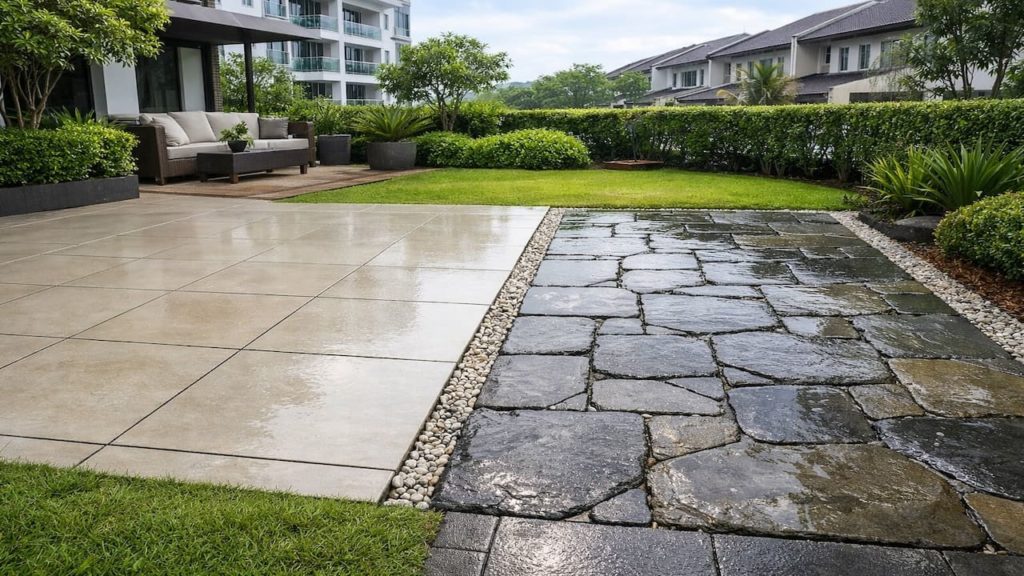
Uneven garden paving is annoying because one tile rocks, then chairs wobble, then the whole area starts feeling unsafe after rain.
In Malaysia, humidity and sudden storms make small gaps turn into soft spots fast, especially near walls, drains, and shaded corners.
In this guide, you’ll learn how to stop rocking tiles quickly before cracks spread, so your garden path or patio stays stable through Malaysia’s wet months.

Hi, I’m Ken. I write practical home guides for Malaysia—no fluff, just what works.
I hold a formal building design qualification and have spent about 20 years on job sites across hundreds of projects. My goal is simple: help you avoid costly mistakes with clear, safe steps—a quick way to decide what to do next.
1. Fix uneven paving in the garden: 5 steps
Find the real movement point so you fix the cause, not the symptom.
Rocking usually comes from a void under the tile, a base that softened, or edges that drifted over time. In Malaysia rain, water pumps sand out of joints and turns fine soil into mush, so the tile loses support. If you only tap it down, it comes back and cracks spread from repeated flexing. Root cause.
- Step on each corner to locate rocking points
- Mark loose tiles with tape for removal
- Check edges for gaps and shifting restraint
- Look for ponding water near the loose area
- Note shade zones that stay damp longer
You might think one loose tile is harmless. In reality, repeated rocking is like bending a paperclip, and the crack will arrive. Fix the support under the tile, not just the surface feel. Do it once.
2. Stop rocking tiles before cracks spread
Rebuild the bedding under the tile so the load sits on a full, even layer.
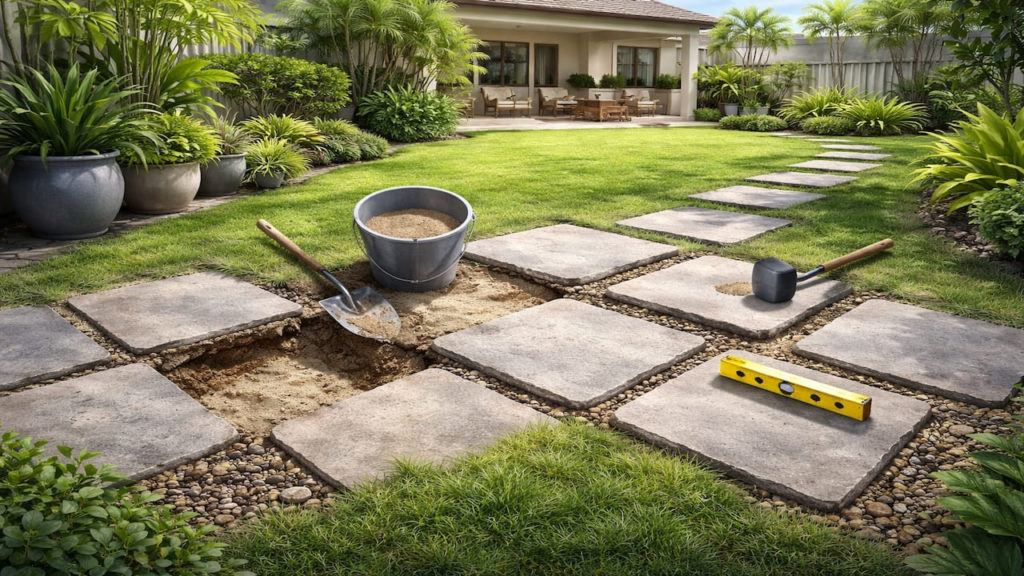
A tile needs continuous support, not just a few high points, or it flexes and fractures. Wet-season moisture in Malaysia can wash out bedding sand and leave a hollow that keeps growing. This is usually a basic repair, and cost is mostly time/effort if you already have simple tools. Solid support.
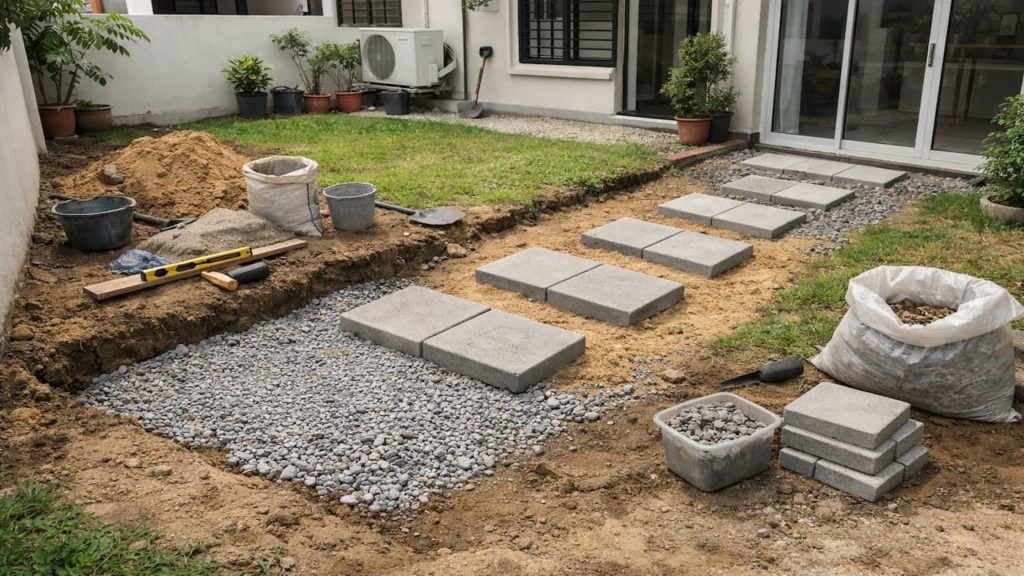
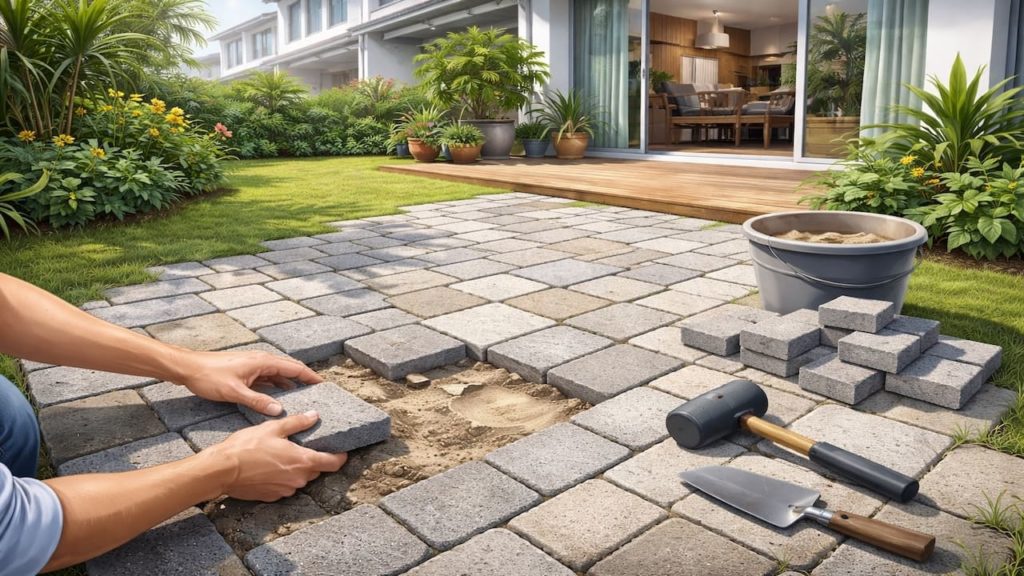
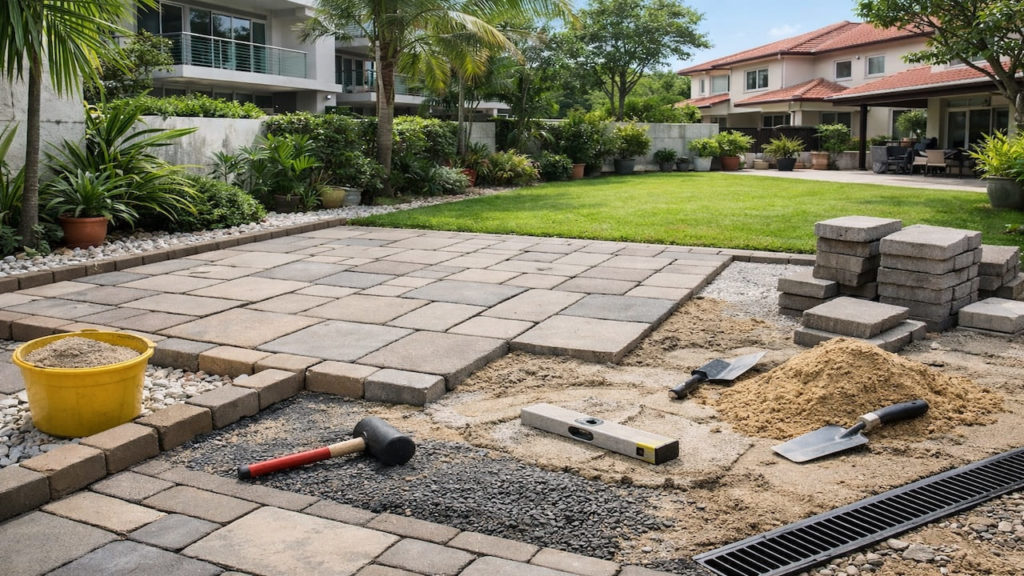
- Lift the tile carefully without chipping edges
- Scrape out loose sand and damp muddy fines
- Repack fresh bedding sand to correct level
- Tap tile flat and confirm no rocking remains
- Sweep joint sand and top up after settling
Some people try to fill gaps from the top with grout or sealant. That can trap water, then the base softens more in Malaysia humidity and the tile moves again. Support first, then joint fill. Clean method.
3. Why garden paving becomes uneven in Malaysia homes
Water and soft base are the usual combo that turns flat paving into a rocking mess.
Runoff from downpipes, outdoor taps, and aircond drains can hit one area daily, washing fines out from under tiles. In terrace homes, narrow side yards often have poor sun, so damp stays and the base never firms up. Ant tunnels, tree roots, and weak edge restraints add movement, especially after heavy rain. Slow damage.
- Trace downpipe and tap runoff onto paving zones
- Check for ants removing sand from joints
- Inspect edge restraints for loosened spikes or gaps
- Look for roots lifting edges near planting beds
- Confirm base compaction where tiles keep sinking
You may blame “bad tiles,” but most tiles fail because the base fails. Contractors can rush compaction or skip edge restraint, and the structure eventually shows the truth. Fix the structure, and the tile behaves. Always.
4. How to level and lock paving so it stays flat
Stabilize the base and edges so the repair survives Malaysia’s wet season.
After you reset the tile, make sure water exits the area and the perimeter cannot spread. In Malaysia, a small slope away from walls helps prevent splash marks and keeps bedding drier. If you need extra materials like joint sand, bedding sand, or simple edge spikes, plan RM20–150 depending on what you already have. Long hold.
- Improve drainage path away from the problem area
- Recompact base layer if the bed feels soft
- Add edge restraint where tiles creep outward
- Use polymeric joint sand if washout repeats
- Rinse lightly then replace joint sand after drying
You might think a perfectly level finish is the goal. In reality, a tiny fall that drains is safer in Malaysia than a dead-flat surface that ponds. If the area keeps failing, consider rebuilding a larger section so the base is consistent. Smart scope.
5. FAQs
Q1. How do I tell if a tile is rocking or the whole base is sinking?
If only one tile moves while neighbors feel solid, it is usually a local void in the bedding. If several tiles dip together, the base is soft and needs deeper compaction.
Q2. Can I fix rocking tiles without removing them?
You can sometimes inject sand, but it rarely fills evenly. Lifting and rebuilding the bedding is more reliable, especially in Malaysia wet months.
Q3. Should I use grout or cement to stop movement?
Do not trap water under tiles because rigid fills can crack and hide a base problem. Fix the support layer first, then use the right joint sand.
Q4. Why do tiles crack after they start rocking?
Rocking creates repeated bending stress, and the tile eventually fractures at weak points. Wet-season washout makes the void bigger, so the crack comes faster.
Q5. How can I prevent the problem from returning?
Stop daily runoff from hitting one spot, lock the edges, and keep joints topped up. Regular quick checks after storms prevent small voids from growing.
Pro’s Tough Talk

Listen. I’ve got 20+ years on site and I’ve handled hundreds of jobs, and rocking tiles are the start of the crack story every time.
The causes are three. Water keeps washing the bedding out, the base was never compacted right, and the edges are free to drift. In Malaysia humidity, that mix turns solid ground into a sponge.
Do these 3 moves now. First, lift the loose tile and clean the mush out. Second, rebuild the bedding so the tile sits on full support. Third, lock the edge and refill joints so water cannot keep stealing your sand. You know that chair-leg wobble that makes your drink slosh. You know the late-night flip-flop step that slides on a wet spot. What is this, a trampoline patio?
I’m not blaming you, and I’m not saying every contractor is trash, but the structure is cold: base, drainage, and restraint decide the result. Base drainage edges decide everything so stop patching the top and fix the support once.
Ignore it and call it “settling” if you want, but don’t act shocked when the next crack shows up.
Summary
Mark the rocking tiles, lift them, and rebuild the bedding so each tile has full support, not hollow corners.
If the area keeps moving, treat it as drainage and edge restraint first. When needed, rebuild a larger section so the base is consistent.
Fix support before appearance and cracks stop spreading in Malaysia wet months. Next, read a runoff control guide or a joint-cleaning guide to keep paving stable.