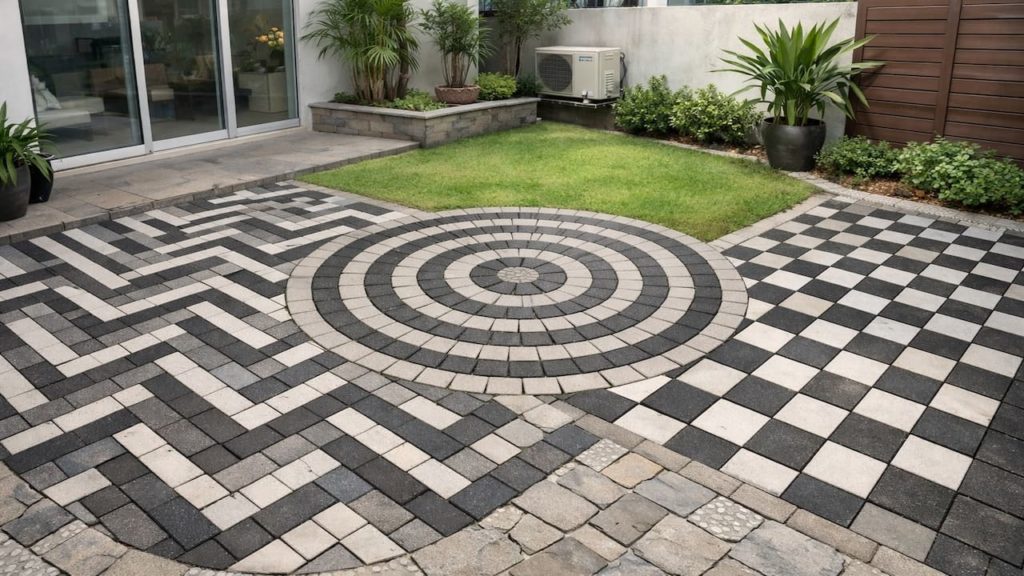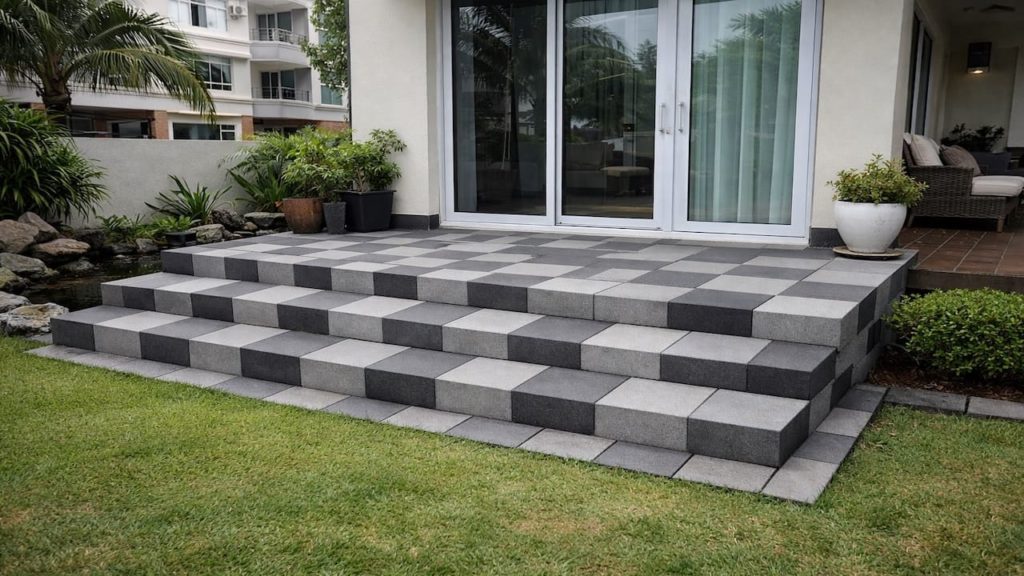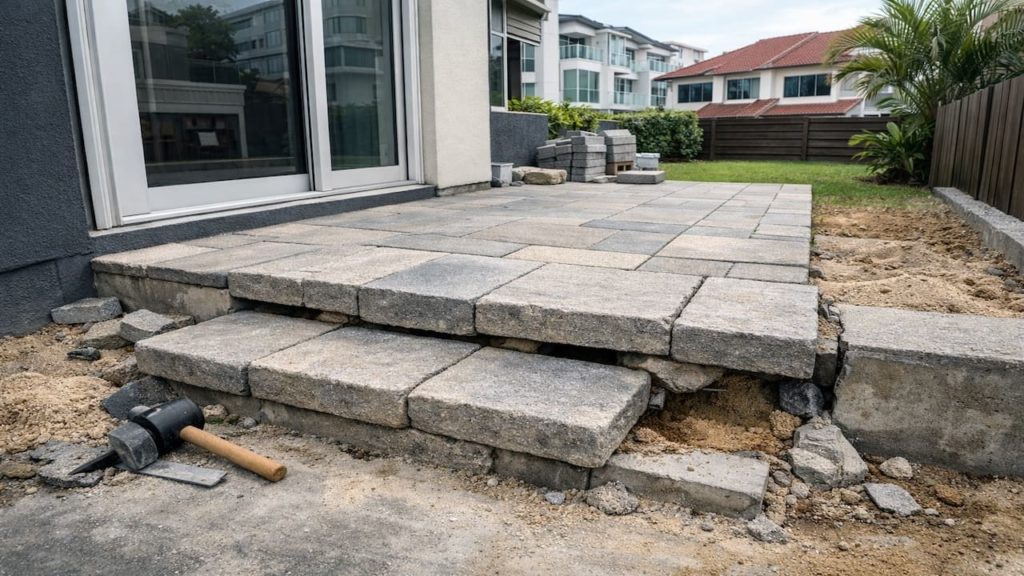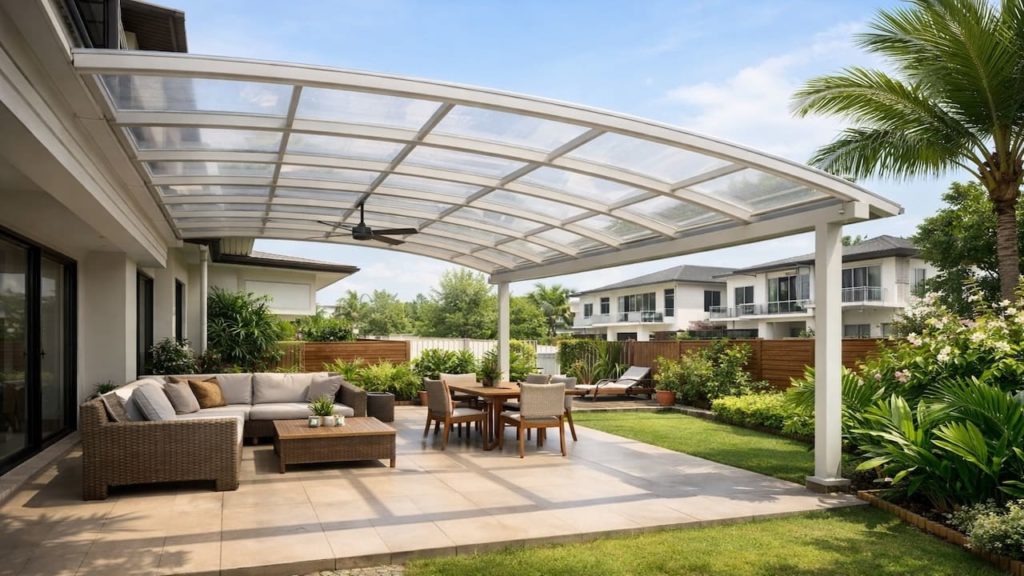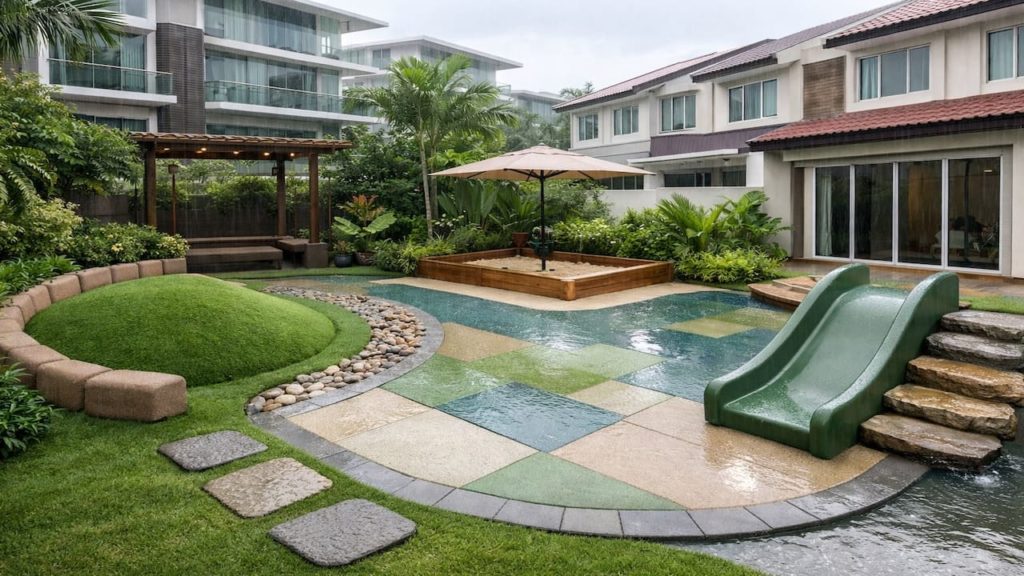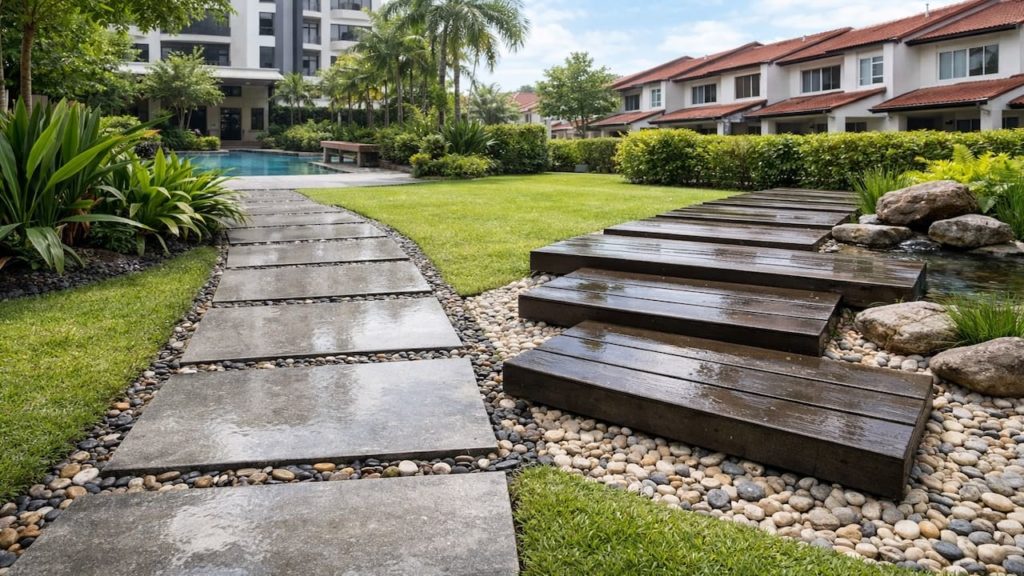
After a heavy storm, a garden walkway can stay wet, slimy, and awkward, especially when you still need to grab parcels or take bins out. Barefoot mornings.
In Malaysia, sudden downpours, high humidity, and narrow terrace-house side yards make surfaces dry slowly, so “normal paving” can become a daily slip risk.
In this guide, you’ll learn how to choose paving that dries quicker for Malaysia storms. You will know what to check before you buy or rebuild.

Hi, I’m Ken. I write practical home guides for Malaysia—no fluff, just what works.
I hold a formal building design qualification and have spent about 20 years on job sites across hundreds of projects. My goal is simple: help you avoid costly mistakes with clear, safe steps—a quick way to decide what to do next.
1. Paving for garden walkways: 5 checks
Pick paving that sheds water fast so the walkway stops staying slick after storms.
Storm water must move somewhere, and the easiest way is gentle slope plus a surface that does not trap a thin film—drying speed is design. In Malaysia gardens, you can expect RM80–300 for base materials and simple edging when you correct the build. Base matters. Wet months are normal.
- Pour a bucket and watch flow direction
- Check slope away from doors and walls
- Choose textured pavers with open joint spacing
- Confirm compacted base thickness with a probe
- Inspect edges for soil spill and low spots
Some owners assume any hard surface will dry once the rain stops. In Malaysia humidity, trapped moisture lingers and algae grows on that damp film. Do not fight with endless scrubbing. Build for drainage first, then choose the look. Drying is safety.
2. Choose paths that dry quicker in storms
Use a surface that drains and grips so you feel stable even right after rain.
Smooth tiles can look clean yet stay slippery when a thin water layer sits on top—traction matters more than gloss. In Malaysia, spending RM60–250 on better joint fill, gravel strips, or anti-slip finishes often beats replacing everything. Simple wins. Fast dry feel.
- Select joint sand that compacts and drains
- Use smaller pavers to follow gentle slope
- Pick light texture to resist slimy algae
- Leave drainage gaps beside planting borders always
- Add gravel strips near walls for runoff
You may worry that “more joints means more weeds,” and that happens when joints hold dirt. But weeds love messy silt, not good drainage. Keep joints tight, clean, and topped up. Maintenance is easier. Dryness stays longer.
3. Why garden walkways stay wet after storms
Wet walkways come from trapped water not from the storm itself.
The usual causes are flat spots, clogged joints, and a base layer that mixes with soil—then it holds water like a sponge. In Malaysia terrace homes, shade and wall splashback keep edges damp for hours after rain. Expect RM20–120 for small fixes like joint refresh or a narrow drainable strip. Wet edges also stain walls over time. Early signal. Green film follows.
- Low spots collect water and delay drying
- Dirty joints block drainage and hold silt
- Weak base absorbs muddy water and stays damp
- Shaded corners lose heat and dry slowly
- Wall splashback keeps the edge constantly wet
People blame “bad weather” and keep brushing harder every weekend. Weather is constant, but your drainage path is adjustable. Fix the way water exits, and the surface dries faster. Less algae. Less risk.
4. How to make paving dry quicker after storms
Fix the base and runoff route and the walkway will dry faster with less cleaning.
Start by mapping where rain should go, because Malaysian gardens often have tight routes between walls, gates, and drains—guessing creates puddles. If you add compacted gravel, edge restraint, or a small channel, plan RM100–400 for typical small areas. Short work. Big payoff. Cleaner steps daily.
- Mark slope lines using string and pegs
- Lift pavers and remove muddy base material
- Add compacted gravel base with correct depth
- Reset pavers with consistent joint spacing everywhere
- Brush joint sand and rinse to settle
It can feel like overkill for “just a garden path.” One slip while carrying groceries can cause real injury. Malaysia storms repeat, so the same wet spot returns. Build once, then enjoy reliable drying. Your weekends come back.
5. FAQs
Q1. How much slope should a garden walkway have?
A gentle slope that visibly moves water away from doors and walls is usually enough. In Malaysia storms, tiny low spots still matter.
Q2. Are smooth tiles okay if I clean them often?
Smooth tiles stay risky when wet because a clean surface can still be slick after rain. Texture and drainage reduce risk more than frequent scrubbing.
Q3. What joint fill helps drying and reduces weeds?
Use joint sand that compacts well and does not wash out quickly. Keep it topped up so water drains while seeds have fewer places to settle.
Q4. Do I need a drain channel beside the path?
Not always, but it helps when runoff has no safe exit along a wall. A narrow gravel strip can work as a simple escape lane for water.
Q5. Why does my walkway turn green so fast?
Warm moisture, shade, and dirt film feed algae, so it appears quickly in Malaysia humidity. Improve drying and rinse dirt before it bonds.
Pro’s Tough Talk

Listen. I have been on site for over 20 years and I have done hundreds of jobs. The always wet walkway problem is never a mystery.
It breaks down into 3 causes: no slope, clogged joints, and a base that drinks muddy water. In Malaysia humidity, that dampness hangs around like wet laundry left in a bag.
Do 3 steps now: pour a bucket to find the low spot, scrape joint sludge out, and add a drainable gravel strip. Put it at the edge. Then rinse and watch the flow again. That barefoot “ugh cold and slimy” moment is your warning.
You do not need to blame yourself, and you do not need to hate every contractor, but you must accept the structure. Water always follows the easiest route, so you must build an exit route. Seriously, if the surface is green and shiny, why are you trusting it.
When you rush out with the bin in one hand and the gate in the other, that is when slips happen. Two storms later, you will either walk confidently or you will repeat the scrub routine again like a hamster wheel. Your call.
Summary
Choose paving that drains fast by checking slope, texture, joints, and a base that does not hold muddy water. No guesswork.
If puddles and green film keep returning, treat it as a drainage design problem and adjust runoff routes before spending on fancy finishes. Be strict.
Do the bucket test today then continue to the guides on algae control and easy-clean outdoor surfaces for Malaysia wet months.