Outdoor paving looks fine on day 1, then Malaysia’s wet season hits and your “nice path” starts feeling damp, slick, and annoying to walk on.
That slow-dry problem is rarely one thing. It is usually surface texture, shade time, joint gunk, base drainage, and where roof or aircond water lands.
In this guide, you’ll learn how to choose paving that dries faster for terrace homes and condo gardens. You will spot the wet-season traps and fix flow without turning weekends into scrubbing duty.

Hi, I’m Ken. I write practical home guides for Malaysia—no fluff, just what works.
I hold a formal building design qualification and have spent about 20 years on job sites across hundreds of projects. My goal is simple: help you avoid costly mistakes with clear, safe steps—a quick way to decide what to do next.
1. Outdoor garden paving in wet season: 5 checks
Check where water wants to go—drying speed depends on exit routes, not luck.
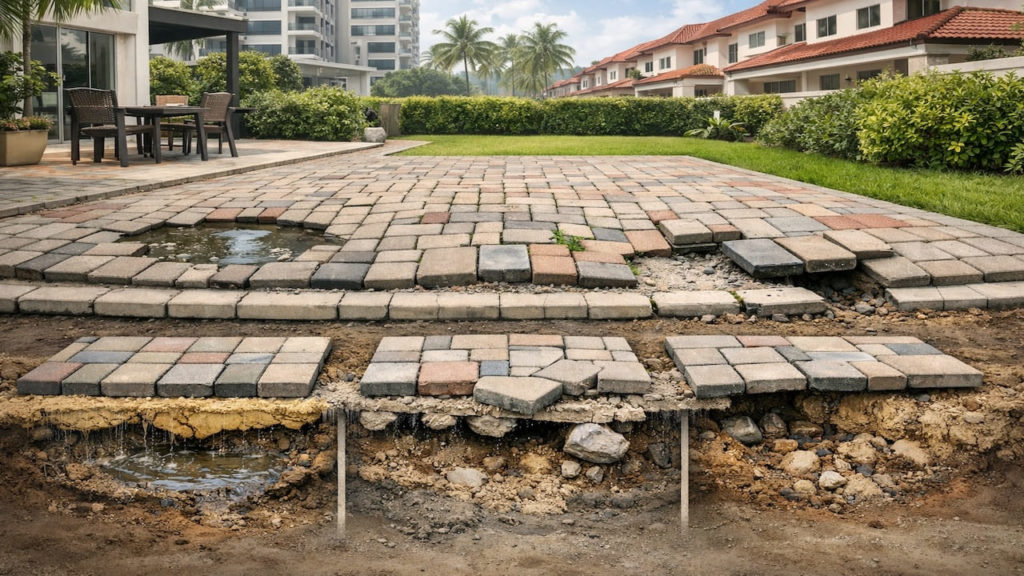
In Malaysia, rain falls hard and fast, then humidity keeps shaded paving damp for hours. If water cannot run off or soak into the base, it sits in joints and feeds slippery film. Most “bad paving” complaints are really slope and runoff problems hiding under a pretty surface. Weekend time.
- Watch puddle lines after a heavy rain
- Check slope away from walls and doors
- Find downpipe splash zones near the path
- Trace aircond drip points onto paving edges
- Confirm water can escape toward a safe drain
People think sealing fixes everything, because it sounds simple. In Malaysia damp months, sealing on a poorly draining base can trap dirt and make cleaning harder. Do the water path checks first, then decide what surface makes sense. Clear logic.
2. Choose surfaces that dry faster
Pick texture with shallow grip—it dries quicker than deep grooves that hold grime.
Fast drying is about how easily water sheds and how quickly the surface warms and ventilates. In Malaysia, deep patterns catch soil, leaf bits, and algae food, so the paving stays darker and wetter. A lightly textured finish with tight joints usually feels safer under bare feet or wet sandals. Surface choice.
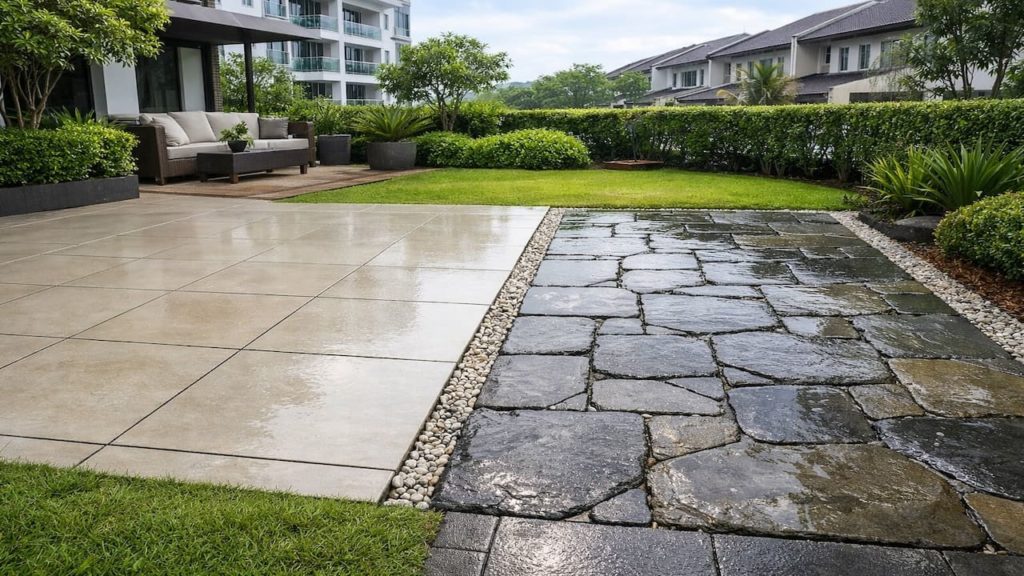
- Choose matte finishes over glossy polished faces
- Avoid deep stamped grooves that trap silt
- Prefer smaller chamfers that shed thin films
- Match joint width to your cleaning tools
- Test grip with wet hand and shoe sole
You might worry matte looks “cheap” compared to shiny stone. In real Malaysia gardens, shine turns into patchy haze and shows water marks faster, so it ages worse. Texture that sheds water looks premium longer because it stays cleaner. Simple win.
3. Why wet-season paving stays damp and slippery in Malaysia homes
Shade plus dirt makes a wet skin—and that film turns normal steps into near slips.
Terrace side yards and condo ground floors often get limited sun, so paving never fully dries. Add roof runoff, garden soil splash, and trapped leaf dust, and you get a constant damp layer that algae loves. Malaysia humidity slows evaporation, so a small puddle becomes a long problem. Slippery season.
- Count daily shade hours across the paving strip
- Check soil splash marks along the lower walls
- Look for green film starting at joint lines
- Notice black spots where pots drip daily
- Inspect edge sinking that holds water pockets
Some people blame cleaners, pets, or “dirty neighbors,” but the structure is mechanical. Water sits, dirt feeds growth, and shade keeps it alive, so the surface stays slick. Fix one input and the problem drops fast. No drama.
4. How to pick and lay paving that dries faster
Build for drainage first—a good base makes average pavers behave like premium ones.
Choose a surface you can rinse, then support it with a compacted base and edge restraint so joints stay tight. In Malaysia wet months, aim for a gentle fall away from walls, and plan a landing area that does not pool under downpipes. For small garden paths, budget RM300–1,500 for basic materials and prep depending on size and access. Drying performance.
- Set a gentle fall toward a safe outlet
- Compact base layers until they feel rock solid
- Install edge restraints to stop side drift
- Use joint sand that locks and drains well
- Keep soil and mulch off paving edges
You may think DIY shortcuts are fine if the top looks level. In Malaysia, a soft base becomes wobble, then joints open, then water and dirt move in and stay. If you hire a contractor, watch the base and slope, because that is where long-term drying is decided. Strong foundation.
5. FAQs
Q1. Which paving type dries faster in Malaysia wet season?
Usually concrete pavers or textured tiles with tight joints dry faster than deep-grooved stamped surfaces. The base drainage and shade time still matter more than the label.
Q2. Is smooth stone always more slippery when wet?
Yes, polished finishes often get slick because water forms a thin sheet. A matte or lightly textured face breaks that film and feels steadier.
Q3. Do I need to seal outdoor pavers in humid months?
Seal only after drainage is right because sealing a damp system can trap grime. In Malaysia, fix slope and joint stability first, then seal if staining is the main issue.
Q4. How often should I clean wet-season paving?
Light rinse and quick brush weekly beats a heavy scrub monthly—small effort prevents algae from settling. Focus on shaded edges and joint lines where film starts.
Q5. Why does my paving stay wet even after the rain stops?
It is usually shade, pooled runoff, or a base that holds water like a sponge. Check downpipe splash points and aircond drips before blaming the paver surface.
Pro’s Tough Talk

Alright, listen up. I’ve got 20+ years on site and I’ve handled hundreds of jobs, and wet-season slippery paving is not something to “try your luck” with.
The causes are only three. Water has nowhere to run, sun never hits the surface, and grime builds up. That makes a thin film, and the stone starts acting like soap.
Here are the 3 moves you do right now. First, create a clear water exit. Second, lock the edges so the paving stops wobbling. Third, reset the joints once to remove the food that feeds algae. You know that moment when you take the trash out in sandals at night and go “whoa”? That. And the other one, rushing to grab laundry before rain and nearly slipping. Seriously, what did you expect?
I’m not blaming you, and I’m not saying every contractor is evil, but the structure is cold: Water dirt shade always win unless you change the base to fight back.
Ignore it and cry after you fall if you want, but the floor does not care about your confidence.
Summary
Wet-season paving that dries faster starts with water exit routes, shade awareness, and a surface that does not trap grime.
If your path stays damp, treat it as slope, runoff, and joint stability first. If those fail, choose a different finish and rebuild the base.
Drainage first then surface and your Malaysia garden path stays safer with less cleaning. Next, read a moss cleanup guide or a downpipe splash control guide for faster results.