If you searched “garden planning before you build” you’re probably worried your small yard will turn into a messy, costly redo after the first heavy rain.
In Malaysia, storms can dump water fast, heat dries surfaces unevenly, and humid air keeps damp patches hanging around. That mix exposes weak planning early, especially in terrace homes and condo patios.
In this guide, you’ll learn how to plan your garden to survive storms without expensive redo by checking water flow, levels, access, and simple layout decisions before you start building.

Hi, I’m Ken. I write practical home guides for Malaysia—no fluff, just what works.
I hold a formal building design qualification and have spent about 20 years on job sites across hundreds of projects. My goal is simple: help you avoid costly mistakes with clear, safe steps—a quick way to decide what to do next.
1. Garden planning before you build: 5 checks
Do these 5 checks before any build to avoid rework.
Malaysia rain is not gentle—one storm can reveal wrong slopes, blocked drains, and puddles that stain tiles. Planning first saves money and saves weekends. Basics.
- Mark drainage direction with a quick hose test
- Measure door thresholds to prevent rain backflow
- Confirm longkang points and keep them reachable
- Sketch zones and leave a clean walking lane
- Decide storage spots before placing any planter groups
You might think “I’ll fix it later if needed.” Later costs more because you’ll be ripping out wet soil, shifting heavy pots, and paying twice for the same work.
2. Avoid costly redo after the first storm
The first storm tests your water logic not your decoration.
In Malaysia terrace yards, water moves like it has a mission, and it always finds the weakest edge—if you build without flow control, the storm will redesign your garden for you. Reality.
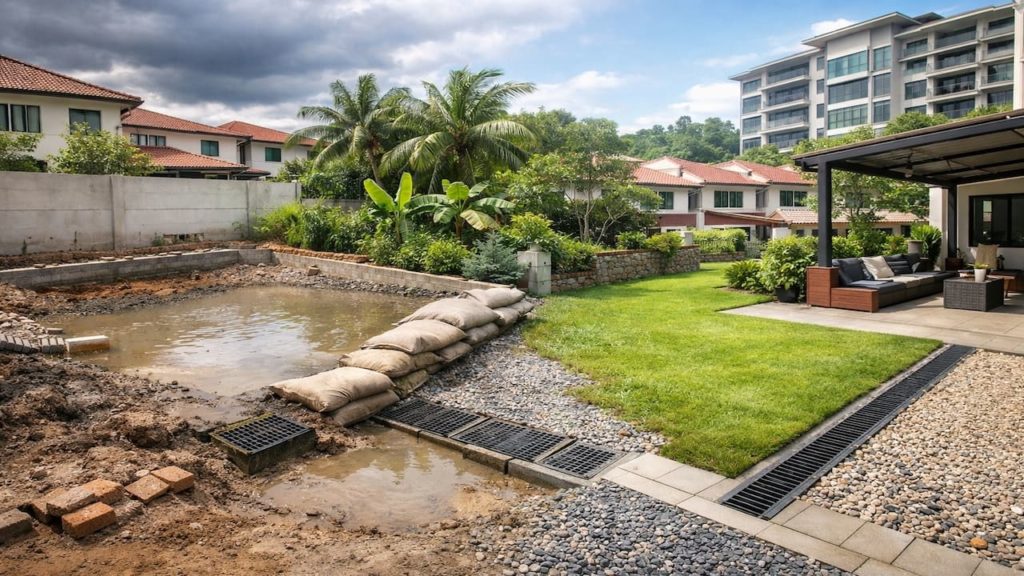
- Keep a clear water exit line to drains
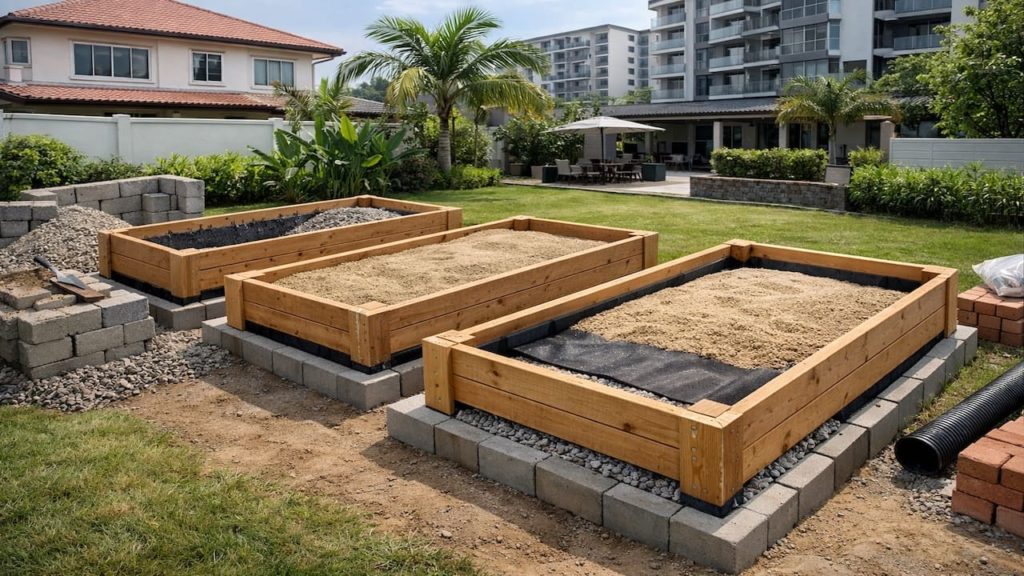
- Raise soil beds away from door and walls
- Use gravel strips where rain splash hits hardest
- Choose one edging line and keep it continuous
- Leave service access for pipes and outdoor taps
Some people chase looks first and call drainage “later.” Looks never survive standing water, so handle flow first and your nice stuff stays nice.
3. Why gardens fail fast in Malaysia wet season
Most redo happens because levels and airflow were ignored.
Humidity keeps surfaces damp, and warm rain feeds algae and moss, so small layout mistakes get loud fast in Malaysia homes. Wet corners smell. Mess spreads.
- Flat floors trap puddles and grow slippery film
- Too many pots block airflow and keep damp
- Soil splash stains tiles and makes edges look dirty
- Hidden drains clog and overflow during sudden downpours
- Tall plants in front shrink the whole space
You might blame “bad luck” with weather. It’s usually predictable: wrong height, wrong exit path, and too much stuff sitting where water wants to run.
4. How to plan storm proof layout before building
Plan around one path one drain line and clear edges.
Do a simple map, mark high and low points, then test with a hose; RM5–20 for basic tape and string is enough. In Malaysia, this small prep prevents big wet headaches. Control.
- Draw a main path that stays dry first
- Set plant beds on the outer edges only
- Reserve a splash zone near roof drip lines
- Test water flow before fixing any edging down
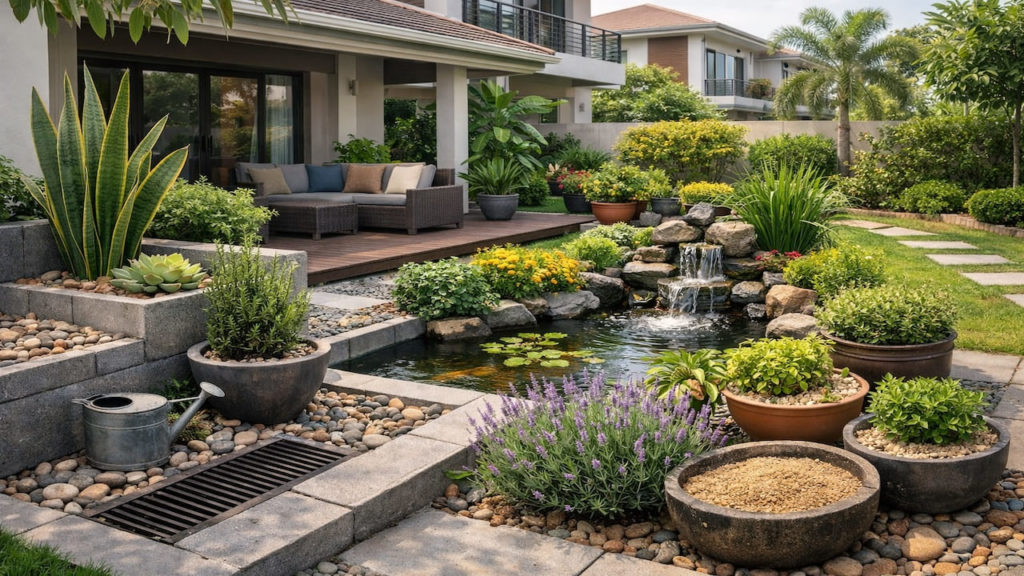
- Keep drain covers removable for quick cleaning
You may think this is overthinking for a small yard. It’s the opposite: the smaller the yard, the less margin you have, so plan tight and build once.
5. FAQs
Q1. How do I know where water will flow in my yard?
Use a hose test to see the real flow. Do it after a normal rain too, because wind-driven water behaves differently in Malaysia.
Q2. Should I build raised beds right against the wall?
Usually no, because splash and trapped moisture can stain walls and invite mold. Leave a small gap and keep airflow moving.
Q3. What is the biggest mistake before building a patio area?
Blocking the drain line or hiding it under heavy items. If you can’t reach the drain fast, you will hate maintenance during wet season.
Q4. Can I plan first without hiring a designer?
Yes, for small yards you can start with zones, path, and drainage checks. If you later hire help, your plan still saves time and money.
Q5. How often should I check drains once the garden is done?
In Malaysia, check more during rainy months because leaves and soil move fast. A quick weekly look prevents surprise overflow.
Pro’s Tough Talk

Ok, I’m gonna say it straight. I’ve been on site for 20+ years, done hundreds of jobs, and the “first storm destroyed my garden” story is the same movie every time. You’re not stupid, but the weather here is a bully.
Three causes. One, you build flat because it looks neat, then water sits like a lazy buffalo. Two, you hide drains behind pots and benches, then act shocked when it overflows. Three, you cram decorations everywhere, and airflow dies like a fish in a plastic bag.
Do this now. First, do the hose test and watch the flow with your own eyes. Second, clear one main path and keep the center open. Third, keep drains reachable and clean them before rain season hits.
Here’s the rule plan water first then build the pretty parts. Aruaru #1: the new bench becomes a wet laundry stand in two days. Aruaru #2: you buy “one more pot” until you can’t sweep. What are you building, a garden or an obstacle course?
I’m not blaming you and I’m not saying every contractor is trash, but the structure is cold: if you ignore flow, the storm will charge you for a redesign. Go plan properly before the rain laughs at you.
Summary
You avoided costly redo by checking drainage direction, thresholds, drain access, and simple zones before building.
If storms still create puddles, your next step is to re-check levels and restore a clear exit path to drains before adding more features.
Do the hose test today and lock the layout before you spend on big items then read a drainage or anti-slip guide to keep the yard safe in wet season.