You need outdoor power points for pumps, lights, or weekend tools, but you worry about rain, splashes, and messy extension cords. In Malaysia, wet evenings and humidity make small wiring mistakes feel big.
Terrace home porches, condo balconies, and garden corners often stay damp, and water can creep into covers if seals and routing are sloppy. If cables sprawl across walkways, you also add trip risk and faster wear.
In this guide, you’ll learn how to set outdoor power points safely in wet areas while keeping cable routing tidy and practical. You will also learn what to check before using power outside, and how to avoid the common “looks fine until rain” problems.

Hi, I’m Ken. I write practical home guides for Malaysia—no fluff, just what works.
I hold a formal building design qualification and have spent about 20 years on job sites across hundreds of projects. My goal is simple: help you avoid costly mistakes with clear, safe steps—a quick way to decide what to do next.
1. Garden power points done safely: 5 checks
Outdoor power points must be planned like a wet zone.
Malaysia rain hits hard and fast—so “covered” is not the same as “protected.” Safety first. Focus on water entry points, socket quality, and where hands will touch when the floor is damp. A safe setup also reduces the urge to use random extension cords everywhere.
- Check socket IP rating and sealing cover
- Confirm RCD protection on the circuit
- Mount outlets above splash height and puddles
- Inspect conduit entries for tight grommets
- Test cover closes fully with plug inserted
Some people think “it’s only low power,” but water plus electricity does not care about your plan. Reality check. Treat it like a wet bathroom rule set and you avoid scary surprises.
2. Wet area rules plus tidy cable routing
Route cables so water and feet never win.
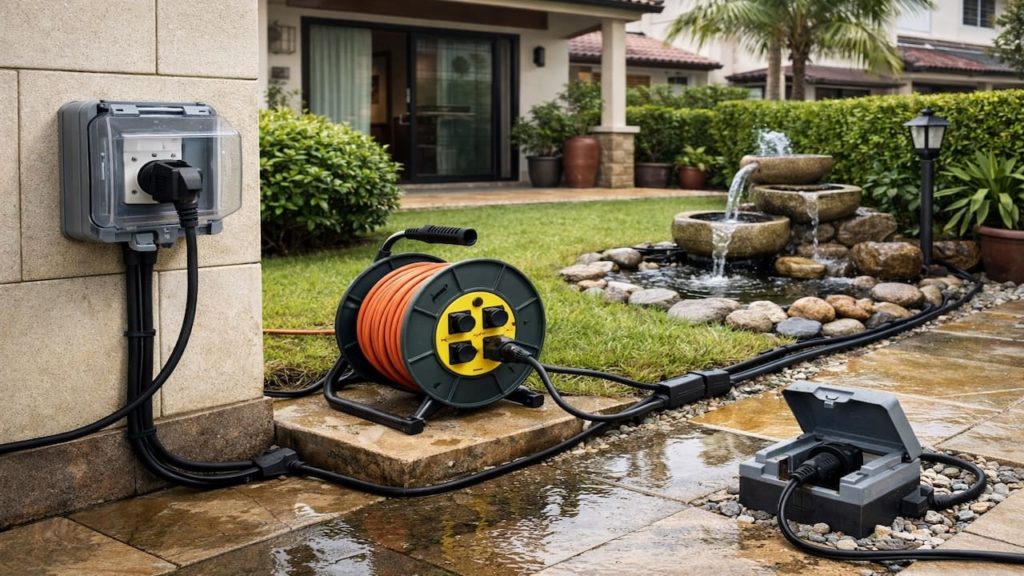
Messy cables turn into daily clutter and damage points—especially in Malaysia humidity where surfaces stay damp longer. Keep cables off walking lines, avoid sharp bends, and stop water from running along the cable into a socket. Neat routing also makes cleaning faster after rain splash or garden work.
- Run cables high along walls using clips
- Create drip loop before entering any enclosure
- Keep cables away from door thresholds and steps
- Use conduit for long exposed outdoor runs
- Label each plug to avoid wrong connections
You might think tidy is only about looks, but tidy is also safety because it prevents strain, cuts, and accidental unplugging. Simple rule. If you can sweep the floor without snagging cables, you did it right.
3. Why outdoor power points get risky in humid Malaysia
Moisture finds gaps and creates hidden corrosion.
High humidity can fog enclosures, and rain splash can push dirty water into tiny seams—then contacts corrode quietly. Hidden risk. Condos and terrace side yards often have weak airflow, so damp stays longer after storms. Once corrosion starts, heat builds at poor contacts and the problem escalates faster than expected.
- Spot condensation inside covers after cool nights
- Check green corrosion on screws and contacts
- Notice warm plugs indicating resistance buildup
- Find cracked seals from sun and heat cycling
- See puddles near outlets after heavy rain
People blame “cheap sockets,” but placement and sealing details decide whether even good hardware survives. Cold mechanics. Fix water pathways and airflow and the same outlet lasts much longer.
4. How to set safe outdoor sockets without messy cables
Use weatherproof hardware and a cleanable layout.
Start by choosing a location that stays drier, then mount outlets higher than splash zones and route cables with clips and drip loops—clean lines matter. For materials like weatherproof socket boxes, conduit, clips, and basic seal parts, RM30–250 is a common range depending on how many points you install. Keep the layout simple so you do not create a permanent cable nest. Practical setup.
- Install weatherproof box with gasketed hinged cover
- Mount outlet on wall away from runoff paths
- Add drip loop on every cable entry
- Clip cables neatly along a single route
- Keep extension joints inside sealed enclosures
Some people avoid adding outlets and rely on extensions, but long loose cords usually create more wet contact and more clutter. Better approach. Add fewer, better-placed points and your garden use becomes calmer and safer.
5. FAQs
Q1. Do I need RCD protection for outdoor outlets?
Yes, it is a key safety layer when floors and hands can be wet. If you are not sure, treat outdoor use as higher risk and confirm protection on the circuit.
Q2. What is the biggest mistake with outdoor power points?
Leaving water pathways into the socket through bad sealing or cable routing is the common failure. Drip loops, tight grommets, and higher mounting reduce that risk.
Q3. Can I keep using extension cords outside?
You can, but only if cords stay off wet floors and joints are protected in a sealed box. Loose cords across walkways become trip hazards and get damaged faster in rain.
Q4. How do I reduce cable clutter around the garden?
Mount clips along one route and keep cables high and tight to the wall. Store temporary cords inside after use so the area stays clean and sweepable.
Q5. How often should I check outdoor sockets in wet months?
Check monthly for fogging, corrosion, and loose covers, and immediately after major storms. Early detection prevents bigger damage and safety issues.
Pro’s Tough Talk

Listen, I’ve got 20+ years on site and I’ve done hundreds of jobs, and outdoor power mistakes are always the same story. Malaysia rain is a stress test that shows every shortcut you tried to hide.
Three causes. One, people buy “outdoor” covers but leave tiny gaps, then water creeps in like it owns the place. Two, cables run across wet floors, get stepped on, and the insulation ages fast. Three, they skip protection and routing, then wonder why plugs get warm and scary.
Do this in 3 steps. First, put the outlet higher than splash and give every cable a drip loop. Second, clip cables into one clean route and keep joints inside a sealed box. Third, test after rain, wipe down, and replace any cracked seal before it becomes drama.
Don’t blame yourself, and don’t call every contractor useless either, but the structure is cold. People pay for the visible stuff and neglect the hidden routing because it is boring work. Water path control is the real safety switch.
Classic: it “works fine” until the first big storm, then suddenly you’re tiptoeing around plugs. Classic: the garden looks neat, but the cable pile looks like spaghetti. Come on, you want safe power or a wet-night gamble?
Summary
Outdoor power points stay safer when you control water entry, use protection, and place outlets above splash zones with even cable routing. Malaysia humidity makes small gaps and clutter become bigger risks.
If your setup relies on long loose extensions, reduce the run, add drip loops, and move joints into sealed enclosures before you add more devices. If you see fogging or warmth, stop and fix the cause.
Check one outlet cover and one cable route today then follow with a wet-night step lighting guide or an outdoor sink placement guide to keep the whole garden safer and easier to use.