If your garden surface looks fine but feels grimy after every rinse, you are stuck in the worst loop: wash, dry, then slip or see film again.
Malaysia humidity, warm rain, and dusty roads leave a thin layer that bonds to smooth finishes, especially on shaded porches and narrow terrace side paths.
In this guide, you’ll learn how to choose and set surfaces that rinse clean and stay grippy while keeping the layout easy to wash, easy to dry, and less annoying to maintain.

Hi, I’m Ken. I write practical home guides for Malaysia—no fluff, just what works.
I hold a formal building design qualification and have spent about 20 years on job sites across hundreds of projects. My goal is simple: help you avoid costly mistakes with clear, safe steps—a quick way to decide what to do next.
1. Garden surfaces made to rinse: 5 checks
Rinse-friendly surfaces need grip and quick drying so Malaysia porch areas do not turn into a slick trap after a simple hose-down.
Film forms when water sits, dirt sticks, and shade delays drying—Malaysia weather makes that combo happen all year. Texture matters more than shine. A surface can look premium and still hide micro-grip that breaks the film and drains faster. Cleaning feels easy when water runs off instead of smearing.
- Test surface grip using wet barefoot step
- Check puddle spots after a quick rinse
- Inspect tile texture under angled sunlight reflection
- Look for algae tint in shaded corners
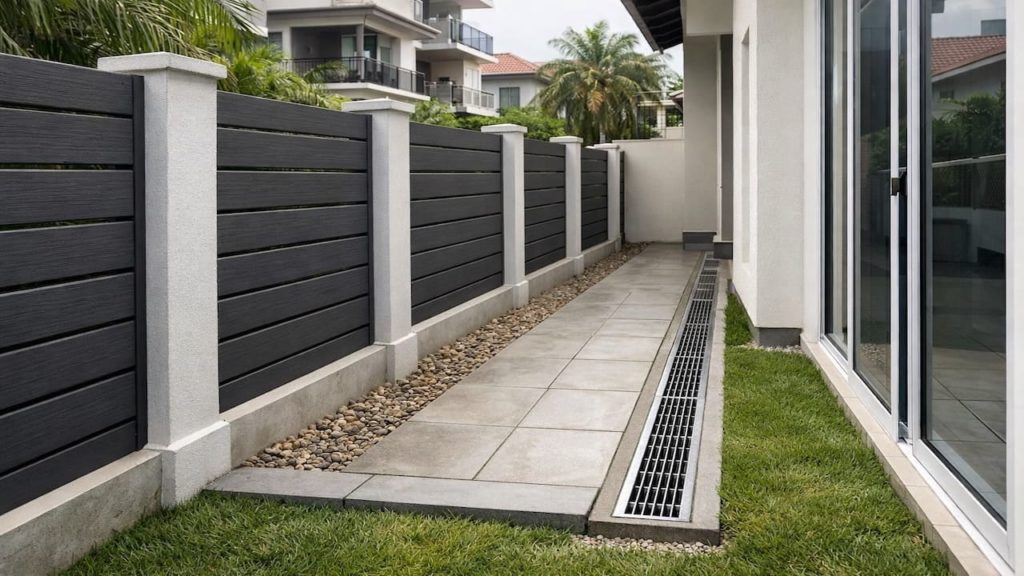
- Confirm slope direction toward a safe drain
You might assume “just scrub harder” solves it, but the film returns when the surface holds water in tiny low spots. Not your fault. Fix grip and drainage first, then rinsing becomes maintenance instead of punishment.
2. 【Build for easy washing without slippery film】
Build the washing path so water and dirt exit fast and your Malaysia entry stays rinse-clean without leaving a slick shine behind.
Easy washing is layout, not effort—hoses, drains, and edges decide the outcome before you start. If your rinse water has to cross soil, it drags grit back onto the surface. If drains clog with leaves, film returns within days. The “best” surface fails when the washing route is badly planned.
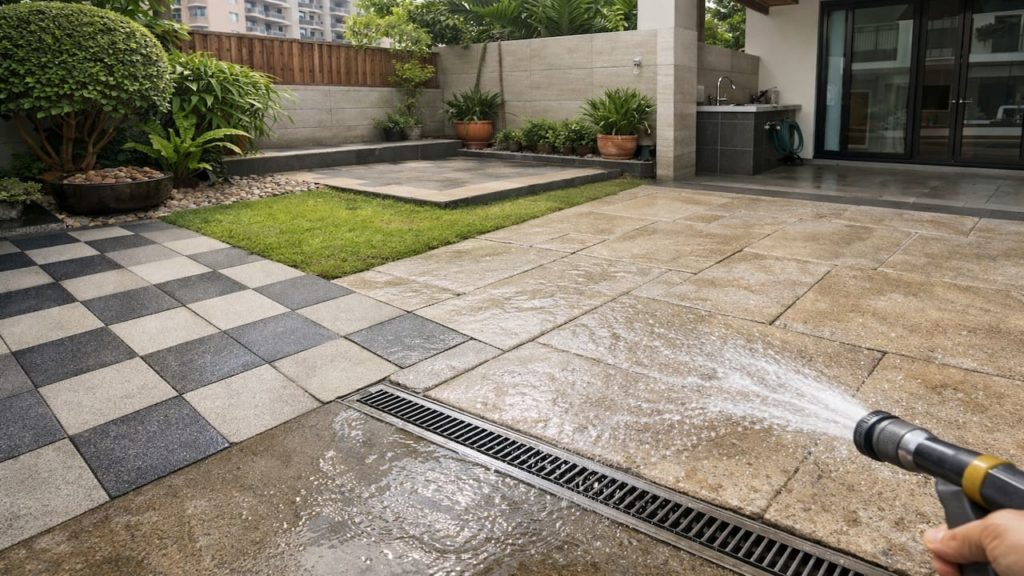
- Route rinse water straight toward a drain
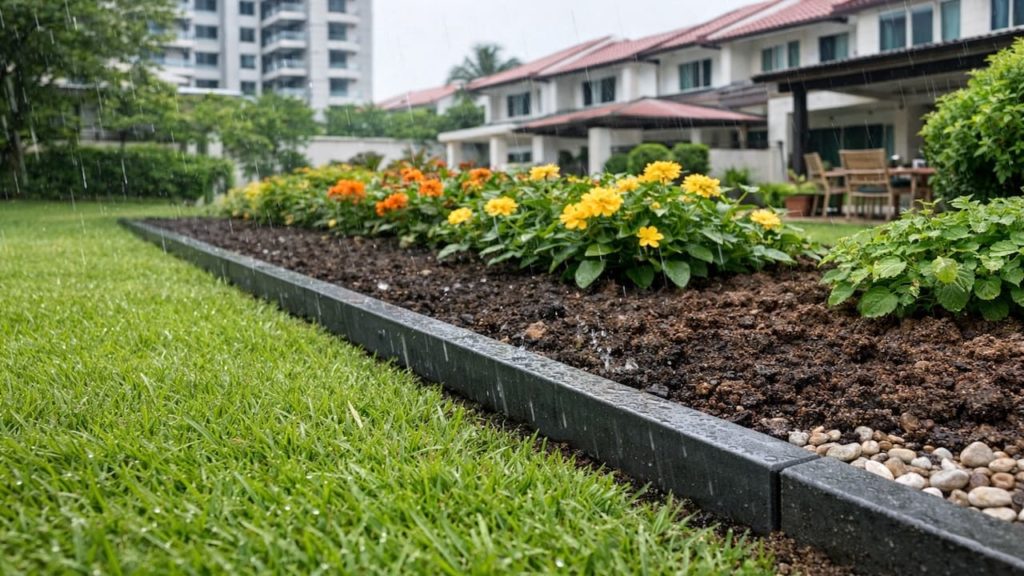
- Keep soil beds separated with solid edging
- Place drain covers where leaves collect most
- Ensure hose reach without dragging through plants
- Leave a sweep gap along walls and fences
Some people build beautiful surfaces and then block access with pots and clutter, so rinsing becomes awkward and skipped. Same result every month. Design the wash route like a walkway, then keep it open and the film stays weaker.
3. Why rinsed surfaces still feel slippery in humidity
Slippery film builds when moisture stays trapped in shade and joints, which is common around Malaysia homes with tight airflow zones.
Humidity slows evaporation, so a thin biofilm forms even after a rinse and “looks clean” from far away—then your feet discover the truth. Shaded tiles near walls dry last. Tiny joints and rough grout hold nutrients for algae, while dust from roads feeds the layer. The risk spikes where water repeatedly stops, like near gates and porch steps.
- Notice slow-dry zones near shaded walls
- Check grout lines for darkening and slime
- Watch where rinse water stalls and swirls
- Find leaf litter that rots near drain covers
- Look for smooth glossy patches under footpaths
You may think the surface material is “bad,” but the real cause is the moisture cycle and trapped dirt. Fix the drying conditions. Once airflow and water escape improve, even basic finishes stop feeling like a skating rink.
4. How to make surfaces rinse clean and stay safe
Reduce film by combining drainage tweaks and gentle texture so Malaysia outdoor areas rinse fast, dry fast, and keep grip in wet months.
Start with slope and drains, then adjust edges and joints so dirt cannot keep returning; RM5–20 covers basic degreaser and a stiff brush for weekly resets. Simple tools. Add a squeegee for shaded entries, and rinse from the clean side toward the drain. If you must treat the surface, pick anti-slip options that do not create sticky residue.
- Rinse from high point toward the drain
- Squeegee shaded zones to speed drying
- Scrub grout lightly before slime turns thick
- Clear leaf traps so drains flow freely
- Add textured mats at entry splash zones
People worry texture will “trap dirt,” but standing water traps more dirt than any fine texture ever will. Safety first. When water leaves quickly and drying improves, rinsing becomes a quick reset instead of a long fight.
5. FAQs
Q1. What surface finish is easiest to rinse without streaks?
Matte or lightly textured finishes usually show fewer streaks than glossy ones, especially in Malaysia humidity. They also dry with less visible spotting after rain.
Q2. Why does my floor feel slippery even when it looks clean?
A thin biofilm can form in hours in warm shade, so “looks clean” is not the same as “has grip.” Improve drying, clear drains, and scrub joints before slime builds.
Q3. Should I use strong chemicals to remove the film?
Strong chemicals can damage grout and leave residues that attract dirt again. Start with mild degreaser, a stiff brush, and better drying habits, then only escalate if needed.
Q4. How can I stop algae on shaded porch tiles?
Reduce standing water first by fixing slope and clearing drain paths. Then squeegee after rinsing so the shaded zone does not stay wet for hours.
Q5. What is the safest quick test for slip risk?
After a rinse, do a careful barefoot step test in one small area and note any sliding. If it feels slick, treat it as a drainage and drying problem, not just dirt.
Pro’s Tough Talk

Listen, I’ve been on site 20+ years and done hundreds of jobs, and I’ve seen “nice outdoor tiles” turn into slip traps the moment Malaysia humidity moves in. One rainy week and the film shows up like it owns the place.
Cause is 3 parts: wrong finish, wrong slope, and blocked drains. Classic move: pick glossy because it looks premium, then act shocked when it becomes a skating rink. Another classic move: let leaves rot by the drain cover, then blame “mystery slime.”
Do this 3-step fix: watch one heavy rain and mark puddles, clear every drain and leaf trap, then rinse high-to-low and squeegee shade zones. And come on, if you rinse toward the house wall, what did you think would happen.
The structure is brutal: water always wins unless you guide it, and Malaysia weather gives water extra stamina. Fix slope and drying and the film loses power. You didn’t fail, and the builder is not always evil, but lazy detailing punishes everyone.
A slippery porch is like soap on a staircase, so either fix it now or enjoy doing the penguin walk to your own front door.
Summary
Rinse-friendly surfaces depend on grip, drainage, and drying speed, because Malaysia humidity makes film return when water sits in shade and joints.
If your floor stays slick, track puddles during rain, clear drain paths, and separate soil from slabs so rinse water does not drag dirt back across your surface.
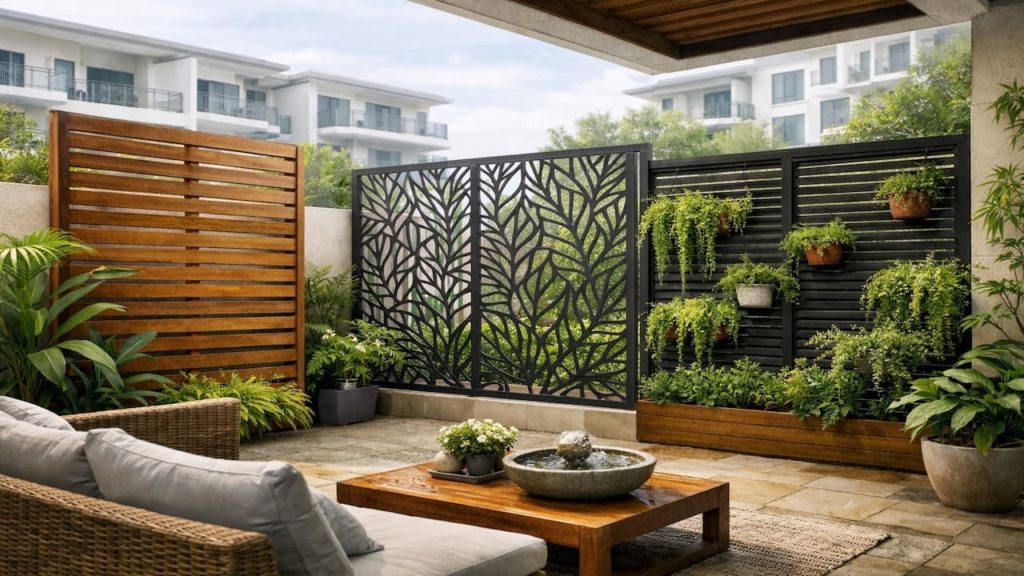
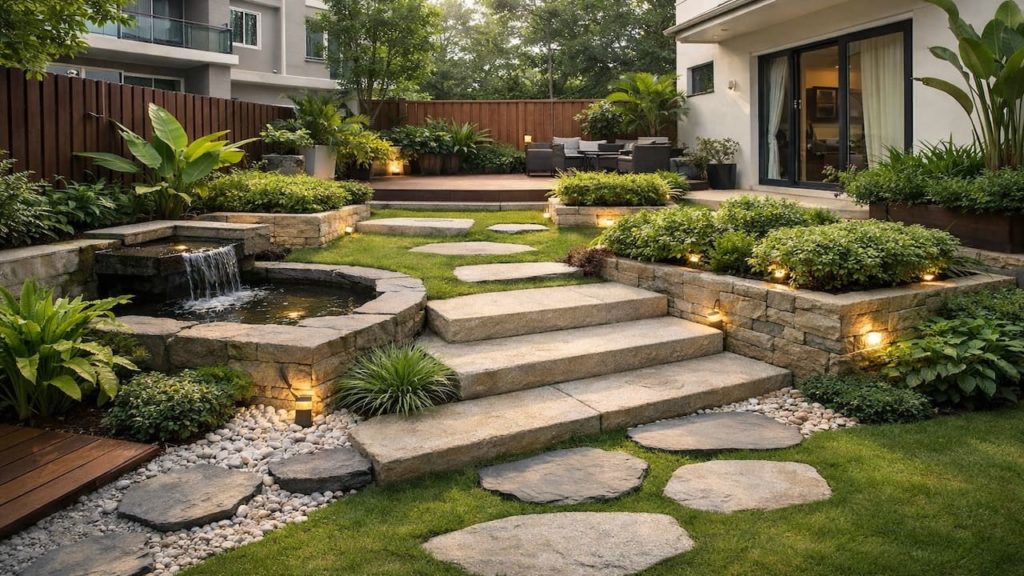
Change the wash route and drying first, then move to upgrades like edging, lighting, and screening plants that keep the whole garden cleaner longer.