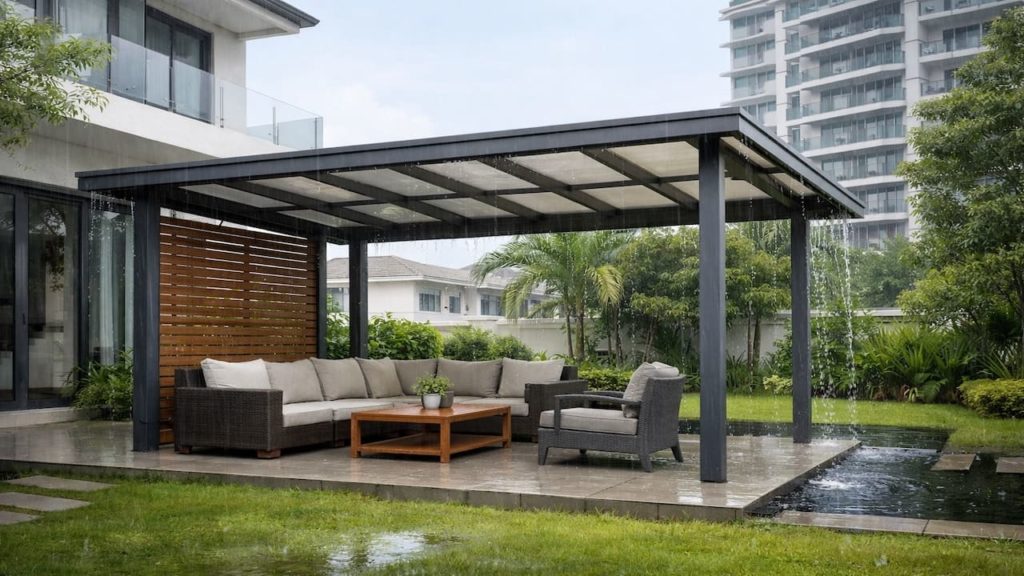
If you searched “garden seating kept dry in rain” you’re probably tired of chairs getting soaked and the seating corner becoming useless after every storm.
In Malaysia, downpours are sudden, wind can blow rain sideways, and humidity keeps cushions damp for too long. A small layout mistake can turn “cozy” into “always wet.”
In this guide, you’ll learn how to place seating and simple shelter so it dries fast while still feeling open, bright, and breezy in wet season.

Hi, I’m Ken. I write practical home guides for Malaysia—no fluff, just what works.
I hold a formal building design qualification and have spent about 20 years on job sites across hundreds of projects. My goal is simple: help you avoid costly mistakes with clear, safe steps—a quick way to decide what to do next.
1. Garden seating kept dry in rain: 5 steps
Dry seating comes from placement and runoff control more than products — layout wins first.
Malaysia rain is not just vertical; wind pushes it under roofs and into corners, and splash bounces up from tiles. If you plan the route for water, your seating stays usable. Comfort.
- Map rain blow direction by watching one storm
- Move seating away from roof drip splash zones
- Keep one clear dry path from door to seat
- Angle shelter to drain water toward a safe exit
- Store cushions in a sealed box after rain
You might think buying waterproof cushions solves it. If the seat sits in the drip line or splash zone, it will still stay wet and smell, so do the steps first.
2. Simple shelter layout that still feels open
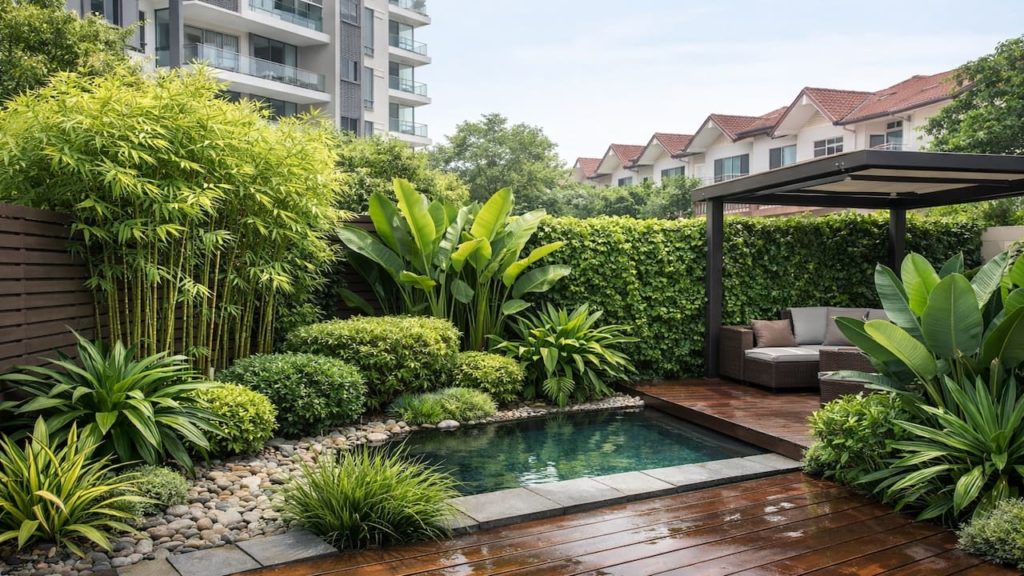
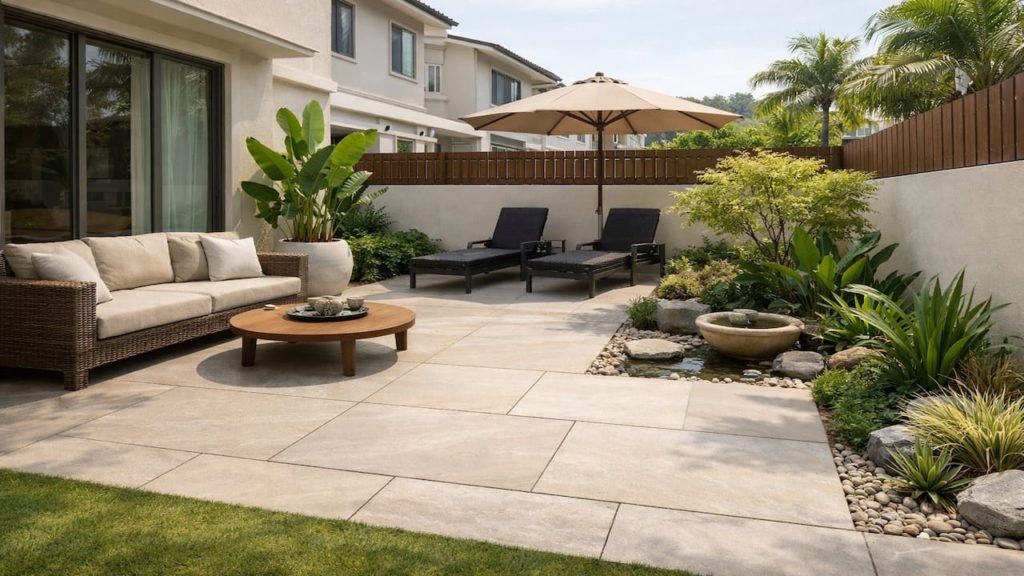
Use a partial roof over the seat and keep the sides open.
In Malaysia humidity, open sides matter because trapped air keeps damp longer—an airy shelter dries faster and feels cooler. Open shelter. Better mood.
- Cover only the seating footprint not the whole yard
- Keep the top pitched so water never pools
- Leave a high ventilation gap for hot air exit
- Position the seat to face the open light side
- Use plants as soft screens not solid walls
You may think closing the sides keeps rain out. Closed sides often trap damp and heat, so the area stays clammy and smells, and you lose the “garden” feeling.
3. Why seating stays wet in Malaysia rain
Most wet seating is caused by drip lines and splash rebound — not “bad furniture.”
Rain hits the roof, runs to an edge, then drops hard in one line, and tiles bounce splash upward; humidity then slows drying and mildew starts. Wet cycle.
- Roof edges drip directly onto chair backs
- Flat covers cause ponding and overflow splashes
- Wind-driven rain enters from the open side
- Tiles splash dirty water onto legs and cushions
- Poor airflow keeps fabric damp and musty
You might blame the material or brand. Fix the drip and splash routes, and suddenly even simple seating stays cleaner and drier for longer.
4. How to set a dry seating zone in wet season
Create a dry zone with pitch drainage and easy storage.
Keep it simple; RM60–300 for a small cushion box, hooks, and basic splash guards can transform usability without rebuilding the whole area in Malaysia. Light spend. Big effect.
- Place seating under the highest roof point possible
- Direct drip line away using gutter or chain
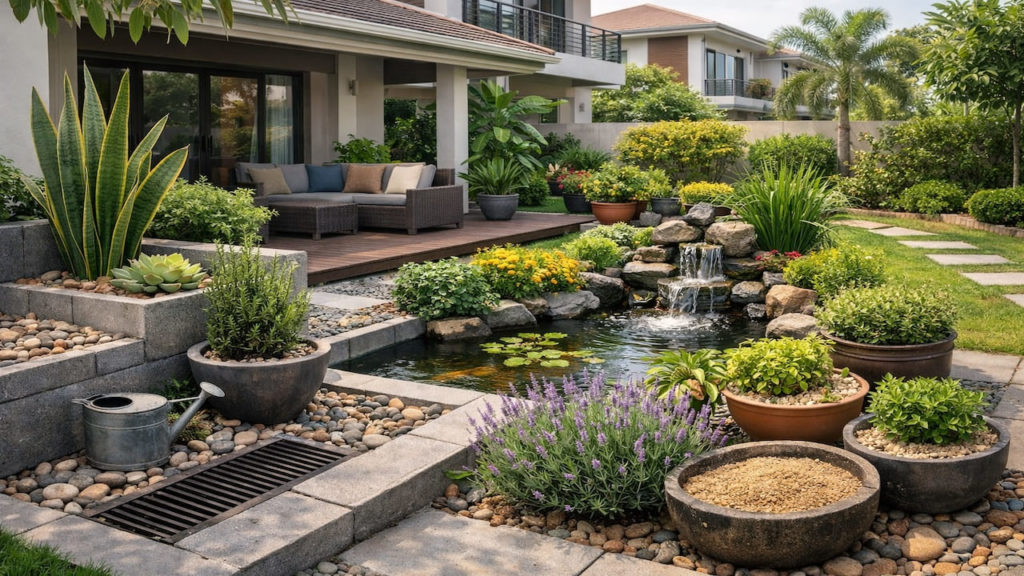
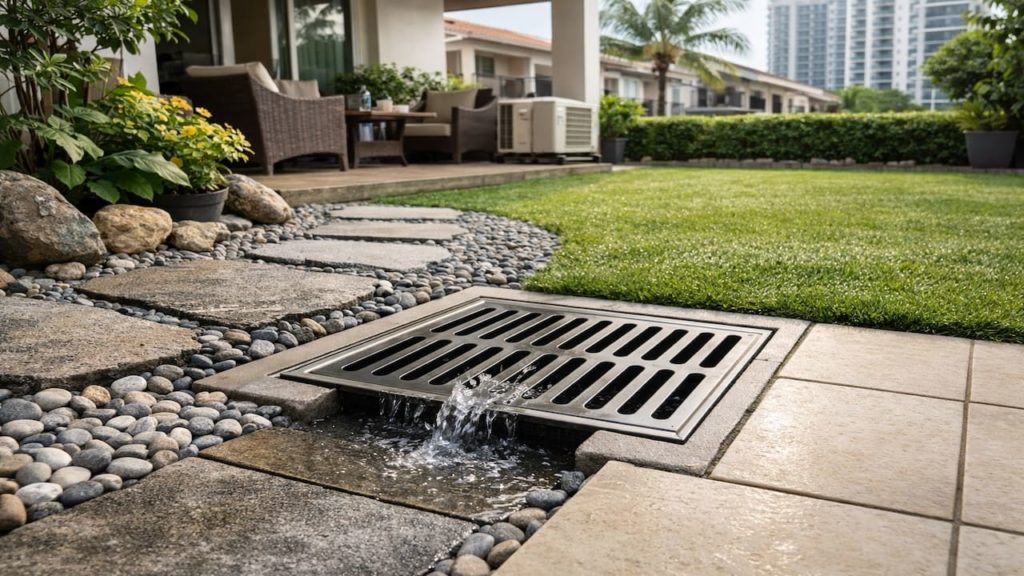
- Add a gravel strip to reduce tile splash rebound
- Choose quick-dry fabric and removable covers
- Dry cushions indoors after heavy storm days
You may think storage is annoying. It saves you from mold smell and replacement costs, and it keeps the seating ready for the next clear evening.
5. FAQs
Q1. Where is the best place to put outdoor seating to stay dry?
Put seating away from roof drip lines and splash zones. In Malaysia, the drip edge is the real enemy, so plan around where water lands.
Q2. Do I need a full roof to keep seating usable?
No, a small pitched shelter over the seat often works. Keep sides open for airflow so it dries quickly after rain.
Q3. What if wind blows rain into my seating corner?
Rotate the seat to face away from the wind side and use a partial screen or tall plants as a wind break. Avoid sealing the area fully, because humidity will trap inside.
Q4. How can I prevent mold smell on cushions?
Use removable covers and dry them quickly after storms. Storage in a sealed box helps, but only if the cushion is not stored while still wet.
Q5. Are outdoor rugs a good idea in wet season?
They can trap moisture and grow mildew if airflow is poor. If you use one, choose quick-dry material and lift it to dry after heavy rain days.
Pro’s Tough Talk

Ok, listen. I’ve been on site for 20+ years and done hundreds of jobs, and the “my outdoor seating is always wet” problem is almost always layout. Malaysia rain is sideways, splashy, and unforgiving. That’s the deal.
Three causes. First, you put the chair right under the drip edge, then act surprised when it gets showered daily. Second, you block airflow with panels, so damp stays like a wet towel in a plastic bag. Third, you skip storage, so cushions sit wet and grow that funky smell.
Do this now. Step 1: watch one storm and mark the drip line and splash zone. Step 2: move the seating under the higher point and redirect runoff away. Step 3: store cushions dry, or bring them in after heavy rain.
Rule is simple move seat off drip line and keep airflow alive. Aruaru #1: you buy “waterproof” cushions, then they still smell like damp socks. Aruaru #2: the nice bench becomes a laundry stand in two days. What is this, a garden lounge or a wet storage corner?
I’m not blaming you and I’m not saying every contractor is useless, but the structure is cold: if water lands on the seat, the seat gets wet. Fix the landing zone, or enjoy sitting on a sponge, boss.
Summary
Dry garden seating starts with storm-aware placement, clear drip control, and an airy shelter that drains water away.
If seating still stays damp, focus next on splash reduction and airflow, then add simple storage so wet season does not turn cushions into mold farms.
Do the 5 steps today and set a dry seating zone that drains and dries fast then read a drainage or outdoor cleaning guide to keep the area fresh in Malaysia.