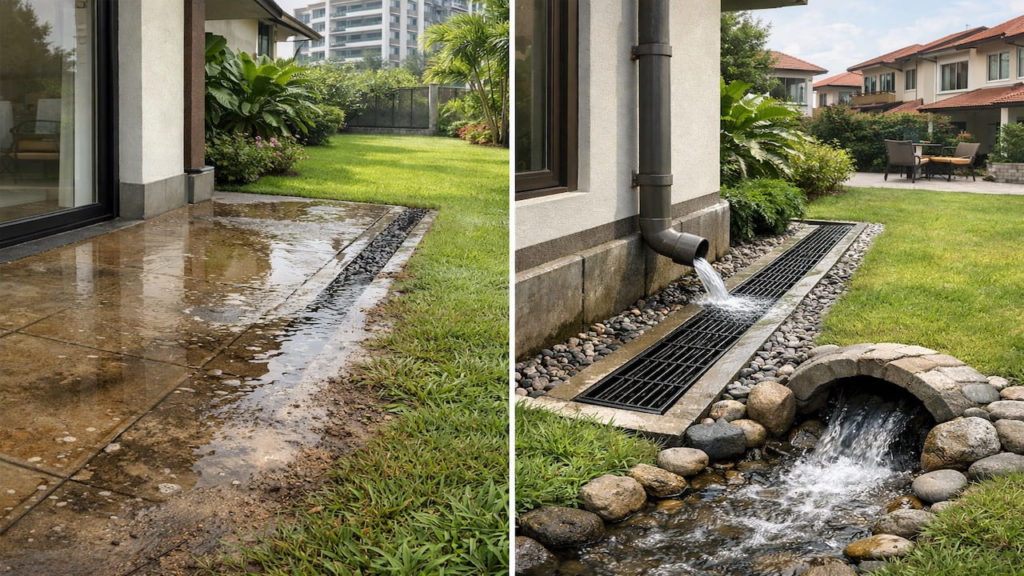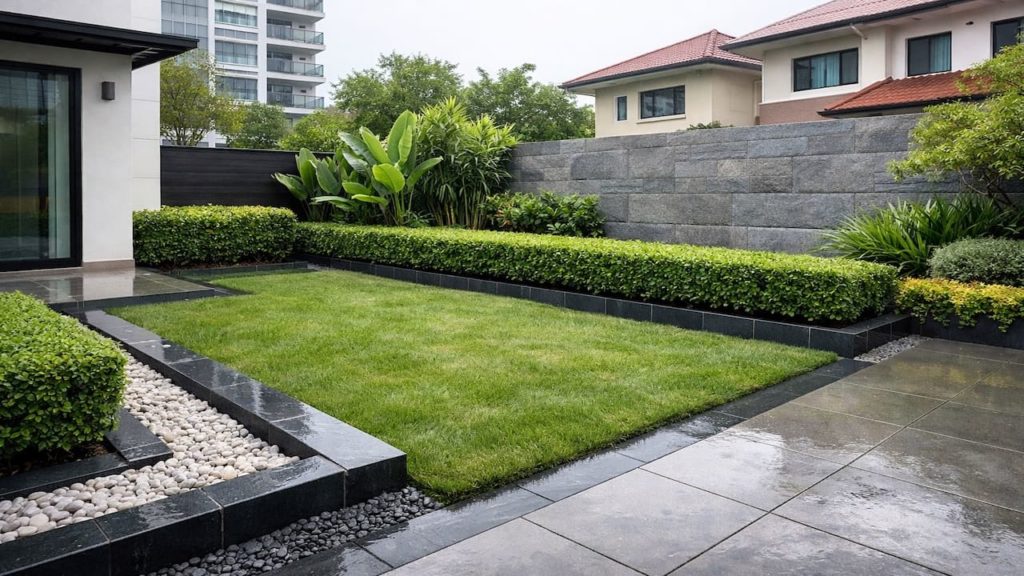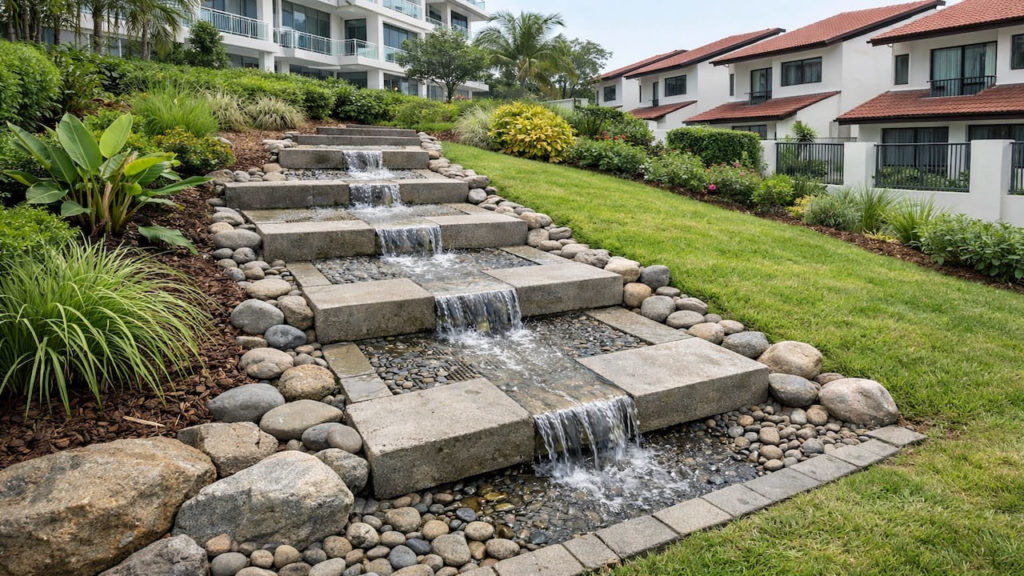
Your garden looks fine on a dry day, but after a heavy rain the water races to the wrong spot and leaves stains, puddles, or muddy washouts. In Malaysia, that runoff can turn into a repeat problem fast.
Downpours, humid air, and compacted ground around terrace homes and condo ground floors make slope issues show up as slick algae, soil loss, and wet corners that never fully dry. The tricky part is fixing flow without tearing the whole yard apart.
In this guide, you’ll learn how to redirect runoff smoothly with small slope fixes so water moves away without major digging. You will also learn what causes “bad flow,” where to adjust first, and how to test results between storms.

Hi, I’m Ken. I write practical home guides for Malaysia—no fluff, just what works.
I hold a formal building design qualification and have spent about 20 years on job sites across hundreds of projects. My goal is simple: help you avoid costly mistakes with clear, safe steps—a quick way to decide what to do next.
1. Garden slope fixes that work: 5 steps
Small slope changes beat big rebuilds when you target the true low points.
In Malaysia, you do not need a perfect landscape grade, you need predictable water movement during sudden rain bursts—flow control. A few centimeters of height change can decide whether water drains or pools. Start by identifying where water slows, where it accelerates, and where it hits walls or borders. This approach keeps effort and cost reasonable.
- Mark puddle zones after rain using chalk lines
- Locate the true outlet point toward longkang direction
- Find high spots that act like mini dams
- Check water paths from downpipes to yard edges
- Test slope using a straight board and level
Some people spread soil everywhere and hope, but that usually creates new dams and new puddles. Structure. Fix one flow line at a time and the yard becomes stable.
2. Redirect runoff smoothly without major digging
Shape a gentle flow channel that guides water where you want it.
The goal is not to create a trench, it is to create a smooth surface that nudges water away from the house and away from weak borders. In Malaysia wet months, sharp drops can cause erosion, while flat areas create standing water and algae. A gentle grade and a firm surface layer help water move without stripping soil. Done right, it looks natural.
- Add a shallow swale to guide water off paths
- Build a low berm to block wall-base runoff
- Use gravel strip to stabilize high-flow edges
- Blend topsoil gradually to avoid sudden step changes
- Compact in thin layers to prevent later settling
You might think “no digging means no real fix,” but smart shaping often solves most puddles and stains. Reality. Redirect first, then upgrade only if water still pools.
3. Why runoff gets worse around homes in Malaysia
Compaction plus sudden rain makes water run fast instead of soaking in.
Yards near houses often get compacted by foot traffic, construction fill, and repeated wet-dry cycles, so water cannot infiltrate. Malaysia humidity also slows drying, so shaded low spots stay wet and grow biofilm. When runoff has no clear exit, it hugs walls, undercuts borders, and leaves a stain trail. The flow repeats because the ground shape repeats.
- Spot hard soil that repels water like concrete
- Find narrow side yards with poor airflow drying
- Check patios where tile slope sends water inward
- Notice soil loss where runoff accelerates downhill
- Trace repeated stain lines showing the same route
It is easy to blame rain intensity, but the real cause is the surface shape and soil condition that force water into the same path. Mechanism. Change the shape and the route changes.
4. How to fix slope safely with light tools
Raise, lower, then lock in so your grade stays put after storms.
Use a rake, shovel, and tamper to adjust small heights, because you are correcting a surface layer, not rebuilding the whole yard. Focus on removing high spots that dam water and adding material to low spots that pool. For basic supplies like topsoil, gravel, and simple edging, RM20–150 is common depending on area and material choice. Then test with a hose and confirm the exit flow.
- Scrape high spots and spread to low areas
- Compact every thin layer to reduce later settling
- Add gravel in flow zones to prevent erosion
- Edge swales to keep them from flattening out
- Retest during rain and adjust small sections only
Some people want a “one day perfect fix,” but slope tuning is often iterative, especially in Malaysia’s rain cycles. Patience. Do one zone, test, then expand once it works.
5. FAQs
Q1. What slope is enough to move water without erosion?
A gentle slope is usually enough if the surface is smooth and the outlet is clear. Too steep can cause soil loss, so stabilize flow paths with gravel or plants.
Q2. Can I fix slope problems without removing existing grass?
Yes, if you topdress and blend gradually rather than piling soil in one spot. Raise low areas in thin layers so grass can recover and the grade stays stable.
Q3. How do I find the real low point in my yard?
Watch after rain or run a hose and follow the slowest draining spot. The real low point is where water lingers longest, not where it looks lowest.
Q4. Why do my slope fixes disappear after a few storms?
If layers are not compacted, the soil settles and water re-creates the old path. Compact in thin lifts and add a stabilizing top layer where flow is strongest.
Q5. When is major digging actually necessary?
If there is no outlet at all or the base level is wrong across the whole yard, you may need deeper drainage work. Try surface shaping first and escalate only if water still has nowhere to go.
Pro’s Tough Talk

Alright, I’ve been on site 20+ years, done hundreds of jobs, and slope problems are always the same joke with different plants. Malaysia rain is the boss fight, and your yard grade is either helping you or betraying you.
Three causes. One, high spots act like tiny dams, so water turns and attacks the wall base. Two, low spots become ponds, then algae moves in like it pays rent. Three, the ground is compacted, so water cannot soak in and just sprints downhill.
Do this in 3 steps. First, watch one real rain or hose test and mark the flow with chalk. Second, shave the high dams and feather soil into the low ponds, then compact it. Third, lock the flow path with gravel and a clear outlet route.
Don’t blame yourself, and don’t say every contractor is useless either, but the structure is brutal. People pay for “pretty finish,” then skip the boring grade work because it is hidden. Water follows shape every time and it does not care about your feelings.
Aruaru: you fix one puddle, then it appears 1 meter to the left. Aruararu: the side yard that never dries and smells like a wet shoe rack. Oi, you want a dry garden, right? Tune the slope, or keep living in the Splash Zone.
Summary
Slope fixes work when you identify true low points, create a gentle swale, and give runoff a clear outlet path. In Malaysia humidity, smooth flow reduces stains, algae, and slippery patches.
If water still pools after small reshaping, recheck for hidden dams, settling soil, and blocked outlets before you consider major digging. Fix the worst flow line first, then expand.
Do one hose-flow test today and reshape one low spot then move to a drainage-around-the-house guide or a border reinforcement guide to keep the whole yard stable in wet months. Small grade wins prevent big messes.