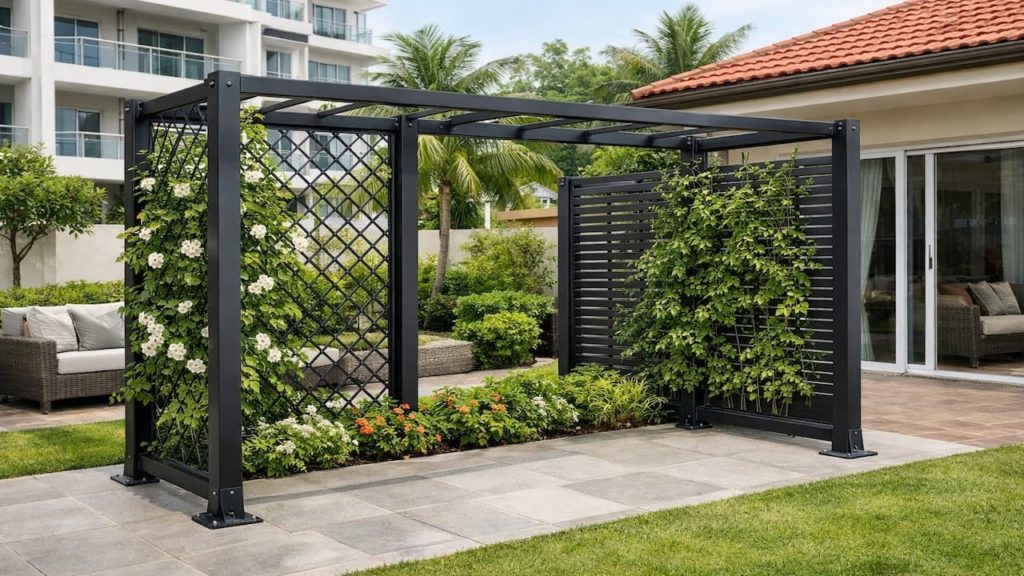
If you searched “garden trellis that won’t lean” you’re probably sick of a wobbly frame that looks cheap and feels unsafe.
In Malaysia, wet season rain softens soil, humidity keeps wood damp, and sudden gusts can hit hard around terrace homes and condo patios. A trellis that was “fine yesterday” can shift fast.
In this guide, you’ll learn how to check the base, anchors, and load so your trellis stays straight before vines get heavy and you end up rebuilding after the next storm.

Hi, I’m Ken. I write practical home guides for Malaysia—no fluff, just what works.
I hold a formal building design qualification and have spent about 20 years on job sites across hundreds of projects. My goal is simple: help you avoid costly mistakes with clear, safe steps—a quick way to decide what to do next.
1. Garden trellis that won’t lean: 5 checks
A trellis stays upright when the base and anchors work together — not when you just push it deeper.
Malaysia rain makes ground unpredictable, so a quick check now prevents the slow lean that turns into a full wobble later. Stability.
- Test soil firmness with a screwdriver push
- Check post vertical using phone level app
- Inspect anchors for rust cracks and looseness
- Confirm cross braces are tight at corners
- Limit vine weight until frame is proven
You might think the trellis is “strong enough” because it stands today. When the soil turns soft and vines pull like a sail, that confidence collapses, so do the checks first.
2. Support vines and screens without wobble
Support works when wind passes through and loads spread — solid panels in small yards can backfire.
In Malaysia humidity, dense screens trap damp air, and in storms they catch wind like a wall, so your supports get hammered even if the trellis looks thick. Airflow.
- Choose slats with gaps to reduce wind load
- Mount screen panels across two posts not one
- Keep the top open for light and breeze
- Leave a cleaning lane behind vines and panels
- Tie vines to multiple points not single hooks
It’s tempting to make it fully private with one big sheet. That often creates more wobble and more moisture problems, so block views with layers and keep breeze moving.
3. Why trellises lean in Malaysia wet season
Most leaning starts at the ground line where water weakens support — the trellis is guilty by association.
Wet season soil can turn mushy, and repeated rain splash can wash out small gaps around posts, especially near drains and roof drip lines. Ground shift.
- Waterlogged soil loses grip around post bases
- Uneven footing depth creates slow tilt over weeks
- Rusty fasteners loosen under repeated wind vibration
- Heavy vines pull sideways after rapid growth spurts
- Poor drainage causes erosion around support points
Some people blame the trellis material only. Material matters, but layout and drainage decide whether the base stays firm, so fix the cause not the symptom.
4. How to build a trellis base that stays straight
Lock the base first then add vine load in stages — you want straight now and straight next year.
For Malaysia weather, plan for wet ground and gusts; RM80–400 for anchors, brackets, and basic concrete depends on size and materials, and it is cheaper than rebuilding. One-time pain.
- Dig deeper footing below the soft topsoil layer
- Set posts in concrete and brace while curing
- Add diagonal braces to resist sideways pull forces
- Use galvanized screws and check tightness monthly
- Train vines gradually to avoid sudden heavy loads
You may think concrete is overkill for a small yard. In wet season, a shallow base fails quietly, so build the foundation once and enjoy a trellis that stays tidy.
5. FAQs
Q1. How deep should a trellis post go to stop leaning?
Deeper footings reduce leaning more than thicker wood. In Malaysia wet season, aim deeper than the soft top layer so the base holds when soil turns soggy.
Q2. Is wall mounted trellis better than ground posts?
Wall mounts can work if the wall is solid—avoid weak fixings that pull out under wind. Ground posts still need good drainage so the base does not shift.
Q3. My trellis already leans slightly, can I save it?
Often yes if it is early. Reduce vine weight, straighten, then improve the base support and tighten all joints before the next storm hits.
Q4. What vines cause the most wobble problems?
Fast growers that get heavy quickly can pull sideways. Train them in multiple tie points so one branch does not drag the whole frame.
Q5. How do I maintain a trellis so it stays straight?
Check fasteners after heavy rain and strong wind days. Keep the base area clear so you can spot erosion, puddles, and loose anchors quickly.
Pro’s Tough Talk

Listen, I’ve been on site for 20+ years and done hundreds of jobs, and a leaning trellis is never “bad luck.” Malaysia rain turns soft soil into porridge, then wind comes and starts pushing your frame around.
Three causes. One, you stick posts into soft ground like a chopstick in pudding. Two, you hang a solid screen and it becomes a sail. Three, you let vines go wild and the weight pulls sideways like a kid dragging a suitcase.
Do this now. Step 1: cut the load, untie heavy vines, lighten the pull. Step 2: straighten the frame and brace it, no excuses. Step 3: fix the base, improve drainage, tighten every joint.
This is the deal base first then vines later. Aruaru one: you buy a pretty trellis, then wet season arrives and it leans in slow motion. Aruaru two: you ignore a wobble, then one gust makes it dance. What is this, a garden or a karaoke mic stand?
I’m not blaming you, and I’m not saying every contractor is useless, but the structure is cold: weak bases always fail when weather gets serious. Go fix it before your vines start doing stand-up comedy.
Summary
A trellis won’t lean when the base is firm, anchors are tight, and wind load is managed with gaps and braces.
If you still see wobble after rain, your next step is to improve footing depth and drainage, then reduce vine weight until it stays stable.
Do the soil and anchor checks today and build the base right before vines get heavy then read a drainage or wet season cleaning guide to keep the whole yard tidy.