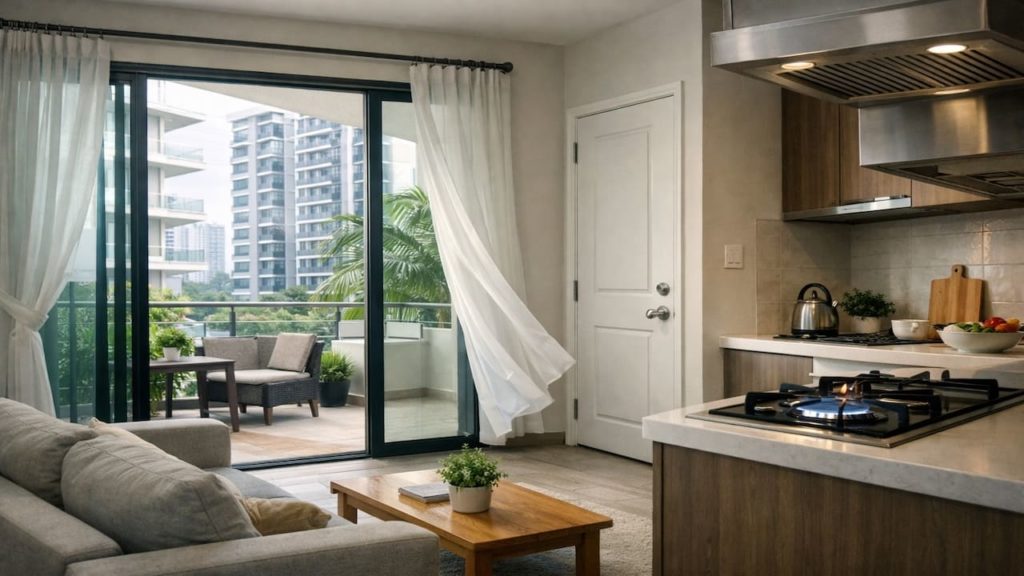
You just caught a gas smell near the stove, the cabinet, or the cylinder area, and now you’re searching because you want a clear move, not guesswork.
In Malaysia, hot days, humid nights, and tight terrace kitchens can trap odors, while condo corridors and service shafts can carry smells from other units. The cause can be a tiny seal issue, or it can be something that needs a pro.
In this guide, you’ll learn how to stay safe and stop the smell in a realistic Malaysian home setup, then check the most common points without doing anything that could trigger ignition.

Hi, I’m Ken. I write practical home guides for Malaysia—no fluff, just what works.
I hold a formal building design qualification and have spent about 20 years on job sites across hundreds of projects. My goal is simple: help you avoid costly mistakes with clear, safe steps—a quick way to decide what to do next.
1. Malaysia gas smell guide: 5 steps
Act first and investigate second even if the smell seems mild.
Gas can pool low and travel along floors—one still, warm afternoon can keep it hanging around longer than your nose expects. Speed matters, but panic is useless. Clear actions.
- Open kitchen windows and keep doors ajar
- Turn off stove knobs and close cylinder valve
- Avoid switches and unplug devices near smell
- Move people outside and keep pets close
- Call a qualified technician if smell persists
You might think “I’ll just sniff around and find it,” but that curiosity can turn into damage and bills. In small Malaysian kitchens, air sits. Shut the source, then think.
2. Ventilate and shut
Fresh air and isolation stop the danger faster than any gadget.
Ventilation lowers concentration—shutting the supply prevents more gas entering, and those two moves buy you real time. In condos, airflow can bounce between units. Awkward reality.
- Open opposite windows to create cross ventilation
- Close LPG cylinder valve clockwise until firm
- Turn off piped gas valve if present
- Do not light candles or test with flame
- Step outside and wait a few minutes
Some people worry ventilation “spreads” the smell, but trapped gas is the bigger risk. Malaysia’s humidity can make odors linger, so give it a few minutes before you re-enter.
3. Why gas smells happen in Malaysian homes
Most gas smells come from small seal failures not dramatic stove disasters.
Heat cycles and humidity harden rubber hoses and O-rings—especially around regulators, quick-connects, and older stove fittings. Add grease, ants, and frequent wiping, and small looseness becomes a leak. Boring, but dangerous.
- Cracked hose near regulator from sun heat
- Loose clamp on hose from repeated cleaning
- Worn stove knob seal from heavy daily cooking
- Regulator not seated straight on cylinder head
- Smell drifting in from nearby unit cooking
Yes, it can be “just cooking smell,” especially in dense terrace rows and condos. But you only decide that after you’ve shut the supply and aired out. If you don’t buy anything today, cost is mostly time/effort.
4. How to find the source safely and stop it
Use a no spark check to locate leaks then fix the weak link.
After the smell fades, do a simple soap-bubble test—basic supplies are usually RM5–30 and it can save you a pointless service call. Keep windows open and keep your phone away from the leak zone.
- Mix dish soap and water in a spray bottle
- Apply bubbles to regulator hose and joints
- Watch for growing bubbles at one spot
- Tighten clamp or reseat regulator with care
- Replace hose or regulator if bubbles return
If you’re thinking “I’ll crank everything tight and finish,” slow down. Over-tightening can damage fittings, and humid kitchens hide corrosion. If bubbles persist, shut off and call a licensed technician.
5. FAQs
Q1. Is it safe to use the exhaust fan or aircond?
Avoid turning anything on if you suspect gas is present. Switching can create a tiny spark inside a motor or switch. Use windows and doors first, then leave the area if the smell is strong.
Q2. What if the smell is strong and my eyes sting?
Leave the area immediately and get everyone outside. Don’t troubleshoot in place, even for one minute. Once outside, contact building management or a qualified gas technician.
Q3. I live in a condo and smell gas in the corridor only.
It may be drifting from another unit—through a shared service duct or a common meter area. Treat it as real until proven otherwise and alert management fast. Keep your unit ventilated and avoid flames.
Q4. Can I detect leaks by smelling close to the hose?
Don’t put your face near fittings. Ventilate, shut the supply, then use a soap-bubble check when it’s safe. If you feel unsure, that’s your signal to call a pro.
Q5. When should I replace the hose or regulator?
If you see cracks, stiffness, or repeat bubbles, replace it. Malaysia’s heat can age rubber faster than you expect. Paying a little now often avoids a bigger repair later.
Pro’s Tough Talk

I’ve been on sites for over 20 years and handled hundreds of kitchens, pipes, and “mystery smells.” When you smell gas, the most dangerous thing is that smug thought: “It’s probably nothing.” In humid Malaysia heat, rubber gets old fast. Fast.
It usually breaks into 3 causes. One, worn hose or tired gasket. Two, a regulator that isn’t seated right or a clamp that’s barely holding. Three, smell drifting in from next door. You know the one, you blame your stove, then realize it’s not even yours.
Immediate fix is 3 moves. Open windows. Shut the valve. Get out without touching switches. Gas is like a snake sliding under the floor, and your greasy kitchen is basically a spark buffet. And please, don’t “test” with a lighter—seriously?
Here’s the rule. Ventilate shut then verify. If you can do a bubble check, do it calmly. If you can’t, call someone who does this daily. Another common scene: the family group chat explodes, and nobody opens a window. Don’t be that movie.
If you sleep because the smell “went away,” enjoy your comedy ending when it comes back at 2 a.m.
Summary
When you smell gas, treat it as real—ventilate hard, and shut the supply before you try to identify the source.
If the smell returns after airing out, use a no-spark bubble check or bring in a qualified technician, especially in tight terrace kitchens and enclosed condo layouts.
Do the first 2 minutes right and you’ll avoid panic, damage, and bigger costs, then move on to another Malaysia home safety guide to lock in better habits.