You opened a kitchen cabinet, touched the handle, and got that sticky film on your fingers. Now you’re searching because the grease keeps coming back.
In Malaysia, heat and humidity make cooking vapor settle fast, and small terrace kitchens or condo galley layouts trap oily air. Over time it gums up cabinet doors, hinges, and even attracts pests.
In this guide, you’ll learn how to remove grease and keep cabinets cleaner with simple routines that fit Malaysian cooking, without turning your weekend into a full renovation.

Hi, I’m Ken. I write practical home guides for Malaysia—no fluff, just what works.
I hold a formal building design qualification and have spent about 20 years on job sites across hundreds of projects. My goal is simple: help you avoid costly mistakes with clear, safe steps—a quick way to decide what to do next.
1. Malaysia kitchen grease guide: 5 tips
Grease stops when you control the air not when you scrub harder.
Cabinets get dirty because oily vapor lands, cools, and sticks—especially during wok cooking and frying. Humid air slows drying, so residue stays tacky longer. Sticky kitchen.
- Run hood before cooking and after cooking
- Wipe cabinet fronts weekly with mild degreaser
- Clean handles and edges where grease builds
- Line shelves to block splatter and dust
- Fix oil drips around bottles and dispensers
You might think “I’ll deep clean once a month,” but the film grows daily. A small weekly wipe is cheaper than replacing swollen panels later.
2. Keep cabinets clean
Cabinets stay clean when grease can’t settle and you remove it early.
Clean doesn’t mean perfect—just no sticky layer that traps dust and roaches. In Malaysian kitchens, airflow and timing matter more than strong chemicals. Gentle wins.
- Open windows to create cross ventilation
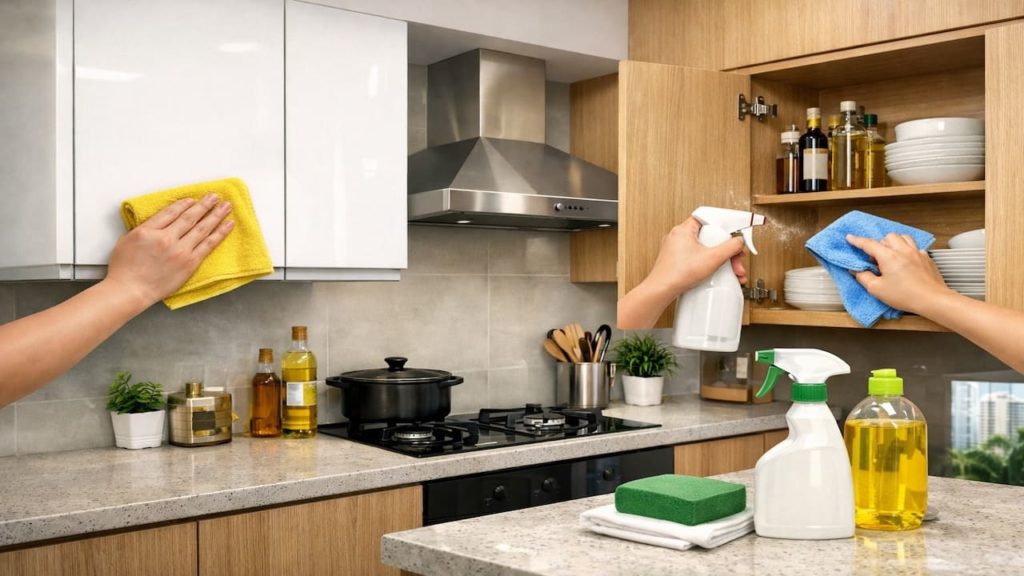
- Use a damp microfiber cloth not a dripping rag
- Wipe with warm soapy water then dry immediately
- Target corners near stove and fryer zone
- Finish with a dry cloth to prevent swelling
Some people avoid wiping because “it’ll streak,” but streaks come from leaving moisture on laminate. Dry it fast and it looks new again.
3. Why grease builds up fast in Malaysia kitchens
Heat humidity and oily cooking create the film that coats cabinets.
Hot air lifts oil particles, then cooler cabinet surfaces catch them like a magnet. Add humidity and the residue stays soft, so dust sticks, then it becomes a grey paste. Ugly reality.
- High heat wok cooking throws oil mist upward
- Weak exhaust hood fails to capture vapor
- Cabinets placed too close to stove edge
- Fans off too early after cooking ends
- Old grease on hood filters recirculates particles
It’s not always “poor hygiene.” It’s physics plus Malaysian weather. If you’re not buying anything today, cost is mostly time/effort.
4. How to clean safely and prevent future buildup
Degrease gently then protect surfaces so the next wipe is easy.
For supplies, you can keep it basic—RM10–40 covers dish soap, baking soda, and a simple degreaser. Avoid harsh solvents on laminate, or you’ll pay later with peeling edges.
- Test cleaner on a hidden cabinet corner
- Use warm soapy water for light grease
- Apply degreaser and wait one minute
- Scrub hinges gently with an old toothbrush
- Replace hood filter or clean it monthly
If you think “more chemical equals more clean,” nope. Strong stuff can dull finishes and loosen edge banding—then humidity makes the damage spread. Clean smart, not loud.
5. FAQs
Q1. Can I use vinegar to remove kitchen grease?
Vinegar can help on some surfaces, but it may damage certain laminates and stone finishes. Start with warm soapy water first and test any acidic cleaner in a hidden spot. Dry the surface right after.
Q2. My cabinets are sticky again after two days.
That usually means vapor is still landing daily. Improve exhaust timing and clean the hood filter, then do quick weekly wipes. You can’t out-scrub bad airflow.
Q3. Is it okay to soak cabinet doors with water?
Don’t soak them. In Malaysia’s humidity, water can swell MDF or loosen edges. Use a damp cloth, then dry immediately with a clean cloth.
Q4. How often should I clean the range hood filter?
For frequent frying, monthly is safer. If you cook lightly, every 2–3 months may work. A clogged filter recirculates grease back onto cabinets.
Q5. What if my cabinet surface is already swollen or peeling?
Cleaning won’t reverse swelling. You can reduce further damage by keeping it dry and improving ventilation, but swollen boards may need repair or replacement. Handle it early to avoid spreading.
Pro’s Tough Talk

I’ve been on sites for over 20 years and I’ve done hundreds of kitchen jobs, from simple cleanups to full cabinet replacements. When cabinets feel sticky, it’s not “bad luck.” It’s your kitchen air slapping oil onto wood like a printer that never stops.
Cause breaks into 3 parts. One, the hood is weak or the filter is clogged. Two, the stove setup is too close to cabinets, so grease hits them directly. Three, you clean, but you leave moisture behind, and Malaysia humidity turns it into glue. Classic.
Immediate fix is 3 steps. Start the hood early. Wipe the hotspot zones weekly. Clean the hood filter regularly. Cabinets are like phone screens—if you ignore it, the grime becomes part of the identity. And yeah, you’re not “saving time,” you’re just borrowing dirt.
Bottom line. Control vapor then wipe early. Do that, and you won’t be scrubbing like you’re sanding a boat. Another common scene: people buy fancy sprays, then forget the filter. That’s like washing your car while the exhaust pipe pours soot on it.
Keep ignoring it, and your cabinets will age faster than your weekend plans.
Summary
Grease on cabinets is mostly an airflow problem—stop the vapor from settling, then remove residue early before it hardens.
If buildup keeps returning, focus on hood timing, filter cleaning, and targeted weekly wipes near the stove, especially in humid Malaysian kitchens.
Do one small wipe each week and you’ll protect cabinet finishes, avoid swelling repairs, and naturally move to another Malaysia kitchen guide for the next upgrade.