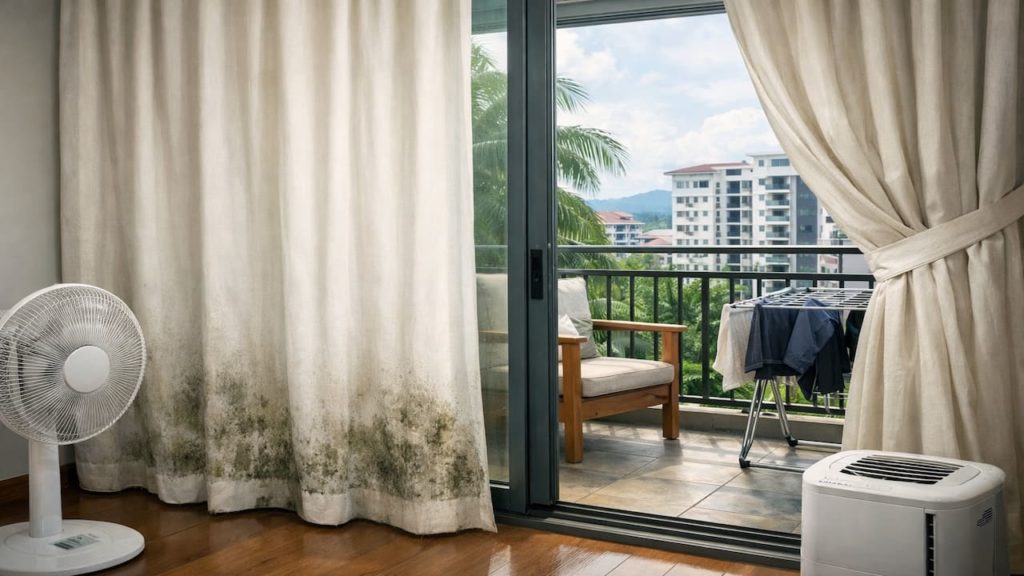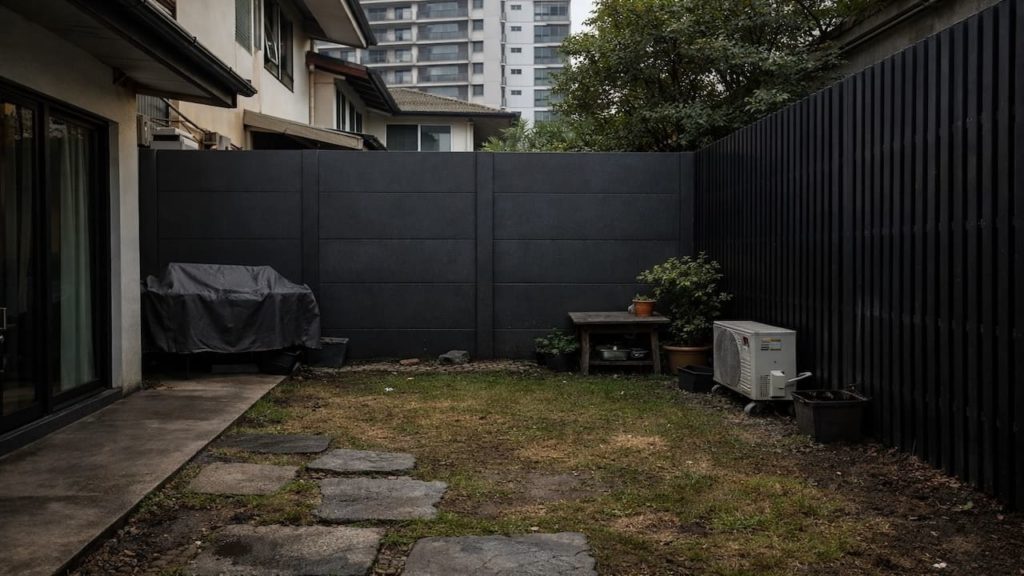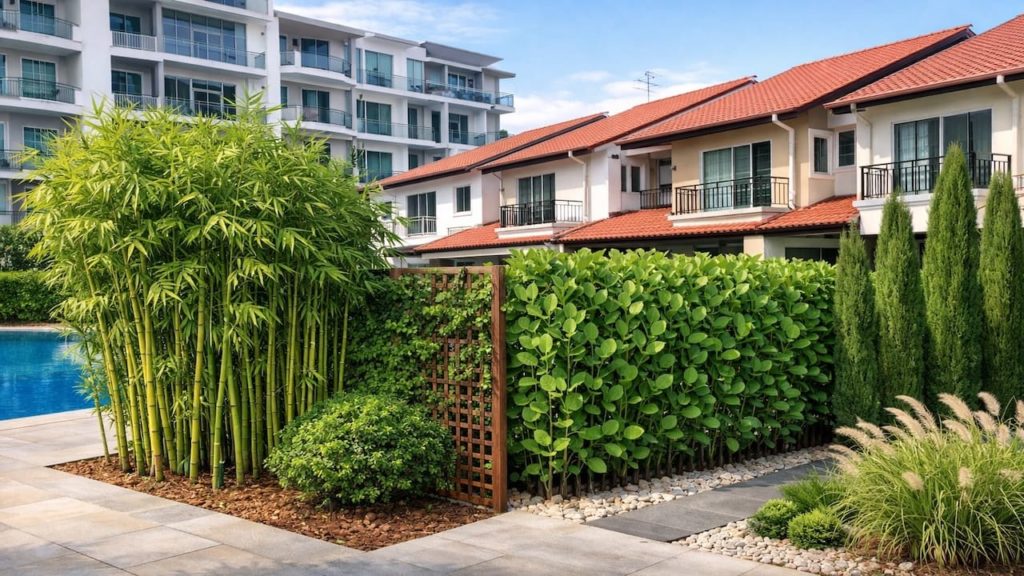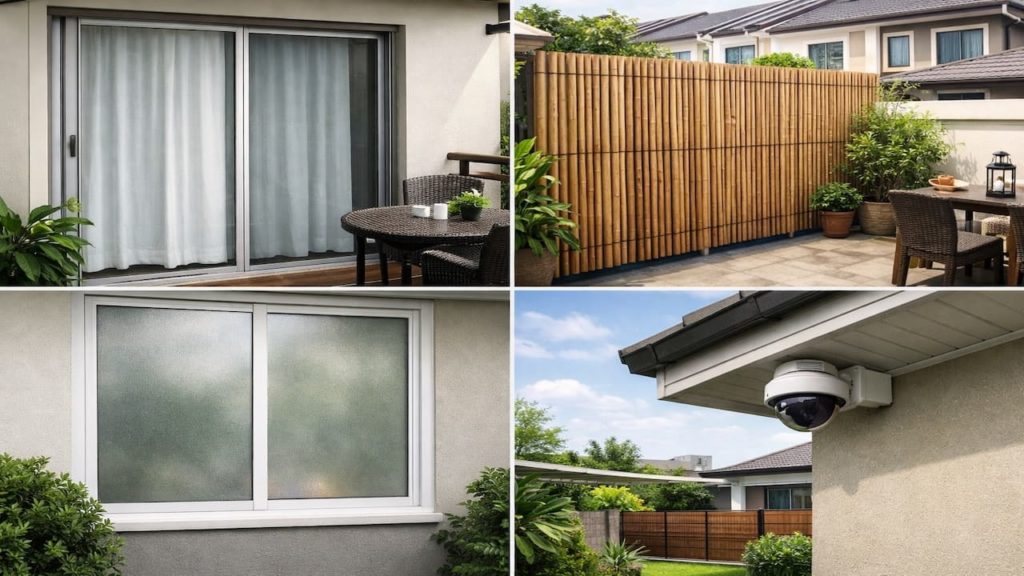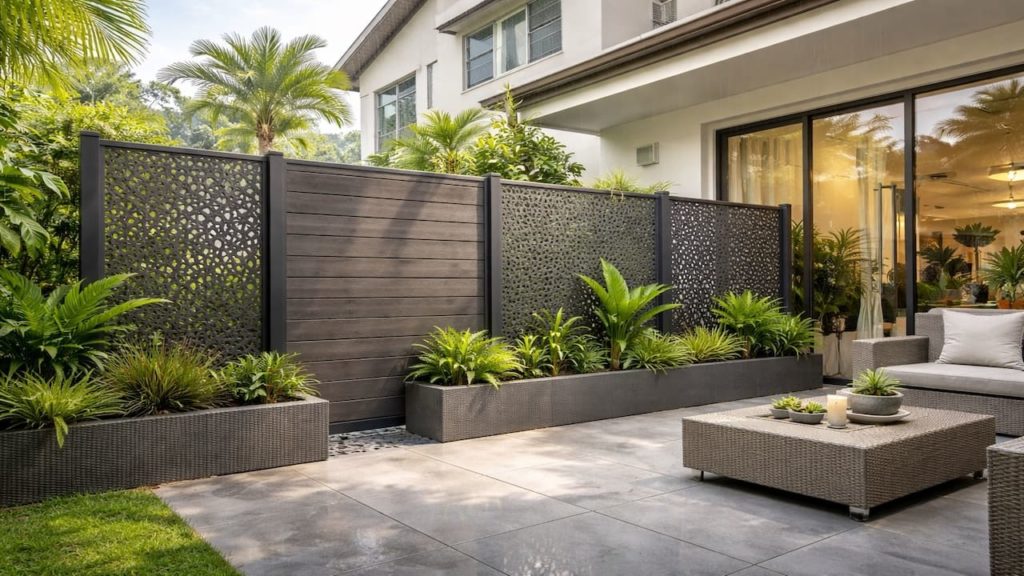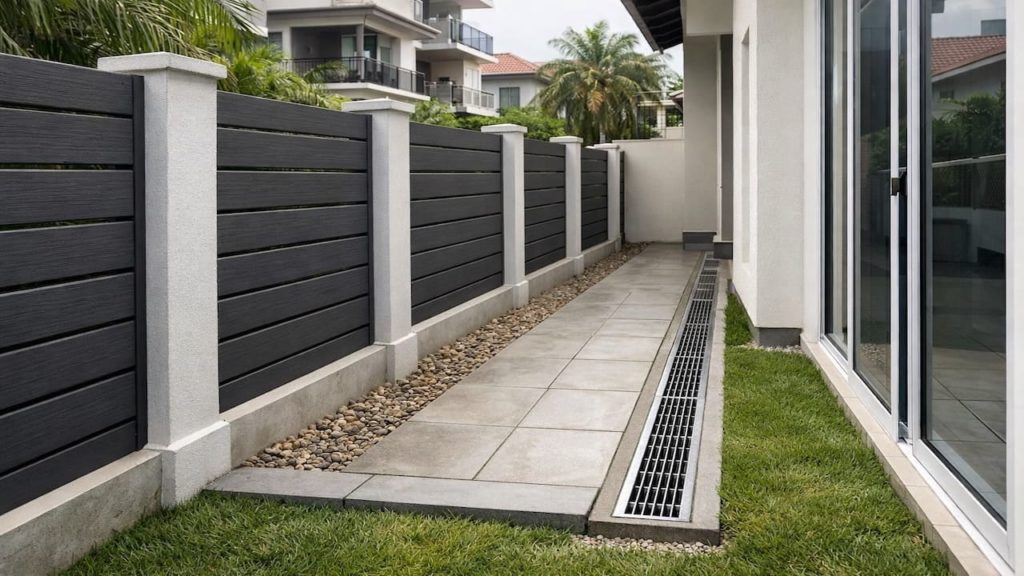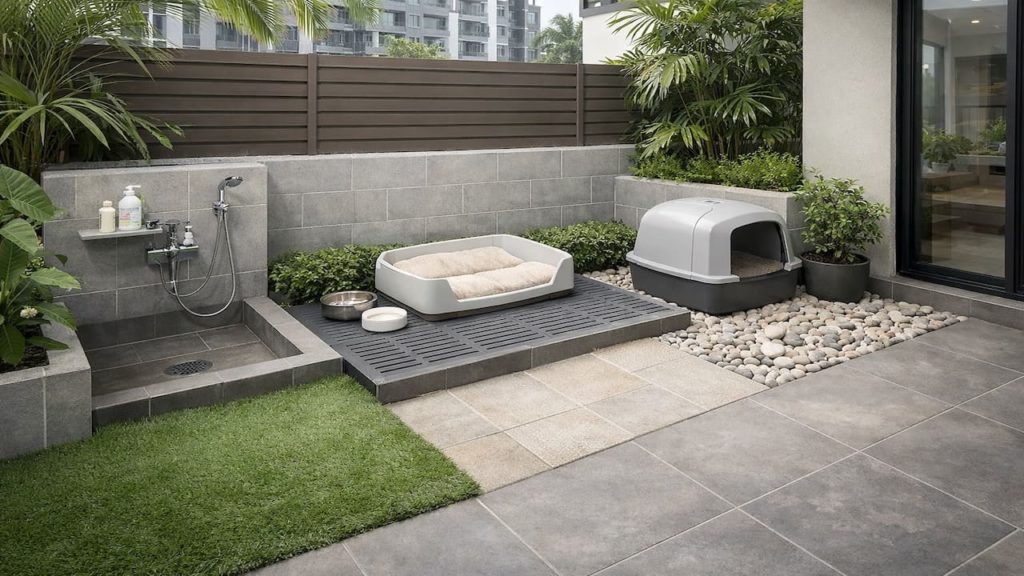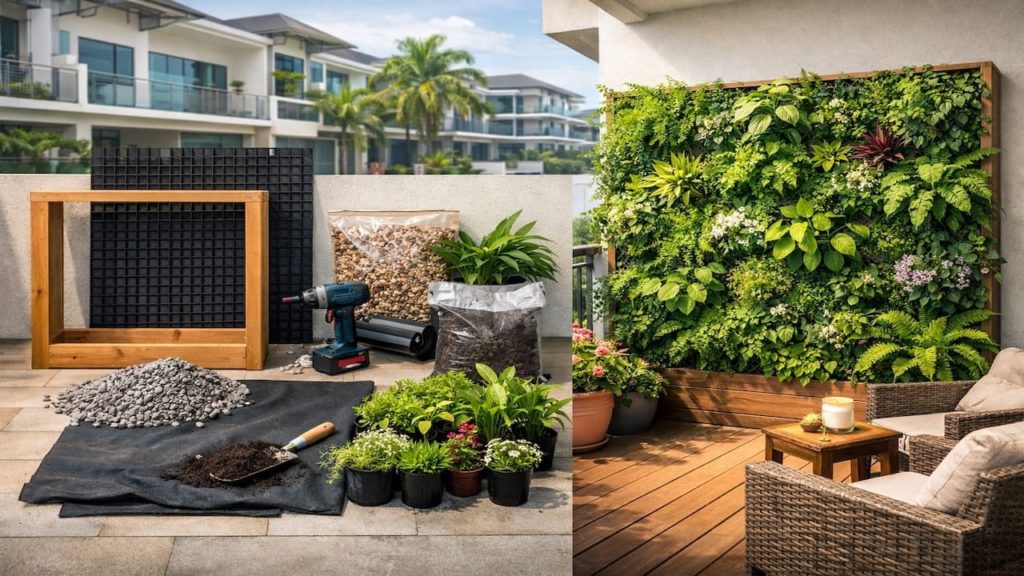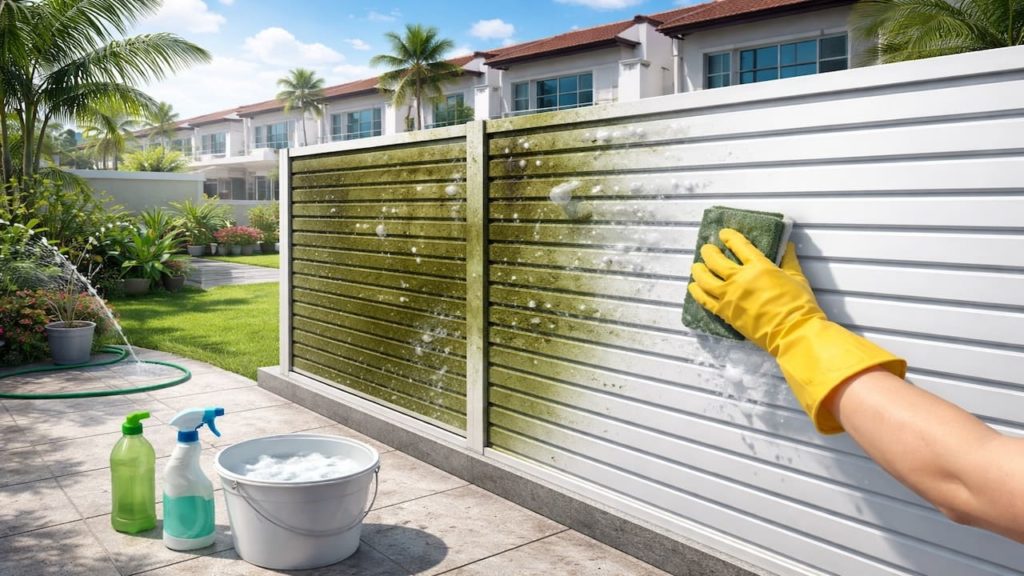
Your privacy screens look great when clean, but Malaysia wet heat can grow green algae film and black streaks fast.
Strong cleaners and rough scrubbing feel tempting, yet they can dull powder coating, scratch composite skins, and shorten the panel life.
In this guide, you’ll learn how to remove algae safely without wrecking coatings, what tools to use, and what cleaning habits keep screens easier between rains.

Hi, I’m Ken. I write practical home guides for Malaysia—no fluff, just what works.
I hold a formal building design qualification and have spent about 20 years on job sites across hundreds of projects. My goal is simple: help you avoid costly mistakes with clear, safe steps—a quick way to decide what to do next.
1. Cleaning privacy screens: 5 tips
Clean with gentle chemistry and let time do the work.
Algae is a thin living film, and it releases better with soak time than with force—especially on coated aluminium and composite surfaces. Malaysia humidity keeps it sticky, so rushing with harsh chemicals can burn finishes and leave dull patches that catch dirt later. A calm routine. Aim for mild soap, soft tools, and rinse control so you do not push grime into joints and corners. Clean smarter, not harder.
- Wet surface first to soften algae film
- Use mild soap and warm water mix
- Scrub with soft brush not abrasive pad
- Rinse top down to avoid streak trapping
- Dry corners to reduce film return speed
Some people say blast it with high pressure, but pressure can drive water behind panels and lift edges over time—especially in Malaysia wet months. Slow wins. A gentle clean protects coatings and reduces repeat work.
2. Remove algae without damaging coatings
Avoid harsh acids and bleach unless the coating maker allows it.
Powder coating and painted metals hate strong chemicals and rough pads, and composite caps can haze when scrubbed hard. Finish matters. For most households, cost is mostly time/effort, because the best method is a mild wash plus repeat light passes. If you need a safer boost, choose a diluted neutral cleaner and test in a hidden corner before doing the whole screen.
- Test cleaner on hidden edge before full wash
- Use pH neutral cleaner for coated metal
- Use soft sponge to prevent micro scratches
- Avoid bleach splash that stains nearby grout
- Avoid vinegar on bare metal fasteners
You may hear “bleach kills everything,” and yes it kills algae, but it can also attack coatings and leave uneven tone. Not worth it. If you must use stronger products, keep contact time short and rinse hard. Coating life is the goal.
3. Why algae comes back so quickly in wet months
Algae returns when water sits and airflow stays blocked.
Malaysia rain often hits sideways, and splashback keeps lower zones wet, so film grows where drying is slow. Wet corners. If panels are installed tight to walls, the back side stays damp and feeds streaks that show up again after your “deep clean.” Shade and dust add food for algae, so reducing water hold time matters more than chasing a perfect scrub.
- Check bottom rail for pooling water lines
- Rinse splash zone after heavy rain events
- Keep small stand off space behind panels
- Trim plants to improve airflow around screens
- Clean gutters to reduce dirty runoff splash
People think algae means the material is bad, but many times it is the layout and drainage around the screen. Normal. Fix water paths and the cleaning becomes easy. Moisture always chooses the slow-dry spot.
4. How to set a simple cleaning routine that lasts
Do light cleaning often instead of rare heavy scrubbing.
In Malaysia, weekly rinses during rainy season can stop film before it thickens, and that keeps you away from harsh chemicals. Small habit. After a rinse, wipe only the shaded and lower zones where algae starts, then dry corners so water does not sit overnight. If you want to reduce future work, keep the base area clean so mud does not splash upward during storms.
- Rinse screens weekly during wet season months
- Wipe lower third where splash marks collect
- Use microfiber cloth for final buff pass
- Clear debris from bottom gaps and drains
- Check fasteners for rust and replace early
Some say cleaning weekly is too much, but a 5 minute rinse beats a 1 hour scrub that damages coatings. Reality. If you hate maintenance, design for it with drainage and airflow. Routine saves money.
5. FAQs
Q1. Can I use a pressure washer on privacy screens?
You can, but keep pressure low and keep the nozzle far enough to avoid lifting edges or driving water behind panels. Test a small area first and rinse top down.
Q2. Is bleach safe for powder coated aluminium?
Usually not the best choice because it can dull coatings and leave uneven tone. Use mild soap first, then a neutral cleaner, and rinse well.
Q3. What brush should I use to avoid scratches?
Use a soft nylon brush or a microfiber pad. Avoid green abrasive pads and metal brushes because micro scratches trap dirt and algae faster.
Q4. How do I remove black streaks near the bottom?
Those are often splashback dirt plus algae film, so soak with mild cleaner and wipe in one direction. Reduce splash by cleaning the ground and improving drainage.
Q5. Why do screens look hazy after cleaning?
Haze often comes from abrasive scrubbing or strong chemicals reacting with the coating. Switch to gentler tools, rinse more, and stop scrubbing dry surfaces.
Pro’s Tough Talk

Listen, I have over 20 years on site and I have done hundreds of different jobs, and the fastest way to ruin a nice screen is panic scrubbing in Malaysia humidity.
Cause is 3 things. You scrub dry and scratch the coating. You use harsh chemicals and burn the finish. You forget drainage so water sits and algae comes back laughing.
Do 3 steps now. Wet it first and give it soak time. Use mild soap and a soft brush, then rinse top down like you mean it. Dry the corners and clear bottom gaps so water can escape.
This is like sanding a car because it is dusty, like using a machete to cut a birthday cake—Let water and time do the work and the coating stays smooth and easy next time.
When you rush out after rain and when guests show up and you suddenly notice the green film, tsukkomi: if you keep attacking it with brute force, the only thing you will “clean” is your wallet.
Summary
Remove algae by soaking, using mild cleaners, and scrubbing with soft tools so you do not damage coatings. In Malaysia wet months, drainage and airflow decide how fast algae returns.
If haze, dull patches, or peeling appears, stop harsh chemicals and switch to gentle rinses and targeted wiping, then fix splashback and pooling water. If rust marks appear, replace fasteners early.
Do the 5 tips today and then read your related guides on wall splash marks and balcony drainage so your screens stay cleaner with less effort.