You want privacy with fabric curtains, because panels feel heavy, drilling is annoying, or your Malaysia balcony needs something flexible.
But fabric outdoors can turn into a damp smell magnet, flap like crazy in wind, and stain walls if it stays wet after rain.
In this guide, you’ll learn how to choose and hang outdoor curtains so they resist mold, handle wind, and use tiebacks that actually work in Malaysia humidity.

Hi, I’m Ken. I write practical home guides for Malaysia—no fluff, just what works.
I hold a formal building design qualification and have spent about 20 years on job sites across hundreds of projects. My goal is simple: help you avoid costly mistakes with clear, safe steps—a quick way to decide what to do next.
1. Fabric privacy curtains: 5 checks
Outdoor fabric must dry fast or it will smell and spot.
Malaysia wet heat keeps moisture in cloth longer than you expect, especially on shaded balconies and side yards with weak airflow. Drying speed. The best privacy curtain is not the thickest one, it is the one that sheds water, dries quickly, and does not trap mildew at folds. If you choose the wrong fabric, you will clean it every week and still feel a damp odor near the door. Fabric choice is the whole game.
- Choose quick dry fabric rated for outdoor use
- Check for mildew resistant finish on labels
- Prefer lighter weave that still blocks sightlines
- Confirm UV resistance to prevent fast fading
- Inspect seams for strong stitching and reinforcement
Some people buy indoor curtains because they look nicer, but indoor fabric holds water and grows spots fast in Malaysia humidity. Reality. Outdoor-rated fabric looks boring at first, then stays clean longer. That is the real premium.
2. Mold, wind, and tiebacks done right
Wind control prevents mold because flapping keeps fabric wet and dirty.
When curtains whip in wind, they rub walls, pick up dust, and stay damp at the bottom edge where rain splash hits. Wear and damp. Use tiebacks that hold the curtain off the floor, keep a bottom gap, and reduce contact with wet tiles. For simple supplies like hooks, cord, and anti-rust clips, RM5–20 covers many basics, and the biggest improvement is correct placement and spacing.
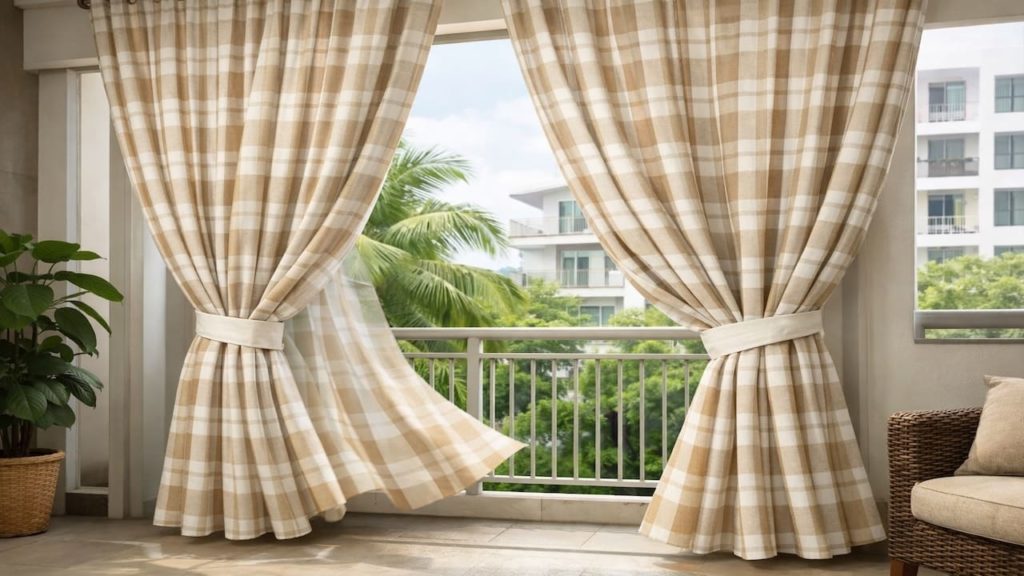
- Use tiebacks that lift hem above splash zone
- Add bottom weights to reduce flapping movement
- Keep a wall stand off gap for airflow
- Use stainless clips and rustproof eyelets
- Open curtains daily to fully dry folds
You might think heavier fabric solves wind, but heavy fabric dries slower and can grow mildew in folds during wet months. Not worth it. Control wind with tiebacks and weights instead. Keep it breathable.
3. Why outdoor curtains get moldy in wet heat
Mold grows in folds when fabric never dries fully.
Humidity makes the curtain stay damp overnight, and rain splash keeps the lower hem wet, so mildew starts in hidden creases. Hidden damp. If airflow is blocked by screens or tight corners, the back side stays wet and stains appear even if the front looks fine. Malaysia weather amplifies every small mistake in spacing and drying routine.
- Check lower hem for constant damp feel
- Look for black spots along folded crease lines
- Notice musty odor near curtain tie points
- Inspect wall behind curtain for damp streaks
- Watch for algae film on tiles under hem
Some people think mold means the fabric is bad quality, but the main issue is water contact and poor drying, not brand. Normal. Reduce splash, increase airflow, and mold has less chance. Drying is prevention.
4. How to hang curtains so they last longer
Hang for airflow and drainage not for perfect straight lines.
Mount the rod higher than you think, keep the hem off the floor, and leave side gaps so breeze can move through in Malaysia wet months. Layout matters. If you cannot drill, use clamp rods and straps, but always test stability during a windy day before you hang full fabric length. cost is mostly time/effort, because adjusting height and tie points matters more than buying expensive cloth.
- Set hem clearance above wet tile splash line
- Use double tie points to stop twisting
- Space curtain away from wall to help drying
- Choose grommets that slide smoothly on rod
- Remove and sun dry after long rainy streak
Some people hang curtains like indoor decor, touching the floor and hugging the wall, but that is a mold recipe in Malaysia humidity. Reality. Treat it like outdoor gear. Airflow plus clearance keeps it clean.
5. FAQs
Q1. What fabric is best for outdoor privacy curtains?
Outdoor polyester with mildew resistance is a common best choice because it dries faster and holds color better under UV. Avoid heavy indoor cotton outdoors.
Q2. How do I stop curtains from blowing in storms?
Use tiebacks plus bottom weights and keep the curtain length shorter so it stays above splash zones. Close and secure before storms if possible.
Q3. Can I use curtains on a condo balcony without drilling?
Yes with clamp rods and straps, but test stability and keep fabric size modest to reduce wind load. Redundancy matters.
Q4. How often should I wash outdoor curtains in Malaysia?
Rinse lightly during rainy season and wash when you see spots or smell damp. The key is drying fully afterward, not washing more often.
Q5. What is the fastest way to prevent mold?
Keep the hem off wet surfaces and open the curtain daily to dry folds. Mold needs constant damp, so break the damp cycle.
Pro’s Tough Talk

Listen, I have over 20 years on site and I have done hundreds of different jobs, and outdoor curtains in Malaysia can be great privacy or a moldy flag, nothing in between.
Cause is 3 things. You buy indoor fabric that drinks water. You hang it touching the floor so splash keeps it wet. You ignore wind, it flaps, rubs dirt, and never dries in the folds.
Do 3 steps now. Lift the hem above the splash line and keep a wall gap for airflow. Use tiebacks and bottom weights so it stops whipping around. Open it daily and let it dry fully after rain.
This is like wearing a raincoat inside a sauna, like leaving wet laundry in a closed basket—Drying is the real mold killer and the curtain suddenly stops smelling like trouble.
When guests come and you panic-close everything, and when the rain hits and it turns into a damp towel, tsukkomi: if you want that scent, just open a gym bag instead.
Summary
Fabric privacy curtains work when the fabric is outdoor-rated and dries fast, and when you control wind so the cloth stays clean and off wet surfaces. In Malaysia humidity, clearance and airflow prevent mold more than strong chemicals.
If you see spots, musty odor, or damp streaks on walls, raise the hem, add tiebacks and weights, and improve drying routine before you replace the curtain. If wind keeps whipping it, reduce panel size and add redundant tie points.
Do check 2 today and then read your related guides on cleaning privacy screens and drill-free privacy setup so your privacy stays neat without constant maintenance.