You want a hedge that gives real privacy, but you do not want a messy bush that blocks airflow and drops leaves everywhere in Malaysia wet heat.
Hedges get bare patches when trimming is rushed, the top is wider than the base, or the plant stays damp and stressed after rain.
In this guide, you’ll learn how to trim hedges for privacy so they stay thick like a neat wall, with tips that fit Malaysia housing and humid weather.

Hi, I’m Ken. I write practical home guides for Malaysia—no fluff, just what works.
I hold a formal building design qualification and have spent about 20 years on job sites across hundreds of projects. My goal is simple: help you avoid costly mistakes with clear, safe steps—a quick way to decide what to do next.
1. Hedge trimming for privacy: 5 tips
Trim for light into the base or the bottom will thin out.
Most “bare patch” problems are light problems, not fertilizer problems—if the top shades the bottom, lower leaves drop and never return. Shape matters. In Malaysia, fast growth plus humidity can trick you into over-cutting after one rainy week, and that shock also causes patchiness. Aim for frequent light trims instead of rare heavy chops. Consistency wins.
- Keep base wider than the top profile
- Trim lightly more often not deeply rarely
- Cut back to green growth not brown wood
- Check sun direction hitting the hedge line
- Leave airflow gaps near walls and corners
Some people chase a perfectly flat face, but a too-flat heavy cut can expose inner dead zones in humid climates. Reality. Keep a slight curve and the hedge stays forgiving. Light at the base is the secret.
2. Keep a neat wall without bare patches
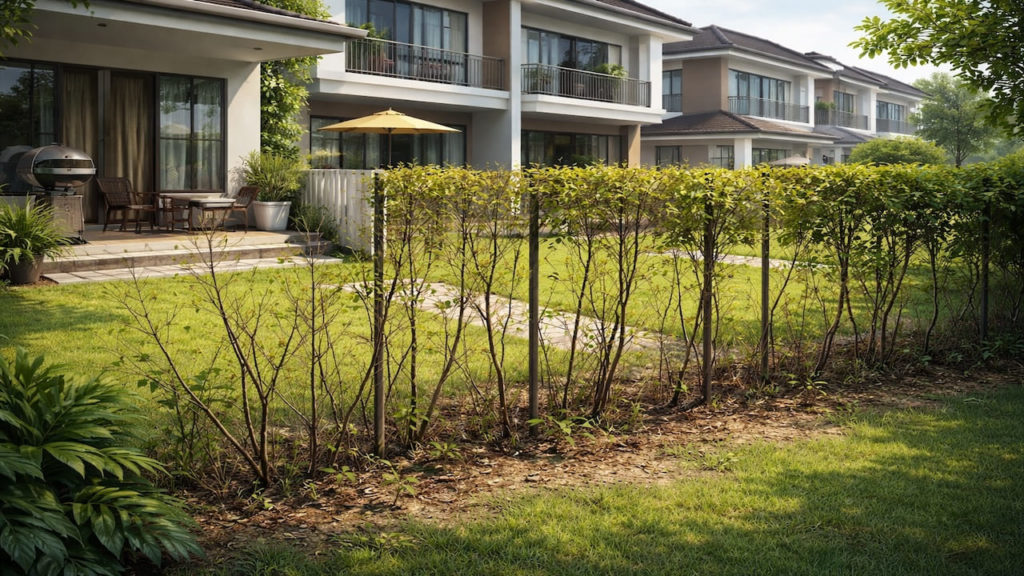
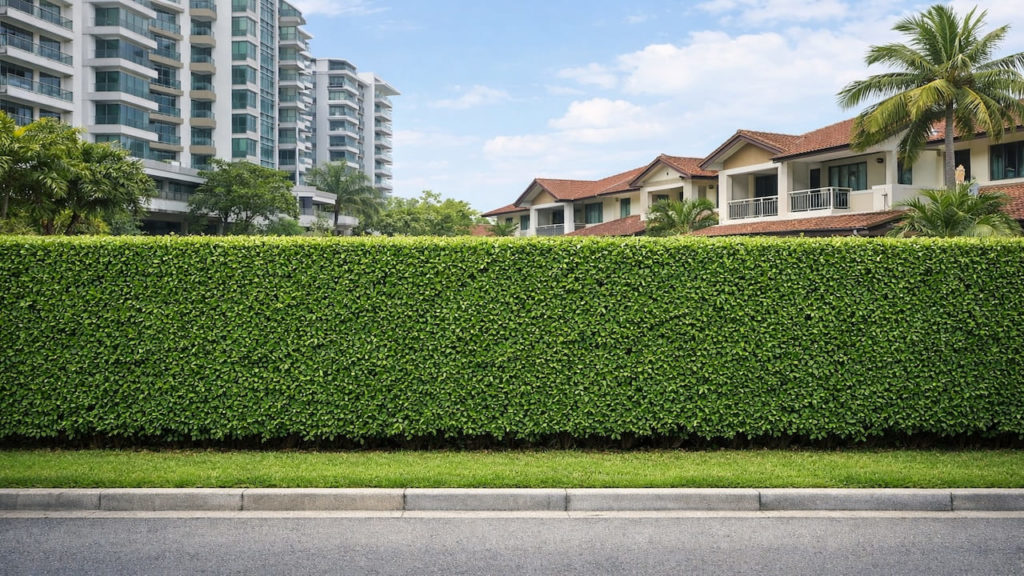
Control the top edge and the hedge stays dense below.
The top grows fastest and steals light, so your whole job is to prevent a “mushroom cap” that shades the lower half. Simple rule. In Malaysia wet months, dense wet foliage also holds moisture and invites fungus spots, so a neat wall needs both thickness and ventilation. cost is mostly time/effort, because the best result comes from timing and technique, not products.
- Trim the top slightly narrower than base
- Remove crossing stems to open airflow lines
- Feather the face with small shallow cuts
- Step back often to check straightness visually
- Clean clippings off leaves to reduce damp
You might think cutting harder makes it grow thicker, but hard cuts often expose bare interior wood that does not leaf out again. Not worth it. If you need height reduction, do it in stages across weeks. Slow is safer.
3. Why hedges get bare patches in humid months
Patchiness comes from stress plus shade plus poor drying.
When the hedge stays wet overnight, fungus and leaf drop increase, and when you cut too deep, the plant cannot recover fast in shaded areas. Stress cycle. Malaysia humidity also makes inner foliage stay damp, so the center becomes weak and sparse if you never thin it. A hedge needs air inside, not only a clean outside surface.
- Look for yellowing leaves inside the canopy
- Check for black spotting after rainy streaks
- Notice leaf drop where sunlight never reaches
- Inspect for insects hiding in dense damp cores
- Watch for dieback on repeatedly overcut sections
Some blame the plant type, but even good hedge species get bare when light and airflow are blocked. Normal. Change shape and thin gently and it improves. Give it breathing room and it thickens.
4. How to trim safely and keep the hedge healthy
Trim in dry windows and clean tools to prevent disease spread.
Cutting wet foliage spreads disease and keeps cut surfaces damp, which is exactly what Malaysia wet months already do naturally. Timing matters. Trim after a dry morning, and avoid evening cuts before heavy rain. Use sharp blades so you slice clean, then water at the roots, not on leaves, to reduce damp retention inside the hedge. Neat work.
- Trim after a dry morning not late evening
- Use sharp blades to avoid leaf tearing
- Disinfect tools between sections if disease appears
- Thin inside lightly to improve air movement
- Water soil not leaves to reduce damp
Some people wash the hedge hard after trimming, but that keeps leaves wet and encourages fungus in humidity. Skip that. Blow or shake off clippings and let airflow do the drying. Cleaner, safer, faster.
5. FAQs
Q1. How often should I trim a privacy hedge in Malaysia?
During fast growth, light trims every few weeks work better than rare heavy cuts. Frequent small cuts keep density without exposing inner bare wood.
Q2. What shape prevents bare patches best?
A slight taper with the base wider than the top keeps light reaching lower leaves. This is the classic privacy wall shape for long-term density.
Q3. Can bare patches grow back?
If the patch is still green inside, it can fill in with time and light. If you cut into brown woody stems, many hedges will not regrow there quickly.
Q4. How do I keep hedges from trapping damp smell?
Thin the interior lightly and avoid planting too close to walls. Airflow reduces damp retention and lowers fungus risk in humid months.
Q5. What should I do right after trimming?
Remove clippings, check for pests, and give the hedge a few days to dry and recover. Avoid heavy fertilizing immediately after a hard trim.
Pro’s Tough Talk

Listen, I have over 20 years on site and I have done hundreds of different jobs, and hedges are the same as fences: shape and maintenance decide if they work.
Cause is 3 things. You let the top get wider than the base so the bottom starves. You cut too deep into brown wood and it stays bald. You keep it too dense so it stays wet in Malaysia humidity and drops leaves.
Do 3 steps now. Taper the hedge so the base is wider and light hits low leaves. Trim lightly and often, never hacking deep in one day. Thin the inside a little so air can move and it dries after rain.
This is like wearing a cap that blocks your eyes, like stuffing wet towels into a closet—Let light reach the base and the hedge stops going patchy and starts looking expensive.
When you panic-trim before guests and when the rainy week makes it explode, tsukkomi: if you want a bald hedge, keep cutting like you are shaving it.
Summary
Trim hedges for privacy by keeping the base wider than the top, using frequent light cuts, and ensuring airflow so foliage dries in Malaysia wet months. Bare patches usually come from shade and over-cutting.
If you see thinning at the bottom or fungus spots, taper the shape, thin the interior, and trim only in dry windows before the problem spreads. If a section is cut into brown wood, recover slowly and avoid more heavy cuts.
Do tip 1 today and then read your related guides on design privacy corners and budget privacy upgrades so your privacy wall stays neat and low stress.