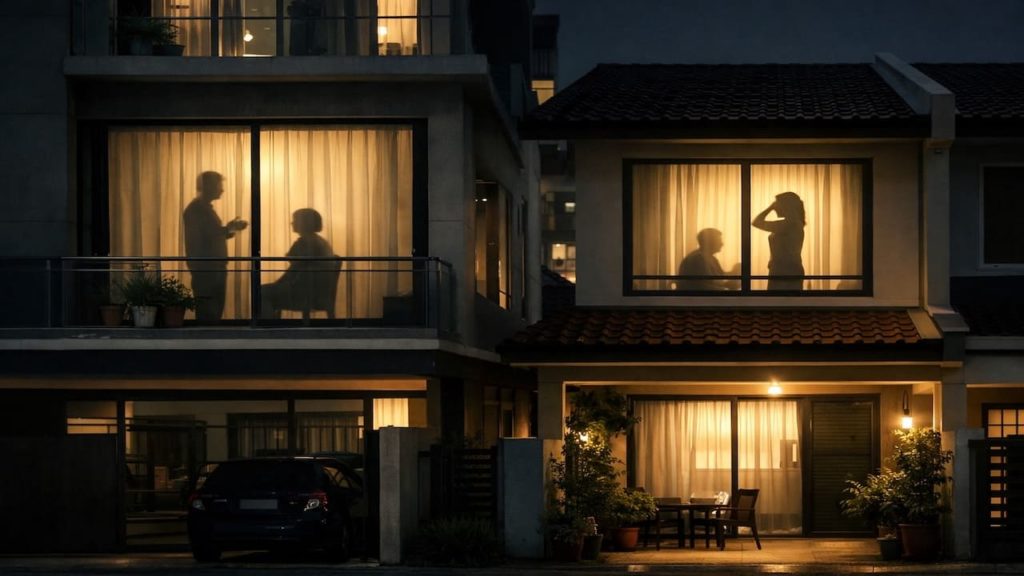
Your privacy can feel perfect in daylight, then at night your room turns into a lantern and silhouettes show through screens, slats, or plants.
In Malaysia homes, bright indoor lighting and reflective walls make backlighting stronger, so small gaps look bigger and people notice movement.
In this guide, you’ll learn how to stop silhouette backlighting by spotting the key signs and fixing lighting, angles, and layers without ruining airflow.

Hi, I’m Ken. I write practical home guides for Malaysia—no fluff, just what works.
I hold a formal building design qualification and have spent about 20 years on job sites across hundreds of projects. My goal is simple: help you avoid costly mistakes with clear, safe steps—a quick way to decide what to do next.
1. Night privacy fails: 5 signs
Backlighting reveals motion even when gaps look small.
At night, privacy is about contrast: bright inside, dark outside, and the eye catches movement through any opening. Contrast problem. Malaysia terrace corridors and condo balconies can create long sight tunnels, so a neighbor far away can still see shapes if your interior light is strong. The fix is not only “more cover,” it is changing the light and the view angle so silhouettes disappear. Physics.
- See body outlines when someone walks past windows
- Notice shadows on screens from indoor ceiling lights
- Spot glowing rectangles through slat gaps at night
- See movement from corridor even at distance
- Feel exposed when lights are on indoors
Some people think thicker screens solve it, but silhouettes can still show if light is blasting straight out. Reality. Control the light first, then add layers only where needed. You can fix most night privacy without building a wall.
2. Backlighting shows silhouettes clearly
Lower contrast and break sightlines to kill silhouettes.
Silhouettes happen when a bright source sits behind you, like ceiling downlights near a window or balcony door, creating a clean outline. Light geometry. In Malaysia, open-plan living rooms can spill light straight out to the corridor, so the easiest win is repositioning and softening light, then adding a second layer that scatters outlines. cost is mostly time/effort, because you can start with lighting habits before buying anything.
- Move bright lamps away from windows and doors
- Use warm low lamps instead of overhead glare
- Add sheer layer to blur outlines behind screens
- Angle slats or overlap panels to block corridors
- Close the brightest room first not every room
You might think blackout curtains are the only answer, but full blackout can trap heat and reduce airflow in humid nights. Not worth it. Use a layered approach: diffuse plus block the worst angles. Keep the breeze where you can.
3. Why daytime privacy does not work at night
Your house becomes the light source and outside becomes the viewer zone.
In daytime, outside is bright and your interior is darker, so people cannot see in. At night, it flips: your light turns you into a silhouette, and the darker outside gives the viewer perfect contrast. Simple switch. Malaysia homes often use bright cool lights, and glossy tiles reflect light outward, making the effect stronger. Even a small slat gap becomes a glowing line when interior light hits it directly.
- Check for glossy floors reflecting light outward
- Notice downlights placed close to balcony doors
- Look for mirrors or white walls boosting brightness
- See straight sight tunnels from corridor angles
- Spot gaps aligned like a glowing ladder pattern
Some people blame the fence gap size, but light placement is often the real reason silhouettes appear. Normal. Fix the source and the same fence suddenly feels private. Light is the leak.
4. How to fix night privacy without ruining airflow
Use diffusion plus angle control instead of sealing everything.
Add a diffuser layer close to the light source and a blocking layer where the sightline is strongest, while keeping top and bottom airflow paths open. Balanced fix. RM5–20 for basic supplies like hook tape, clips, or a simple sheer panel can help you test quickly before you invest in heavier solutions. Start with one window or one door, test from the corridor, then scale.
- Install sheer curtain to blur silhouette edges
- Use tiebacks to keep fabric off wet floors
- Add staggered slats to break direct corridor views
- Use indoor lamp shades to soften glare sources
- Test outside at night and adjust layers fast
Some people add a thick solid screen and then complain the area feels hotter and damp. That is the trap in Malaysia humidity. Do not seal airflow. Diffuse first, then block the angle, then keep the base gap clear so air still moves. Comfort is part of privacy.
5. FAQs
Q1. Why can people see me at night through slats?
Because your interior light creates contrast and outlines show through any aligned gap. Reducing glare and adding diffusion usually fixes more than changing slat size.
Q2. What is the fastest fix for night silhouettes?
Turn off overhead lights near windows, use lower lamps deeper in the room, and add a sheer layer that blurs outlines. Then test from the corridor angle.
Q3. Do sheer curtains actually help privacy?
Yes, they blur edges and reduce silhouette clarity, especially when paired with better light placement. They work best as the first layer, not the only layer.
Q4. How do I keep airflow if I need more night privacy?
Use staggered screens or angled slats to block views while leaving gaps for breeze. Avoid fully sealed walls that trap heat and damp in humid nights.
Q5. Should I change my light bulbs?
Changing to warmer, lower brightness bulbs can help reduce contrast and glare. Lighting layout matters more than bulb brand, so start with placement first.
Pro’s Tough Talk

Listen, I have over 20 years on site and I have done hundreds of different jobs, and night privacy fails are not mystery, they are lighting physics.
Cause is 3 things. You blast overhead lights right at the window. You have shiny floors and white walls that bounce light outward. Your slats line up and form a perfect glowing tunnel from the corridor.
Do 3 steps now. Kill the glare source near the opening and switch to softer lamps deeper inside. Add a sheer layer to blur silhouettes, then block only the worst sightline angles with stagger or overlap. Test from outside at night and adjust.
This is like shining a flashlight behind a curtain, like wearing a bright shirt in a dark room—Reduce contrast and break the corridor view and the silhouettes disappear fast.
When you walk past the door and your shadow does a full theater show, tsukkomi: if you want an audience, sell popcorn and start a showtime schedule.
Summary
Night privacy fails show up as silhouettes, glowing gaps, and long corridor sightlines, because backlighting flips the privacy rules after dark. In Malaysia homes, bright overhead lights and reflective surfaces make the effect stronger.
If you feel exposed at night, reduce glare near openings, add diffusion to blur outlines, and block only the strongest angles with staggered layers while keeping airflow. Test from outside at night and adjust before buying big screens.
Do step 2 today and then read your related guides on drill-free privacy setup and DIY slat fence spacing so your privacy works in daylight and after dark.