You want privacy now, but you do not want your Malaysia terrace yard or condo balcony to feel boxed in.
Close walls, direct sight lines, and wet heat make cheap screens warp, stain, and rattle faster than you expect.
In this guide, you’ll learn how to buy panels that last in sun and rain, which materials stay cleaner, and what budget traps to skip before you pay twice.

Hi, I’m Ken. I write practical home guides for Malaysia—no fluff, just what works.
I hold a formal building design qualification and have spent about 20 years on job sites across hundreds of projects. My goal is simple: help you avoid costly mistakes with clear, safe steps—a quick way to decide what to do next.
1. Affordable privacy panels: 5 checks
Choose panels that stay rigid when humidity and sun hit daily.
Malaysia moisture never takes a day off—so flex becomes cracks, and loose screws become noise when storms hit sideways. Sticker price lies, because the cheapest set usually needs extra brackets, extra drilling, and extra time to keep it straight. A panel that lasts 3 rainy seasons is cheaper than a panel you replace twice, even if the first checkout feels painful. Value is performance, so check rigidity, coating, and hardware before you compare colors.
- Test panel flex by pushing the center
- Confirm UV rating for full outdoor exposure
- Check drainage gaps to prevent water trapping
- Inspect frame corners for tight seated fasteners
- Verify rust resistance for coastal humid air
Some people say any panel works if installed carefully, but weak cores still bow after repeated hot-and-wet cycles in Malaysia. Structure wins. In small yards, a leaning screen steals space fast. Buy strength first, then color.
2. What to buy and what to avoid
Prefer aluminium or capped composite for most small-home privacy needs.
Powder-coated aluminium handles rain splash and UV better in Malaysia homes than thin PVC that turns brittle, and better than raw bamboo that stays damp. Boring wins—because boring survives through damp nights and hot afternoons. If you want a wood look, choose capped boards that seal cut edges so water cannot wick inside, and keep the design simple. Low absorption.
- Buy powder coated aluminium slats for airflow
- Buy capped composite boards for splash areas
- Choose UV rated PVC only for shaded zones
- Avoid untreated bamboo panels that stay wet
- Avoid mild steel frames without full coating
You might hear wood is always more premium, but in humid months cheap wood becomes a sponge and grows stains at joints. Contractors help, yet material limits remain if the core soaks water. If you choose timber, demand sealing and spacing. Pick low-absorption surfaces and you relax.
3. Why budget panels fail in humid months
Most failures start from trapped water at the bottom and inside joints.
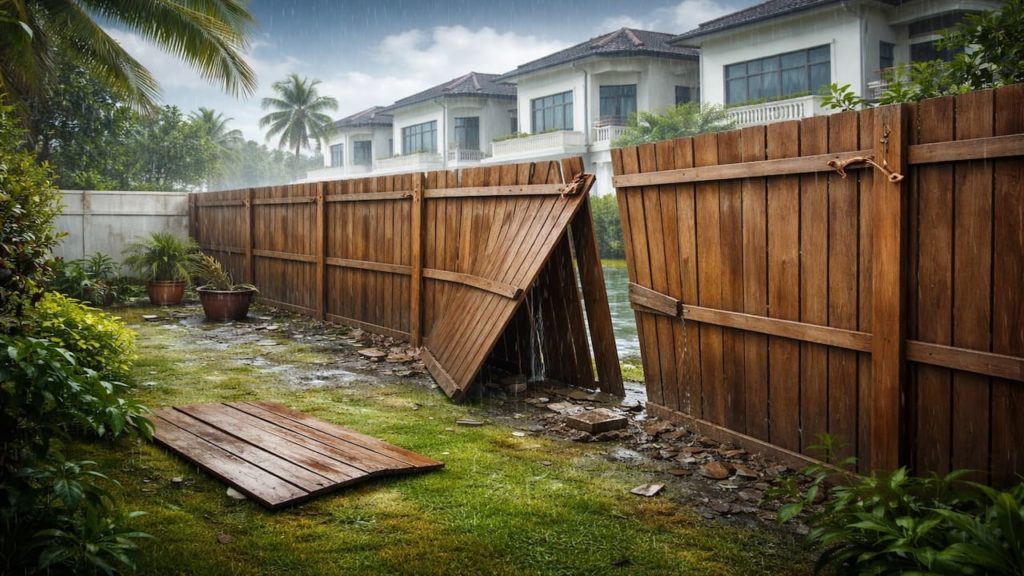
Humidity slows drying, and sideways rain keeps the same edges wet for hours, so mold lines and rust freckles appear early. Moisture physics. Once fasteners rust, holes widen and panels wobble in wind—then the screen starts tapping your wall like a metronome. It is predictable in Malaysia wet seasons.
- Look for pooling water along bottom rails
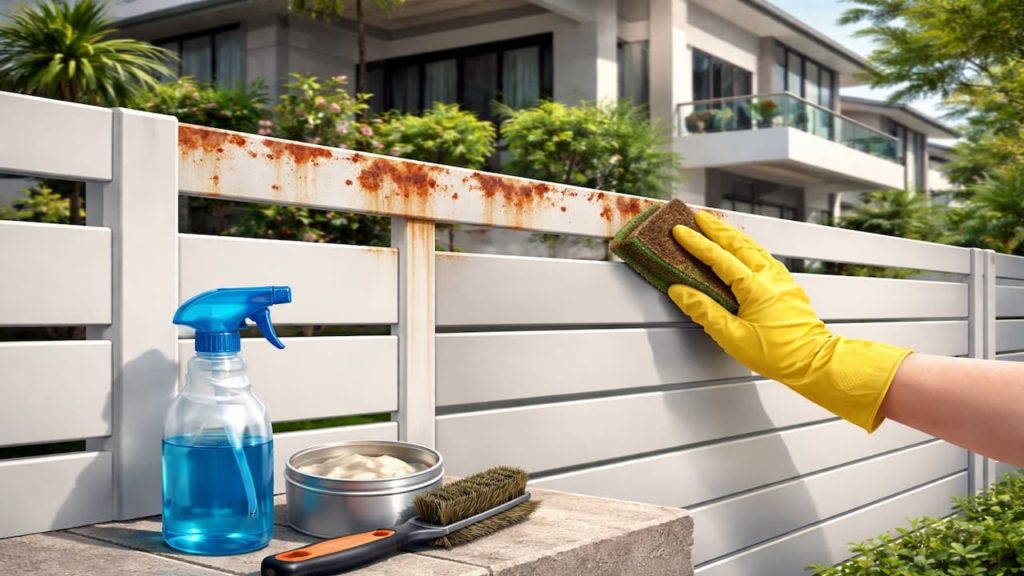
- Check for rust streaks around screw heads
- Test wobble with a gentle side push
- Inspect swelling or soft edges on boards
- Notice black streaks after repeated rain cycles
People blame the installer, but even a careful job cannot save weak cores with poor drainage design. Not your fault. Good installers matter, yet the structure is cold and strict. Fixing a wobble later costs more.
4. How to buy and install without regret
Match wind load and anchors before you choose a style.
Measure the span and sight line, then pick slats that breathe and drain in Malaysia wet season. Side rain and sudden gusts hit screens—so anchors decide safety, not the slat pattern. For basic mounting supplies, RM5–20 is a practical starter range. Stability first.
- Measure opening and mark solid mounting points
- Use stainless screws and correct wall plugs
- Leave a bottom gap for drainage access
- Seal cut ends to block water entry
- Recheck all fasteners after first storm exposure
Some say no-drill clamps are fine, but vibration and heat cycles loosen them and the screen turns into a sail. If you rent, use smaller modular panels and spread the load. No drama. Keep airflow and you reduce odor and mold.
5. FAQs
Q1. Are privacy panels safe on a balcony railing?
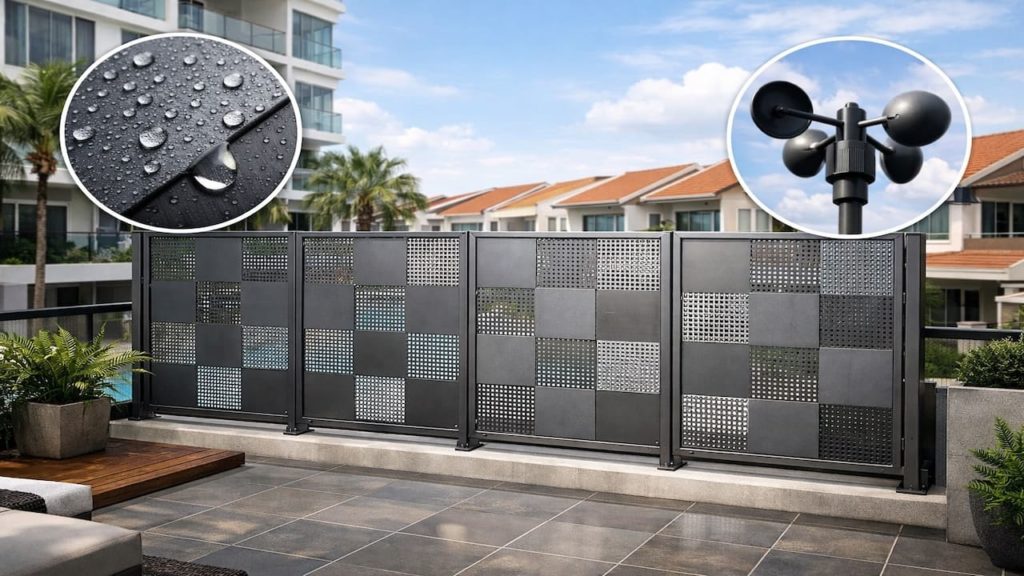
They can be safe if you treat them as a wind surface and mount into solid structure, not thin decorative metal. Test for wobble after heavy rain.
Q2. What is the best low-cost material for Malaysia?
Powder coated aluminium is usually the safest budget choice because it resists rust, stays straight, and rinses clean after rain. Pair it with proper anchors.
Q3. Will panels block airflow and trap heat?
Solid sheets can trap heat, while slats keep air moving and still block views. In wet heat, airflow is comfort.
Q4. How do I keep panels from growing mold streaks?
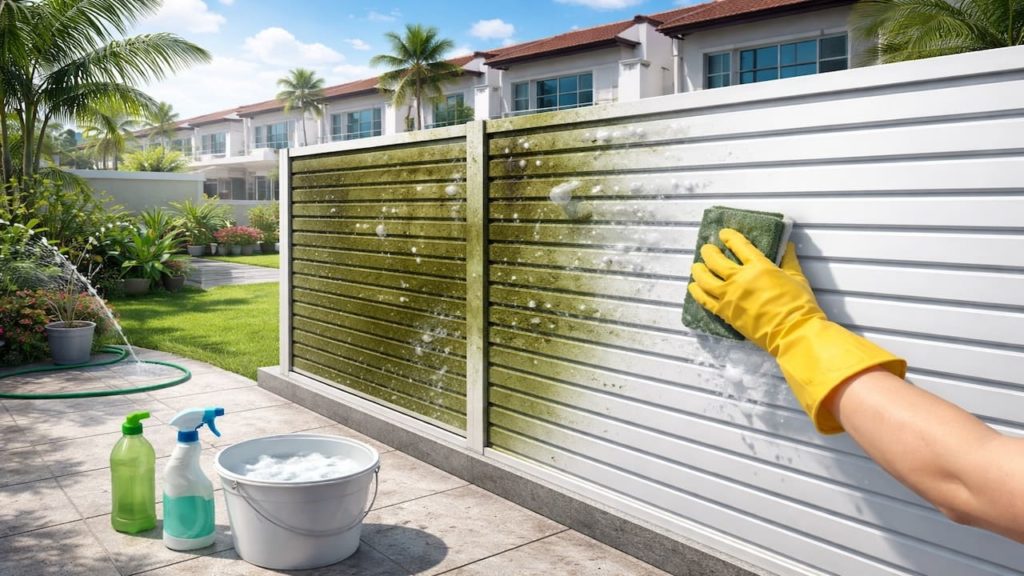
Leave a small stand-off from the wall and rinse behind the screen during routine cleaning. Remove trapped damp and it stays cleaner.
Q5. Should I choose light colors or dark colors?
Light colors show dirt streaks, while dark colors show water spots, so pick what you can rinse easily. Texture matters more than shade.
Pro’s Tough Talk

Listen, I have over 20 years on site and I have done hundreds of different jobs, and “cheap panel equals privacy done” is usually a joke that comes back loud.
Cause is 3 things. Weak core bends. Trapped water feeds streaks. Rusty hardware turns tight holes into sloppy holes in Malaysia wet heat.
Do 3 steps now. Grab the panel and find the worst wobble point. Open a drainage gap at the bottom. Swap to stainless fasteners and tighten into real structure.
This is like strapping cardboard onto a roof and calling it weatherproof, like taping an umbrella to a bicycle—Give water and air a path and the screen stops acting cursed.
When you carry laundry past it and when you rush the bins out, it bumps and rattles, tsukkomi: if you insist on bargain drama, at least charge it rent.
Summary
Affordable privacy panels are a good buy when they stay rigid, drain water, and use rust-proof hardware in Malaysia weather. In wet months, drainage gaps and stainless screws matter more than fancy patterns.
If your screen still wobbles, stains, or leans after a proper mount, change the material or the anchor plan before you add more panels. If you see rust streaks or bottom pooling, treat it as an early warning.
Do the 5 checks today and then read your related guides on wall splash marks and balcony drainage to keep the whole zone cleaner. Small fixes stack up.