Your dog keeps nosing the fence line, your cat keeps disappearing, and your neighbors keep watching the gate like it is a show. You want privacy and safety, not a daily escape drill.
In Malaysia, humid heat, sudden rain, and soft ground make small gaps grow fast, so “privacy” fences can turn into escape routes. That is why small checks beat big promises. Real life.
In this guide, you’ll learn Seal escape gaps by checking the fence base, corners, and gate details so pets stay in and your yard stays calm. You will also know when to call the fence company before the next downpour.

Hi, I’m Ken. I write practical home guides for Malaysia—no fluff, just what works.
I hold a formal building design qualification and have spent about 20 years on job sites across hundreds of projects. My goal is simple: help you avoid costly mistakes with clear, safe steps—a quick way to decide what to do next.
1. Pet privacy fencing: 5 checks
Your fastest win is a perimeter walk focused on gap spotting—before you blame your pet or the fence height.
Malaysia wet months wash soil away and reveal openings you never saw in dry weather. Wood swells, metal shifts, and “tight” panels slowly separate. Many terrace homes also have narrow side paths where you rarely look closely. Cheap fixes beat emergency chases later.
- Walk fence line at pet eye level
- Wiggle each panel and note movement points
- Check post bases for soft soil wobble
- Look for chew marks and scratch widened holes
- Photograph gaps and measure widths with ruler
You might think your pet is just stubborn, but they simply repeat what works. One open corner becomes the daily route. Fix the route first, then train the habit. Containment.
2. Stop gaps and prevent easy escape routes
Block every under fence opening with ground contact—because pets escape low, not high.
Heavy rain can carve a shallow trench under panels, especially in terrace house side yards. Condo ground floor gardens also settle where sprinklers and aircond drains drip. If there is loose gravel, pets can kick it out and reopen the hole in a week. Spending a little now prevents bigger repairs later.
- Fill low spots with compacted gravel sand mix
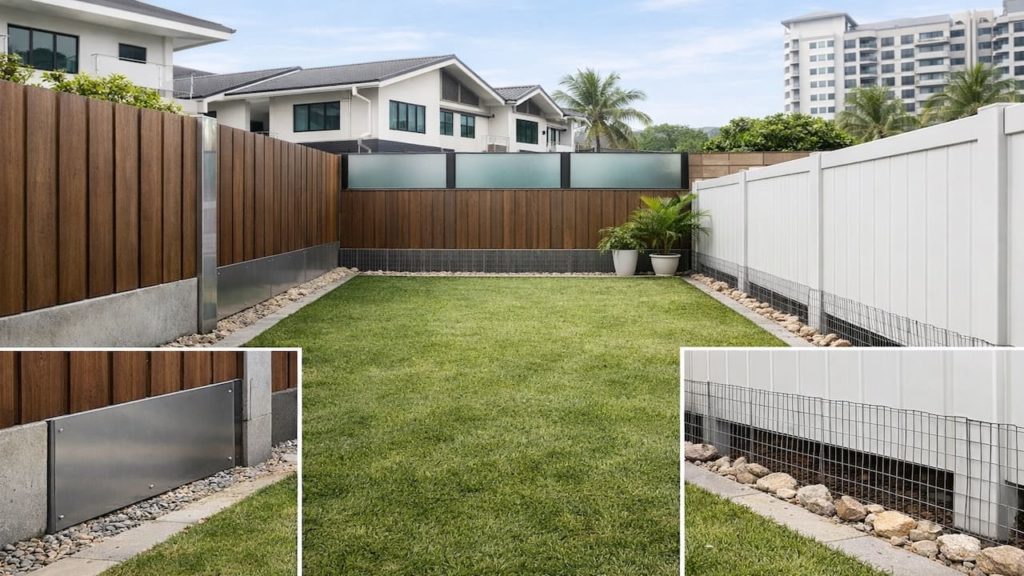
- Install buried mesh skirt along the fence base
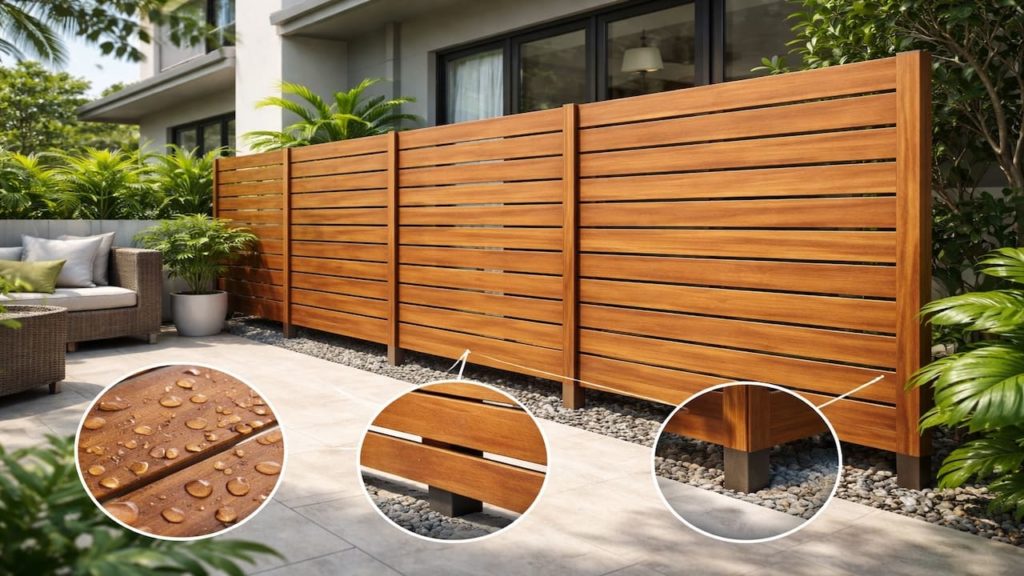
- Attach rigid panels to cover wide bottom gaps
- Replace broken pickets and tighten loose fasteners
- Close corner triangles with brackets or filler blocks
Some people say “my pet never digs,” then one storm changes the ground level. Don’t blame yourself or the installer, just fix the route. Tight base lines keep peace with neighbors. No shortcuts.
3. Why pets find fence weak points fast
Pets map your yard like a puzzle and target repeat pathways—especially after rain softens edges in Malaysia.
They follow scent lines, look for daylight under panels, and test anything that moves. Bored pets also try the same spot when the house feels hot and closed up. Cats use quiet corners and jump points, while dogs use nose and shoulder pressure. Behavior costs less than redoing a whole fence.
- Watch where your pet pauses and sniffs edges
- Mark the three lowest points along perimeter
- Check latch alignment and test gate self closing
- Spot climbing aids like bins planters and chairs
- Note noise triggers that make dogs bolt outside
It’s easy to call it “training,” but structure always wins when there is a gap. Fixing paths reduces stress for everyone. Then training sticks longer. Pattern.
4. How to harden a privacy fence for pets
Turn a privacy fence into a pet barrier using three layers—base block, climb block, and gate control.
Most upgrades are simple hardware and a bit of digging, which suits Malaysia homes where you cannot rebuild walls. Budget RM5–20 for basic supplies like ties, screws, and small mesh offcuts. Start small and finish clean, because sloppy add ons create new snag points. The goal is to remove the one easy route your pet keeps testing.
- Add mesh skirt and bury it 10 cm deep
- Cap fence tops and remove nearby climbing steps
- Upgrade gate latch and add spring closer kit
- Seal gaps at posts with strips and screws
- Recompact soil line and slope water away
You may worry this is overkill, yet one escape can mean injury, conflict, or lost time. Do the base first, then corners, then the gate. Recheck after the next heavy rain. Control.
5. FAQs
Q1. How small of a gap can a pet squeeze through?
Focus on the lowest gaps first, because many pets only need a hand-width opening. Check again after rain, when Malaysia soil shifts and edges settle.
Q2. Is a taller fence enough for dogs and cats?
Height helps, but most escapes start at the base unless there are easy climb points nearby. Remove bins and planters that act like ladders.
Q3. What about shared side fences in terrace housing?
Treat it as your responsibility for safety, even if ownership feels unclear. Photograph issues and fix your side of the gap line first.
Q4. Will adding mesh make the fence look ugly?
If you keep it low and straight, it disappears behind plants and shadow lines. Trim edges neatly so it looks intentional.
Q5. How often should I recheck the perimeter?
Do a quick walk weekly and after any heavy storm. Five minutes beats one lost pet hour.
Pro’s Tough Talk

Listen, I’ve been on site for 20+ years and handled hundreds of jobs, and gaps don’t stay “small” in Malaysia humidity and rain. I don’t blame you, and I’m not saying every contractor is evil, but the structure is cold.
Cause is 3 things. Ground settles and water eats the base line. Panels loosen because posts were set shallow or fasteners were rushed. Gates get sloppy because nobody realigns the latch after the first month.
Do 3 steps now. Get down at pet eye level and find daylight like you are hunting coins under a sofa. Pour water and watch where it cuts the edge. Then block it with a solid strip and tight compaction.
This is like locking the front door and leaving the window open, so tsukkomi: seriously? Kill the easy route and your pet stops “learning” new tricks, even when wet season hits hard.
The “one hand on groceries” stumble and the “laundry basket dash” are when the gate stays open two seconds too long, so fix the gate and base before you act surprised again.
Summary
Check the fence base, corners, and gate, because most pet escapes start low and repeat the same path. Start at the lowest point and work outward. No drama. Safer walks daily. Less stress.
If the same gap returns after rain, treat it as a drainage and ground contact problem, not a “naughty pet” story in Malaysia. Water flow decides gaps faster than you think.
Do one perimeter walk today, block the worst gap, and then open the next guide on rainy season yard safety—so your routine stays smooth.