You searched because your privacy screen looks fine in dry weeks, but the wet season brings moldy spots, green film, and stains that won’t rinse off.
Malaysia rain, warm nights, and humid air keep surfaces damp, so the wrong material turns into a cleaning chore and still feels exposed.
In this guide, you’ll learn how to choose wet season privacy materials that stay cleaner longer for terrace houses and condo balconies in Malaysia.

Hi, I’m Ken. I write practical home guides for Malaysia—no fluff, just what works.
I hold a formal building design qualification and have spent about 20 years on job sites across hundreds of projects. My goal is simple: help you avoid costly mistakes with clear, safe steps—a quick way to decide what to do next.
1. Wet-season privacy screens: 5 checks
Run these 5 checks and you avoid screens that grow grime fast in Malaysia wet months.
Wet-season reality. Mold and algae are not just “dirt,” they are moisture problems that cling to rough coatings and shaded corners — especially near paving splash zones. If you check material and detailing first, your screen stays cleaner with less scrubbing. That saves money because you avoid early repainting and replacement.
- Check coating type for humidity and UV resistance
- Confirm surface texture is smooth not porous
- Inspect fasteners for rust safe metal grade
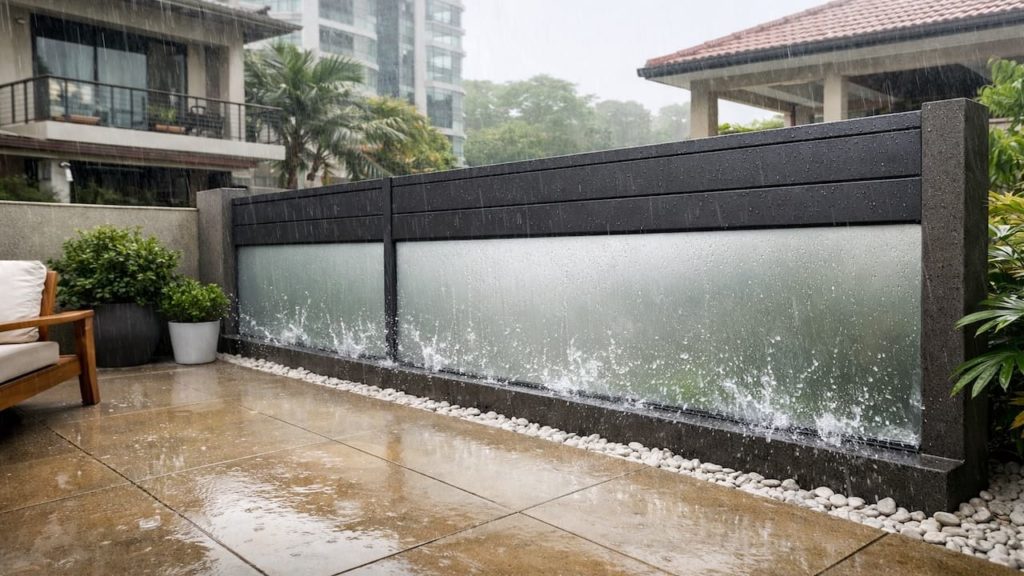
- Verify bottom clearance prevents constant splashback
- Plan airflow gaps so damp does not linger
You might assume any “outdoor” panel is fine, so you choose based on looks alone. In Malaysia, the wrong surface becomes a sponge for green film and black dots, then you clean every week. Do the checks once, then buy with confidence, and the screen stays calm through storms.
2. Pick materials that resist mold and algae
Choose materials that shed water and do not trap spores so wet season grime cannot settle easily.
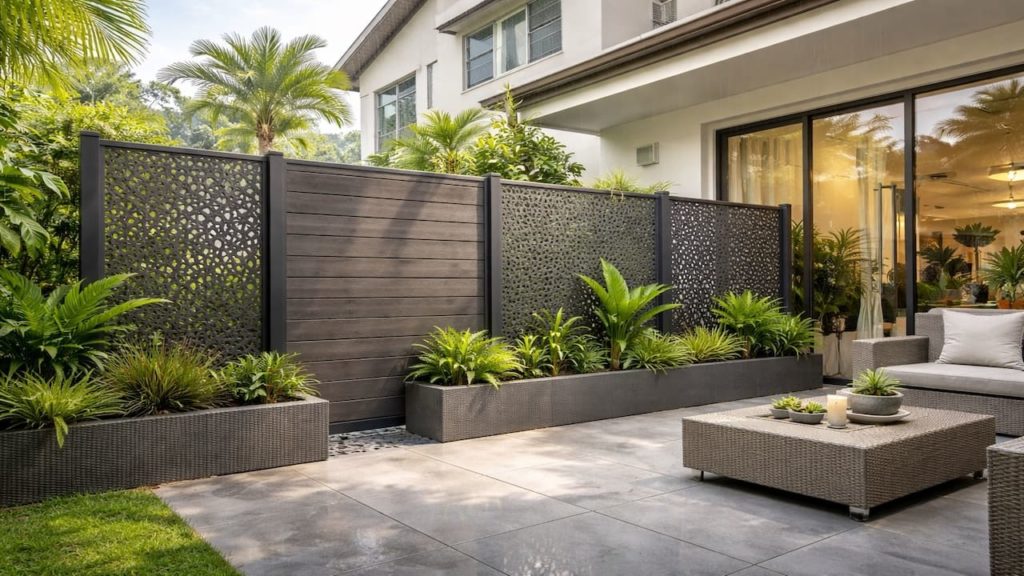
Material choice matters. Powder-coated aluminum, quality uPVC, and sealed composites usually resist algae better than rough render boards and cheap paint layers — because water does not soak in. Smooth surfaces dry faster when breeze returns after rain. When you pick right, cleaning becomes light rinsing, not heavy chemicals.
- Choose powder coated aluminum for smooth clean finish
- Select UV stable uPVC for damp locations
- Use sealed composite slats with capped ends
- Avoid raw timber near splash zones always
- Match fasteners to prevent rust bleed marks
Some people say wood always looks best, so you must accept extra upkeep. Wood can work, but only when it is sealed well, lifted from splash, and ventilated. If you want low maintenance in Malaysia humidity, pick smooth non-porous faces and protect every cut edge.
3. Why wet-season screens grow mold and algae
Mold and algae appear when moisture sits and airflow dies even if your screen material looks strong.
Cause chain. Malaysia rain wets everything, then shade and tight gaps keep surfaces damp for hours, so growth starts where dirt collects — corners, bottom rails, and behind dense panels. Rough textures hold spores and grime like Velcro. Small design mistakes become constant cleaning, and the screen never feels premium.
- Identify shaded zones that stay wet longest
- Look for water traps at bottom rails
- Check tight gaps that block drying breeze
- Notice splashback marks along lower band
- Inspect seams where dirt accumulates repeatedly
You might blame the wet season itself and think nothing can stay clean. Not true — the issue is trapped water plus dirt plus no airflow, then growth follows. Fix drainage and ventilation, and even basic materials stay cleaner in Malaysia’s rainy months.
4. How to choose and install screens for wet months
Install for drainage and airflow first then finish for looks so wet season grime cannot take hold.
Build order. Start with a layout that lets water exit and air move, then choose surfaces that rinse clean in Malaysia humidity — that combination lasts. If you are buying materials and supplies, RM80–450 is a realistic range depending on length, hardware quality, and coating type. Spend on rust-safe fasteners and sealed edges before decorative upgrades.
- Set bottom clearance to reduce splash stains
- Add drip edges to stop water sheet marks
- Use stainless fasteners to avoid rust streaks
- Seal cut ends with exterior grade caps
- Keep slat spacing consistent for steady airflow
You may want a fully closed wall to feel private, but that often creates a damp pocket behind the screen in Malaysia wet months. Use angled slats and corner returns to block views while keeping ventilation. Cleaner surfaces. Better comfort, and less time wasted on scrubbing.
5. FAQs
Q1. What material stays cleanest during Malaysia wet season?
Powder-coated aluminum and quality uPVC usually stay cleaner because they shed water and do not absorb grime. Smooth faces also rinse faster after storms.
Q2. Why do black dots appear on my privacy screen?
Those dots often form where moisture sits in shade and dirt feeds growth. Improve airflow, reduce splashback, and clean early before it spreads.
Q3. Do I need a special coating for mold and algae?
Sealed smooth surfaces with proper drainage resist growth best even more than “magic” coatings. A good installation detail beats a fancy label in wet months.
Q4. How much bottom clearance should a screen have?
Enough to avoid constant splashback and allow drying air to pass underneath. If the bottom band stays wet after rain, raise it and add a gravel strip.
Q5. What is the easiest maintenance routine in wet months?
Light rinse after heavy storms and a quick wipe of corners and seams works best. Waiting too long lets algae anchor, then cleaning becomes hard work.
Pro’s Tough Talk

Listen, I’ve got 20+ years on site and I’ve done hundreds of jobs, and Malaysia wet season exposes every “cheap outdoor” lie in one month.
Cause is 3 things. You pick rough surfaces that hold grime. You build tight and kill airflow, so damp sits like a wet towel. You ignore splashback and the bottom band becomes a green runway.
I’m not blaming you, and contractors are not all villains, but the structure is cold: low bids skip caps, skip stainless screws, and skip drainage details because you cannot see them on day one.
This is like wearing socks in a flooded bathroom, like painting over a leaking ceiling Choose smooth materials and let water exit fast. Tsukkomi: you want low maintenance, but you built a moisture trap.
The “pulling laundry in during sudden rain” rush and the “night trash run on wet tiles” shuffle are when you notice the slime, so fix the details now—or keep scrubbing forever and call it normal.
Summary
Wet-season privacy screens stay cleaner when materials are smooth, edges are sealed, and airflow and drainage stop moisture from lingering in Malaysia humidity.
If mold and algae keep returning, the real issue is usually splashback, shade, or dead-air pockets, so adjust clearance and spacing before repainting.
Check one panel today for bottom splash and trapped airflow, then continue with “Rain splash privacy walls” and “Slat privacy fences” to keep privacy without constant cleaning.