You searched “repair AC drip indoors” because water is dripping from the indoor unit and you worry about stains, mold, and damaged flooring.
In Malaysia, hot humid air makes the aircon pull a lot of condensation, so one small blockage can turn into a steady indoor drip in condos or terrace homes.
In this guide, you’ll learn how to check drain slope and clear pan lines before damage spreads so you stop the leak, dry the area, and keep cooling reliable.

Hi, I’m Ken. I write practical home guides for Malaysia—no fluff, just what works.
I hold a formal building design qualification and have spent about 20 years on job sites across hundreds of projects. My goal is simple: help you avoid costly mistakes with clear, safe steps—a quick way to decide what to do next.
1. Repair AC drip indoors: 5 checks
Confirm the drip path before blaming the aircon.
Indoor dripping usually means condensate is not leaving through the drain route. Malaysia humidity creates more water than you expect, so the system must drain cleanly each day. Fast check. No panic.
- Look for water trail on wall below unit
- Check drip timing during high fan setting
- Inspect filter dirt level and airflow reduction
- Confirm remote set temperature not extremely low
- Listen for gurgling sound at drain outlet
Some people assume the refrigerant is leaking, then they top up gas. That rarely fixes dripping and wastes money — start with drainage and airflow, then decide.
2. Drain slope and clogged pan lines
Most indoor drips are drain problems not cooling problems.
If the drain hose slopes upward or the pan line is clogged, water backs up and overflows from the tray. In Malaysia condos, tight pipe routing and long hose runs make slope mistakes common, especially after renovations.
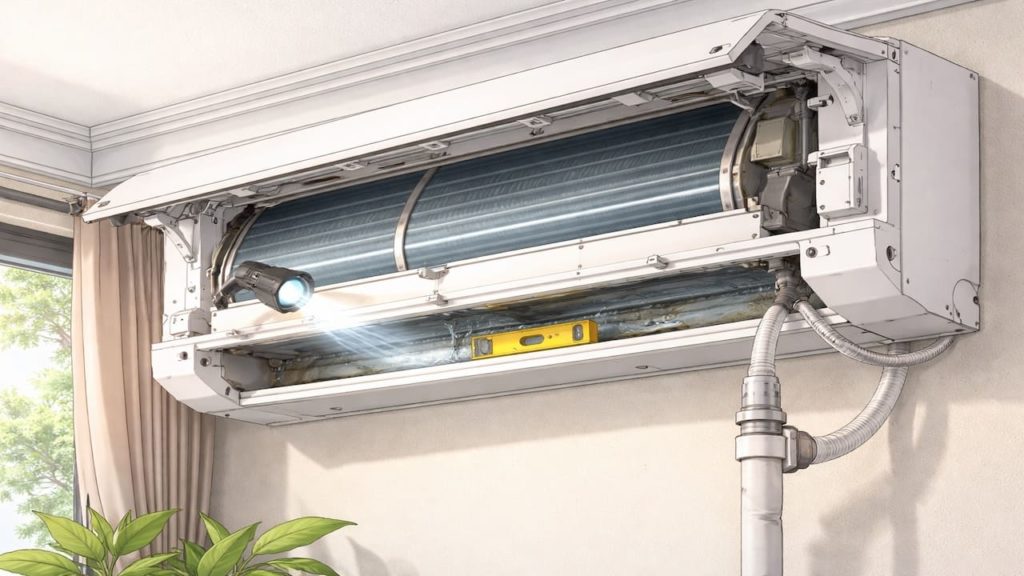
- Open cover and inspect pan for standing water
- Vacuum drain hose end using wet dry vacuum
- Flush drain line with clean water bottle
- Confirm hose slopes downward without upward loops
- Clean algae slime using brush and mild soap
“I cleaned the filter so it should stop” is a common belief. Filters help, but a clogged drain still overflows, so fix slope and blockage first — then the drip usually ends.
3. Why AC drips happen more in Malaysia homes
High humidity creates more condensate than the drain can handle.
Aircon removes moisture from air, and Malaysia air carries plenty of it. When coils get dirty, airflow drops and the coil gets colder, so more water forms faster, then the pan can overflow. Pattern.
- Dirty coil causes ice then melt overflow
- Closed rooms trap moisture from cooking showers
- Unit installed not level shifts pan water
- Rainy season humidity pushes drainage harder daily
- Old drain hose sags and traps water pockets
Yes, sometimes the unit is simply old. But most drips are maintenance and installation issues, not “bad luck” — treat it like a system and you regain control.
4. How to stop the drip and prevent ceiling stains
Clear the drain then dry the room and reset settings.
Start with low risk steps and escalate only if the pan keeps filling. In Malaysia, a basic aircon check can start around RM80–RM150, drain clearing often lands around RM150–RM300, and replacing a clogged hose or pump can reach RM300–RM600 depending on access as budget guardrails. Keep the floor protected and dry fast.
- Turn off unit and place towels under drip
- Clear drain line and confirm free water flow
- Clean coil surface with suitable cleaner spray
- Set temperature 24C to 26C dry mode
- Run dehumidifier to dry walls and skirting
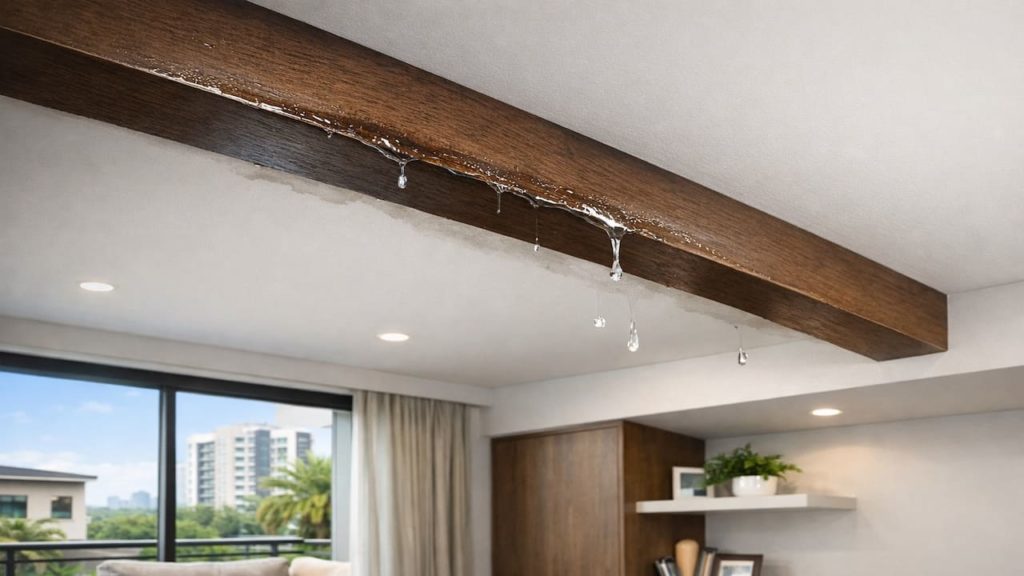
Some people keep running the unit to “dry it out.” That can overflow more water and stain ceilings, so stop the drip source first — then run gentle drying to finish.
5. FAQs
Q1. Is indoor dripping always a clogged drain line?
Most of the time, yes, but low airflow or an unlevel unit can also cause overflow. Check the pan water and the drain outlet first, then move to coil issues.
Q2. Why does it drip only at night?
Nighttime cooling can lower coil temperature and increase condensation, and doors are often closed so humidity rises inside. The drain line then struggles and backs up.
Q3. Can I use bleach in the drain line?
Bleach can damage some plastics and seals, so use mild soap and water first. Vacuum and flush is safer than harsh chemicals. If algae keeps returning, schedule proper service.
Q4. What if water leaks from the front panel seam?
That often points to a full drain pan or a tilted unit. Turn it off, clear the drain, and confirm the unit is level before restarting.
Q5. When should I call a technician?
Call if the pan refills quickly after clearing, ice forms on the coil, or you cannot access the drain route safely. In condos, management rules may also require approved vendors.
Pro’s Tough Talk

Alright, I’ve been on site for 20+ years and handled hundreds of jobs, and AC dripping indoors in Malaysia is basic physics, not a curse. Humid air is like a wet sponge, and your aircon squeezes it all day.
Three causes show up again and again. Drain line clogged with slime and dust. Drain hose slope wrong or sagging so water pools. Coil airflow poor so it ices and then dumps water when it melts.
Do 3 steps, no drama. Step one, switch off and check the pan, because if the pan is full you are already losing. Step two, vacuum the drain outlet and flush the line until flow is clean. Step three, clean filters and coil and set sane temperature.
Don’t blame yourself and don’t call every tech a scammer, but stop the “top up gas” reflex. Fix drainage first and most drips disappear. Anyone selling gas for a drain problem is doing magic tricks.
Relatable moment one, the drip starts right when guests arrive. Relatable moment two, you put a bucket under it and hope, then it overflows at 2 a.m. Fix it today, or enjoy your new indoor waterfall show.
Summary
Indoor AC drips usually come from a clogged drain line, poor drain slope, or low airflow that overfills the pan. Malaysia humidity makes these issues show up faster than you expect.
If clearing the drain stops the drip, maintain it and keep settings reasonable. If the pan refills fast, ice forms, or the unit is unlevel, escalate to a technician before stains and mold spread.
Start today by switching off, checking the pan, vacuuming the drain outlet, and drying the room properly. Stop the overflow then cool with confidence again. If you also have damp wall paint or ceiling stains, read those guides next and connect the moisture path.