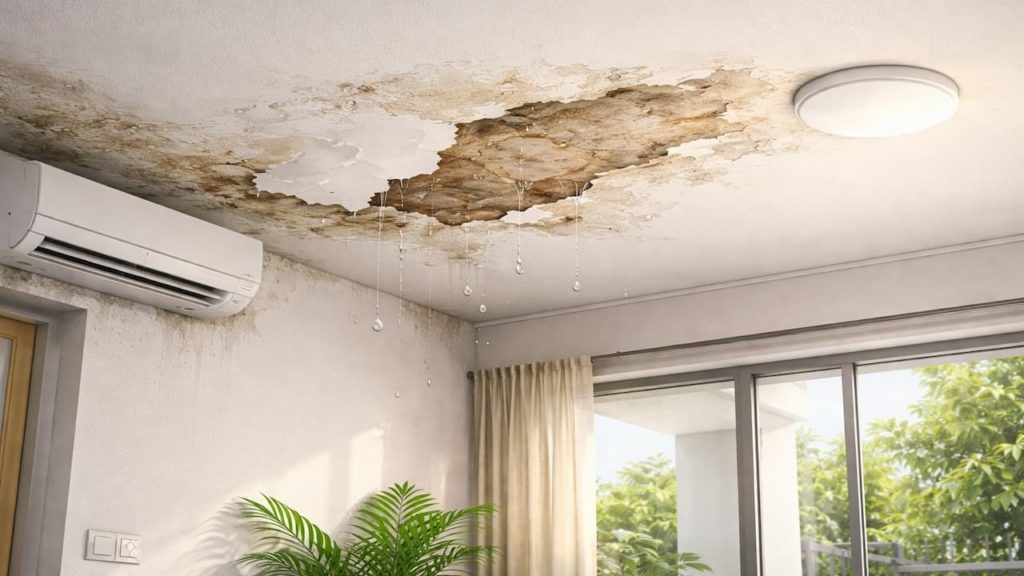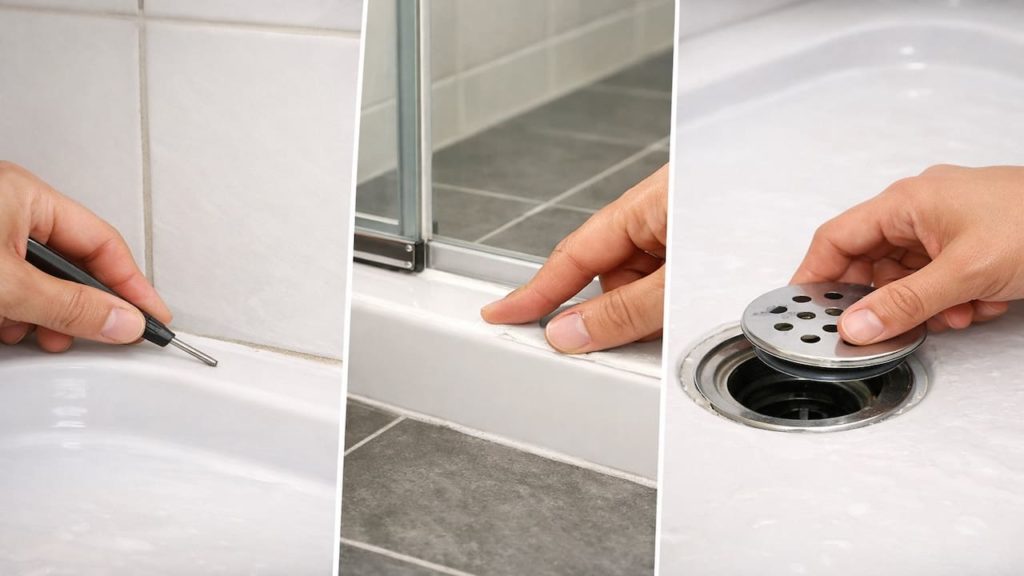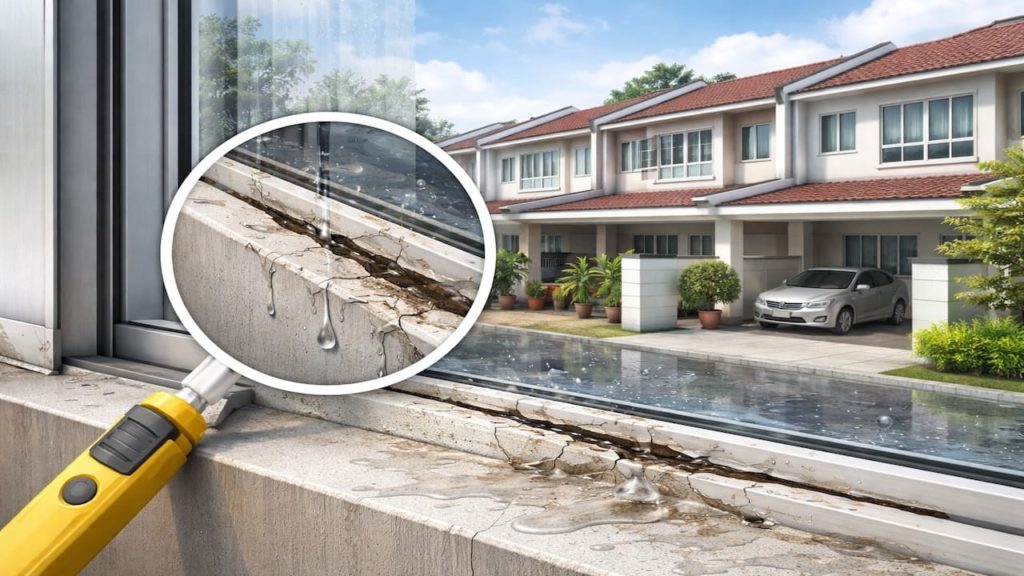
You searched “repair cracked sealant” because you see gaps in old caulk, hairline splits, or peeling edges around windows, balcony doors, or exterior joints after heavy rain.
In Malaysia, strong sun, daily heat cycles, and sudden storms age sealant fast, especially on condo facades and terrace homes where joints move. Common.
In this guide, you’ll learn how to judge whether the crack is cosmetic or a rain entry path so you reseal the right joint and stop water creeping behind finishes.

Hi, I’m Ken. I write practical home guides for Malaysia—no fluff, just what works.
I hold a formal building design qualification and have spent about 20 years on job sites across hundreds of projects. My goal is simple: help you avoid costly mistakes with clear, safe steps—a quick way to decide what to do next.
1. Repair cracked sealant: 5 checks
Sealant cracks matter when water can sit and push inward.
Not every crack leaks, but cracks at the top or sides of openings often feed rain inward. Malaysia downpours can force water into tiny gaps, then damp shows up later. Signal.
- Check crack location on top and side joints
- Press sealant and feel if it is brittle
- Look for separation line between sealant and frame
- Check for mold line or dirt streak at joint
- Inspect interior wall for damp smell after rain
Some people patch over the crack with more caulk. If the old bead is detached, new sealant will not bond well and the leak returns. Prep decides everything.
2. Old caulk that lets rain creep in
Rain creeps in when old caulk loses adhesion and elasticity.
Old caulk shrinks, hardens, and pulls away from frames, leaving a tiny channel. Water then wicks behind it and spreads sideways, especially around windows and balcony doors exposed to wind-driven rain. Sneaky.
- Check for hollow gaps behind bead using plastic pick
- Look for missing corners and thin stretched sections
- Check weep holes are clear not sealed shut
- Inspect sill slope for standing water spots
- Check interior paint bubbles near the joint line
Some think more sealant equals more waterproofing. If you block weep holes or trap water, you can worsen leaks. Seal the right joint and keep drainage paths open.
3. Why sealant fails fast in Malaysia homes
UV heat and constant moisture cycles break sealant sooner.
Malaysia sun cooks the outer bead, then rain soaks it, and daily expansion and contraction cracks weak products. Condos add wind pressure on facade joints, while terrace homes add splashback and wet walls. Tough environment.
- Check sun exposed edges for chalky surface
- Inspect for algae growth on shaded joint areas
- Observe cracks widen during hot afternoon periods
- Check joint movement when door opens and closes
- Check if last sealant was cheap acrylic type
Some blame the installer only. Bad prep matters, but even good beads need renewal when UV and rain are constant. Maintenance is normal, not shameful.
4. How to reseal properly and what it may cost
Remove failed caulk fully then apply the right exterior sealant.
For a lasting repair, strip the detached bead, clean and dry the joint, use backer rod if the gap is deep, then apply exterior grade silicone or polyurethane made for movement. In Malaysia, DIY materials can be RM20–RM120, a handyman reseal visit may be RM120–RM400, and larger window or balcony perimeter resealing can be RM400–RM1,500 depending on access and height risks. Cost guardrails.
- Cut out old caulk completely using sharp blade
- Clean joint with alcohol and let dry fully
- Insert backer rod for deep wide gaps
- Apply continuous bead and tool smooth finish
- Keep weep holes clear and water paths open
Some people reseal during rain or high humidity and wonder why it peels. Sealant needs a dry surface and cure time, so choose a dry window and protect the bead while it cures.
5. FAQs
Q1. Can I just add new caulk over old caulk?
Only if the old bead is still bonded and flexible, which is rare when it is cracking. Most of the time you need to remove the failed bead for a reliable bond.
Q2. What sealant type is best for exterior rain joints?
Exterior silicone or polyurethane made for movement usually performs better than cheap acrylic. Choose a product rated for UV and weather exposure.
Q3. How do I know if the crack is causing my damp wall smell?
If smell or stains worsen after rain and the crack is on the top or side joint, it is a strong suspect. Rain linked symptoms usually mean an entry path. Do a controlled hose test to confirm.
Q4. Should I seal weep holes to stop water?
No, weep holes are there to drain water out of frames. Blocking them traps water and can force leaks into walls.
Q5. When should I call a pro instead of DIY?
If the joint is high risk to access, if leaks involve facade cracks or balcony slabs, or if you see repeated paint bubbles inside. Condos may need building management for exterior scope.
Pro’s Tough Talk

Alright, I’ve been on site for 20+ years and handled hundreds of jobs, and cracked sealant in Malaysia is the classic “tiny gap, big headache.” Wind-driven rain finds that hairline like it has GPS, then your wall starts smelling damp weeks later. Sneaky.
Three causes show up nonstop. One, old caulk turns hard and detaches, so water slides behind it like a secret tunnel. Two, wrong product and bad prep, dirty wet joints, so it never bonds properly. Three, joint movement plus UV heat, the bead stretches and snaps like old rubber bands. Structure.
Do 3 steps, simple. Step one, locate the crack at top and side joints and link it to rain days, that tells you if it is an entry path. Step two, cut out the failed bead fully and clean and dry the joint, because half prep equals half life. Step three, apply the right exterior sealant with a continuous bead and keep weep holes clear, then let it cure. Simple.
You didn’t fail and not every installer is a villain, but stop doing that lazy “smear more caulk on top” move. Remove failed caulk then reseal on dry clean joints. Anyone selling you a 5 minute patch is selling you a future leak. That’s my jab.
Relatable moment one, you see a tiny crack and ignore it, then rainy week hits and you smell damp like wet cardboard. Relatable moment two, you reseal one spot, but you accidentally block a weep hole and now water has nowhere to go. Keep treating sealant like makeup and the rain will keep creeping in like it pays rent. Enjoy.
Summary
Cracked sealant becomes a leak when it loses adhesion and creates a channel that lets rain creep behind frames, and Malaysia UV and storm cycles speed that failure. Small cracks can matter.
Check crack location, brittleness, separation from the frame, and rain linked indoor symptoms, then confirm with a controlled hose test. For a durable fix, remove failed caulk completely, clean and dry the joint, and use exterior grade sealant while keeping drainage paths open.
Today, inspect top and side joints, cut out any detached bead, clean and dry the gap, then reseal with the right exterior product and proper tooling. Good prep and the right sealant stop rain creep. If you also have window leaks or paint bubbles, read those guides next and close the moisture pathway fully.