You searched “repair door latch misfit” because the latch will not catch, you must push or lift the door, and it feels wrong every single day.
In Malaysia, humidity swells door edges, aircon cycles loosen screws, and frames shift slightly, so latch alignment drifts in condos and terrace homes.
In this guide, you’ll learn how to diagnose strike plate alignment and hinge sag fast so the door latches smoothly without damaging the lockset.

Hi, I’m Ken. I write practical home guides for Malaysia—no fluff, just what works.
I hold a formal building design qualification and have spent about 20 years on job sites across hundreds of projects. My goal is simple: help you avoid costly mistakes with clear, safe steps—a quick way to decide what to do next.
1. Repair door latch misfit: 5 checks
Find whether the latch is high low or too deep.
Latch misfit is geometry, not mystery. If the latch hits the plate above or below, you fix height. If it hits the face, you fix depth. Malaysia humidity can change gaps by millimeters. That is enough.
- Close door slowly and mark latch contact point
- Check top gap for uneven widening on latch side
- Test if lifting handle upward helps latch catch
- Inspect hinge screws for looseness and wobble
- Check strike plate screws for stripped holes
Some people keep slamming the door harder. That bends parts and cracks frames over time. Diagnose the contact point first, then adjust the right component.
2. Strike plate and sagging hinges
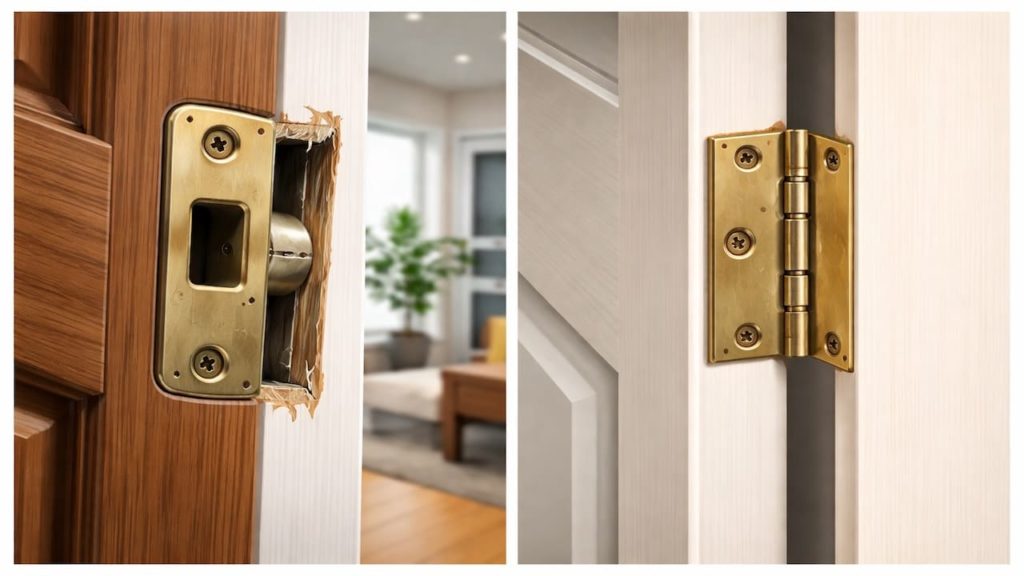
Most misfits are hinge sag plus a shifted strike plate.
Loose hinges let the door drop and the latch hits low, while swollen edges make the fit tighter. In Malaysia, moisture and repeated closing loosen screws slowly — then one day it stops catching. Common.
- Tighten hinge screws and replace stripped ones
- Install longer screw into solid stud wood
- Loosen strike plate and shift slightly then retighten
- File strike plate opening where latch rubs
- Test latch action with door open then closed
“The lock is broken” is a common assumption. Many locks are fine, the door alignment is not. Fix sag and plate position, then the latch suddenly behaves.
3. Why latch alignment drifts in Malaysia homes
Humidity movement and screw wear change door geometry.
Wood expands, frames breathe, and screws back out with vibration and heat. Aircon cools the room, then humidity returns when it is off, and the door moves through cycles. Malaysia makes that cycle frequent. Reality.
- Unsealed door edges absorb moisture and swell
- Hinge screws loosen from repeated daily closing
- Soft frame timber strips screw holes over time
- Floor level changes make door rub and sag
- DIY repaint layers reduce clearance at latch side
Yes, brand new doors can also misfit after installation settles. The key is not age, it is movement plus weak fixing. Reinforce the hinge, then adjust the plate.
4. How to fix it and keep costs under control
Reinforce hinges first then tune the strike plate opening.
Do it in order or you will chase the problem. In Malaysia, a handyman visit often starts around RM80–RM150, basic hinge and strike adjustments may land around RM100–RM250, and reboring a stripped frame hole can push to RM200–RM400 depending on tools and door type. Guardrails. Tight scope wins.
- Replace one hinge screw with 75 mm screw
- Fill stripped holes with wood plug and glue
- Reposition strike plate using pencil outline marks
- File plate opening minimally then smooth sharp edges
- Seal exposed wood around mortise with primer paint
Some people cut the door edge aggressively. That can create drafts and ugly gaps in dry season. Fix hinges and strike first, then trim only if the door still binds.
5. FAQs
Q1. The latch hits the strike plate below the hole, what should I do?
That usually means the door has sagged. Tighten hinges and add a longer screw into the stud, then shift the strike plate slightly downward only if needed.
Q2. The latch catches only when I lift the handle, why?
That points to vertical misalignment, often hinge sag or a dropped door. Adjust hinges first and check if the latch aligns without lifting. Then fine tune the strike.
Q3. Should I file the strike plate hole or move the plate?
Move the plate first if alignment is clearly off, because it keeps the opening clean and centered. File only the contact edge minimally when you need a small clearance change.
Q4. Can humidity alone cause latch misfit?
Humidity can swell the door edge and tighten gaps, but complete misfit usually includes hinge looseness too. In Malaysia, the two problems often arrive together.
Q5. When should I replace the lockset?
Replace it if the latch spring is weak, the tongue sticks even with the door open, or the internal mechanism grinds. If it works fine open door, focus on alignment instead.
Pro’s Tough Talk

Alright, I’ve been on site for 20+ years and handled hundreds of jobs, and latch misfit in Malaysia is a daily annoyance category. Humidity swells, screws loosen, and suddenly you are shoulder checking your own door. Ridiculous.
Three causes cover almost everything. One, hinges sag and the latch drops low. Two, strike plate shifted or the frame holes got stripped and sloppy. Three, the door edge swelled and now everything is tight like a wedged drawer. That’s the structure.
Do 3 steps and stop slamming like it owes you money. Step one, tighten hinges and add one long screw into the stud. Step two, mark the latch hit point and shift the strike plate to match. Step three, file only the rubbing edge and seal any exposed wood. Simple.
You didn’t fail and the lock is not always “bad,” but the fix is not brute force. Hinges first strike plate second always. And if someone tells you to “just push harder,” that’s not advice, that’s a tantrum. That’s my jab.
Relatable moment one, you can close it quietly but it never locks, so you keep checking it again and again. Relatable moment two, it works in the afternoon then fails at night when humidity spikes. Fix alignment once, or enjoy your new job as Door Security Guard forever.
Summary
Door latch misfit usually comes from sagging hinges, a shifted strike plate, or swelling from Malaysia humidity. The fix starts with proving the latch contact point.
If lifting the handle helps, reinforce hinges first and correct door height. If the latch hits the plate face or misses the hole, reposition the strike plate and file only small amounts for clearance.
Start today by marking where the latch hits, tightening hinges with one long screw, and adjusting the strike plate before trimming the door edge. Align first and the latch works like new. If you also have swollen doors or window condensation, read those guides next and connect the humidity chain.