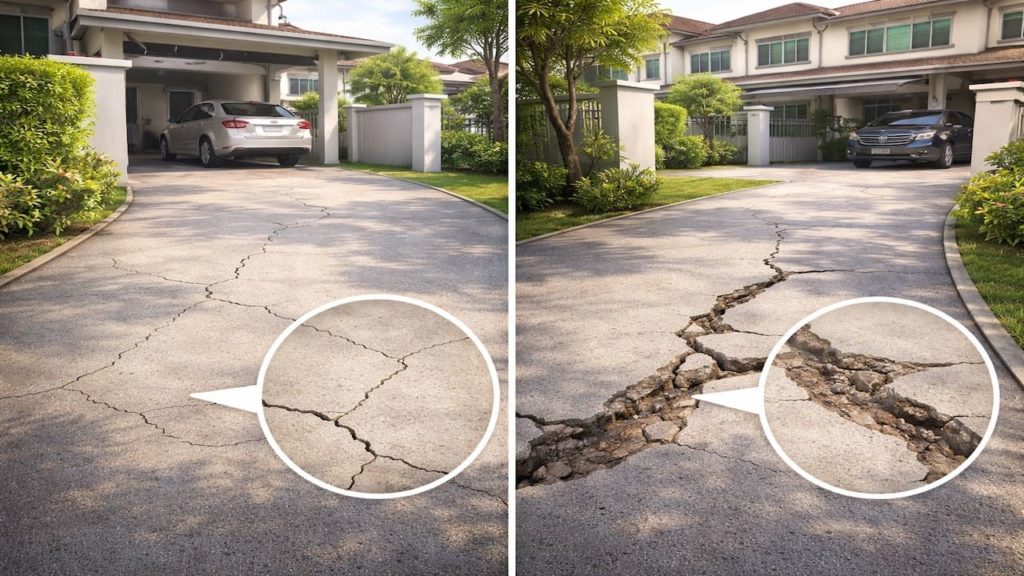
You searched “repair driveway cracks” because new lines appeared in your porch or driveway slab, and you worry rainwater is getting underneath.
In Malaysia, hot afternoons and sudden storms stress concrete fast, so cracks can be harmless shrinkage or a warning that the base is washing out.
In this guide, you’ll learn how to tell shrinkage cracks from base washout before spending so you fix the real cause and stop the same crack from coming back.

Hi, I’m Ken. I write practical home guides for Malaysia—no fluff, just what works.
I hold a formal building design qualification and have spent about 20 years on job sites across hundreds of projects. My goal is simple: help you avoid costly mistakes with clear, safe steps—a quick way to decide what to do next.
1. Repair driveway cracks: 5 checks
Start by checking crack pattern width and movement.
Crack shape tells a story. Hairline networks often come from curing shrinkage, while wider cracks near edges can signal movement from water and load. Important.
- Measure crack width using coin edge reference
- Mark crack ends with tape and date
- Check if crack changes after heavy rain
- Look for uneven slab height across crack line
- Inspect nearby drains for overflow and ponding
Some say all cracks are cosmetic — not in a driveway that takes cars daily. If width grows or levels shift, treat it as structure and drainage first.
2. Shrinkage vs base washout signs
Shrinkage stays stable while washout shows sinking and gaps.
Shrinkage cracks usually stay thin and do not create hollow sounds, but base washout leaves voids under the slab and makes corners drop. Malaysia storms feed washout through joints. Common.
- Tap slab near crack and listen hollow sound
- Check edge gap under slab using thin ruler
- Look for sand loss at joints after rain
- Check crack near downpipe splash point location
- Inspect expansion joint filler for missing sections
People blame concrete mix only — mix matters, but drainage decides whether the base stays tight. Fix water routes or any patch will fail.
3. Why driveway cracks spread in Malaysia
Heat cycles and storm water pressure stress slabs daily.
Concrete expands in heat and cools fast at night, then storms push water into joints and carry fine sand away. Humidity slows drying, so the base stays damp longer. Wear.
- Check for repeated puddles near slab edge
- Inspect gutter discharge splashing onto driveway surface
- Look for algae lines showing constant damp zones
- Check nearby soil slope directing runoff under slab
- Observe heavy vehicle turning marks near crack area
Some think sealing the top solves it — it helps only if the base is stable. Stop runoff and splashback first, then seal with confidence.
4. How to repair cracks and control the cost
Stabilize the base then seal or patch the crack properly.
Do repairs in the right order: control water, recompact edges, then choose filler or resurfacing. In Malaysia, simple crack sealing can be around RM150–RM500, partial re-screed or patching may be RM600–RM2,000, and lifting or rebuilding sections can reach RM2,000–RM8,000 depending on size and access. Guardrails.
- Redirect downpipe discharge away from slab edge
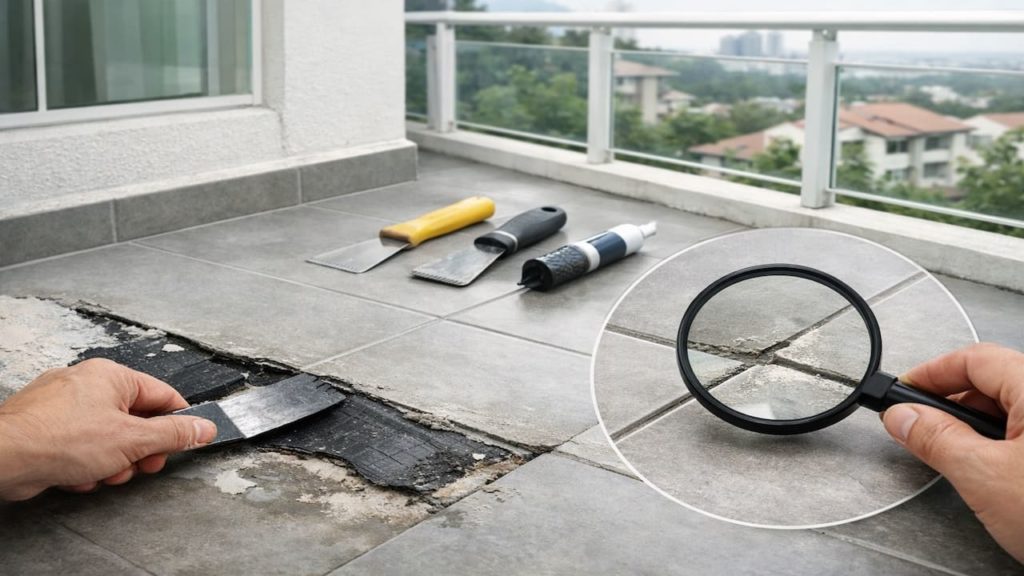
- Clean crack fully and remove loose debris
- Inject flexible sealant for stable hairline cracks
- Patch spalled edges using polymer repair mortar
- Rebuild sinking section after compacting base layer
Some want to resurface the whole driveway — looks nice, but it is wasted money if the base is washing out. Fix drainage and support, then upgrade surfaces.
5. FAQs
Q1. Are hairline cracks normal on a new driveway?
Small hairline cracks can happen from curing shrinkage, especially in hot weather. If they stay thin and the slab stays level, it is often a minor issue.
Q2. What crack width should worry me?
If the crack keeps widening, catches your shoe, or shows a height difference across it, take it seriously. Movement is the clue.
Q3. How can I quickly test for a hollow spot?
Tap the slab near the crack with a small metal tool and compare the sound to solid areas. Hollow sound plus sinking hints base void. Do it after a dry day for clearer sound.
Q4. Can I just fill the crack with cement paste?
Cement paste is rigid and often cracks again when the slab moves. Flexible sealant or proper repair mortar works better depending on stability.
Q5. When should I call a contractor?
Call if you see slab sinking, repeated puddles at the same edge, or sand washing out after storms. Those signs usually need drainage and base work, not only filling.
Pro’s Tough Talk

Alright, I’ve been on site for 20+ years and handled hundreds of jobs, and driveway cracks in Malaysia are never “just a line.” Heat cooks the slab, storms punch water into joints, and the base gets bullied quietly. Classic.
Cause one is shrinkage, thin spider lines that stop growing. Cause two is washout, where rainwater steals sand under the slab until corners drop. Cause three is load and turning, cars twisting the same spot every day. Structure.
Do 3 steps before you panic. Step one, bucket test your downpipe and runoff, because splashback is a crack factory. Step two, tap for hollow spots and check level differences across the crack. Step three, fix water routes first, then choose sealant or rebuild. Simple.
You didn’t fail and not every contractor is trash, but don’t do the hero move and smear cement like peanut butter. Water control beats any filler every time. That’s the jab, because I’ve seen that lazy fix die in one storm.
Relatable moment one, you wash the porch and the puddle returns like it pays rent. Relatable moment two, you hear a crunch when the car turns and your stomach drops. Fix it now, or enjoy your driveway turning into a map of your bad decisions. Funny right.
Summary
Driveway cracks can be harmless shrinkage or a sign the base is washing out, and Malaysia storms make the difference show up fast. Pattern and movement matter.
If cracks stay thin and level stays stable, clean and seal and focus on runoff control. If you see hollow sounds, sinking edges, or sand loss after rain, plan base stabilization and partial rebuild instead of cosmetic resurfacing.
Today, mark the crack, test drainage splash points, tap for hollow areas, then pick the repair that matches the cause. Fix the water path and the crack stops growing. If you also have porch puddles or gutter overflow, follow those guides next and link the whole runoff chain.