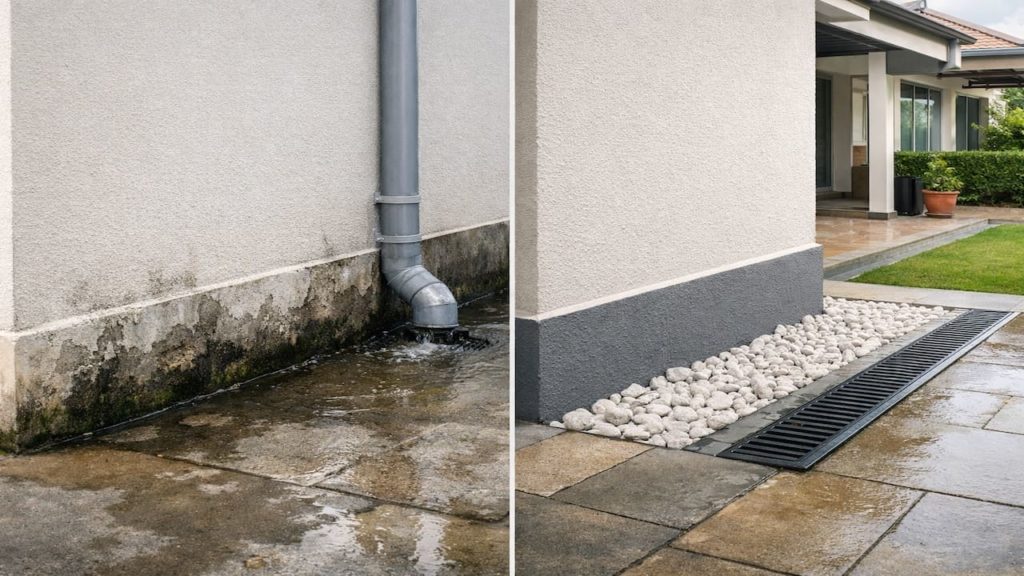
You searched “repair exterior damp line” because you see a dark band near the bottom of an outside wall, and paint starts to bubble or flake.
In Malaysia, intense rain, hot sun, and high humidity keep walls damp, so splashback and poor runoff can climb higher than you expect.
In this guide, you’ll learn how to confirm splash and runoff causes before sealing the wall so you stop the damp line at its source and avoid repeat repairs.

Hi, I’m Ken. I write practical home guides for Malaysia—no fluff, just what works.
I hold a formal building design qualification and have spent about 20 years on job sites across hundreds of projects. My goal is simple: help you avoid costly mistakes with clear, safe steps—a quick way to decide what to do next.
1. Repair exterior damp line: 5 checks
Confirm the damp line cause before you repaint.
Damp lines often look the same at first, but the cause can be ground splash, runoff, or a hidden leak. Malaysia humidity slows drying, so stains linger and mislead — track water behavior. A moisture map.
- Check wall base for mud splash after rain
- Inspect gutter discharge hitting wall or walkway
- Look for damp line height uniform around corner
- Test soil slope sending runoff toward wall base
- Check exterior tap leaks near wall base
Some people rush to repaint because it looks ugly. Paint over moisture traps damp and makes blistering worse. Find the water route first, then fix once.
2. Ground splash and poor runoff
Most damp lines start with repeated splash at the base.
When rain hits bare soil, gravel, or a flat walkway, water bounces onto the wall like a constant spray. In Malaysia storms, that splash can reach higher, especially on terrace homes with narrow side lanes. Constant wetting.
- Add gravel strip along wall to reduce splash
- Clear clogged drain grates near wall edge
- Move potted plants away from wall base
- Extend downpipe outlet away from wall base
- Seal small cracks at skirting render line
You might think splash is too small to matter. Repeated small splash is exactly how damp lines form and climb. Reduce splash and runoff, then the wall can dry.
3. Why damp lines spread up exterior walls in Malaysia
Humidity keeps the wall wet so capillary rise travels.
When the wall base stays wet, moisture can wick upward through porous render and blockwork. Heat then drives salts to the surface, leaving white marks and paint failure. Malaysia weather turns a small wet edge into a long damp season. Slow damage.
- Check for salt crystals on paint near base
- Inspect for moss algae film on shaded walls
- Measure drying time after rain using tissue test
- Check skirting render for hollow loose sounding areas
- Inspect wall base joints for missing sealant
Some blame only rising damp from deep ground. That can happen, but most exterior damp lines here start from surface water and splash. Fix surface water first, then reassess.
4. How to stop splashback and improve runoff cheaply
Control water at ground level before treating the wall.
Start with simple runoff control, then do targeted wall repairs after the base stays dry. In Malaysia, clearing drains and extending a downpipe can be around RM80–RM300, adding a gravel splash strip may be RM150–RM600, and patching damaged render plus repainting a small section often lands around RM400–RM1,500. Bigger regrading or new channel drains can reach RM1,500–RM5,000 depending on length and access. Cost guardrails.
- Regrade soil to slope away from wall base
- Install small channel drain along wet edge
- Add downpipe extension to proper discharge point
- Patch skirting render and apply breathable masonry paint
- Seal joint gaps around outdoor tap and pipes
Some people seal the wall with waterproof paint first. That can trap moisture inside the render and cause peeling later. Fix runoff and splashback, then use breathable finishes.
5. FAQs
Q1. How can I tell splashback is the main cause?
Look for mud specks on the wall after storms and a damp line that is strongest near the ground. If it worsens after heavy rain and dries slowly, splashback is likely.
Q2. Is the damp line always rising damp?
No, many Malaysia cases are surface water problems from runoff and splash, not deep rising damp. Treat the ground and drainage first before expensive injections.
Q3. Should I use waterproof paint on the outside wall?
Only after the wall base stays dry and you confirm the water path is fixed. Breathable paint works better for damp walls because it lets moisture escape.
Q4. Why is the damp line worse on one side wall?
Side lanes often trap moisture and get less sun and airflow, especially in terrace homes. Downpipe discharge and soil slope can also focus water on one wall.
Q5. When should I call a professional?
Call if the render is hollow and crumbling, if damp rises above waist height, or if you suspect a hidden plumbing leak. Also call if regrading or drains need concrete work.
Pro’s Tough Talk

Alright, I’ve been on site for 20+ years and handled hundreds of jobs, and that exterior damp line in Malaysia is the classic “it looks small until it spreads.” Rain hits like a drum, humidity hugs the wall, and the stain just camps there.
Three causes show up nonstop. One, splashback from bare soil or flat concrete keeps peppering the wall base. Two, runoff flows toward the wall because slope is wrong or drains are clogged. Three, downpipes dump water right beside the wall, then the base stays wet for days. Structure.
Do 3 steps, easy. Step one, watch the wall during rain and right after, because that is when the truth shows. Step two, fix discharge and drainage first, extend downpipes and clear grates. Step three, add a gravel strip or channel drain so water cannot bounce back. Simple.
You didn’t fail and not every contractor is trash, but stop repainting the stain like it will behave. Fix the ground water path and the wall dries. Anyone selling you magic wall paint first is like selling an umbrella for a flooded floor. That’s my jab.
Relatable moment one, you scrub the wall and it looks clean for one day, then the line returns after the next storm. Relatable moment two, you blame the paint brand and buy another tin, then it bubbles again. Fix runoff now, or enjoy your wall doing a damp tattoo comeback tour. Enjoy.
Summary
Exterior damp lines usually come from ground splashback and poor runoff that keep the wall base wet, and Malaysia humidity slows drying so stains spread upward. The cause is often outside the wall, not inside it.
If you see mud splash, clogged drains, or downpipe discharge near the wall, fix those first and wait for the base to stay dry before repainting. If the render is hollow, salts keep forming, or the damp rises higher over time, plan deeper repairs and get an inspection.
Today, clear drains, extend downpipe discharge, add a gravel splash strip, and mark the damp line height after the next storm to confirm improvement. Stop splash and runoff and the damp line fades. If you also have porch puddles or gutter overflow, read those guides next and connect the whole water chain.