You searched “repair home leaks fast” because water is showing up where it should not, and you want the quickest way to stop damage before it spreads.
In Malaysia, heavy rain, high humidity, and warm walls can turn a small leak into damp smells, paint bubbles, and mold faster than you expect in condos or terrace homes.
In this guide, you’ll learn how to stop leaks safely and limit damage in minutes then confirm the entry point, dry the area, and decide when you must call help.

Hi, I’m Ken. I write practical home guides for Malaysia—no fluff, just what works.
I hold a formal building design qualification and have spent about 20 years on job sites across hundreds of projects. My goal is simple: help you avoid costly mistakes with clear, safe steps—a quick way to decide what to do next.
1. Repair home leaks fast: 5 steps
Stop the water source first then protect the area.
Leaks spread through floors and wall cavities, and Malaysia humidity slows drying so damage grows even after the drip stops. Fast order matters — control then contain. No delay.
- Shut off nearest valve or main supply
- Switch off power at breaker for wet zones
- Move furniture and rugs away from leak
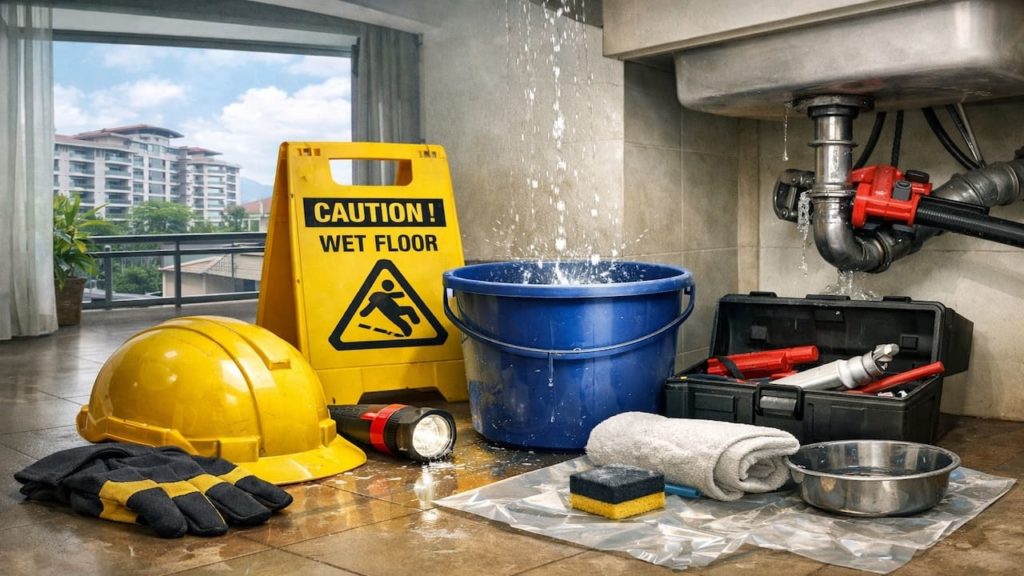
- Place towels and bucket under active drip
- Open windows and run fan for airflow
Some people hunt the cause first because they want certainty. If water is still running, damage keeps compounding and safety risk climbs. Stop the water, then investigate, then fix.
2. Prioritize safety and stop spread
Electricity and water together is the real danger.
Many Malaysia homes have sockets low on the wall and extension cords on the floor, and condos often hide wiring paths inside damp walls. One small puddle can reach a live point — serious. Safety first.
- Turn off breaker feeding the wet room
- Unplug extension cords and power strips nearby
- Keep kids and pets out of area
- Use slippers and avoid standing water contact
- Ventilate room with fan and Dry mode
Some people keep using the room because it looks like “just a little water.” That is how shocks and hidden short circuits happen. Secure power, isolate the area, then stop spread with drying.
3. Why leaks spread so fast in Malaysia homes
Warm humid air keeps materials damp and weak.
Water moves sideways along plaster joints, tile gaps, and skirting lines, then sits in dark cavities where it stays wet. Malaysia rain bursts and daily AC cycles can add condensation to the same wall. Silent damage. Moisture pathway.
- Check ceiling corner stains after recent storms
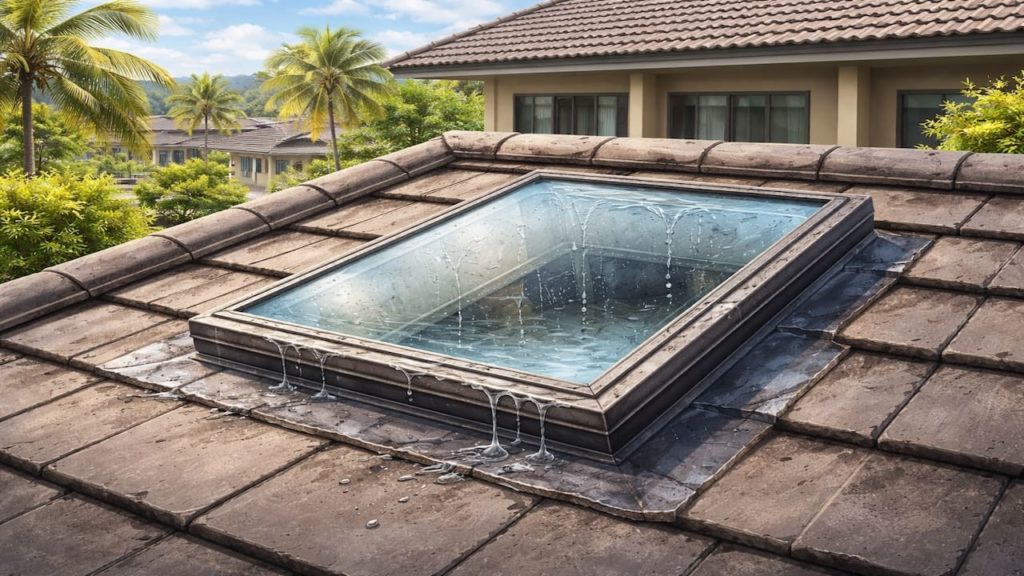
- Inspect window frame joints for rain gaps
- Check bathroom grout lines and silicone edges
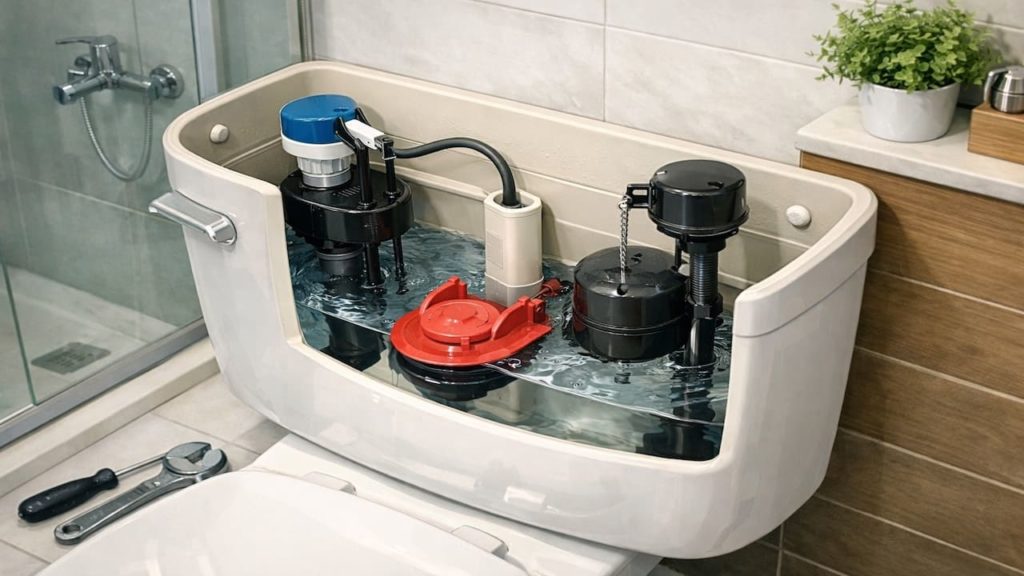
- Look under sink for slow drip marks
- Smell wall base area after room closed
Some blame the weather and accept damp as normal. Weather raises baseline, but a true leak keeps feeding moisture day after day. Find the pathway, or it returns.
4. How to isolate the source and fix today
Trace the entry point then dry and seal properly.
Do simple tests before opening walls, because many leaks are at joints you can reach. In Malaysia, minor reseal or trap tightening may be RM80–RM300, a basic plumber visit is often RM120–RM350, and concealed leak tracing or partial wall access can be RM500–RM2,500 depending on condo access and damage. Cost guardrails.
- Dry everything then watch for first new drop
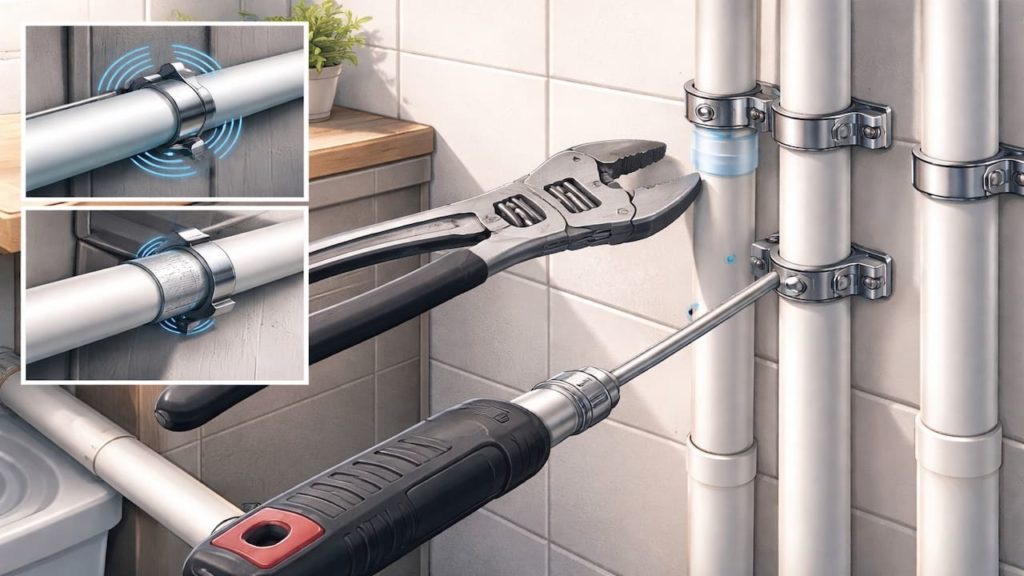
- Tissue test fittings and valves for wet spots
- Run controlled hose test on window corners
- Seal small gaps with proper exterior sealant
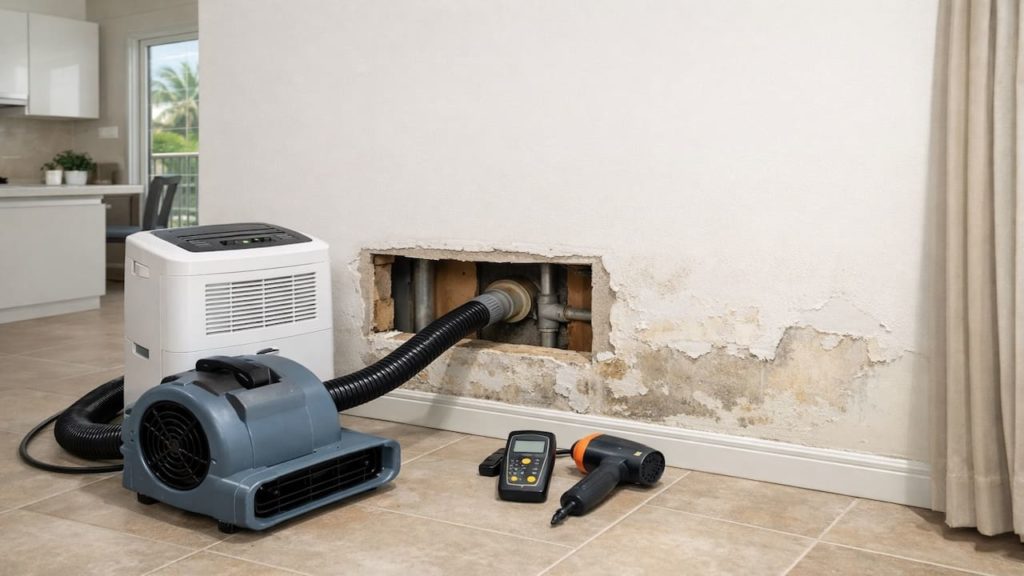
- Dry wall using fan and dehumidifier daily
Some people repaint or patch immediately to feel done. If the source still feeds moisture, the patch fails and mold starts again. Confirm entry point, stop it, dry deeply, then finish.
5. FAQs
Q1. What should I do in the first 5 minutes?
Shut off the nearest valve or main supply and place a bucket or towels to catch active drips. If water is near sockets, switch off the breaker before touching wet surfaces.
Q2. How can I tell if the leak is from rain or plumbing?
Rain leaks often worsen during storms and appear near windows, ceilings, or exterior walls. Plumbing leaks often show even on dry days and cluster under sinks, bathrooms, or water heater areas.
Q3. Why does the damp smell remain after the leak stops?
Moisture can stay inside wall cavities, skirting, and under flooring, especially in Malaysia humidity. Drying is a repair step not a comfort step so keep airflow and dehumidification going for days.
Q4. Should I open the wall immediately to dry it?
Not always, because you may cut into wiring paths or miss the true entry point. Start with tracing and drying from accessible areas, then open only if moisture keeps returning.
Q5. When must I call building management in a condo?
If the leak seems linked to facade cracks, balcony slabs, shared riser pipes, or water from above units. Document photos and dates so the case is clear.
Pro’s Tough Talk

Alright, I’ve been on site for 20+ years and handled hundreds of jobs, and “small leak” in Malaysia is the biggest lie people tell themselves. Warm air, humid rooms, and sudden rain turn a drip into stink and rot fast. Brutal.
Three causes show up nonstop. One, plumbing joints and valves loosening over time under sinks and toilets. Two, rain creeping through old sealant at windows and balcony edges. Three, hidden pathways in walls and skirting where water travels sideways like a sneaky lizard. Structure.
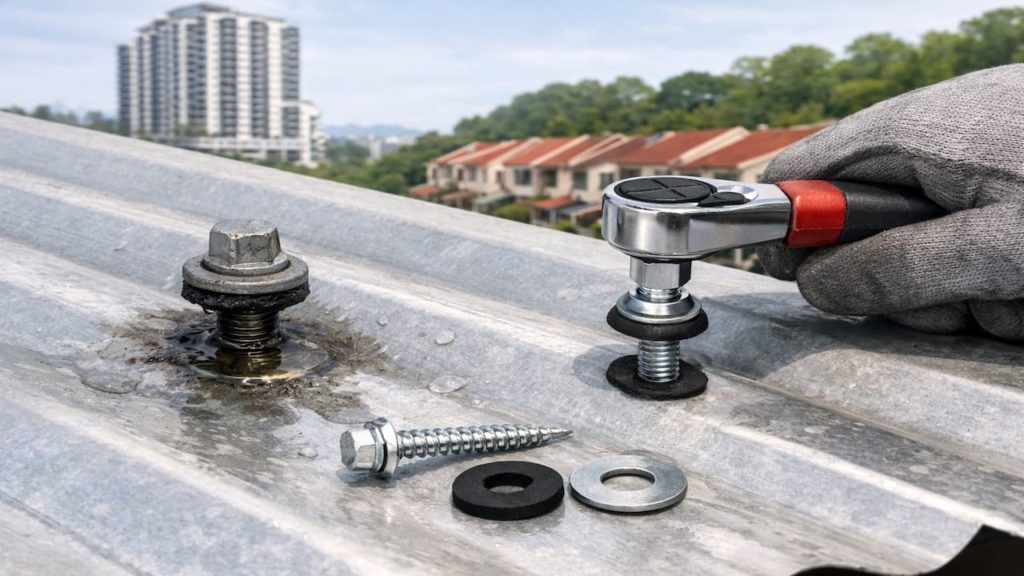
Do 3 steps and stop panicking. Step one, shut the valve and kill power to the wet zone, because water plus electricity is a horror combo. Step two, catch and contain with towels and buckets, then ventilate hard, fan and Dry mode. Step three, trace the first wet point with tissue tests and a controlled hose test, then fix the joint or sealant. Simple.
Don’t blame yourself and don’t assume every plumber is a saint or a scammer, but stop doing the “wipe and pray” routine. Stop water stop power dry hard then trace. That is the whole game, and skipping any part is how you pay twice. My jab.
Relatable moment one, you smell damp at night and pretend it is the mattress. Relatable moment two, you repaint a bubble and feel proud, then rainy week pops it again. Keep delaying and your wall will grow its own personality, then you act shocked. Cute.
Summary
Fast leak repair means the right order: stop the water, protect safety, contain spread, then trace the entry point and dry deeply. Malaysia humidity makes delays expensive.
If the leak is active or near electrical points, shut off valves and breakers first, then ventilate and dehumidify for days. If moisture keeps returning after drying, you likely have a hidden pathway from rain joints, bathrooms, or shared condo systems.
Today, shut off the source, cut power to the wet zone, dry aggressively, then run tissue and hose tests to confirm the entry point before sealing or repainting. Order beats effort when leaks hit fast. If you also see paint bubbles or wet wall smells, follow those guides next and close the pathway fully.