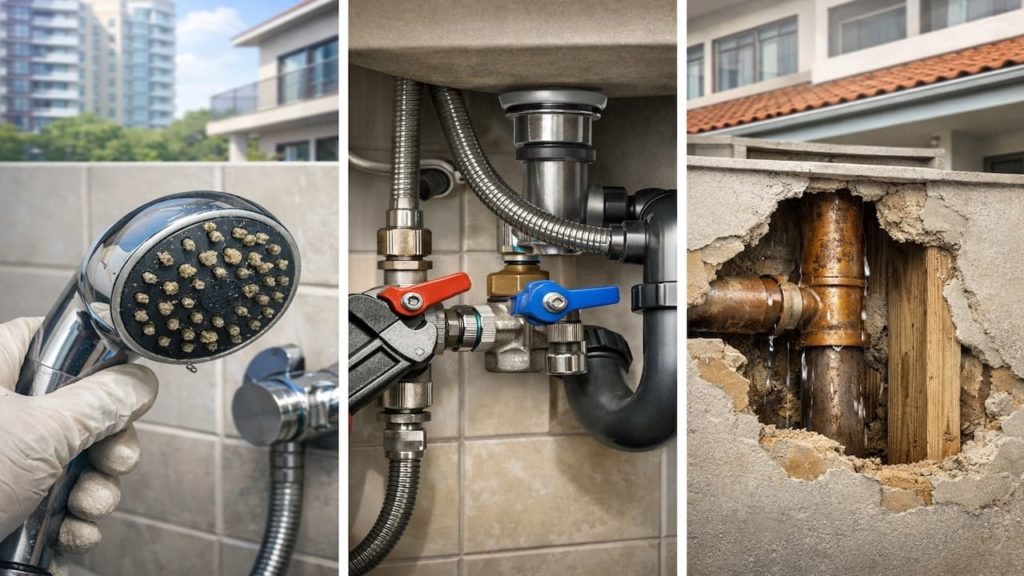
You searched “repair low water pressure” because the shower feels weak, the tap takes forever, and daily routines start wasting time.
In Malaysia, pressure can change with peak hours, condo tank levels, rain season demand, and hidden leaks that stay wet in humid ceilings and cabinets.
In this guide, you’ll learn how to test clogs valves and leaks in the right order so you find the real restriction, avoid wrong repairs, and restore steady flow.

Hi, I’m Ken. I write practical home guides for Malaysia—no fluff, just what works.
I hold a formal building design qualification and have spent about 20 years on job sites across hundreds of projects. My goal is simple: help you avoid costly mistakes with clear, safe steps—a quick way to decide what to do next.
1. Repair low water pressure: 5 checks
Check the whole water path before replacing fixtures.
Low pressure is usually a restriction or a loss, not bad luck. Malaysia condos and terrace homes may have rooftop tanks, shared risers, or booster pumps — and each point can choke flow. Reality.
- Compare pressure at kitchen tap and bathroom tap
- Test cold water then hot water separately
- Check other units or neighbors for same issue
- Inspect visible pipes for drips and damp stains
- Time bucket fill at tap for baseline rate
Some people say “It’s just the shower head,” and sometimes it is. But if multiple outlets weaken at once, the issue is upstream. Start wide, then zoom in.
2. Clogs, valves, and hidden leaks
Find the restriction point and remove it safely.
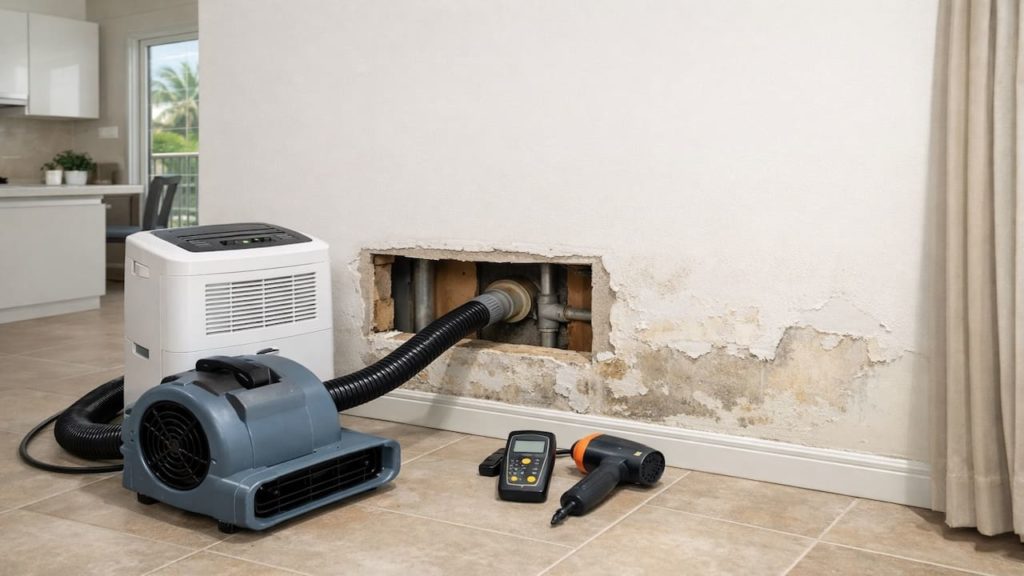
Clogs happen at aerators, angle valves, filters, and old flex hoses, while hidden leaks steal flow behind tiles. In Malaysia humidity, a slow leak stays wet and quietly grows — annoying. Simple.
- Clean tap aerator screen with toothbrush and vinegar
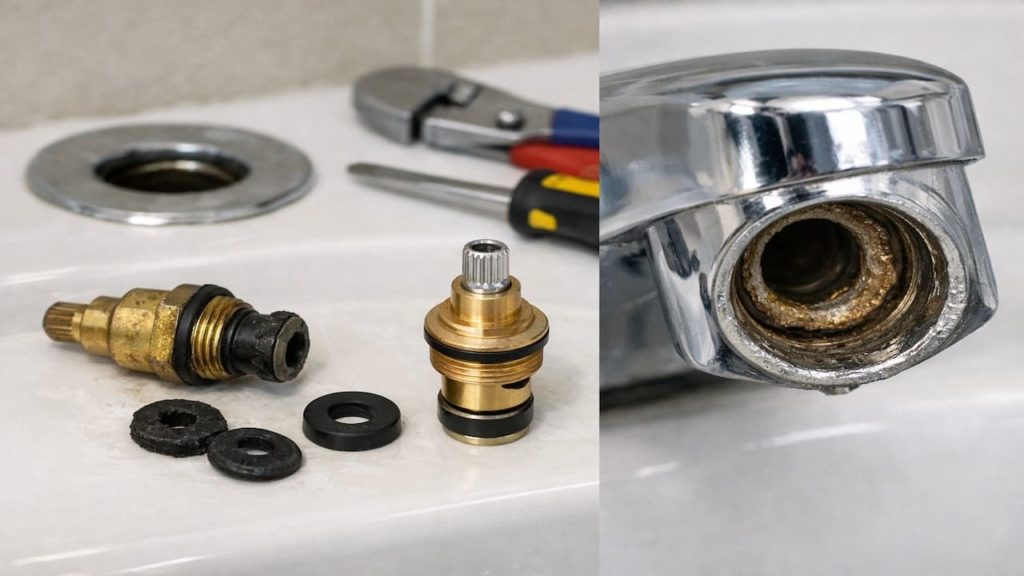
- Open angle valve fully then back quarter turn
- Check flex hose kinks under sink cabinet
- Inspect water filter housing for blocked cartridge
- Look for wet floor tiles near pipe routes
“I opened the valve already” is common, but many valves jam half open from scale. Confirm each step with a simple flow test, then move on. No guessing.
3. Why low water pressure happens suddenly in Malaysia homes
Pressure drops when demand rises or water escapes.
Malaysia mornings and evenings can hit peak demand, and condos may share pump cycles or tank refill timing. Rainy season humidity also hides leaks in ceilings and walls, so loss keeps going unnoticed — sneaky. Pattern.
- Check building pump schedule during peak hours
- Inspect meter for movement with all taps off
- Listen for pipe hiss behind toilet wall
- Check water heater inlet filter for sediment
- Look for ceiling stains below upstairs bathrooms
Yes, some areas simply have lower supply pressure on certain days. But sudden change inside your unit often means clogging or leakage, not a citywide mystery. Test and prove.
4. How to restore pressure without wasting money
Isolate the cause then fix one point at a time.
Start with the cheapest checks, then pay only when evidence says so. In Malaysia, a basic plumber visit often starts around RM80–RM150, small valve or hose swaps may land around RM120–RM300, and leak tracing plus minor repair can run RM300–RM800 depending on access and ceiling work. Budget guardrails — not a quote. Keep it controlled.
- Replace clogged aerator or shower filter screen
- Swap worn angle valve with matching size
- Replace old flex hose with braided type
- Fix hidden leak then dry cavity completely
- Request pump and tank inspection from management
Some people jump straight to “install a booster pump,” and that can help in specific cases. But boosting pressure into a leaking or clogged system can make damage worse. Isolate first, then upgrade only if needed.
5. FAQs
Q1. How do I know if it is only my unit or the whole building?
Compare multiple taps in your home, then ask one neighbor or check common area taps if possible. If everyone is weak at the same time, supply or pump timing is likely. If only you are weak, focus on your valves and filters.
Q2. Why is hot water pressure lower than cold?
Water heaters often have inlet filters or partially closed service valves. Sediment can also narrow the heater path over time. Check heater valves and filters first.
Q3. What is the quickest test for a hidden leak?
Turn off all taps and watch the meter for movement over a few minutes. Meter movement with taps off means water is escaping. Then look for damp smells and ceiling marks in humid rooms.
Q4. Should I descale everything with strong chemicals?
Be careful, because harsh acids can damage fittings and seals. Use mild vinegar cleaning for aerators and screens, and replace cheap parts rather than risking bigger damage. Keep it simple.
Q5. When should I contact condo management or a landlord?
Contact them when shared risers, pumps, rooftop tanks, or facade leaks are suspected. Pressure issues tied to certain hours often point to shared systems. Evidence helps cooperation.
Pro’s Tough Talk

Okay, I’ve been on site for 20+ years and handled hundreds of jobs, and low pressure in Malaysia is rarely “mysterious.” Humidity hides leaks like a wet blanket, and peak demand hits like a stampede. You feel it first.
Most cases boil down to 3 things. One, a clog at the outlet, aerator, filter, hose, heater inlet. Two, a valve half stuck from scale, so the pipe is basically pinched. Three, a hidden leak stealing flow behind walls and ceilings. That’s the structure.
Do 3 steps and stop panicking. Step one, compare outlets and cold versus hot to map the path. Step two, clean screens and confirm every valve is truly open, not “looks open.” Step three, check meter movement and damp signs to catch leaks. Basic.
Here’s the truth. Pressure comes back when you prove the restriction point. And if someone says “Just buy a pump bro” without testing, that’s selling umbrellas indoors. That’s my jab.
Relatable moment one, the shower is weak only when everyone wakes up. Relatable moment two, you hear a tiny hiss at night and pretend it is nothing. Fix the cause and you win, keep guessing and you’ll be doing bucket showers like a survival show.
Summary
Low water pressure usually comes from clogs, half closed valves, shared system timing, or hidden leaks. In Malaysia homes, humidity and peak demand make these problems feel random. They are not.
If multiple outlets are weak, test supply timing, building systems, and the meter for leakage signs before buying new fixtures. If only one outlet is weak, clean aerators and check local valves and hoses first.
Start today by timing a bucket fill, cleaning screens, and checking valves, then use the meter test to rule out leaks before spending. Prove the cause then spend once. If you also have grout gaps or damp wall paint, read those guides next to connect the moisture story.