You searched “repair musty closet” because clothes smell stale, the wardrobe feels damp, and you worry about mold spots on fabric.
In Malaysia, warm humidity stays trapped in wardrobes, especially in condos with cool aircon rooms and terrace homes with damp walls after rain.
In this guide, you’ll learn how to fix musty closets with airflow gaps and dry storage habits so your clothes stay fresh and you stop the smell cycle.

Hi, I’m Ken. I write practical home guides for Malaysia—no fluff, just what works.
I hold a formal building design qualification and have spent about 20 years on job sites across hundreds of projects. My goal is simple: help you avoid costly mistakes with clear, safe steps—a quick way to decide what to do next.
1. Repair musty closet: 5 fixes
Reduce trapped humidity inside the closet before buying sprays.
Musty smell is usually moisture plus low airflow, not “dirty clothes.” Malaysia humidity feeds that combo fast, and closed wardrobe doors make it worse. Simple.
- Pull clothes out and sniff back panel area
- Check for damp wall patches behind wardrobe
- Look for mold dots on corners and shelf edges
- Measure closet humidity using small hygrometer device
- Leave doors open 2 hours and recheck smell
Some people hang more fragrance sachets and hope. That hides the smell for a day and then the damp wins. Fix airflow and dryness first, then scents become optional.
2. Airflow gaps and dry storage habits
Closets need breathing space or humidity gets trapped.
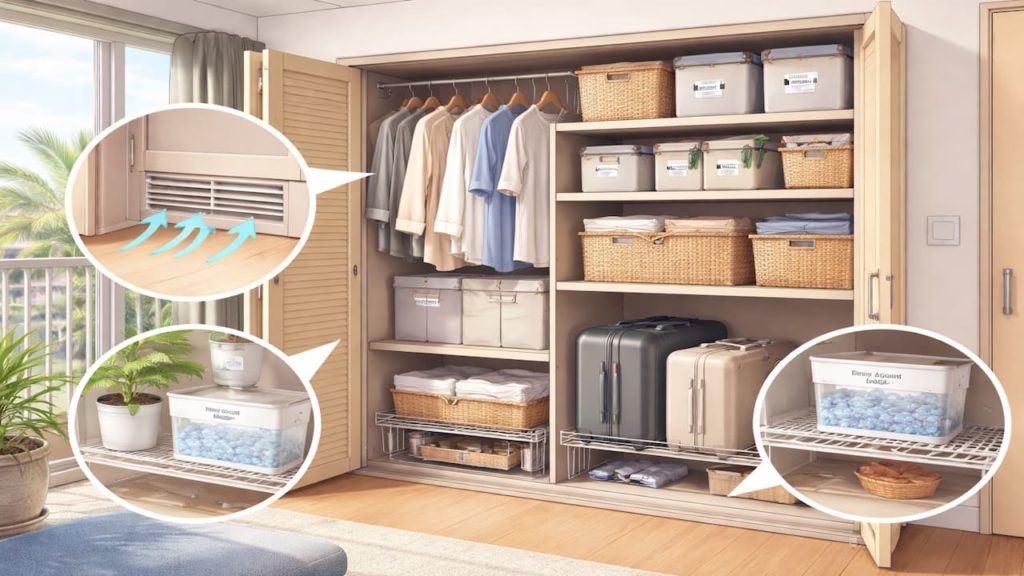
If the wardrobe is pushed tight to the wall and packed full, air cannot circulate, so moisture sits in fabric. In Malaysia, that turns into musty odor quickly — especially in bedrooms cooled at night. Give air a path.
- Leave 3 cm gap between wardrobe and wall
- Keep bottom plinth vents clear of boxes
- Use slim fan near closet for 30 minutes
- Store only fully dry clothes and towels
- Rotate rarely used items monthly to air out
“But my room has aircon so it should be dry” is a common trap. Aircon cools, but closets can stay humid if doors stay shut and airflow is blocked. Make breathing space.
3. Why closets turn musty in Malaysia homes
Warm walls and cool rooms create hidden condensation zones.
When the room is cooled, the wardrobe interior can become a cooler pocket, and humid air condenses on the back panel. Terrace homes can also get damp external walls after storms, while condos may have shaded walls that stay cool. Malaysia makes it steady.
- External wall seepage raises humidity behind wardrobe
- Rainy season keeps indoor drying slow
- Closed doors trap moisture from sweaty daily clothes
- Dust and fabric fibers feed mold growth
- Floor mopping adds moisture trapped at bottom panel
Yes, cheap particleboard wardrobes smell faster. But even good cabinets go musty when airflow is zero and humidity is high. Control the environment, then materials matter less.
4. How to remove odor and prevent mold without overdoing it
Dry the closet fully then maintain with simple routines.
Start with drying and cleaning, then add long term control. In Malaysia, moisture absorber packs are cheap and effective for small spaces, while a dehumidifier is often worth it if you fight daily dampness. A basic handyman check for wall damp or sealing might start around RM80–RM150 as guardrails. Spend where it matters.
- Wipe surfaces with mild detergent then dry fully
- Use dehumidifier 2 hours daily for one week
- Place moisture absorber tubs on bottom shelf
- Use cedar blocks or charcoal bags for odor control
- Keep closet under 60 percent humidity target
Some people bleach everything. That can damage finishes and does not solve humidity returning. Drying and airflow prevent the smell from coming back, then cleaning is enough.
5. FAQs
Q1. Should I leave closet doors open all day?
It helps, especially after rainy days or laundry drying. If you cannot, open for 1–2 hours daily or use a small fan to move air into the closet.
Q2. Can I put a dehumidifier inside the closet?
Small closets can work with moisture absorber tubs, while a dehumidifier usually works better in the room with doors open. Monitor humidity to avoid overdrying wood panels.
Q3. Why does the smell return after cleaning?
Humidity is still trapped, and fabric holds moisture deep inside. Drying and airflow beat cleaning alone. Use drying routines and reduce overcrowding.
Q4. What if I see mold spots on clothes?
Wash and dry items fully in sun if possible, and wipe wardrobe surfaces. Then lower humidity and improve airflow, or the spots will return.
Q5. When is musty smell a sign of wall leak?
If the back panel area is damp, paint bubbles, or smell is strongest near one wall, suspect seepage or condensation. Check after heavy rain and fix wall moisture sources.
Pro’s Tough Talk

Alright, I’ve been on site for 20+ years and handled hundreds of jobs, and musty closets in Malaysia are a humidity trap with a door. You close it, it stews, and your shirts come out smelling like an old sponge. Classic.
Three causes run the show. One, zero airflow because the wardrobe is jammed to the wall and stuffed full. Two, moisture sources, sweaty clothes, wet towels, mop water, rainy season air. Three, cold aircon room plus warm wall creates condensation behind the cabinet. That’s the structure.
Do 3 steps. Step one, empty it, wipe it, and dry it hard with fan or dehumidifier. Step two, create gaps, 3 cm behind, space between hangers, clear the bottom. Step three, store only dry items and use absorber tubs like a routine. Simple.
You didn’t fail and the wardrobe brand is not always the villain, but the habit matters. Airflow plus dry routines kills musty smell. And if someone sells you “magic perfume balls,” that’s like spraying cologne on wet socks. That’s my jab.
Relatable moment one, you grab a clean shirt and it still smells weird in the lift. Relatable moment two, you find tiny mold dots right on the collar and you panic. Fix the airflow, or keep hosting the Closet Humidity Festival every week. Enjoy.
Summary
Musty closets come from trapped humidity and low airflow, often made worse by Malaysia rainy season moisture and aircon cooling cycles. Odor is a humidity signal.
If drying and leaving doors open reduces smell quickly, focus on airflow gaps, decluttering, and moisture control habits. If the back wall stays damp or smells strongest near one area, investigate wall seepage or condensation and fix the source.
Start today by emptying the closet, drying it hard, creating a wall gap, and using moisture absorbers as maintenance—not perfume masking. Dry space and breathing gaps keep clothes fresh. If you also have window condensation or peeling ceiling, read those guides next and connect the damp chain.