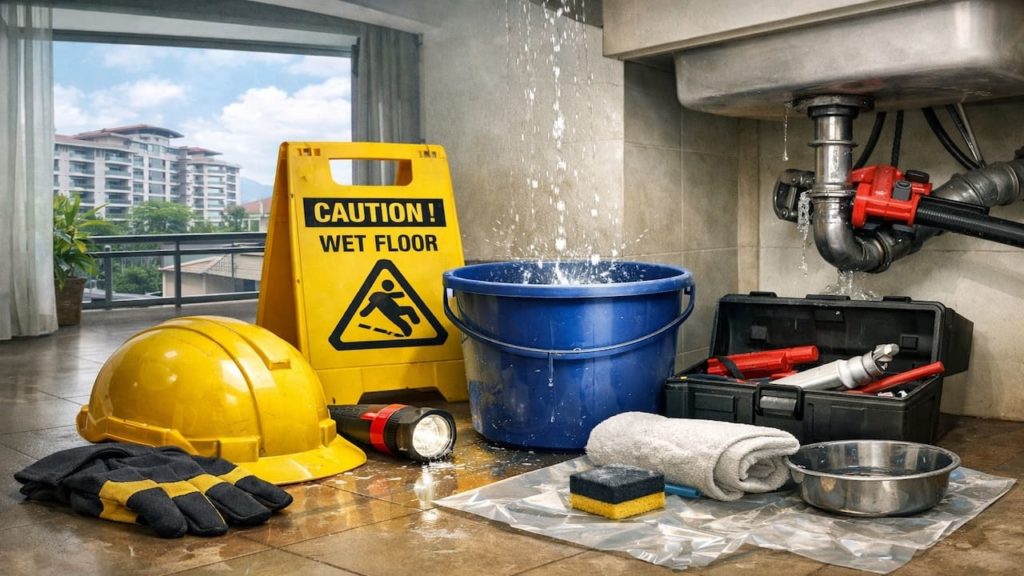
You searched “repair shower leak” because water shows up outside the shower, the floor stays wet, or the ceiling below has damp marks.
In Malaysia, daily humidity, frequent showers, and slow drying make small leaks spread fast, especially in condos with units below and terrace homes with shared wet walls.
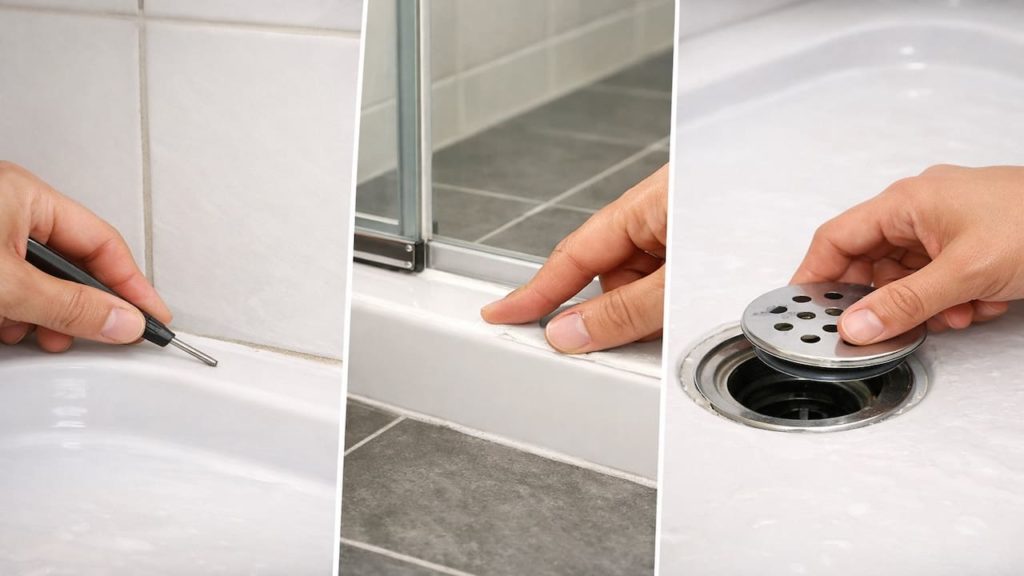
In this guide, you’ll learn how to check grout tray edges and drain seals before ripping tiles so you stop the leak at the source and avoid repeat damp damage.

Hi, I’m Ken. I write practical home guides for Malaysia—no fluff, just what works.
I hold a formal building design qualification and have spent about 20 years on job sites across hundreds of projects. My goal is simple: help you avoid costly mistakes with clear, safe steps—a quick way to decide what to do next.
1. Repair shower leak: 5 checks
Find where water escapes before you reseal anything.
Most shower leaks come from predictable paths: joints, edges, and drains. Malaysia humidity hides early signs because everything dries slowly, so you need a simple test routine. Evidence.
- Dry floor fully then run shower 5 minutes
- Check outside shower line for new wet marks
- Inspect grout lines for gaps and dark staining
- Press tray edge sealant and feel soft spots
- Check drain area for slow flow and pooling
Some people reseal blindly and hope. That can trap water behind silicone and make mold worse. Test the leak path first, then seal the right place.
2. Grout, tray edges, and drain seals
Edge joints and drain seals fail more often than tiles.
Grout cracks let water travel, but tray edges and drain seals are the common escape points. In Malaysia, movement and cleaning chemicals can weaken sealant faster — especially where the tray meets the wall. Common.
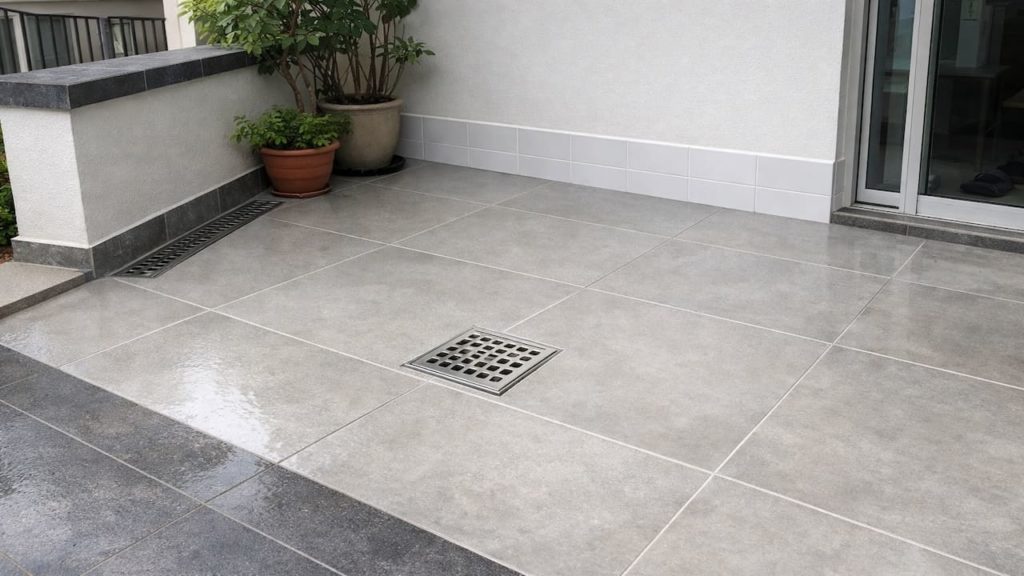
- Check silicone at wall tray joint for splits
- Look for loose tiles near shower corner base
- Inspect drain grate and remove hair and slime
- Check drain flange seal for wobble movement
- Test shower head spray direction hitting edges
People say “regrout everything” first. Grout is not waterproof by itself, and leaks often happen at edges and drains. Fix seals and edges, then touch grout as needed.
3. Why shower leaks get worse in Malaysia homes
Humidity slows drying so small seepage becomes constant damp.
In humid Malaysia air, moisture stays trapped in corners and under mats, so you see mold, peeling paint, and swelling skirting earlier. Condos add risk because leaks travel down to the unit below. Serious.
- Check bathroom ventilation fan airflow using tissue test
- Inspect wall paint outside bathroom for bubbling
- Look for musty smell near vanity cabinet base
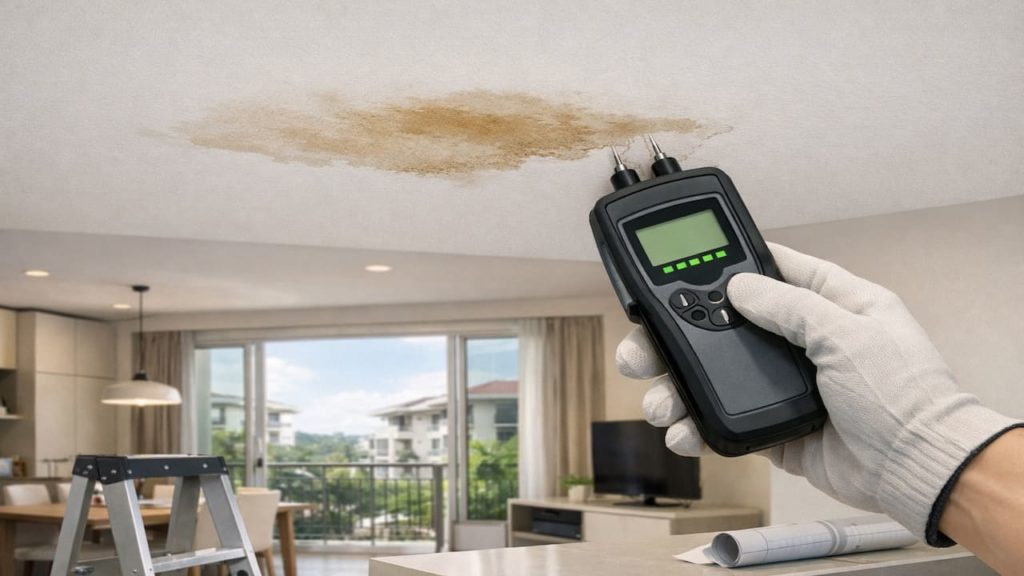
- Check ceiling below bathroom for yellow stains
- Measure bathroom humidity after shower using hygrometer
Some blame only “bad workmanship.” Sometimes true, but daily wetting plus poor ventilation makes even decent bathrooms fail sooner. Control water and drying together.
4. How to stop the leak and keep costs under control
Clean dry and reseal edges then service the drain properly.
Start with the least invasive fixes and watch results. In Malaysia, basic resealing around a shower can be roughly RM150–RM400, drain unclog and minor seal work may be RM100–RM300, and deeper tile removal or waterproofing repairs can climb to RM800–RM3,000 depending on area and condo access rules. Guardrails. Pay for diagnosis before demolition.
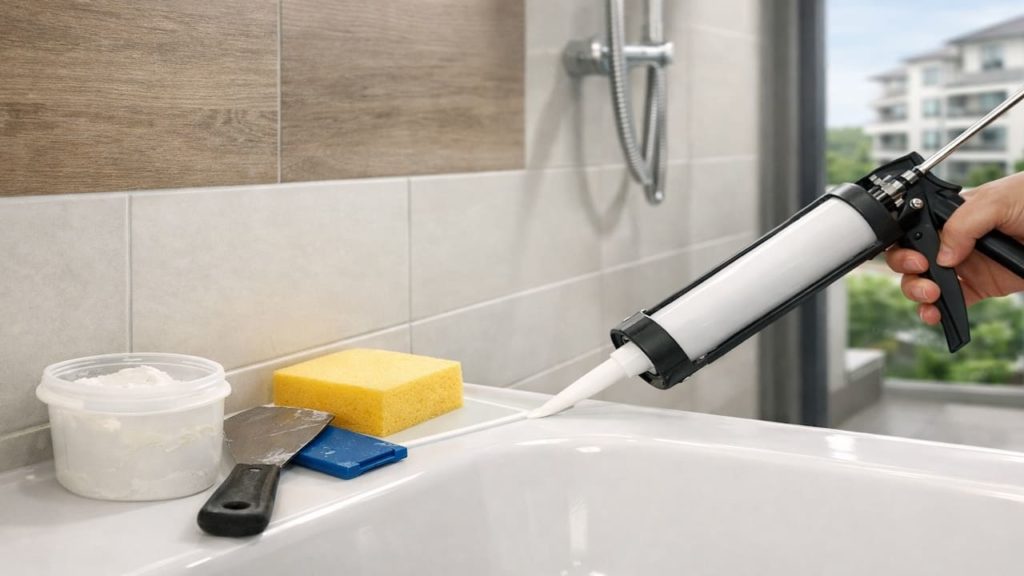
- Remove old silicone fully and clean with alcohol
- Dry joint using fan and dehumidifier overnight
- Apply bathroom grade silicone with smooth bead
- Replace drain rubber gasket or flange seal
- Regrout only cracked lines after waterproof checks
Some people apply new silicone on top of old. That fails fast and traps moisture. Remove, dry, and reseal clean, then test again.
5. FAQs
Q1. How do I know if the leak is from the drain?
Leaks from the drain often show as water appearing near the drain line or below the bathroom ceiling. Run water directly into the drain without wetting walls and see if leaks still appear.
Q2. Is grout enough to stop water?
No, grout is not waterproof and can crack. Waterproofing is behind the tiles, and edge silicone plus drain seals are critical to keep water from escaping.
Q3. Can I reseal without drying the bathroom?
It is risky because moisture trapped under silicone causes poor adhesion and mold. Dry joints fully before resealing or it fails. Malaysia humidity makes drying time more important.
Q4. Why does water appear outside the shower even with a door?
Spray direction, worn door seals, or a slight floor slope issue can push water out. Also check tray edges and silicone joints for capillary seepage.
Q5. When should I call a professional?
Call if leaks reach the ceiling below, tiles feel loose, or you suspect waterproofing failure under tiles. Condo cases can involve neighbor damage, so act early.
Pro’s Tough Talk

Alright, I’ve been on site for 20+ years and handled hundreds of jobs, and shower leaks in Malaysia are sneaky because everything is already damp. A tiny gap turns into a weekly wet nightmare, especially when rainy season keeps the air heavy.
Three causes cover most cases. One, silicone at tray edges splits and water sneaks behind. Two, drain seals fail or hair gunk makes water pool and overflow into joints. Three, grout cracks and loose tiles let water travel where you can’t see. That’s the structure.
Do 3 steps, no panic demolition. Step one, dry everything and run controlled tests, walls only, drain only, then full shower. Step two, remove old silicone properly, dry overnight, and reseal clean. Step three, clear the drain and replace gaskets if there is movement. Simple.
You didn’t fail and not every installer is a villain, but don’t fall for lazy fixes. Remove old silicone and dry before resealing. Anyone telling you “just add another layer” is like putting a bandage on a wet soap bar, it slides off. That’s my jab.
Relatable moment one, you mop the bathroom and it’s wet again 10 minutes later. Relatable moment two, you spot a yellow stain on the ceiling below and your stomach drops. Fix it now, or you’ll be funding the Mold Museum soon. Enjoy.
Summary
Shower leaks usually come from cracked edge silicone, failing drain seals, or damaged grout lines, and Malaysia humidity makes small seepage stay wet and spread. Controlled tests reveal the path.
If the leak happens after full shower spray, focus on tray edges and wall joints and reseal only after proper drying. If leaks show even when running water straight into the drain, inspect drain gaskets and flange seals and repair before touching tiles.
Today, dry the bathroom, run a drain-only test, then remove and replace old silicone with a clean dry bead and retest the next day. Test first then reseal clean and it stops. If you also have musty closets or peeling ceilings, read those guides next and connect the moisture chain.