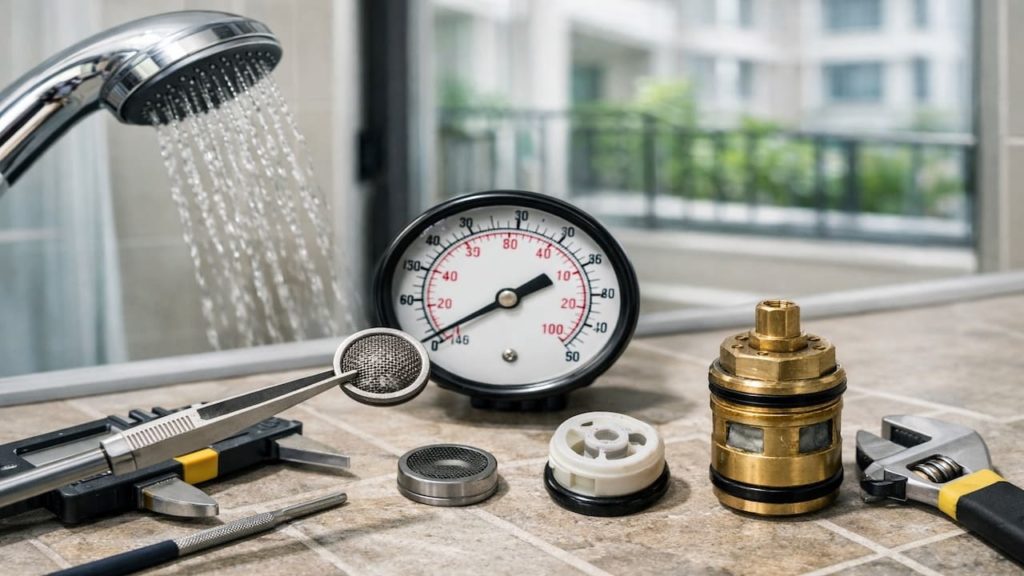
You searched “repair shower low flow” because the shower feels weak, the spray is uneven, or it takes forever to rinse shampoo even when other taps feel normal.
In Malaysia, warm water, humidity, and mineral scale can clog small meshes fast, and some condos also have pressure changes that make weak flow feel sudden.
In this guide, you’ll learn how to pinpoint whether the blockage is in the head mesh or the valve so you fix low flow without replacing the wrong parts.

Hi, I’m Ken. I write practical home guides for Malaysia—no fluff, just what works.
I hold a formal building design qualification and have spent about 20 years on job sites across hundreds of projects. My goal is simple: help you avoid costly mistakes with clear, safe steps—a quick way to decide what to do next.
1. Repair shower low flow: 5 checks
Confirm if the restriction is local to the shower.
Start by comparing fixtures and isolating the exact point where flow drops. Malaysia bathrooms often have hidden fittings and small filters, so simple tests save money. Clarity.
- Compare flow at basin tap versus shower
- Test hot and cold separately for flow difference
- Remove shower head and test hose flow
- Check spray pattern for jets blocked by scale
- Listen for valve hiss or chatter during use
Some people assume the water supply is the problem. If other taps are strong, your issue is usually the head mesh, hose, or valve. Local fix.
2. Scale, filter mesh, and valve wear
Most weak showers are clogged screens not weak pipes.
Shower heads and hoses often have tiny screens that trap sand, scale, and debris, and valve wear can reduce flow or cause uneven mixing. In Malaysia, bathrooms stay humid, so deposits and corrosion build quietly — stubborn. Common.
- Soak shower head in vinegar and brush jets
- Clean inlet filter mesh at head or hose joint
- Check hose for kinks and internal swelling
- Inspect diverter valve for partial closed position
- Replace worn cartridge if lever feels gritty
Some people crank the valve harder to get more flow. That can damage the cartridge and seals. Clean and test first, then replace only what is worn.
3. Why shower flow drops in Malaysia homes
Warm humid bathrooms accelerate scale and debris trapping.
Deposits stick faster when water evaporates on hot surfaces, and humid rooms keep fittings damp, which helps corrosion and grit collect at screens. Condo riser work and intermittent supply can also shake debris loose. Malaysia reality. Annoying.
- Check head jets for white crust buildup
- Inspect tap aerators for sand debris signs
- Observe low flow after building maintenance events
- Check pressure drops during evening peak usage
- Inspect bathroom for poor ventilation and dampness
Some think the shower is “just old.” Age matters, but most low flow problems are maintenance issues at small meshes and cartridges. Fixable.
4. How to restore flow and keep costs realistic
Clean filters first then replace the valve parts if needed.
Do the cheap steps first and verify improvement before buying new hardware. In Malaysia, DIY cleaning costs almost nothing, a new shower head or hose can be RM30–RM150, replacing a cartridge or diverter may be RM80–RM350, and a plumber visit for diagnostics and replacement is often RM120–RM350 plus parts. Cost guardrails.
- Turn off water and remove head and hose
- Clean filter mesh and flush debris out
- Soak head and brush jets until clear
- Replace hose if kinked or internally blocked
- Replace cartridge if cleaning does not restore flow
Some people replace the whole mixer set immediately. That is overkill if the mesh is clogged. Clean and test, then upgrade only if valve wear is real.
5. FAQs
Q1. How do I know if it is the shower head or the valve?
Remove the shower head and test flow from the hose. Strong hose flow means the head is clogged, weak hose flow points to the valve or supply.
Q2. Why is cold flow fine but hot flow weak?
Hot side screens and cartridges can clog with scale more quickly, and some heaters or mixing valves restrict hot flow when partially blocked. Clean meshes first.
Q3. Is vinegar safe for cleaning shower heads?
Vinegar works for scale on many heads, but avoid long soaks on delicate finishes. Short soak plus brushing clears most jet clogs. Rinse well after.
Q4. Can a clogged aerator elsewhere affect the shower?
Not directly, but if multiple fixtures show debris, your supply may have sediment and you should clean several screens. Consider a whole unit filter if debris repeats.
Q5. When should I call a plumber?
If flow is weak across multiple fixtures, if the valve is stuck or leaking, or if you are in a condo and suspect riser pressure issues. Also call if you cannot shut off the supply safely.
Pro’s Tough Talk

Alright, I’ve been on site for 20+ years and handled hundreds of jobs, and weak shower flow in Malaysia is usually not a mystery. It’s the tiny mesh screen acting like a trash net, and you’re trying to rinse shampoo with a sad drizzle. Annoying.
Three causes show up nonstop. One, scale and grit clogging the head jets and inlet mesh, the small stuff that blocks big comfort. Two, hose kinks or internal swelling, especially cheap hoses in humid bathrooms. Three, worn cartridges and diverters, so the valve never fully opens. That’s the structure.
Do 3 steps, simple. Step one, remove the head and test hose flow, that tells you where the restriction lives. Step two, clean the mesh and soak the head, then flush debris out like you mean it. Step three, if flow is still weak, replace the cartridge or diverter, because worn valves don’t magically heal. Simple.
You didn’t fail and not every plumber is out to get you, but don’t rage buy a fancy new mixer because you’re mad. Clean the mesh first then replace worn valve parts. Anyone skipping that step is selling you shiny pain. That’s my jab.
Relatable moment one, you stand there freezing because you overcool the bathroom just to feel “more pressure.” Relatable moment two, you keep turning the lever like it owes you money and nothing changes. Fix the screen and valve, or enjoy showering with the confidence of a watering can. Enjoy.
Summary
Low shower flow is most often caused by clogged head jets, blocked filter meshes, kinked hoses, or worn valve cartridges, and Malaysia heat and humidity speed up deposits and corrosion. Test and isolate first.
If the hose flows strong without the head, clean the head and mesh and you are done. If the hose is weak too, look at the valve cartridge, diverter, or wider pressure issues, especially in condos during peak usage.
Today, remove the head, test hose flow, clean the mesh and jets, and replace only the part that still restricts flow after cleaning. Diagnosis saves you from buying the wrong hardware. If you also have noisy pipes or leaking taps, read those guides next and fix the valve side causes together.