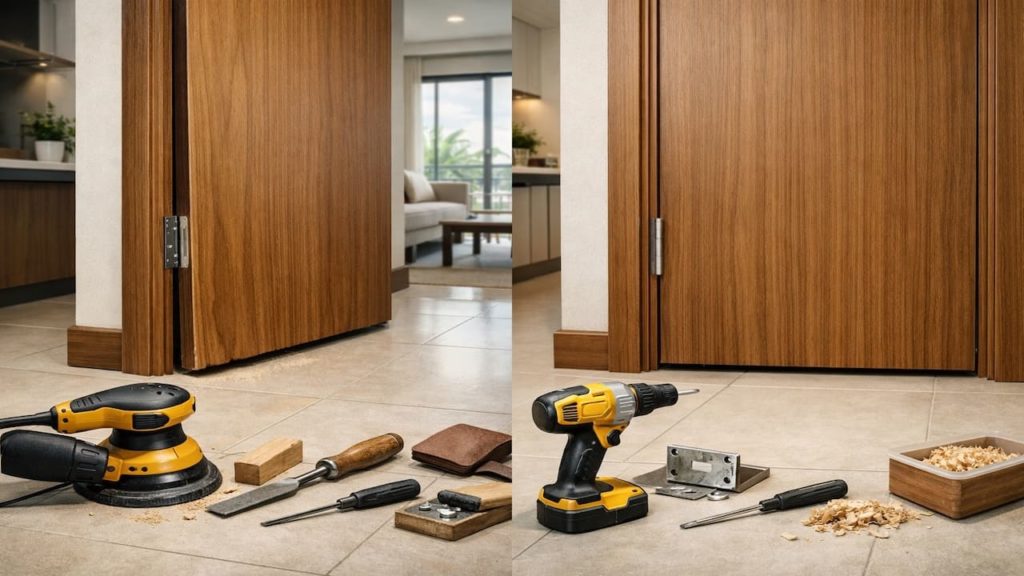
You searched “repair swollen doors” because the door suddenly sticks, scrapes the frame, or will not latch cleanly in daily use.
In Malaysia, humidity rises fast during rainy season, and wood or MDF doors absorb moisture, especially in condos with aircon cycles and terrace homes with wet entry areas.
In this guide, you’ll learn how to fix swollen doors by controlling moisture and correcting alignment so the door closes smoothly without ruining the finish.

Hi, I’m Ken. I write practical home guides for Malaysia—no fluff, just what works.
I hold a formal building design qualification and have spent about 20 years on job sites across hundreds of projects. My goal is simple: help you avoid costly mistakes with clear, safe steps—a quick way to decide what to do next.
1. Repair swollen doors: 5 fixes
Fix sticking doors by proving whether it is swell or sag.
A swollen door rubs because the panel expanded, while a sagging door rubs because hinges shifted. Malaysia humidity can trigger both, so you need a quick check before sanding anything. Basic.
- Mark rub points using chalk on door edge
- Check gap evenness along top and latch side
- Tighten hinge screws and test closing again
- Check latch strike plate alignment with tongue
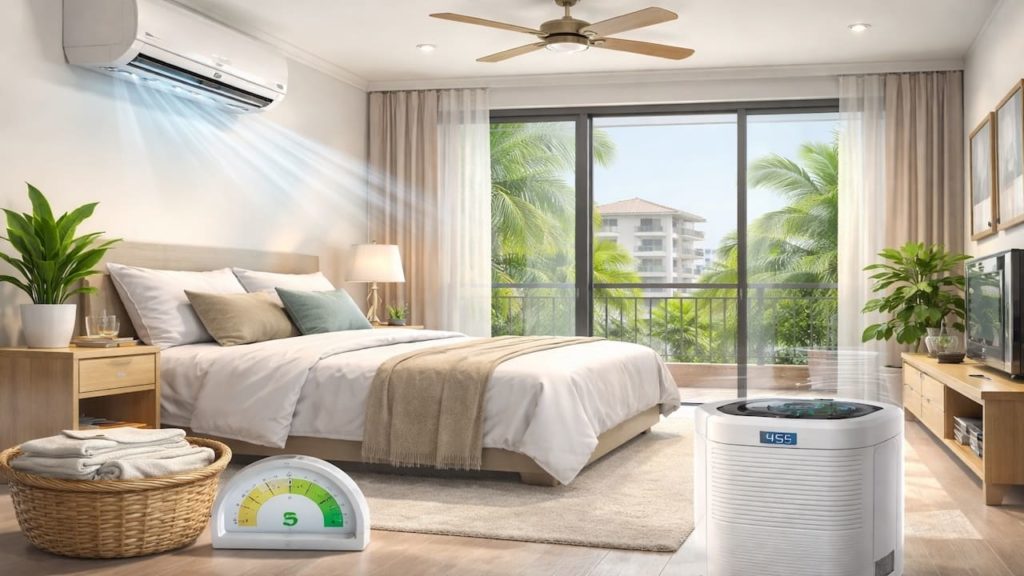
- Run dehumidifier in room for 24 hours
Some people start shaving the door immediately. That can make gaps ugly when the humidity drops later. Diagnose first, then remove material only if needed.
2. Humidity warp and hinge alignment
Most sticking doors are hinge sag plus humidity swell.
When hinges loosen, the door drops and rubs at the top latch corner, then humidity makes the fit even tighter. In Malaysia, repeated aircon on off cycles move wood and screws — small shift becomes daily friction. Annoying.
- Replace one hinge screw with longer screw
- Shim hinge with thin card for minor lift
- Plane door edge lightly at marked rub zone
- Seal bare wood edges using primer and paint
- Adjust strike plate using small file carefully
“The door is just old” is a lazy explanation. Old doors can work fine if hinges are solid and edges are sealed against moisture. Fix alignment, then protect edges.
3. Why doors swell in Malaysia homes
Moisture enters through unsealed edges and weak paint.
Door faces may be painted, but the top and bottom edges are often raw or thinly sealed, so they soak humidity like a sponge. Malaysia bathrooms and kitchens add extra moisture, and wet floors keep the bottom edge damp. That’s the trap.
- Bathroom steam raises humidity near door panels
- Unsealed bottom edge absorbs mop water repeatedly
- Aircon off periods let wood reabsorb moisture
- Door frame shifts slightly with building movement
- Cheap hollow core doors warp under damp stress
Yes, solid wood moves naturally. But swelling that jams the latch usually means moisture entry plus poor sealing. Seal the edges and the problem calms down.
4. How to repair it and keep costs realistic
Start with hinges then moisture control then light planing.
Most fixes are small if you do them early. In Malaysia, a handyman visit often starts around RM80–RM150, hinge or latch adjustments can be RM100–RM250, and trimming plus repainting edges may land around RM150–RM400 depending on tools and door type. Guardrails. Keep the scope tight.
- Tighten all hinge screws and replace stripped ones
- Add longer screw into stud for hinge strength
- Dry room with fan and dehumidifier daily
- Plane minimal edge then sand smooth lightly
- Seal top and bottom edges with paint primer
Some people want to replace the door immediately. Replacement is fine for badly warped panels, but many Malaysia doors recover once alignment is fixed and moisture is controlled. Repair first, replace last.
5. FAQs
Q1. How do I tell swelling from hinge sag?
If the latch side top corner rubs and the hinge gaps look uneven, sag is likely. If the whole edge feels tight and the panel looks bowed, swelling is likely. Many cases are both.
Q2. Should I sand the door edge?
Only after hinge tightening and drying steps, because sanding is irreversible. Remove the smallest amount possible, then seal the exposed wood so moisture does not return.
Q3. Why does the door stick more during rainy season?
Humidity rises and the door absorbs moisture, especially if edges are unsealed. Moisture plus loose hinges makes the jam worse. Drying the room often gives quick relief.
Q4. Can I fix the latch without trimming the door?
Sometimes. Strike plate adjustment and hinge lift can restore clearance. Trim only if the rub mark remains after alignment fixes.
Q5. What if the bottom of the door is swollen?
That often comes from mop water and wet bathroom floors. Keep the floor drier, add a small threshold or door sweep, and seal the bottom edge to prevent repeat swelling.
Pro’s Tough Talk

Alright, I’ve been on site for 20+ years and handled hundreds of jobs, and swollen doors in Malaysia are a seasonal comedy. Rainy humidity hits, then suddenly every door thinks it is a brick. You’re not crazy.
Three causes cover most cases. One, hinges loosen and the door sags, so it rubs at the top latch corner. Two, the door edges were never sealed, so moisture soaks in like a sponge. Three, wet mopping and bathroom steam keep the bottom edge damp. That’s the structure.
Do 3 steps and stop grinding the door like a carpenter movie. Step one, tighten hinges and add a longer screw into solid wood. Step two, dry the room and stop feeding moisture from wet floors. Step three, plane only the rub zone and seal the edge immediately. Simple.
You didn’t fail and the builder is not always a villain, but cheap doors plus humidity is a rough combo. Alignment first then trimming only if needed. And if someone tells you to “just slam it harder,” that’s not repair, that’s anger management. That’s my jab.
Relatable moment one, you get stuck in the bathroom because the door won’t open. Relatable moment two, you wake up and the latch won’t catch, so you kick it shut. Fix it right, or enjoy your new daily workout called Door Wrestling Championship.
Summary
Swollen doors usually come from Malaysia humidity plus unsealed edges, often made worse by hinge sag and latch misalignment. The right fix depends on whether the problem is swelling, sagging, or both.
If drying the room and tightening hinges restores clearance, seal the edges to prevent repeat issues. If the door still rubs, plane only the marked zone and repaint the exposed wood, or replace badly warped doors as a last resort.
Start today by marking rub points, tightening hinges, and drying the room before sanding anything. Dry and align first then the door behaves again. If you also have window condensation or moldy corners, read those guides next and connect the humidity chain.