You searched “repair termite damage” because wood sounds hollow, paint bubbles near edges, or a door frame suddenly feels soft when you press it.
In Malaysia, warm humid air and frequent rain keep timber and plaster slightly damp, so termites can work quietly behind walls in condos and terrace homes.
In this guide, you’ll learn how to confirm termite damage and stop the colony before you rebuild so repairs last and you do not chase the same rot line again.

Hi, I’m Ken. I write practical home guides for Malaysia—no fluff, just what works.
I hold a formal building design qualification and have spent about 20 years on job sites across hundreds of projects. My goal is simple: help you avoid costly mistakes with clear, safe steps—a quick way to decide what to do next.
1. Repair termite damage: 5 checks
Confirm active termites before you repair any timber — always.
Repairing first is tempting, but termites can keep eating behind a fresh patch. Malaysia conditions help them stay active year round, especially near bathrooms, kitchens, and ground level walls. Proof.
- Inspect skirting boards for blistered paint patches
- Check door frames for soft spots near floor
- Look for mud tubes along walls and columns
- Open cabinet corners and inspect hidden timber edges
- Check window frames for fine dust frass piles
Some people say drywood damage is old and harmless. That can happen, but you must rule out active mud tubes and fresh hollow areas first. Stop the colony, then repair once.
2. Tap tests and edge rot clues
Tap sounds and edge crumble show where termites traveled — map it.
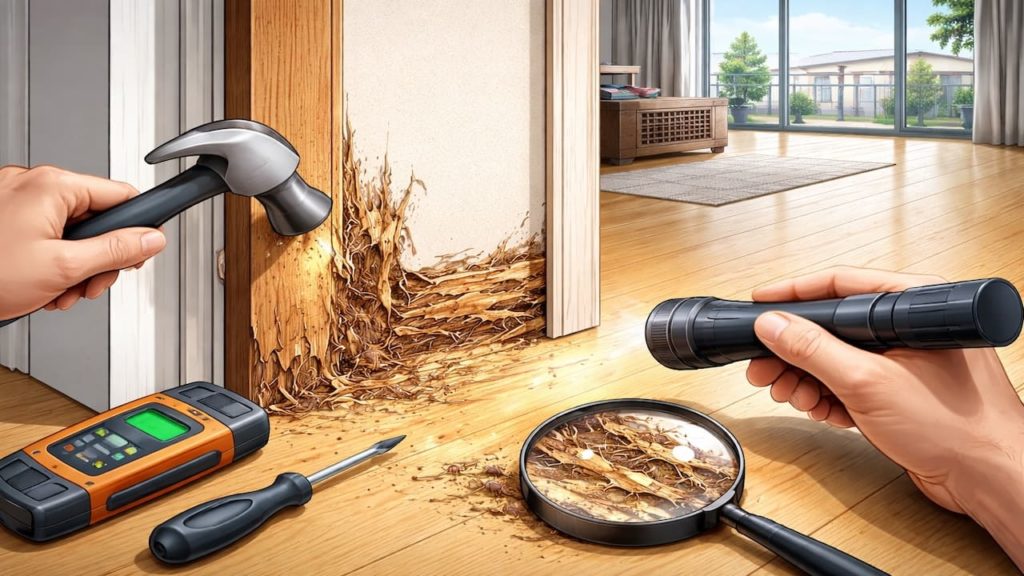
Termites hollow wood from inside, so surfaces can look normal until the edge breaks. A simple tap test helps you find voids, and edge rot clues tell you where moisture helped them. Malaysia humidity turns small leaks into termite highways. Pattern.
- Tap timber and listen for dull hollow tones
- Press screwdriver gently into soft edge sections
- Check laminate bubbles at cabinet base corners
- Inspect wall skirting joints for sandy debris
- Probe stair stringers and porch posts near ground
Some people assume all soft wood is water damage. Water can soften wood, but termites leave galleries and mud lines that water alone cannot explain. Use tap mapping, then confirm the cause.
3. Why termites win in Malaysia homes
Moisture plus hidden timber gives termites safe access routes — common.
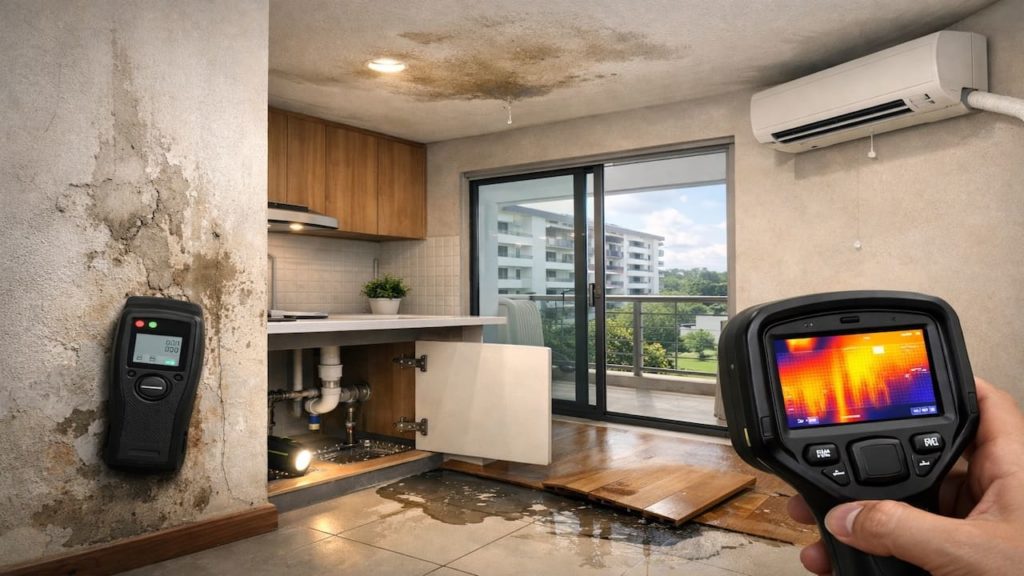
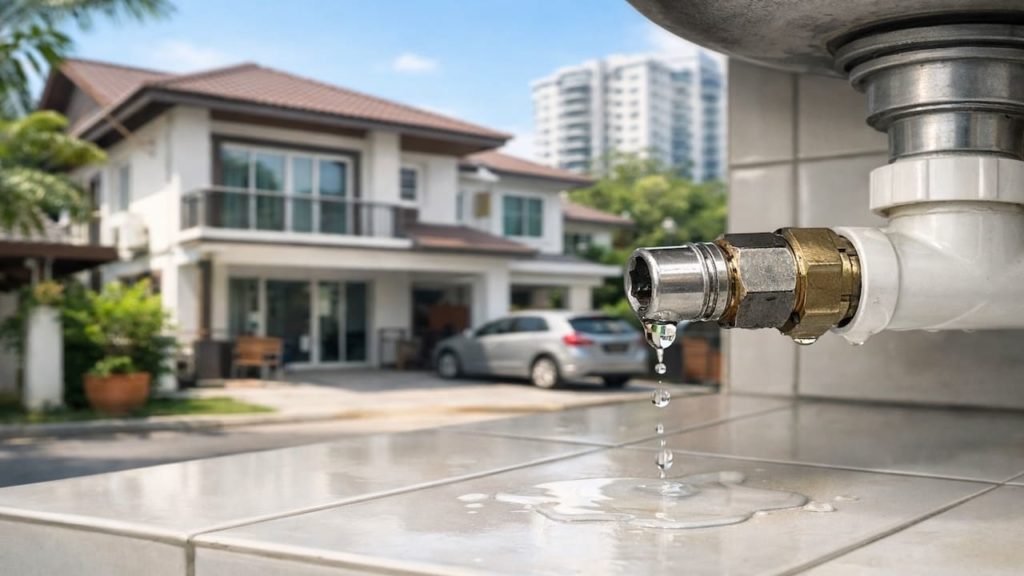
Subterranean termites love concealed paths, and they prefer areas that stay slightly damp. Poor runoff, porch puddles, leaking pipes, and wet soil near the wall base create perfect entry points in Malaysia terrace homes and ground floor units. Structure.
- Check downpipe discharge soaking soil beside walls
- Inspect bathroom pipe chases for slow hidden leaks
- Look under sinks for damp cabinet base swelling
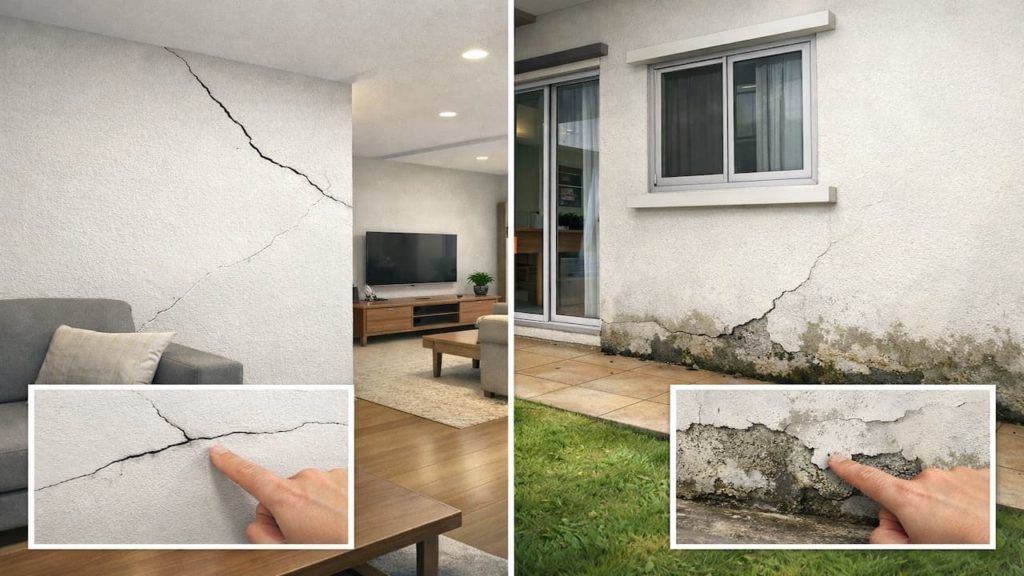
- Check exterior damp line at lower wall render
- Inspect porch slope sending water toward doorway
Some blame only the wood quality. Timber matters, but termites mostly follow moisture and concealment, not brand names. Fix water and access, and pressure drops fast.
4. How to repair termite damage and stop reattack
Treat termites first then rebuild with sealed dry details — in order.
Start with professional treatment, then remove damaged timber, and only then rebuild with better moisture control. In Malaysia, termite inspection can be around RM150–RM350, baiting or perimeter treatment often lands roughly RM800–RM3,000 depending on layout, and replacing door frames or cabinet base sections can range RM300–RM2,500 based on material and access. Guardrails. Do not skip the treatment step.
- Book termite inspection and mark active tube points
- Choose baiting or soil treatment for colony control
- Remove damaged timber and bag debris immediately
- Replace with treated timber or metal alternatives
- Seal gaps and fix leaks and runoff sources
Some people want to DIY spray and patch the hole. Sprays can miss the nest and repairs can hide fresh activity, so you lose time and money. Treat, rebuild, then keep the area dry.
5. FAQs
Q1. How do I know if the damage is active right now?
Look for fresh mud tubes, new blistering paint, and soft spots that expand over weeks. If you break a tube and it gets rebuilt, activity is likely.
Q2. Can termites live in condos above ground floors?
Yes, they can travel through service shafts, wall voids, and wet areas near bathrooms and kitchens. Shared building routes can hide the source.
Q3. Is tap testing enough to confirm termites?
Tap tests help you map hollow zones, but you still need to confirm with tubes, galleries, or professional inspection. Proof beats guesses every time when money is involved.
Q4. Should I repaint after I patch the wood?
Repaint only after treatment and after the wood and wall base are fully dry. Painting too early can trap moisture and invite repeat problems.
Q5. When should I replace instead of repair?
Replace when structural edges crumble, frames lose alignment, or cabinet bases sag and stay damp. If moisture sources remain, replacement alone will not last.
Pro’s Tough Talk

Alright, I’ve been on site for 20+ years and handled hundreds of jobs, and termite damage in Malaysia is the quietest disaster you’ll ever meet. They eat like a ninja, and the first “hello” is your finger going through a door frame.
Three causes keep showing up. One, moisture, leaking pipes, damp wall bases, porch puddles, that wet buffet. Two, hidden timber, skirting, cabinet bases, door frames, all tucked away from airflow. Three, easy soil contact, downpipe discharge and poor runoff feeding the entry path. That’s the structure.
Do 3 steps, no drama. Step one, find and mark tubes and hollow zones, then stop watering the wall base. Step two, get proper treatment, baiting or soil, because killing a few workers is useless. Step three, rebuild with treated timber or metal, then seal gaps and keep airflow moving. Simple.
You didn’t fail and not every contractor is a saint or a villain, but don’t patch wood while the colony is still partying behind it. Kill the colony then rebuild and keep it dry. Anyone selling you “just spray here bro” is selling you a bandage for a broken bone. That’s my jab.
Relatable moment one, you hear a tiny crunch and pretend it’s nothing. Relatable moment two, you spot a mud line and tell yourself you’ll check “next week.” Do that and you’ll be hosting termites like they pay rent, then you’ll act shocked. Cute.
Summary
Termite damage is not just wood repair, it is colony control plus moisture control, especially in Malaysia humidity and rain patterns. Tap tests and edge clues help you map the real spread.
If you find tubes, expanding soft spots, or repeated damp at wall bases, prioritize treatment and fixing leaks and runoff before rebuilding. If damage is near structural frames or keeps returning, get a professional plan instead of repeating small patches.
Today, mark hollow zones, check for tubes, stop splash and damp at the base, and book treatment before buying new frames. Treatment first makes every repair finally stick. If you also have exterior damp lines or gutter overflow, read those guides next and link the moisture chain.