You searched “repair toilet running” because you hear the tank refilling by itself and you do not want a surprise water bill.
In Malaysia, humidity keeps parts damp, mineral scale builds up, and condo water pressure swings can make old valves leak and run longer.
In this guide, you’ll learn how to stop a running toilet by fixing seals and float settings so the tank shuts off cleanly and you stop wasting water overnight.

Hi, I’m Ken. I write practical home guides for Malaysia—no fluff, just what works.
I hold a formal building design qualification and have spent about 20 years on job sites across hundreds of projects. My goal is simple: help you avoid costly mistakes with clear, safe steps—a quick way to decide what to do next.
1. Repair toilet running: 5 fixes
Stop the silent refill before it becomes a leak.
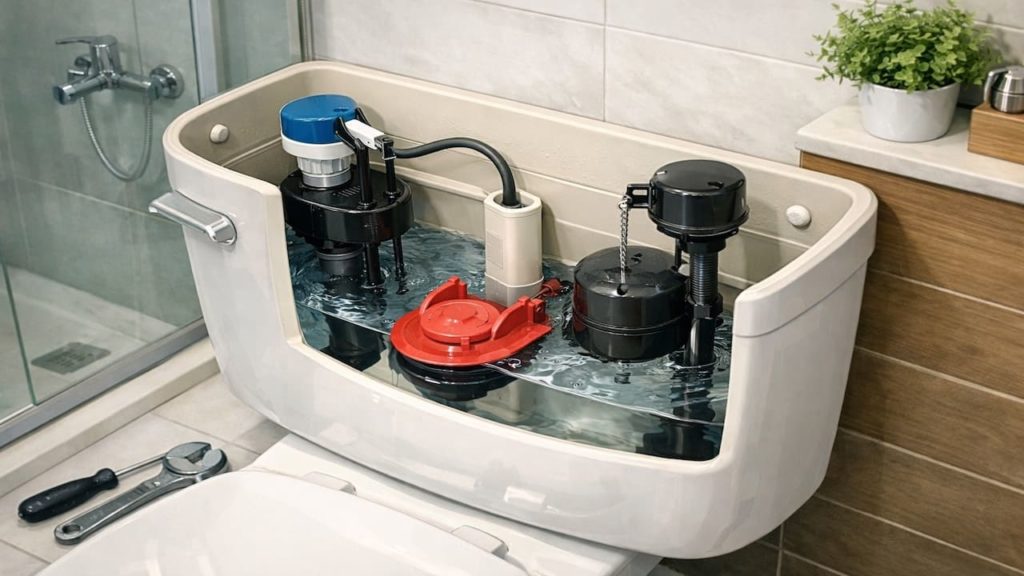
A running toilet is usually a seal or valve issue inside the tank, not a bowl problem. In Malaysia bathrooms, warm damp air speeds grime and scale, so parts stick and leak. Simple.
- Remove tank lid and listen for refill sound
- Drop food dye in tank watch bowl color
- Check water level line relative to overflow tube
- Inspect flapper edge for slime and warping
- Test handle chain slack and snag points
Some people ignore it because the toilet still flushes fine. But a slow run can waste water nonstop and keep the bathroom damp. Fix it early and forget it.
2. Flapper seals and float settings
Most running toilets fail at the flapper seal.
If the flapper does not seal, water leaks into the bowl and the fill valve keeps topping up. Float height also matters, because too high makes water spill into the overflow. In Malaysia, scale can roughen seats and cause micro leaks. Annoying.
- Clean flapper seat with sponge and vinegar
- Replace flapper with matching size and style
- Adjust chain leave slight slack for sealing
- Lower float so water stays below overflow rim
- Check refill tube clipped above overflow opening
“Just tighten the handle” is the wrong fix for most cases. Tightening can shorten chain slack and keep the flapper lifted. Fix the seal and float, then the handle feels normal again.
3. Why toilets run more often in Malaysia homes
Scale pressure changes and damp grime cause valve leaks.
Running gets worse when fill valves stick or the flapper seat is rough. Condo pressure can surge when pumps cycle, while terrace homes may see sediment after pipe works. Malaysia humidity also grows slimy buildup faster, so seals stop sealing. Pattern.
- Mineral scale scratches flapper sealing surface
- High pressure makes fill valve chatter and seep
- Refill tube submerged siphons water into overflow
- Float arm rubs tank wall and sticks open
- Cracked overflow tube leaks at base gasket
Yes, an old toilet will wear out eventually. But most running problems are one cheap part plus a simple adjustment. Do the basics before you replace the whole unit.
4. How to repair it fast and control the cost
Replace the faulty part and verify shutoff under pressure.
Start with testing, then swap only what fails. In Malaysia, a basic plumber visit often starts around RM80–RM150, a flapper replacement is often a small add-on job, and a fill valve swap plus setup can land around RM150–RM350 depending on access and tank type. Budget guardrails. DIY can be cheaper if you can isolate the stopcock safely.
- Close stopcock and flush to empty tank
- Swap flapper then test dye for leaks
- Adjust float to proper water line height
- Replace fill valve if it keeps hissing
- Open water slowly and watch shutoff twice
Some people jump straight to “replace the whole toilet.” That is overkill unless the porcelain is cracked or parts are unavailable. A running tank is usually a parts job, not a rebuild.
5. FAQs
Q1. How can I confirm the flapper is leaking?
Use the dye test and wait 10–15 minutes without flushing. If color appears in the bowl, water is leaking past the flapper. That is the usual culprit.
Q2. Why does my toilet run only sometimes?
A flapper can seal when clean, then leak when it shifts or when pressure changes after pump cycles. Float arms can also stick and release randomly. Intermittent does not mean harmless.
Q3. What water level is correct in the tank?
It should sit below the top of the overflow tube, often around 2–3 cm lower. Too high triggers overflow and constant refill. Adjust the float until it stops cleanly.
Q4. Can I clean parts instead of replacing them?
Cleaning can work if the flapper is still flexible and the seat is smooth. If rubber is warped or slimy and hard, replacement is faster and more reliable. Cheap part, big relief.
Q5. When should I call a plumber instead of DIY?
Call if the stopcock is seized, the tank bolts leak, or you see water around the toilet base. Those can cause hidden floor damage in humid bathrooms. Safety first.
Pro’s Tough Talk

Alright, I’ve been on site for 20+ years and handled hundreds of jobs, and a running toilet in Malaysia is a classic “silent money leak.” Humidity keeps everything damp, and the tank keeps whispering refills like it owns the place. It doesn’t.
Three causes cover most cases. Flapper seal worn or slimy so it leaks into the bowl. Float set too high so water spills into the overflow. Fill valve old or scaled so it never shuts fully. That’s the structure.
Do 3 steps and stop guessing. Step one, dye test to prove the leak path. Step two, clean or replace the flapper and set chain slack correctly. Step three, adjust float and replace fill valve if it still hisses. Simple.
You didn’t “break” anything and the contractor is not automatically a villain either. Running toilets stop when seals and levels are correct. And if someone tells you to “just jiggle the handle every time,” that’s like babysitting a fridge door. That’s my jab.
Relatable moment one, you hear it at 3 a.m. and pretend it is the neighbor. Relatable moment two, you come back from holiday and the bathroom smells damp and weird. Fix it now, or keep donating water like it’s a charity drive.
Summary
A running toilet is usually a flapper seal leak, a float set too high, or a fill valve that will not shut off. Malaysia humidity and scale make these parts fail faster. Simple.
If dye shows bowl leakage, replace the flapper first. If water sits near the overflow line, lower the float. If hissing continues after adjustments, replace the fill valve or call a plumber if the stopcock is stuck.
Start today by doing a dye test, adjusting the float, and replacing the worn seal before the next night refill loop. Fix the seal and the tank goes quiet. If you also have low water pressure or leaking taps, read those guides next and connect the plumbing story.